
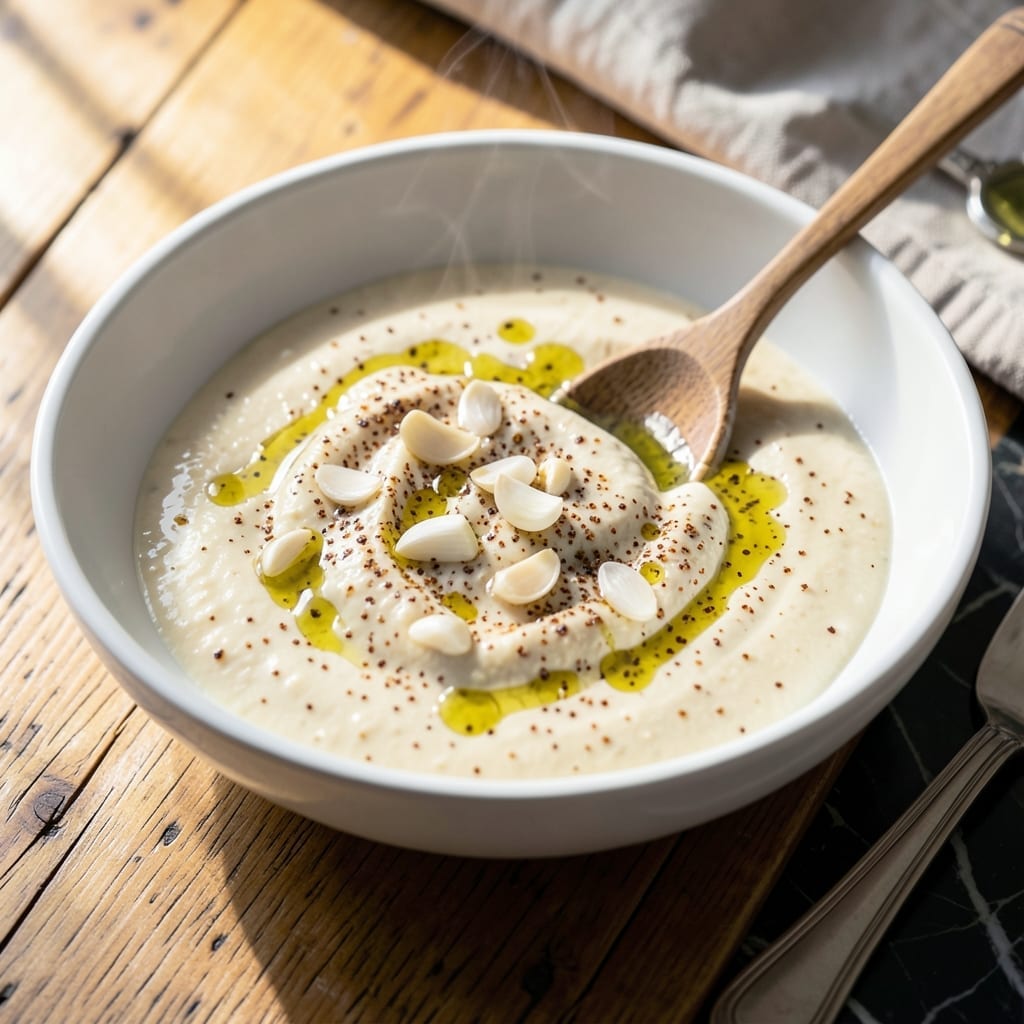
This dairy-free alfredo sauce delivers the same velvety texture and rich parmesan flavor you expect from the classic version. I developed this recipe after years of experimenting with plant-based alternatives that often fell short.
The secret lies in a careful emulsion of olive oil, nutritional yeast, and cashews, which creates a smooth base that mimics traditional alfredo perfectly. No strange aftertastes, just pure creamy satisfaction that coats pasta beautifully.
What you get is a sauce that clings to fettuccine just like its dairy counterpart, with that signature restaurant-quality richness. It reheats beautifully too, making it perfect for meal prep.
Use it for pasta, as a dip, or over roasted vegetables. Here’s how to make this homemade sauce that everyone will love.
Ingredients for Alfredo Sauce Recipe Homemade
Nine simple ingredients create that restaurant-quality velvety sauce you crave without dairy.
| Ingredient | Amount | Notes |
|---|---|---|
| Raw Cashews 🌰 | 1 cup | Soaked in hot water 15 minutes |
| Extra-Virgin Olive Oil 🫒 | ½ cup | High-quality for emulsion stability |
| Nutritional Yeast 🧂 | ½ cup | For cheesy, umami flavor |
| Garlic Cloves 🧄 | 4 cloves | Peeled and roughly chopped |
| Fresh Lemon Juice 🍋 | 2 tbsp | Brightens the sauce |
| Dijon Mustard 🟡 | 1 tsp | Adds depth and tang |
| White Miso Paste 🥣 | 1 tbsp | For savory complexity |
| Sea Salt 🧂 | 1 tsp | Adjust to taste |
| White Pepper ⚪ | ¼ tsp | Freshly ground preferred |
| Water 💧 | ½ cup | As needed for consistency |
Cashews are the backbone here—raw and unsalted are a must. I grab mine in bulk at Whole Foods or Sprouts (their turnover is fast, so they’re always fresh). Nutritional yeast is the secret weapon for that parmesan punch; Bragg or Bob’s Red Mill are reliable brands. The olive oil needs to be extra-virgin and robust—this isn’t the time for that light stuff in the back of your cabinet.
No cashews? Macadamia nuts or raw sunflower seeds work in a pinch (soak them too). Out of nutritional yeast? Aged vegan cheese powder can sub in, but the flavor won’t be as clean. Miso paste is worth hunting down—white or yellow both work. If you’re in a rush, skip the soaking and blend the cashews longer with a splash more water (just don’t expect it as smooth).
Sauce keeps 5 days sealed in the fridge, though it thickens as it chills. Thin with warm water when reheating. Freeze in ice cube trays for 3 months—perfect for quick weeknight pasta. Always give it a good stir before using, as it separates naturally.
Why You’ll Love This Recipe
- Blender Magic: I just toss the cashews, garlic, and lemon juice in and let the blender do the work.
- Rich & Creamy: The nutritional yeast and olive oil give it that deep, savory richness without dairy.
- Endless Uses: Honestly, I’ve drizzled this on pasta, veggies, and even pizza.
- Budget Friendly: Raw cashews stretch farther than you’d think, and it costs less than store-bought.
Step-by-Step Instructions for Homemade Alfredo Sauce
Here’s the method I trust for a velvety emulsion that rivals traditional dairy versions.
Step 1: Soak and Drain the Cashews
Begin by soaking the 1 cup Raw Cashews in hot water for 15 minutes. This softens them significantly, which is crucial for achieving that ultra-smooth texture we’re after. You’ll notice the cashews plump up and become tender to the bite.
After soaking, drain them thoroughly in a colander and give them a quick rinse under cold water. Shake off any excess water—this prevents your sauce from becoming too thin. The cashews should be soft enough to easily blend into a creamy paste.
Step 2: Blend the Base Ingredients
In a high-speed blender, combine the soaked and drained 1 cup Raw Cashews with the 0.5 cup Extra-Virgin Olive Oil, 0.5 cup Nutritional Yeast, 4 cloves Garlic Cloves, 2 tbsp Fresh Lemon Juice, 1 tsp Dijon Mustard, 1 tbsp White Miso Paste, 1 tsp Sea Salt, and 0.25 tsp White Pepper.
Blend on high for 1-2 minutes, stopping to scrape down the sides as needed. The mixture will transform from chunky to completely smooth. You’re aiming for a thick, creamy paste that clings to your spatula. The nutty aroma of cashews combined with the sharpness of garlic should be prominent.
Step 3: Adjust Consistency with Water
With the blender still running, slowly drizzle in the 0.5 cup Water, starting with just a few tablespoons at a time. This gradual addition is key—it allows the emulsion to form properly without breaking. Watch as the sauce becomes glossy and pourable.
You may not need the full 0.5 cup Water—stop adding when the sauce reaches your desired thickness. It should coat the back of a spoon but still flow easily. Remember, the sauce will thicken slightly as it cools, so err on the side of slightly thinner.
Step 4: Taste and Adjust Seasoning
Transfer the sauce to a saucepan and warm it gently over low heat for 2-3 minutes, stirring constantly. This mellows the raw garlic flavor and allows the ingredients to fully meld together. Don’t let it boil—maintain a gentle warmth.
Taste and adjust the seasoning. The 1 tsp Sea Salt provides a good base, but you might want to add more if your nutritional yeast isn’t very salty. The 2 tbsp Fresh Lemon Juice should provide a bright note that cuts through the richness. If the flavor seems flat, a pinch more white pepper can add depth.
Step 5: Serve Immediately for Best Results
This sauce is best used fresh. Toss it with hot pasta immediately—the heat from the noodles will help the sauce cling beautifully. You’ll notice it creates a velvety coating that’s remarkably similar to traditional alfredo.
If the sauce thickens too much as it sits, thin it with a splash of warm pasta water. The emulsion is stable, but for the creamiest texture, serve it within 15-20 minutes of making. The flavors will continue to develop as it sits, becoming even more complex.
Pro Tips For Making Alfredo Sauce Recipe Homemade
- Soak the Cashews: Cover raw cashews in hot water for at least 15 minutes—I learned this the hard way after my first blender full of gritty sauce. The softer they get, the creamier your alfredo will be.
- Toast the Garlic: Cook minced garlic in olive oil on low heat until just golden, about 2-3 minutes. After burning three batches, I finally figured out that raw garlic gives a harsh bite, while toasted adds depth.
- Balance the Lemon: Start with 1 tablespoon of fresh lemon juice, then adjust. Sounds weird, but it works: too much makes the sauce bitter, just enough brightens the nutty cashew flavor.
- Blend It Hot: Use warm water or a quick blender pulse to heat the sauce as you blend—this isn’t the prettiest method, but it’s the tastiest. Cold alfredo tastes flat, while warm emulsifies better and clings to pasta.
Perfect Pairings for This Dish
Pasta Pairings
This sauce clings beautifully to fettuccine or pappardelle, creating that classic restaurant-style coating. I prefer fresh pasta for the best texture—De Cecco or Barilla dried versions work too. Toss with 1 lb cooked pasta and ¼ cup pasta water for perfect adhesion. 🥗
Vegetable Dippers
Serve with steamed broccoli, roasted asparagus, or grilled zucchini for a lighter option. The sauce’s richness pairs especially well with the slight bitterness of charred Brussels sprouts. I love dipping crudités like carrots and bell peppers for a fresh contrast.
Protein Additions
For a heartier meal, add grilled chicken breast or shrimp to your pasta dish. The sauce also works wonderfully with seared scallops or pan-fried tofu for plant-based options. I often add white beans for extra protein and fiber.
Bread Options
Use as a dip for garlic bread or focaccia. The sauce’s thick consistency makes it ideal for soaking up with crusty Italian bread. I recommend warming your bread first to enhance the flavor pairing. 🔥
Salad Toppings
Drizzle over a kale Caesar salad or use as a dressing for a spinach and strawberry salad. The creamy texture adds body to lighter greens. I’ve even used it as a base for vegetable grain bowls with quinoa and roasted veggies.
Nutrition Facts
Frequently Asked Questions
Can I use a regular blender?
A high-speed blender works best for ultra-smooth texture, but a regular blender can work. Soak cashews 30 minutes and blend longer, scraping sides often. The result may be slightly grainier but still delicious.
Why does my sauce separate when reheating?
This happens naturally with emulsions. Warm gently over low heat while stirring constantly. Add warm water 1 tbsp at a time until smooth again. Avoid boiling.
What can I substitute for nutritional yeast?
Vegan parmesan powder works in a pinch, but expect a stronger flavor. Use 3 tbsp powder for every ½ cup nutritional yeast. Miso paste adds depth if you skip it entirely.
How long does it keep in the fridge?
Store in an airtight container for up to 5 days. The sauce thickens as it chills—stir in warm water to restore creaminess before using.

- 6 Egg Cake Recipe with Oil: Light as Air With Buttery Moisture - October 4, 2026
- 4 Bean Casserole Recipe: One-Pan Heartiness With Smoky Paprika Depth - October 4, 2026
- 3-Ingredient Keto Mug Cake Recipe: Microwave Magic in 2 Minutes - October 4, 2026