
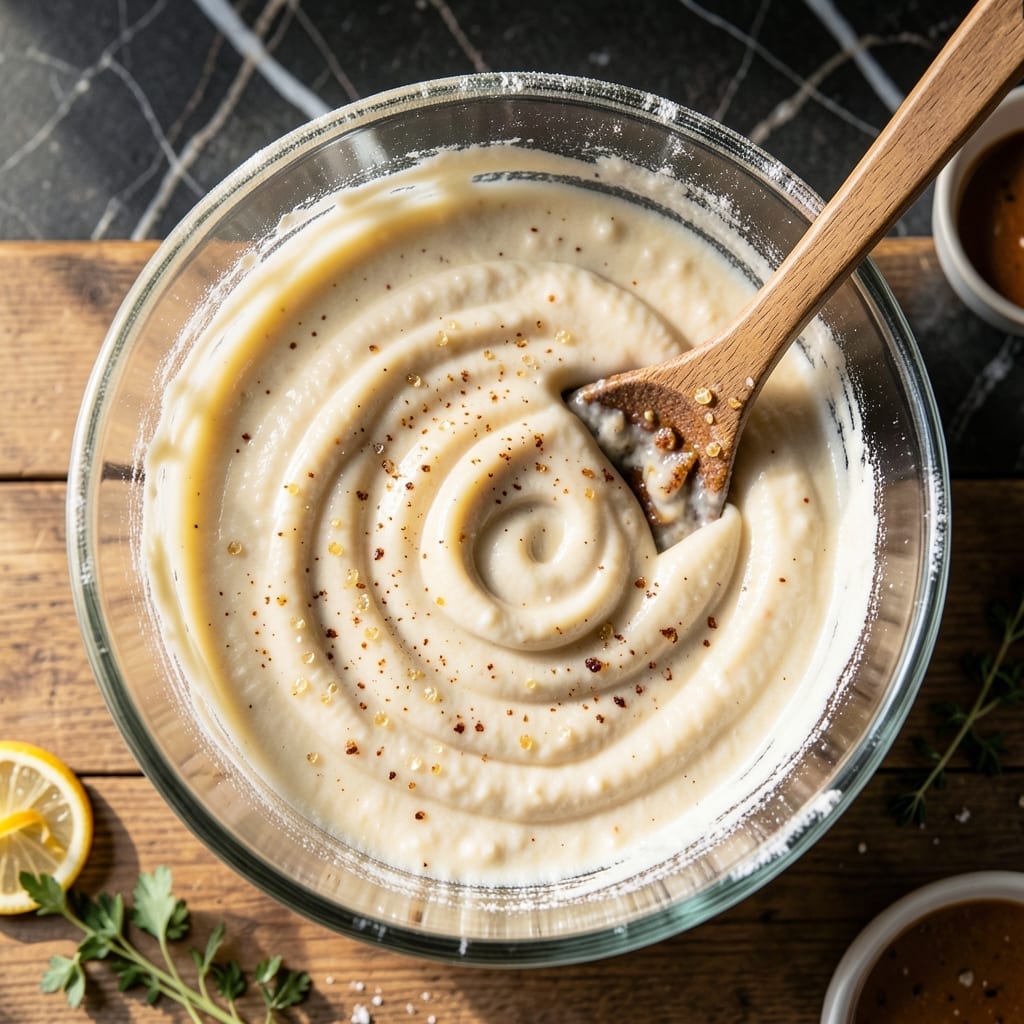
This no-yeast starter brings the tradition of Amish friendship bread to your kitchen with minimal effort. The natural fermentation process creates a sweet, tangy base that develops depth over several days.
The beauty of this method lies in its simplicity—just flour, sugar, and milk come together to create a living starter that requires no special ingredients. Each day, the mixture bubbles and grows, building complex flavors that will make your final bread irresistibly moist and tender.
What begins as a humble batter transforms into a shareable treasure. The starter can be divided and passed to friends, continuing the tradition that makes this bread so special.
With just 10 days of care, you’ll have everything needed to bake a loaf that tastes like warm, sweet nostalgia.
Ingredients for Amish Friendship Bread Starter Recipe Without Yeast
Just flour, sugar, milk, and a little patience make this starter come alive.
| Ingredient | Amount | Notes |
|---|---|---|
| All-Purpose Flour 🌾 | 2 cups | Unbleached preferred for flavor |
| Granulated Sugar 🍚 | ¾ cup | White sugar works best |
| Whole Milk 🥛 | 1 cup | Room temperature for fermentation |
| Active Dry Yeast 🍞 | 0 tsp | Not needed for this method |
| Warm Water 💧 | ½ cup | For initial mixing |
| Salt 🧂 | ½ tsp | Kosher or sea salt fine |
| Vanilla Extract 🌿 | 1 tsp | Pure extract for best flavor |
| Cinnamon 🌶️ | 1 tsp | Ground, for sweetness balance |
| Nutmeg 🌰 | ¼ tsp | Freshly grated if possible |
| Baking Soda 🧂 | 1 tsp | For leavening when baking |
| Baking Powder 🧂 | 1 ½ tsp | Double-acting preferred |
| Eggs 🥚 | 2 whole | Large, room temperature |
| Unsalted Butter 🧈 | ½ cup | Melted for mixing |
The flour is your foundation here. King Arthur or Gold Medal all-purpose both work great—no need for anything fancy. I always keep a 5-pound bag on hand since you’ll be feeding the starter daily. The milk should be whole for best results (the fat helps the fermentation), but 2% in a pinch works too. Warm water gets things started, but don’t go over 110°F—too hot kills the natural yeasts.
No whole milk? Oat or soy milk can work, but the flavor changes slightly. Swap the granulated sugar for brown sugar at the same amount for a deeper caramel note. If you’re out of vanilla, almond extract at half the amount adds a nice twist. The cinnamon and nutmeg are optional but worth it—they give the final bread that classic Amish warmth.
Store the starter in a glass jar (not metal) at room temp during the 10-day process. Once baked into bread, it keeps for 3 days at room temperature or 1 week refrigerated. Always use a wooden or plastic spoon to stir—metal can react with the acids.
Why You’ll Love This Recipe
- No-Fuss Mixing: I just stir flour, sugar, and milk—no yeast to proof, no waiting around.
- Sweet & Tangy: The sugar caramelizes slightly while the milk adds this rich, almost buttery depth.
- Endless Possibilities: I’ve used this starter for muffins, cakes, even pancakes—one base, so many treats.
- Budget Stretch: Five cents of flour and sugar makes a starter that keeps giving for weeks.
Step-by-Step Instructions for Amish Friendship Bread Starter
Here’s how I create this bubbly starter that’s the heart of the recipe.
Step 1: Mix Initial Ingredients for Fermentation
In a large glass or plastic bowl, combine the 2 cups All-Purpose Flour, 0.75 cup Granulated Sugar, and 1 cup Whole Milk. I use a wooden spoon for this—it mixes thoroughly without scraping the bowl.
The mixture should be thick but pourable, like pancake batter. If it’s too stiff, add a splash of the 0.5 cup Warm Water to loosen it slightly. The flour and sugar will begin fermenting immediately, creating that signature tangy base.
This is where the magic starts. The natural yeasts in the flour and air will begin working on the sugars, creating bubbles and a slightly sour aroma within hours.
Step 2: Add Flavorings and Leavening Agents
Stir in the 1 tsp Cinnamon, 0.25 tsp Nutmeg, 1 tsp Vanilla Extract, and 0.5 tsp Salt. These spices add warmth and depth that will carry through to the final bread. The vanilla might seem unusual here, but it balances the tang perfectly.
Now add the 1.5 tsp Baking Powder and 1 tsp Baking Soda. These will help the starter develop its characteristic rise and fall during the fermentation process. The mixture should now smell sweet with a hint of spice.
Step 3: Incorporate Remaining Wet Ingredients
Whisk the 2 whole Eggs lightly in a separate bowl, then pour them into your mixture. Add the 0.5 cup Unsalted Butter, which should be melted but not hot—you don’t want to cook the eggs.
Mix everything together until fully combined. The starter will be thicker now, almost like a thick cake batter. You should see small bubbles forming at the surface within 10-15 minutes, a sign that fermentation has truly begun.
The butter adds richness that will make your final bread incredibly tender, while the eggs provide structure and help the starter develop its characteristic rise.
Step 4: Begin the Fermentation Process
Cover the bowl loosely with a clean kitchen towel or plastic wrap. I prefer a towel—it allows the starter to breathe while keeping out dust. Let it sit at room temperature for 12-24 hours.
You’ll know it’s working when it develops a bubbly, foamy top and starts to smell slightly sour and yeasty. The volume should increase by about 25-50% as the natural yeasts do their work. Stir it once or twice during this period if you notice separation.
This fermentation is what gives Amish Friendship Bread its distinctive flavor and texture, all without commercial yeast.
Pro Tips For Making Amish Friendship Bread Starter Recipe Without Yeast
- Use Room-Temp Milk: Cold milk can shock the starter and slow fermentation—I learned this the hard way after my first batch sat lifeless for days. Let it sit out for 30 minutes before mixing.
- Whisk the Sugar: Dissolve the sugar completely in warm water before adding flour, or you’ll end up with gritty pockets in your starter. A quick stir with a fork does the trick.
- Skip Metal Utensils: Metal can react with the acidic starter, so use a wooden or plastic spoon for stirring. My grandmother swore by this, and her starters were always perfect.
- Feed on Schedule: Stick to a 24-hour feeding cycle—even if you’re busy. I was skeptical until I tried it, but consistency is what keeps the starter active and bubbly.
Best Sauces and Condiments for amish friendship bread starter recipe without yeast
Sweet Glazes
A simple vanilla glaze made with 1 cup powdered sugar, 2 tbsp milk, and 1 tsp vanilla complements the bread’s natural sweetness. Drizzle it over warm slices for a classic finish. I sometimes add ½ tsp cinnamon for extra warmth.
Cream Cheese Spread
Mix 4 oz softened cream cheese with 2 tbsp honey and 1 tsp orange zest for a tangy-sweet spread. It pairs beautifully with the bread’s subtle spice notes. This is my go-to for breakfast slices.
Fruit Compotes
Simmer 2 cups diced apples with ¼ cup brown sugar and 1 tsp cinnamon until thickened. The compote’s texture contrasts nicely with the moist bread. Peach or pear versions work equally well. 💛
Spiced Butters
Whip ½ cup softened butter with 1 tbsp honey and ¼ tsp nutmeg for a rich topping. Serve at room temperature so it melts slightly into the warm bread. I always make extra for sharing.
Citrus Drizzles
A bright lemon glaze (mix 1 cup powdered sugar with 3 tbsp lemon juice) cuts through the sweetness. Add 1 tsp lemon zest for a pop of color and aroma. Perfect for afternoon tea.
Nutrition Facts
Frequently Asked Questions
How long does the starter need to ferment?
The initial mix needs 12-24 hours at room temperature to develop bubbles. The full process takes 10 days with daily stirring and occasional feeding.
Can I use a metal bowl for mixing?
No, metal can react with the acids. Use a glass or plastic bowl and a wooden or plastic spoon to avoid any chemical reactions.
What if my starter isn’t bubbling?
Check the temperature—ideally 70-75°F. If it’s too cold, move it to a warmer spot. If still inactive after 24 hours, add 1 tbsp sugar to kickstart fermentation.
Can I freeze the starter for later use?
Yes! Portion it into 1-cup portions in airtight containers. It will keep for 3 months frozen. Thaw overnight in the fridge before using.

- 6 Egg Cake Recipe with Oil: Light as Air With Buttery Moisture - October 4, 2026
- 4 Bean Casserole Recipe: One-Pan Heartiness With Smoky Paprika Depth - October 4, 2026
- 3-Ingredient Keto Mug Cake Recipe: Microwave Magic in 2 Minutes - October 4, 2026