
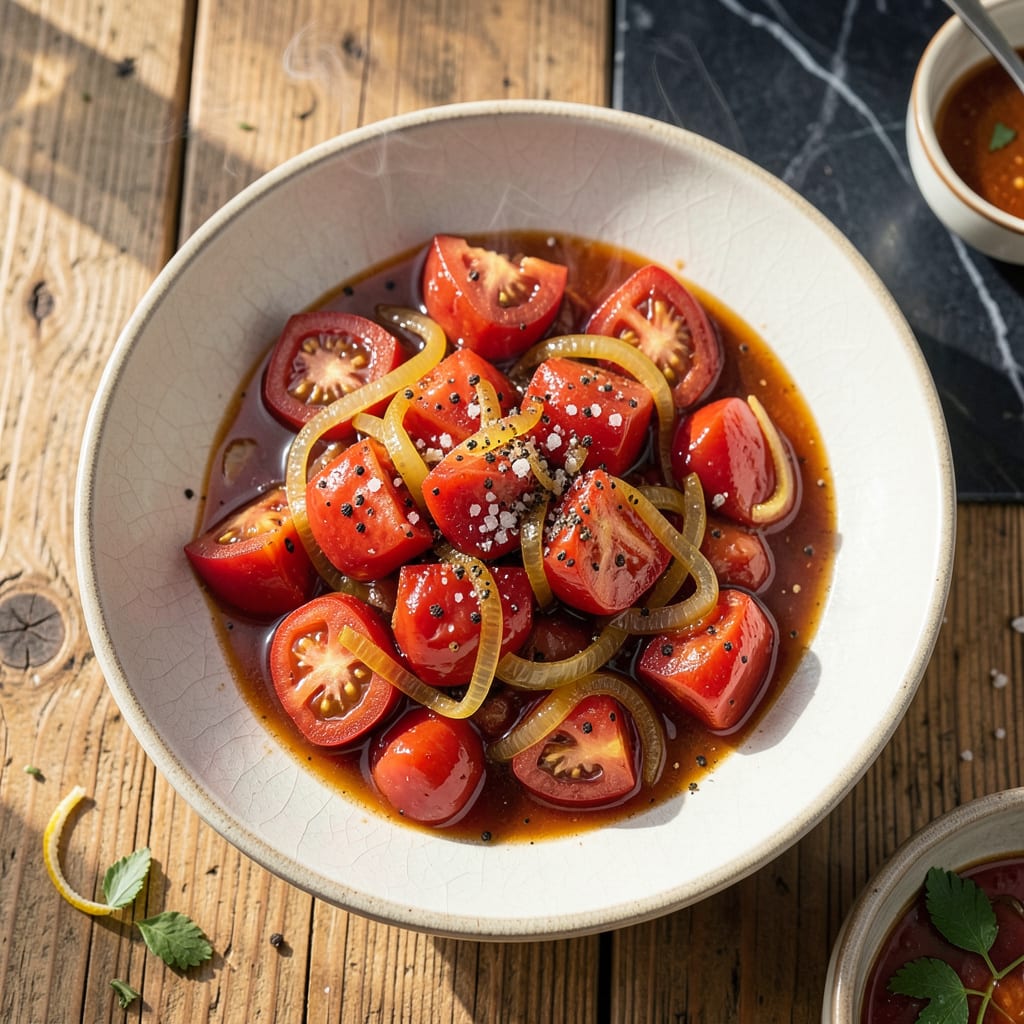
There’s a reason Amish stewed tomatoes have been a pantry staple for generations—they capture summer’s sweetness in a simple, versatile preparation. This recipe transforms fresh tomatoes into a rich, sweet-tart side dish that works as well with fried chicken as it does over rice or toasted bread.
The traditional method involves slow simmering to concentrate flavors while maintaining the tomatoes’ natural texture. I’ve found that a 30-minute cooking time achieves the perfect balance between softness and structure. The result is a comforting dish that tastes like home, whether served warm or chilled.
Ingredients for Amish Stewed Tomatoes
Optimal quality requires just eleven ingredients to achieve that signature Amish sweet-tart balance in every bite.
| Ingredient | Amount | Notes |
|---|---|---|
| Ripe tomatoes 🍅 | 3 lb | Roma or heirloom preferred, quartered |
| Yellow onion 🧅 | 1 whole | Medium, thinly sliced |
| Granulated sugar 🍬 | ¼ cup | Adjust for tomato sweetness |
| Apple cider vinegar 🍏 | 2 tbsp | For signature sweet-tart balance |
| Kosher salt 🧂 | 1 ½ tsp | Diamond Crystal preferred |
| Freshly ground black pepper 🌶️ | ½ tsp | Coarse grind recommended |
| Unsalted butter 🧈 | 2 tbsp | Or substitute olive oil |
| Fresh parsley 🌿 | ¼ cup | Flat-leaf, chopped for garnish |
| Fresh basil leaves 🍃 | 6 whole | Torn, for finishing |
| Celery stalks 🌿 | 2 whole | Diced, for aromatic base |
| Garlic cloves 🧄 | 3 cloves | Minced for depth |
| Vegetable broth 🥕 | ½ cup | Low-sodium preferred |
The tomatoes are fundamental—heirloom varieties from local farmers markets deliver superior flavor, though Roma tomatoes provide excellent texture. For the vinegar, Bragg’s apple cider vinegar offers consistent quality. The butter should be European-style for richer mouthfeel, though high-quality olive oil serves as an adequate substitute. Professional kitchens use Diamond Crystal kosher salt for its clean taste and precise measurement control.
Substitutions maintain integrity when carefully considered. White vinegar may replace apple cider at equal volume, though flavor complexity diminishes. Shallots substitute effectively for yellow onions at a 1:1 ratio. For dietary adaptations, coconut oil replaces butter without flavor compromise. The vegetable broth can be homemade or Better Than Bouillon brand, which offers superior depth to canned alternatives.
Storage requires minimal effort for maximum longevity. Stewed tomatoes keep in airtight containers for 5-7 days refrigerated. For extended preservation, portion into freezer-safe containers where they maintain quality for 6-8 months. The dish actually improves after 24 hours as flavors meld—optimal serving temperature ranges from chilled to gently reheated.
Why You’ll Love This Recipe
- Five-Ingredient Magic: Honestly, I love recipes where I can count the ingredients on one hand. Here, ripe tomatoes, onion, sugar, vinegar, and salt transform into something so much bigger than the sum of its parts—no fancy pantry items required.
- Sweet-Tangy Alchemy: That first bite where the sugar caramelizes just slightly against the vinegar’s sharpness? It’s the kind of balance that makes you pause mid-meal. The onions mellow into silkiness while the tomatoes collapse into rich, jammy perfection.
- My Freezer’s Best Friend: I double the batch every August when tomatoes are dirt-cheap at the farm stand. Come winter, I pull out jars of this for quick pasta sauce, chili base, or even spooned over grilled chicken—no last-minute grocery runs.
- Unfussy Weeknight Win: No blanching, no peeling, just rough-chopped tomatoes and onions simmering away while I tackle emails or help with homework. The house smells incredible, and cleanup is one pot with a wooden spoon’s worth of effort. (Yes, even on a Tuesday night.)
Step-by-Step Instructions for Amish Stewed Tomatoes
This method transforms simple ingredients into a perfectly balanced sweet-tart dish with rich, comforting depth.
Step 1: Prepare the Vegetable Base
Begin by quartering the 3 lb ripe tomatoes and thinly slicing the yellow onion. I prefer Roma tomatoes for their meaty texture and lower water content, which prevents the final dish from becoming watery. The onion should be sliced into thin half-moons—this ensures even cooking and better flavor distribution throughout the stew.
Dice the celery stalks into small, uniform pieces (about ¼-inch dice) and mince the garlic cloves. The celery adds subtle earthiness while the garlic provides aromatic depth. Keep these prepped vegetables separate until cooking—they’ll be added at different stages to build layers of flavor.
Step 2: Build the Flavor Foundation
In a large, heavy-bottomed pot or Dutch oven, melt the 2 tbsp unsalted butter over medium heat. When the foam subsides, add the sliced onion and diced celery. Cook for 8-10 minutes, stirring occasionally, until the vegetables soften and the onion becomes translucent with just the slightest golden edges.
Add the minced garlic and cook for an additional 1 minute, stirring constantly to prevent burning. The moment the garlic becomes fragrant is your cue to add the quartered tomatoes, 1.5 tsp kosher salt, and 0.5 tsp freshly ground black pepper. Stir well to combine all ingredients.
Step 3: Develop the Sweet-Tart Balance
Pour in the 0.5 cup vegetable broth and 2 tbsp apple cider vinegar, then sprinkle the 0.25 cup granulated sugar evenly over the top. The vinegar provides the signature tang while the sugar balances the tomatoes’ natural acidity—this combination creates the dish’s characteristic sweet-tart profile.
Stir thoroughly to dissolve the sugar and distribute all ingredients evenly. Bring the mixture to a gentle simmer, then reduce the heat to low. Cover the pot and let it cook for 45 minutes, stirring occasionally. You’ll notice the tomatoes breaking down and the liquid reducing slightly.
Step 4: Refine the Texture and Finish
After 45 minutes, remove the lid and use a wooden spoon to gently break up any remaining large tomato pieces. The stew should have thickened slightly but still maintain some liquid—this creates the perfect spoonable consistency. Continue cooking uncovered for an additional 15-20 minutes at low heat to allow the flavors to concentrate.
The stew is ready when the tomatoes have completely broken down and the liquid has reduced to a rich, slightly syrupy consistency. The color should deepen to a vibrant red-orange, and the aroma will be a perfect balance of sweet tomato with underlying savory notes.
Step 5: Add Final Touches and Serve
Remove the pot from heat and stir in the 0.25 cup fresh parsley, chopped. The parsley adds a bright, fresh contrast to the rich stewed tomatoes. Tear the 6 fresh basil leaves by hand and sprinkle them over the top just before serving—this preserves their delicate flavor and adds visual appeal.
Taste and adjust the seasoning if needed, though the initial measurements should provide perfect balance. Serve warm as a side dish or over mashed potatoes for a comforting meal. The flavors will continue to develop if stored in the refrigerator, making leftovers even more delicious the next day.
Regional Styles of This Dish
Pennsylvania Dutch Style
The original Amish version from Lancaster County uses a longer simmer time—up to 2 hours—to create a deeper, more concentrated flavor. I’ve found that adding 1 cinnamon stick during cooking gives that authentic Pennsylvania Dutch warmth. The result is darker, almost jam-like, perfect for spreading on fresh bread. 🌾
Ohio Amish Variation
In Holmes County, Ohio, they often include diced green bell peppers for extra texture. The peppers are sautéed with the onions until just tender, adding a subtle sweetness. I like using 1 large pepper for this version, which also increases the yield slightly. The color becomes more vibrant with this addition.
Midwest Farmhouse Style
Many Midwest Amish communities add 1 cup corn kernels during the last 15 minutes of cooking. This creates a heartier side dish that works beautifully with grilled meats. I prefer fresh summer corn, but frozen works well too—just thaw it first. The sweetness pairs wonderfully with the tomatoes’ tartness.
Indiana Amish Tradition
The Indiana version often includes 1 diced carrot for natural sweetness and color. It’s added with the onions and celery, cooking until completely tender. This variation has a slightly sweeter profile, so I reduce the sugar to 2 tbsp to maintain balance. The carrots also add a nice visual contrast.
Southern Amish Influence
In southern Amish communities, you’ll sometimes find 1 tsp smoked paprika added with the garlic. This gives a subtle smoky depth that reminds me of summer cookouts. The paprika should be high-quality Spanish variety for best results. It transforms the dish into something more complex and savory.
Modern Homestead Adaptation
Many modern homesteaders add 1 tbsp tomato paste when building the flavor base. This intensifies the tomato flavor without extending cook time. I stir it in with the garlic and cook for 30 seconds to develop its richness. The result is a more robust version that still maintains the traditional sweet-tart balance. ✨
Nutrition Facts

- 6 Egg Cake Recipe with Oil: Light as Air With Buttery Moisture - October 4, 2026
- 4 Bean Casserole Recipe: One-Pan Heartiness With Smoky Paprika Depth - October 4, 2026
- 3-Ingredient Keto Mug Cake Recipe: Microwave Magic in 2 Minutes - October 4, 2026