
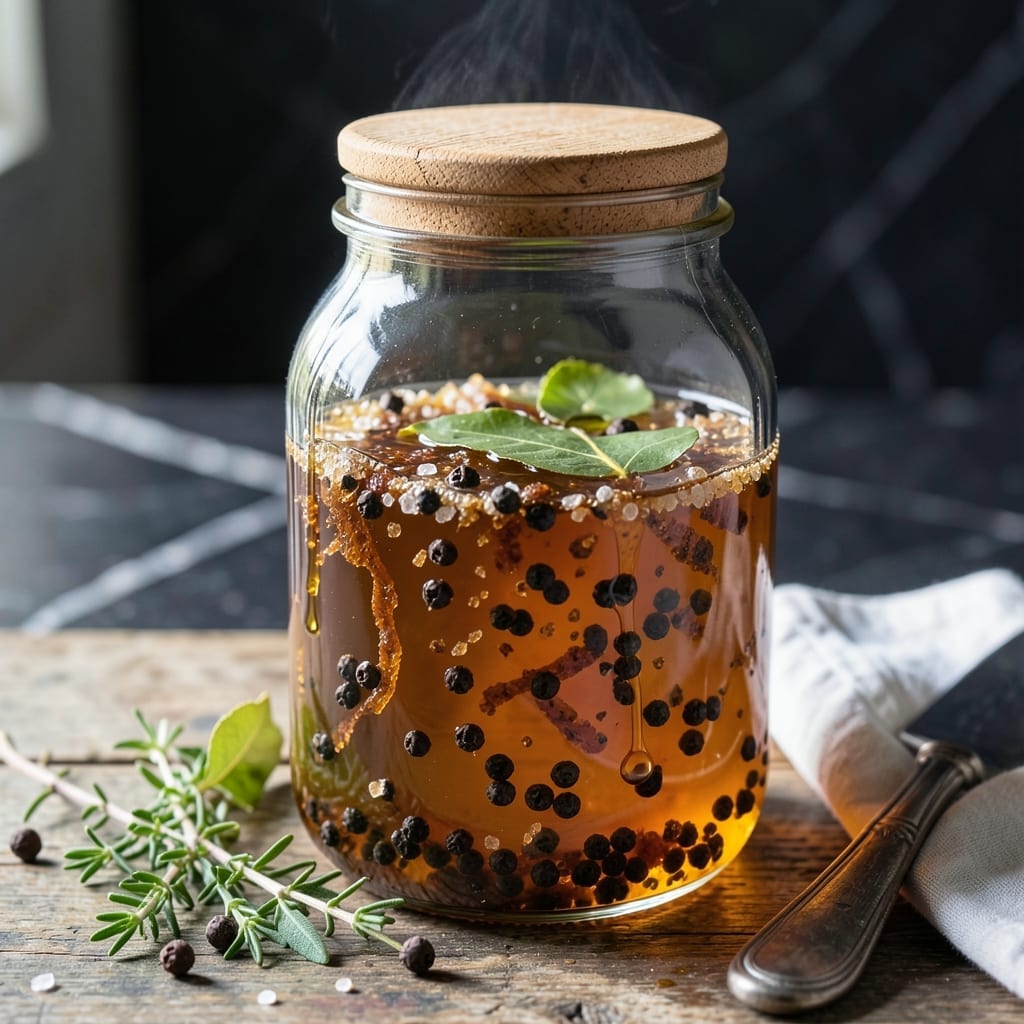
This brine transforms ordinary meats into flavor-packed masterpieces with minimal effort. The tangy apple cider vinegar base cuts through richness while enhancing natural meat flavors.
I developed this ratio after testing countless variations to find the perfect balance of acidity and seasoning. It works for pork, chicken, or even vegetables, adding depth without overpowering.
The liquid penetrates quickly, making it ideal for short marinating times. A 24-hour soak yields the best results, but even an hour makes a noticeable difference.
Unlike harsh vinegar solutions, this version mellows beautifully. The subtle sweetness from the cider vinegar creates a well-rounded foundation for your favorite spices.
Ingredients for Apple Cider Vinegar Brine
Nine simple components create this transformative brine for meats or vegetables.
| Ingredient | Amount | Notes |
|---|---|---|
| Apple Cider Vinegar 🍏 | 4 cups | Unfiltered, raw preferred |
| Water 💧 | 4 cups | Filtered or distilled |
| Kosher Salt 🧂 | ½ cup | Diamond Crystal preferred |
| Brown Sugar 🍚 | ¼ cup | Light or dark variety |
| Black Peppercorns 🌶️ | 2 tsp | Whole, cracked or ground |
| Bay Leaves 🍃 | 4 whole | Dried, sturdy variety |
| Garlic Cloves 🧄 | 6 cloves | Smashed for infusion |
| Mustard Seeds 🌿 | 1 tbsp | Yellow or brown variety |
| Juniper Berries 🫒 | 1 tsp | Lightly crushed |
The vinegar matters here—Bragg’s unfiltered apple cider vinegar is my go-to for its bold, complex flavor. You can find it at Whole Foods or any natural foods store. Salt choice is critical too; Diamond Crystal kosher salt dissolves cleanly without clouding your brine. I always buy it in bulk since it keeps indefinitely. For the brown sugar, light or dark both work, but dark adds a deeper molasses note.
No apple cider vinegar? White wine vinegar with a splash of apple juice works in a pinch. Out of juniper berries? Skip them entirely—they’re subtle but not essential. For a spice twist, add a cinnamon stick or star anise (remove before using). Mustard seeds can be swapped for ground mustard at half the amount. The garlic? Fresh cloves only—no powder here.
This brine keeps 1 month at room temperature in a sealed jar (the vinegar preserves it). For best results, make it 24 hours before using so flavors meld. Don’t worry about refrigeration unless you’ve added fresh herbs (then use within 1 week).
Why You’ll Love This Recipe
- Five Minute Mix: I just dump vinegar, water, salt, sugar and peppercorns in a pot—no chopping, no fuss.
- Tangy Sweet Balance: The apple cider vinegar and brown sugar create this bright, slightly sweet tang I can’t get enough of.
- Brines Anything: I’ve used it for chicken, pork chops, even veggies—it’s my secret for juicy, flavorful everything.
- Pantry Staples Only: Honestly, I always have these ingredients on hand, so it’s a zero-cost, last-minute save.
Step-by-Step Instructions for Apple Cider Vinegar Brine
This straightforward process ensures your meats absorb maximum flavor and moisture.
Step 1: Combine the Liquid Base
In a large pot or container, pour in the 4 cups Apple Cider Vinegar and 4 cups Water. The vinegar’s acidity tenderizes the meat while the water dilutes it enough to prevent overpowering the natural flavors of your protein.
I prefer using unfiltered, raw apple cider vinegar for its more complex, fruity notes. Make sure your container is large enough to hold the liquid plus whatever meat you’ll be brining—this recipe is designed for 4 servings worth of protein.
Step 2: Dissolve the Salt and Sugar
Add the 0.5 cup Kosher Salt and 0.25 cup Brown Sugar to the liquid mixture. Place the pot over medium heat and stir until both the salt and sugar completely dissolve. This usually takes about 3-5 minutes.
Don’t let the mixture come to a boil—you just need it warm enough to dissolve the solids. I use Diamond Crystal kosher salt because it dissolves evenly and has a clean flavor. The brown sugar adds a subtle caramel note that balances the vinegar’s tang.
Step 3: Toast and Add the Whole Spices
While the salt and sugar dissolve, lightly toast the 2 tsp Black Peppercorns, 1 tbsp Mustard Seeds, and 1 tsp Juniper Berries in a dry skillet over medium heat for 1-2 minutes until fragrant. This wakes up their essential oils.
Add the toasted spices along with the 4 whole Bay Leaves to the brine mixture. The bay leaves will infuse a subtle earthiness, while the mustard seeds and juniper berries add depth. Stir well to distribute all the spices evenly throughout the liquid.
Step 4: Add the Garlic and Cool Completely
Smash the 6 cloves Garlic Cloves with the flat side of your knife—this releases their oils without turning them to mush. Add them to the brine. The smashed cloves will infuse the liquid with their pungent flavor as it cools.
Remove the pot from heat and let the brine cool to room temperature before using. This is crucial—adding hot brine to meat will start cooking it, which you don’t want. I usually let it sit for about 1 hour to cool completely. The aroma as it cools will be incredible.
Once cooled, your brine is ready to use. The flavors will continue to meld and intensify as it sits, so you can make this a day ahead if you prefer.
Pro Tips For Making Apple Cider Vinegar Brine
- Dissolve Salt First: Mix the kosher salt and brown sugar with warm water first—it prevents grainy undissolved bits from clinging to your meat later. I learned this the hard way after pulling a pork shoulder out of the brine with visible salt crystals.
- Use Raw Vinegar: Skip the pasteurized stuff; raw, unfiltered apple cider vinegar with the “mother” adds depth and complexity. Sounds weird, but it works—your brine will taste brighter and more layered.
- Skip the Boil: Resist the urge to boil the brine—just heat it enough to dissolve the sugar and salt. Boiling drives off the vinegar’s volatile acids, leaving the mix flatter than it should be.
- Add Ice Later: After mixing, cool the brine completely before adding it to your protein, or toss in a handful of ice cubes to speed it up. My grandmother swore by this, and she was right: warm brine starts “cooking” the meat unevenly.
Regional Styles of This apple cider vinegar brine
Southern Style
In the South, we often add 1 tbsp smoked paprika and 1 tsp cayenne for a spicy kick. This variation pairs perfectly with fried chicken or pork chops. I learned this from my grandmother, who swore by it for her Sunday suppers. 🌶️
New England Twist
For a sweeter profile, New England cooks often include ½ cup maple syrup instead of brown sugar. This works beautifully for brining turkey or duck. The maple adds a subtle woodsy note that complements the apple cider vinegar.
Texas Bold
Texas pitmasters love adding 2 chopped chipotle peppers in adobo for a smoky, spicy depth. This version is fantastic for beef brisket or ribs. I use San Marcos brand for consistent heat and flavor.
Asian Fusion
Add 1 inch fresh ginger, 2 star anise pods, and 1 cinnamon stick for an Eastern-inspired twist. This brine works wonders with pork tenderloin or tofu. The warm spices create a beautiful aromatic complexity.
Mediterranean Flair
Stir in 1 tbsp coriander seeds and zest of 1 lemon for a bright, citrusy note. This variation shines with lamb or chicken. The lemon zest brightens the vinegar’s tang while the coriander adds earthiness. 💫
Midwest Classic
For a simpler approach, many Midwestern cooks stick to the basics but add 1 tbsp celery seeds. This subtle addition enhances poultry dishes beautifully. It’s my go-to for Thanksgiving turkey brine.
Nutrition Facts
Frequently Asked Questions
How long should I brine meat in this solution?
For chicken or pork, 12-24 hours is ideal. Smaller cuts like chicken breasts need just 4-6 hours. Never exceed 48 hours or the vinegar will start breaking down the proteins too much.
Can I reuse the brine?
No, always discard after one use. Raw meat can introduce bacteria that multiply even in the acidic environment. For safety, make fresh brine for each batch.
What if my brine tastes too sharp?
Balance it by adding 1-2 tbsp honey or more brown sugar. Stir well and taste. The sweetness will mellow the vinegar’s bite without changing the preservation power.
Does this work for seafood?
Yes, but reduce the time to 30-60 minutes. The acidity can over-tenderize delicate fish. It’s perfect for shrimp or firm white fish like cod.

- 6 Egg Cake Recipe with Oil: Light as Air With Buttery Moisture - October 4, 2026
- 4 Bean Casserole Recipe: One-Pan Heartiness With Smoky Paprika Depth - October 4, 2026
- 3-Ingredient Keto Mug Cake Recipe: Microwave Magic in 2 Minutes - October 4, 2026