
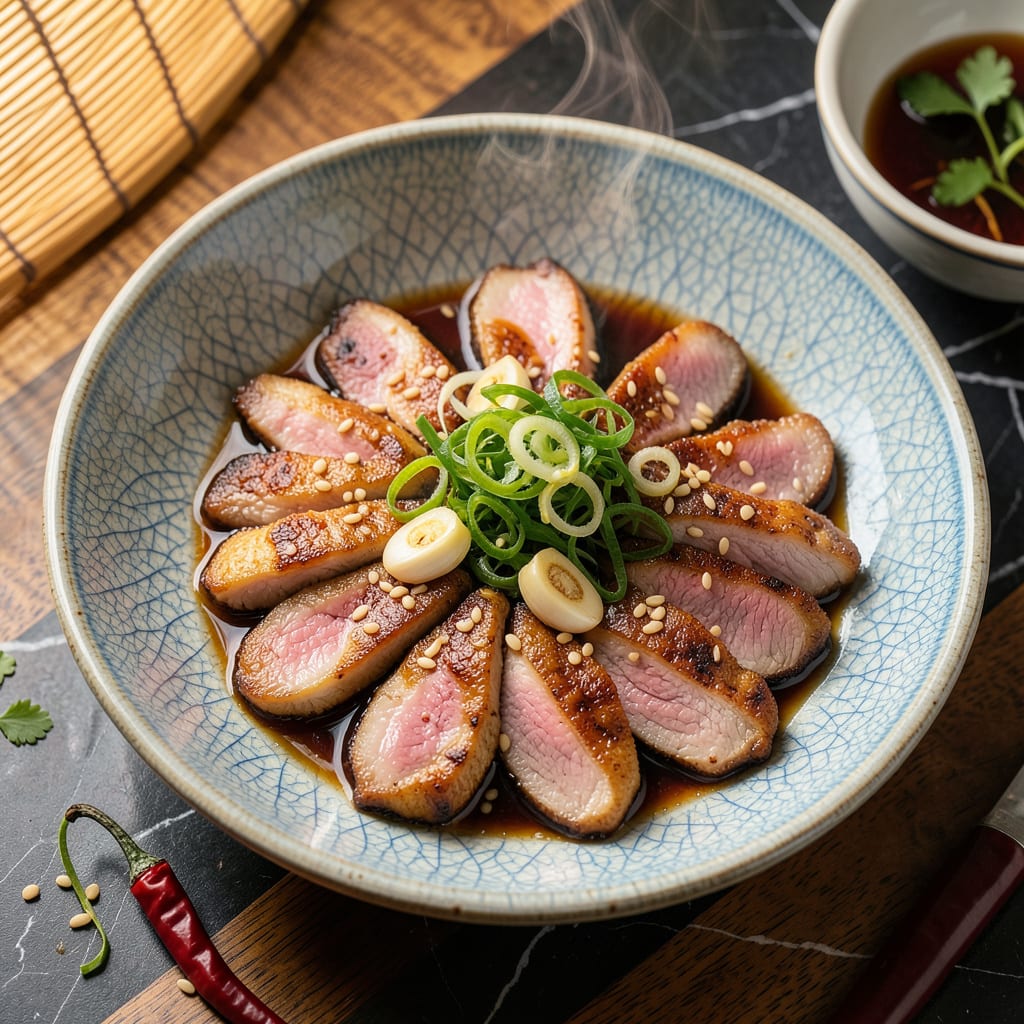
Liver transforms completely when prepared with Asian stir-fry techniques, becoming tender and packed with umami richness. This recipe draws from traditional methods where thinly sliced liver is quickly cooked at high heat to preserve its delicate texture while infusing bold flavors.
The secret lies in proper preparation: soaking the liver in milk to mellow its intensity, then marinating briefly in soy sauce, rice wine, and aromatics. Cooked in 3-4 minutes with garlic, ginger, and scallions, it develops a caramelized exterior while staying perfectly juicy inside.
Ingredients for Asian Liver
Optimal preparation begins with quality chicken livers and traditional Asian pantry staples for authentic umami depth.
| Ingredient | Amount | Notes |
|---|---|---|
| Chicken Livers 🍖 | 1 ½ lb | Trimmed, thinly sliced |
| Whole Milk 🥛 | 2 cups | For soaking liver slices |
| Soy Sauce 🫙 | 3 tbsp | Low-sodium preferred |
| Shaoxing Wine 🍶 | 2 tbsp | Or dry sherry substitute |
| Cornstarch 🌾 | 1 tbsp | For velveting texture |
| Garlic Cloves 🧄 | 6 cloves | Thinly sliced lengthwise |
| Fresh Ginger 🌿 | 1 whole | 1-inch piece, julienned |
| Scallions 🧅 | 4 whole | Cut into 2-inch pieces |
| Neutral Oil 🫒 | 3 tbsp | Peanut or avocado oil |
| Light Brown Sugar 🍯 | 1 tsp | For caramelization balance |
| Sesame Oil 🫒 | 1 tsp | Toasted, for finishing |
| White Pepper 🌶️ | ½ tsp | Freshly ground preferred |
| Steamed White Rice 🍚 | 2 cups | Cooked, for serving |
The liver quality is paramount. Fresh chicken livers should have a deep reddish-brown color without gray spots. Whole Foods or Asian markets typically offer the best selection. For the Shaoxing wine, Koon Chun brand provides authentic flavor; substitute with dry sherry if unavailable. The milk soak is non-negotiable—whole milk works best for neutralizing any metallic notes. Always slice the liver paper-thin (1/8-inch) for proper texture during high-heat cooking.
No Shaoxing wine? Dry sherry at equal volume maintains the depth. For gluten-free adaptation, use tamari instead of soy sauce. The cornstarch velveting step is critical—do not substitute with flour as it alters the dish’s signature silkiness. Scallions can be replaced with shallots at half the quantity, though the flavor profile will shift slightly. White pepper is preferred over black for its cleaner heat, but black pepper can be used at one-quarter the amount.
Prepared liver keeps refrigerated for 24 hours maximum—the texture degrades quickly. The marinade components (soy, wine, aromatics) can be pre-mixed and stored for 1 week in the refrigerator. Cooked dish is best served immediately but can be reheated gently in a skillet with a splash of water. For optimal results, use within 3 hours of preparation to maintain the intended tender texture.
Why You’ll Love This Recipe
- No Soaking Stress: Honestly, the milk bath for the livers sounds fancy but it’s just 10 minutes in a bowl while I prep everything else. No babysitting, no fuss—just tender, mellow-flavored bites every time.
- Umami Bomb: That first sizzle when the Shaoxing wine hits the pan? Magic. The soy sauce caramelizes into this sticky, savory glaze that clings to each piece—crispy outside, custardy inside. I’ll be real: I’ve double-batched just to snack on them cold later.
- Weeknight Lifesaver: Between us, this is my 25-minute secret for when I need protein now. Toss it over rice for dinner, stuff it into bao for lunch, or serve it as bar snacks with beer. My picky nephew even eats it if I call it “crispy bites” instead of liver.
- Budget Stretch: A pound of chicken livers costs less than chicken thighs, and this recipe turns them into something that tastes like a $12 small plate. Leftovers? They reheat in a dry pan—no soggy sadness—so I make extra on purpose. (Yes, even on a Tuesday night.)
Step-by-Step Instructions for Asian Liver Stir-Fry
This method transforms chicken livers into a restaurant-quality dish with perfect texture and deep umami flavor.
Step 1: Prepare and Velvet the Liver
Begin by trimming any connective tissue from the 1.5 lb chicken livers and slicing them into ¼-inch thick pieces. Place the sliced livers in a bowl and cover completely with the 2 cups whole milk. This soaking process removes any bitterness and tenderizes the meat. Allow them to soak for 15 minutes at room temperature.
After soaking, drain the livers thoroughly in a colander and pat them completely dry with paper towels. Transfer to a clean bowl and toss with the 1 tbsp cornstarch, 1 tbsp soy sauce, and 1 tbsp Shaoxing wine. This velveting technique creates an ultra-tender texture while preventing the livers from drying out during cooking.
Step 2: Prepare the Aromatics and Sauce Base
While the livers marinate, prepare your aromatics. Thinly slice the 6 cloves garlic cloves lengthwise, julienne the 1-inch piece of fresh ginger, and cut the 4 whole scallions into 2-inch pieces. Keep these ingredients separate as they’ll be added at different stages.
In a small bowl, combine the remaining 2 tbsp soy sauce, 1 tbsp Shaoxing wine, 1 tsp light brown sugar, and 0.5 tsp white pepper. This sauce base will be added at the end to create a glossy, flavorful coating for the livers. The brown sugar balances the saltiness while the white pepper adds subtle warmth without overpowering.
Step 3: Stir-Fry Using High Heat Control
Heat a wok or large skillet over high heat until smoking. Add the 3 tbsp neutral oil and swirl to coat the pan. Immediately add the marinated livers in a single layer, working in batches if necessary to avoid crowding. Cook undisturbed for 1-2 minutes until the edges begin to brown and the livers release easily from the pan.
Flip the livers and add the sliced garlic and ginger. Stir-fry for an additional 1-2 minutes until the livers are cooked through but still slightly pink in the center. They should be firm to the touch but still tender. Remove the livers to a clean plate, leaving the aromatics in the pan.
Step 4: Finish with Aromatics and Sauce
Return the pan to medium-high heat and add the scallions. Stir-fry for 30 seconds until fragrant but still vibrant green. Pour in the prepared sauce mixture and bring to a rapid simmer. Cook for 1 minute until the sauce thickens slightly and becomes glossy.
Return the cooked livers to the pan and toss to coat evenly with the sauce. The livers should be completely cooked through at this point but still maintain their tender texture. Remove from heat and stir in the 1 tsp sesame oil, which adds a final layer of nutty aroma to the dish.
Step 5: Serve Immediately Over Steamed Rice
Divide the 2 cups steamed white rice among four serving plates. Spoon the liver and sauce mixture over the rice, ensuring each serving gets an equal distribution of the aromatic vegetables. The rice will absorb the flavorful sauce, creating a perfect balance with the rich livers.
Serve immediately while hot. The ideal texture should be tender livers with a slight resistance, coated in a glossy sauce that clings to each piece. The dish should have layers of umami from the soy and wine, balanced by the freshness of the ginger and scallions.
Wine and Beer Pairings for These Flavors
Crisp White Wines
I love pairing this rich dish with a chilled Riesling from Germany’s Mosel region. The 0.5% residual sugar in a Kabinett or Spätlese balances the liver’s intensity while the bright acidity cuts through the umami. Look for bottles like Dr. Loosen Blue Slate—it’s my go-to for Asian-inspired dishes. 🍷
Light-Bodied Reds
For red wine lovers, a slightly chilled Beaujolais (specifically Fleurie or Morgon) works beautifully. The 13% ABV and red fruit notes complement without overpowering. I recommend Jean Foillard’s natural wines—they have just enough earthiness to match the dish’s depth.
Japanese Beer Pairings
A crisp Sapporo Premium Beer or Asahi Super Dry cleanses the palate between bites. The 5% ABV and light malt profile let the liver’s flavor shine. For something more robust, try Hitachino Nest Amber Ale—its caramel notes harmonize with the brown sugar in the sauce.
Chinese Baijiu Option
If you’re feeling adventurous, a small glass of Moutai baijiu (just 1 oz) enhances the meal’s authenticity. The 53% ABV is intense, but sipping it alongside the dish reveals incredible flavor synergy. I discovered this pairing at a Sichuan restaurant in Chengdu. 💫
Non-Alcoholic Alternatives
A chilled jasmine tea with 1 tsp honey per cup provides floral contrast. For something more complex, try lychee sparkling water—the tropical sweetness balances the dish’s savory notes. I keep San Pellegrino Aranciata Rossa on hand for its blood orange depth.
Sake Recommendation
An off-dry junmai ginjo like Dassai 39 offers the perfect bridge between wine and beer. The 15% ABV and melon notes complement the sesame oil finish. Serve slightly chilled at 50°F—I learned this temperature trick from a Tokyo sommelier.
Nutrition Facts

- 6 Egg Cake Recipe with Oil: Light as Air With Buttery Moisture - October 4, 2026
- 4 Bean Casserole Recipe: One-Pan Heartiness With Smoky Paprika Depth - October 4, 2026
- 3-Ingredient Keto Mug Cake Recipe: Microwave Magic in 2 Minutes - October 4, 2026