
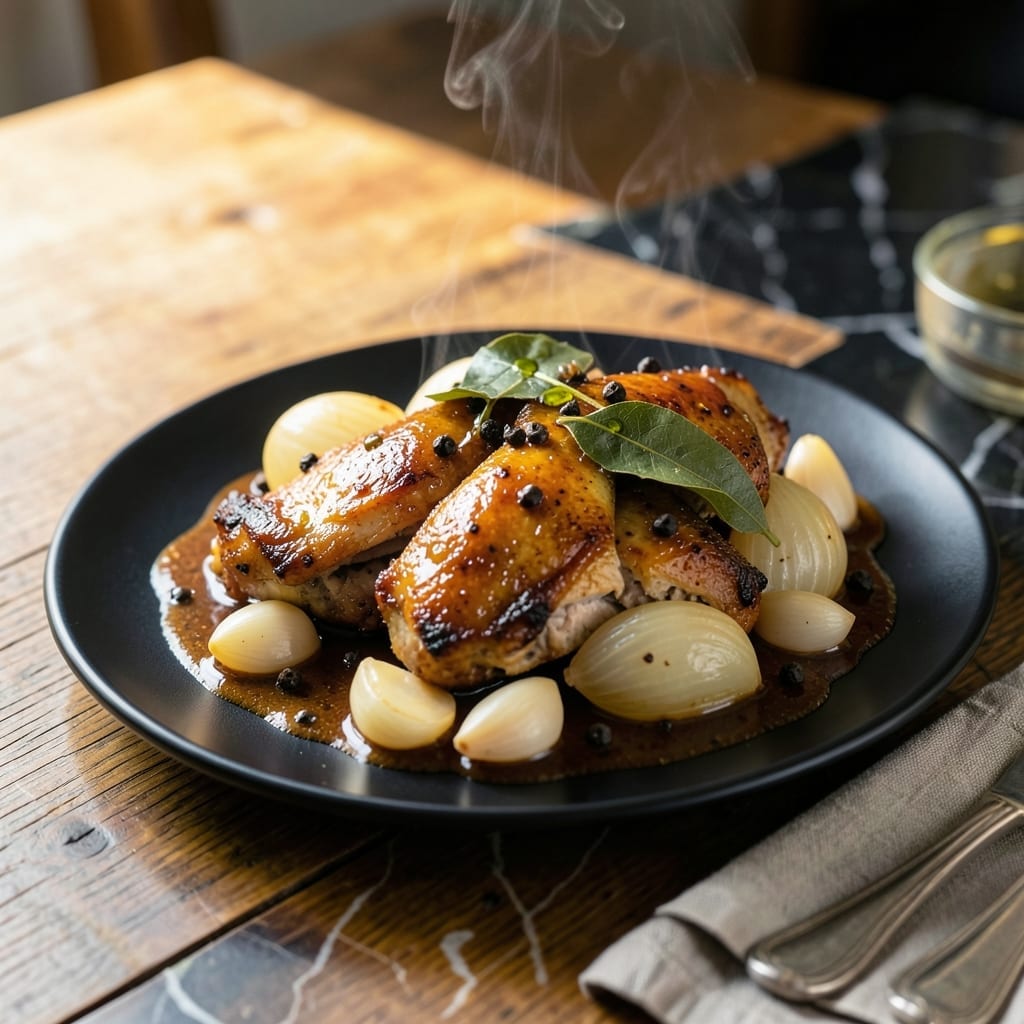
This chicken adobo stays true to Filipino tradition with its perfect balance of tangy, savory, and slightly sweet flavors. The dish relies on a simple braise of chicken thighs in vinegar, soy sauce, and aromatics.
What makes it authentic is the slow simmer that allows the meat to absorb the bold marinade deeply. The vinegar cuts through the richness while creating that signature adobo tang.
The result is fall-off-the-bone tender chicken with a glossy, deeply flavored sauce. Serve it over steamed rice to soak up every drop of the rich braising liquid.
This method delivers the genuine taste of Filipino home cooking with minimal effort and maximum flavor impact.
Ingredients for Authentic Chicken Adobo Recipe Filipino
Simple ingredients deliver bold Filipino flavor in this classic adobo dish.
| Ingredient | Amount | Notes |
|---|---|---|
| Chicken Thighs 🍗 | 2 lb | Boneless, skin-on preferred |
| White Vinegar 💧 | 1 cup | Cane or distilled white |
| Soy Sauce 🫒 | ¾ cup | Filipino brand preferred |
| Garlic Cloves 🧄 | 8 cloves | Peeled, lightly smashed |
| Bay Leaves 🍃 | 3 pieces | Dried, whole leaves |
| Black Peppercorns 🌶️ | 1 tsp | Whole, lightly crushed |
| Dark Brown Sugar 🍚 | 2 tbsp | Optional for balance |
| Water 💧 | ½ cup | To thin the sauce |
| Yellow Onion 🧅 | 1 whole | Peeled, quartered |
| Vegetable Oil 🫒 | 2 tbsp | For searing chicken |
| Kosher Salt 🧂 | 1 tsp | To taste |
| Steamed Rice 🍚 | 4 cups | For serving |
The chicken matters most here. Thighs stay juicy through the long braise—breasts dry out. Filipino markets often have pre-cut chicken pieces perfect for adobo. Look for skin-on, bone-in for authentic texture. If using boneless, reduce cooking time by 10 minutes. The vinegar should be sharp white vinegar—no substitutions for the authentic tang.
Need a soy sauce swap? Coconut aminos work in a pinch (use same amount). Low-sodium soy sauce needs a pinch of salt added. No white vinegar? Apple cider vinegar adds fruitiness but changes the flavor profile. For extra depth, a splash of fish sauce (if available) enhances the umami. The sugar is optional but balances the acidity beautifully.
Adobo improves overnight. Store in an airtight container for up to 5 days in the fridge. The sauce thickens as it cools—reheat gently with a splash of water. Freezes well for 3 months. Always serve with extra sauce spooned over the top.
Why You’ll Love This Recipe
- Five Ingredient Magic: I love that this only needs chicken thighs, vinegar, soy sauce, garlic, and bay leaves to taste authentic.
- One Pot Wonder: Throw everything in a single pot and let it simmer—minimal cleanup, maximum flavor.
- Meals for Days: Honestly, it tastes even better the next day, so I always make extra for leftovers.
- Budget-Friendly Feast: Chicken thighs stay juicy and cheap, making this a reliable weeknight dinner.
Step-by-Step Instructions for Chicken Adobo
Master the traditional method for this iconic dish with balanced tangy and savory flavors.
Step 1: Sear the Chicken Thighs
Heat the 2 tbsp vegetable oil in a large pot or Dutch oven over medium-high heat. Pat the 2 lb chicken thighs dry with paper towels to ensure a good sear. Season both sides with the 1 tsp kosher salt, then carefully place them in the hot oil.
Sear the chicken thighs for 4-5 minutes per side until the skin is golden brown and crispy. This step builds depth of flavor and locks in juices. Avoid overcrowding the pot to prevent steaming instead of searing. Remove the chicken and set aside.
Step 2: Sauté Aromatics and Build the Base
In the same pot, add the 1 whole yellow onion (quartered) and 8 cloves garlic cloves (lightly smashed). Sauté for 2-3 minutes until the onion softens and the garlic turns light golden brown. Stir frequently to prevent burning.
Add the 1 tsp black peppercorns (lightly crushed) and 3 pieces bay leaves, toasting them for 30 seconds to release their aromas. Then pour in the 0.75 cup soy sauce and 1 cup white vinegar, scraping up any browned bits from the bottom of the pot.
Step 3: Braise the Chicken to Tenderness
Return the seared chicken thighs to the pot, along with any accumulated juices. Add the 2 tbsp dark brown sugar and 0.5 cup water. Stir to dissolve the sugar, then bring the mixture to a gentle boil.
Reduce the heat to low, cover, and let it simmer for 35-40 minutes. The chicken is done when it reaches 165°F internally and pulls away from the bone easily. Turn the chicken halfway through cooking to ensure even browning.
Step 4: Reduce the Sauce and Serve
Once the chicken is tender, remove the lid and increase the heat to medium. Let the sauce reduce for 8-10 minutes until it thickens slightly and develops a glossy sheen. The sauce should coat the back of a spoon but still remain pourable.
Discard the bay leaves before serving. Taste and adjust seasoning if needed, though the soy sauce and vinegar should provide a balanced tangy-savory profile. Serve the chicken adobo hot over 4 cups steamed rice, spooning the rich sauce generously over the top.
Pro Tips For Making Authentic Chicken Adobo Recipe Filipino
- Simmer Uncovered: Let the sauce reduce uncovered for 15-20 minutes—this thickens it naturally and deepens the flavor. I learned this the hard way after ending up with watery adobo too many times.
- Brown the Thighs: Sear the chicken thighs first in a hot pan until golden, about 3-4 minutes per side. Sounds like an extra step, but it adds a richness that’s non-negotiable.
- Balance the Vinegar: Use equal parts soy sauce and white vinegar, but taste before adding all the vinegar—some brands are sharper than others. My grandmother swore by this, and she was right.
- Crush the Garlic: Smash the garlic cloves with the side of your knife before mincing—it releases more flavor into the sauce. I was skeptical until I tried it, and now it’s the only way I do it.
Serving Suggestions for Leftovers
Traditional Presentation
Serve this adobo family-style in a large shallow bowl to showcase the glossy, deeply colored chicken and sauce. The traditional way is to nestle the chicken thighs in a pool of the reduced braising liquid. I always ladle extra sauce over each piece at the table. 💛
Rice Pairing
Filipino meals center on rice, and this dish is no exception. Use jasmine or long-grain white rice—about 1 cup per person. The neutral flavor and fluffy texture soak up the tangy sauce perfectly. For extra authenticity, press the rice into a mold for a sculpted presentation.
Fresh Garnishes
Brighten the rich flavors with fresh garnishes. Thinly slice 2-3 green onions and sprinkle over the top just before serving. A handful of cilantro leaves adds a pop of color and freshness. I also like to serve with calamansi wedges for a citrusy finish.
Side Dishes
A simple cucumber and tomato salad with a light vinegar dressing complements the richness. For a heartier meal, serve with stir-fried vegetable medley—think bell peppers, carrots, and cabbage. The crisp textures contrast beautifully with the tender chicken.
Serving Temperature
This dish tastes best served hot or at room temperature. If reheating, warm gently on the stove with a splash of water to thin the sauce. Avoid microwaving, as it can make the chicken dry. The flavors deepen as it sits, so don’t rush to the table. 🔥
Family-Style Service
Encourage guests to serve themselves directly from the communal bowl. Provide small bowls for the sauce—everyone will want seconds. I like to set out extra rice and a side of pickled vegetables to round out the meal. The communal experience is part of the Filipino tradition.
Nutrition Facts
Frequently Asked Questions
Can I use chicken breast instead of thighs?
Thighs are ideal for their rich flavor and moisture, but breasts can work. Reduce cooking time to 25-30 minutes to prevent dryness. The texture will be less tender compared to thighs.
Why does the sauce need to reduce at the end?
Reducing concentrates the flavors and thickens the sauce so it clings to the chicken. It also balances the sharpness of the vinegar. Skip this step, and the dish may taste watery.
Can I make this in a slow cooker?
Yes! Brown the chicken first, then cook on low for 4-5 hours. The flavors will develop differently but still taste delicious.
How do I fix overly sour adobo?
Balance the acidity by adding 1-2 tsp sugar or a splash of coconut milk. Stir well and taste before adjusting further.

- 6 Egg Cake Recipe with Oil: Light as Air With Buttery Moisture - October 4, 2026
- 4 Bean Casserole Recipe: One-Pan Heartiness With Smoky Paprika Depth - October 4, 2026
- 3-Ingredient Keto Mug Cake Recipe: Microwave Magic in 2 Minutes - October 4, 2026