
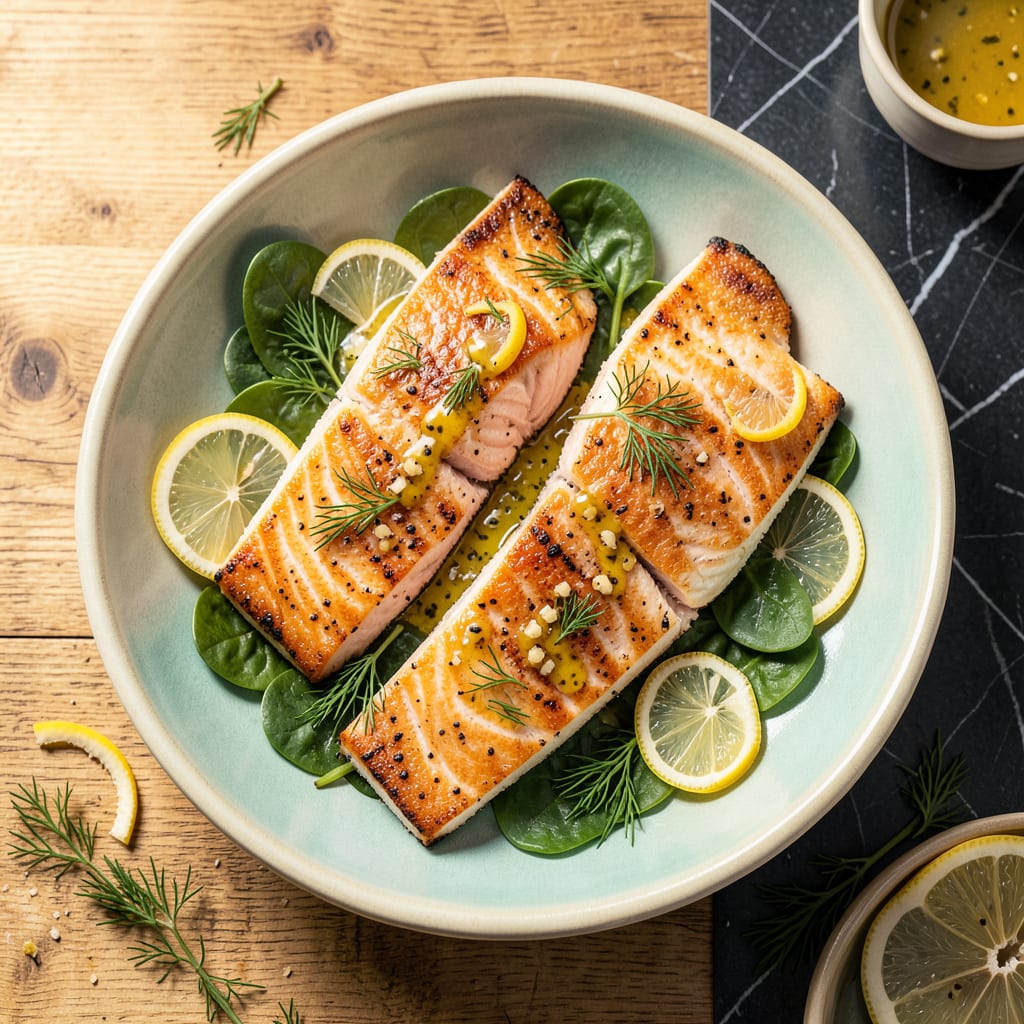
Perfectly baked coho salmon delivers tender, flaky results with minimal effort—ideal for busy weeknights. This recipe combines bright lemon, aromatic garlic, and simple seasoning to enhance the fish’s natural richness without overpowering it. The 20-minute cook time ensures moist, evenly cooked fillets every time.
Coho salmon’s delicate texture and mild flavor make it exceptionally versatile. Baking at high heat creates a light crust while preserving moisture inside. Rich in omega-3s and lean protein, this dish pairs beautifully with roasted vegetables or a crisp white wine for a complete, healthful meal.
Ingredients for Baked Coho Salmon
Fresh coho salmon, bright citrus, and aromatic herbs create this elegant yet effortless 20-minute baked preparation.
| Ingredient | Amount | Notes |
|---|---|---|
| Coho Salmon Fillets 🐟 | 1 ½ lb | Skin-on, boneless, even thickness |
| Extra-Virgin Olive Oil 🫒 | 2 tbsp | Divided for marinade and drizzling |
| Fresh Lemon 🍋 | 1 whole | Zested and juiced (2 tbsp juice) |
| Garlic Cloves 🧄 | 4 cloves | Minced to uniform consistency |
| Dijon Mustard 🟡 | 1 tbsp | Smooth variety for emulsion |
| Fresh Dill 🌿 | 2 tbsp | Chopped, stems removed |
| Kosher Salt 🧂 | 1 tsp | Diamond Crystal preferred |
| Freshly Ground Black Pepper 🌶️ | ½ tsp | Medium-coarse grind |
| Unsalted Butter 🧈 | 1 tbsp | Cold, cubed for finishing |
| Shallot 🧅 | 1 whole | Finely minced (2 tbsp) |
| Dry White Wine 🍷 | 2 tbsp | Sauvignon Blanc or Pinot Grigio |
| Capers 🌱 | 1 tbsp | Rinsed, drained, chopped |
[recipeingredientscaler]
The salmon quality is paramount for optimal results. Wild-caught coho from Alaska or Pacific Northwest sources offers superior texture and flavor. Look for fillets with vibrant color and minimal browning at the edges. Whole Foods and Costco consistently carry high-quality options. For the lemon, Meyer lemons provide exceptional sweetness when in season, though standard Eureka lemons work perfectly. The Dijon mustard should be smooth, not grainy—Grey Poupon delivers reliable quality and consistency for this application.
Substitutions maintain the dish’s integrity with careful adjustments. Sockeye or king salmon may be used at one-quarter inch thinner cuts to match the 20-minute cook time. Replace dill with fresh tarragon at half the quantity for an anise-forward variation. The white wine can be omitted entirely, though additional lemon juice (1 tbsp) should compensate for lost acidity. For a nutty dimension, toasted pine nuts (2 tbsp) make an excellent garnish alternative to capers.
Storage and preparation timing are critical for success. Pat salmon fillets completely dry before marinating to ensure proper crust formation. The marinade can be prepared 24 hours ahead and refrigerated. Baked salmon keeps for 2 days refrigerated but is best enjoyed immediately. For meal prep, assemble all components except salmon, then add fish 30 minutes before baking to prevent texture degradation from the lemon juice.
Why You’ll Love This Recipe
- One Pan Magic: Honestly, cleanup is my least favorite part of cooking—but this? Just line a sheet pan, lay down the salmon, and let the oven do the work. One pan, five ingredients, zero stress.
- That Lemon-Garlic Punch: The combo of fresh lemon juice and minced garlic baked right into the salmon creates this bright, savory crust. And the Dijon? It adds just enough tang to make every bite interesting.
- Meal Prep MVP: I make a double batch on Sundays—flakes perfectly over salads, stuffs into wraps, or pairs with roasted veggies for lunches. Cold or reheated, it holds up beautifully.
- Dinner in 20: Between us, I’ve timed this. Prep takes 5 minutes (just whisk the marinade), bake for 12-15, and boom—dinner’s done. Faster than takeout, and way more satisfying.
Step-by-Step Instructions for Baked Coho Salmon
This method ensures perfectly flaky salmon with crisp skin and vibrant lemon-garlic flavor in under 20 minutes.
Step 1: Prepare the Lemon-Garlic Marinade
In a small bowl, whisk together the 2 tbsp extra-virgin olive oil, 1 tbsp Dijon mustard, zest and juice from the fresh lemon, 4 cloves minced garlic, 1 tsp kosher salt, and 0.5 tsp freshly ground black pepper. The emulsion should thicken slightly as you whisk, creating a cohesive marinade that will adhere beautifully to the salmon.
I prefer using Diamond Crystal kosher salt for its clean flavor and even distribution. The Dijon mustard acts as an emulsifier, binding the oil and lemon juice into a stable mixture that won’t separate during baking. This step is critical for developing the signature bright, tangy flavor profile.
Step 2: Season and Marinate the Salmon
Pat the 1.5 lb coho salmon fillets completely dry with paper towels, paying special attention to the skin side. Place the fillets skin-side down on a parchment-lined baking sheet. Using a pastry brush, apply the lemon-garlic marinade evenly over the flesh side, ensuring complete coverage.
Let the salmon marinate at room temperature for 10 minutes while you preheat the oven to 400°F. This brief marination allows the acid from the lemon to begin tenderizing the surface proteins while the garlic infuses its aroma. The skin should remain dry to ensure maximum crispness during baking.
Step 3: Sauté the Aromatics for the Pan Sauce
While the salmon marinates, heat a small skillet over medium heat. Add the remaining 1 tbsp extra-virgin olive oil and the finely minced shallot. Sauté for 2-3 minutes until the shallot becomes translucent but not browned. Add the 2 tbsp dry white wine and 1 tbsp capers, simmering for 1 minute to reduce slightly.
Remove from heat and whisk in the 1 tbsp cold unsalted butter until fully emulsified. This creates a bright, briny pan sauce that will complement the richness of the salmon. The residual heat should melt the butter completely without breaking the emulsion.
Step 4: Bake to Perfect Doneness
Transfer the marinated salmon to the preheated 400°F oven and bake for 12-15 minutes, depending on thickness. The salmon is done when the internal temperature reaches 135°F at the thickest point and the flesh flakes easily with a fork. The skin should be crisp and golden, while the top develops a light crust from the marinade.
Watch for the proteins to turn opaque and the flesh to separate into distinct flakes. The edges should just begin to curl slightly when properly cooked. Avoid overbaking, as coho salmon continues cooking slightly after removal from the oven.
Step 5: Plate with Pan Sauce and Garnish
Using a thin spatula, carefully transfer the salmon fillets to serving plates, keeping the skin intact. Spoon the warm shallot-caper sauce over each portion. Garnish with the 2 tbsp chopped fresh dill, distributing it evenly across all servings.
The dill adds a final bright, herbal note that balances the richness of the salmon. Serve immediately while the skin remains crisp. Each bite should deliver the perfect harmony of lemon brightness, garlic depth, and the natural sweetness of the coho salmon.
Pro Cooking Tips for Great baked coho salmon
Temperature Precision
Your oven’s accuracy is everything with salmon. I always use an oven thermometer to verify the 400°F setting—many home ovens run 25-50°F off. Place the thermometer on the middle rack where you’ll bake the fish. This small step prevents overcooking or undercooking disasters. 🌡️
For even more control, consider baking on a preheated baking steel or pizza stone. These retain heat better than sheet pans, creating a more consistent cooking environment. The salmon will cook about 2 minutes faster on these surfaces, so adjust your timing accordingly.
Skin Crisis Solution
Crispy skin makes or breaks baked salmon. After patting the fillets dry, I place them skin-side down on parchment paper (not foil) to prevent sticking while allowing moisture to escape. For extra insurance, sprinkle a thin layer of coarse salt directly on the skin before baking—this draws out additional moisture.
If your skin still sticks, slide a thin metal spatula between the skin and parchment while the salmon is still warm. The residual heat helps release it cleanly. Never force it—if it resists, let it cool for 1 minute before trying again.
Doneness Mastery
Forget the “flakes easily” test—use a instant-read thermometer for precision. Pull the salmon at 130°F (it will coast to 135°F while resting). Insert the probe at the thickest part, avoiding the bone line. I use a ThermoWorks Thermapen for its 2-second read time and accuracy.
The 10-degree carryover is real with salmon. If you wait until it hits 135°F in the oven, you’ll end up with 145°F fish by serving time—which is overdone. Trust the lower temp for perfectly moist results every time.
Marinade Magic
The lemon-garlic marinade needs exactly 10 minutes at room temperature—no more, no less. Too short and flavors won’t penetrate; too long and the acid starts “cooking” the surface proteins, creating a mealy texture. I set a timer and prep my pan sauce during this window for perfect synchronization.
For deeper flavor infusion, score the salmon flesh in a crosshatch pattern (about ¼-inch deep) before applying the marinade. This creates more surface area for the flavors to penetrate while keeping the presentation elegant. Use a sharp paring knife and make clean, confident cuts.
Sauce Timing
The pan sauce should be hot but not boiling when you plate the salmon. I make it during the last 5 minutes of baking so it’s fresh and vibrant. If it cools too much, gently reheat it while whisking in a splash of water to maintain the emulsion.
For extra richness, stir in an additional ½ tbsp cold butter just before serving. This “mounting” technique creates a silky texture that clings beautifully to the salmon. The sauce should coat the back of a spoon but still drizzle easily.
Resting Protocol
Let the salmon rest for 3-5 minutes before serving—this is non-negotiable. The proteins relax and reabsorb juices during this time. I tent the fillets loosely with foil to keep them warm without trapping steam, which could make the skin soggy.
Use this window to warm your plates (I run them under hot water and dry thoroughly) and do any last-minute garnishing. The rest also gives you time to reduce the pan sauce slightly if needed or adjust the seasoning with a final pinch of salt.
Nutrition Facts

- 6 Egg Cake Recipe with Oil: Light as Air With Buttery Moisture - October 4, 2026
- 4 Bean Casserole Recipe: One-Pan Heartiness With Smoky Paprika Depth - October 4, 2026
- 3-Ingredient Keto Mug Cake Recipe: Microwave Magic in 2 Minutes - October 4, 2026