
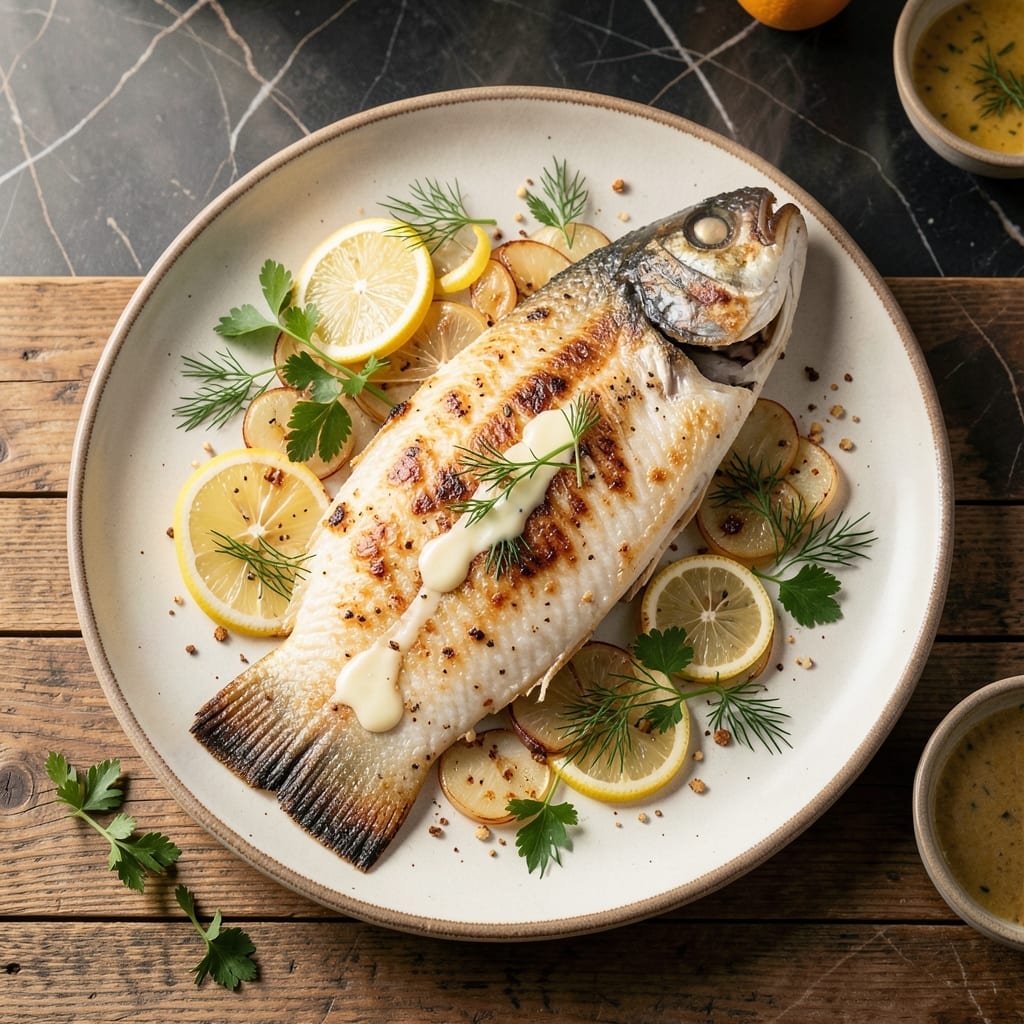
Whole flounder bakes to perfect tenderness with minimal effort, letting its delicate flavor shine through.
I’ve refined this method to ensure the fish stays moist while developing a golden crust from the butter and citrus. The key is even heat distribution and precise timing to prevent overcooking.
The combination of melted butter and bright citrus creates a sauce that complements the flounder’s natural sweetness. A sprinkle of fresh herbs adds a final touch of freshness.
This dish delivers restaurant-quality results with simple ingredients and straightforward technique.
Ingredients for Baked Whole Flounder
Fresh flounder, bright citrus, and herbs create this elegant yet simple baked dish.
| Ingredient | Amount | Notes |
|---|---|---|
| Whole Flounder 🐟 | 2 lb | Fresh, scaled and gutted |
| Unsalted Butter 🧈 | ½ cup | Melted, divided for basting |
| Lemon 🍋 | 1 whole | Thinly sliced for sauce |
| Fresh Parsley 🌿 | ¼ cup | Chopped, for garnish |
| Fresh Dill 🌿 | 2 tbsp | Chopped, for garnish |
| Garlic Cloves 🧄 | 3 cloves | Minced, for aromatic base |
| Shallot 🧅 | 1 whole | Finely diced, for depth |
| Dry White Wine 🍷 | ¼ cup | For deglazing and sauce |
| Sea Salt 🧂 | 1 tsp | Fine grain, for seasoning |
| Freshly Ground Black Pepper 🌶️ | ½ tsp | For seasoning fish |
| Olive Oil 🫒 | 1 tbsp | For greasing baking dish |
| Fresh Thyme Sprigs 🌿 | 4 pieces | For aromatic garnish |
| Lemon Zest 🍋 | 1 tbsp | From 1 lemon, for brightness |
The flounder should be fresh and firm—look for clear eyes and a mild ocean scent. Whole Foods or a trusted fishmonger are ideal sources. For best results, ask them to scale and gut it for you (saves time and mess). The butter matters too—European-style has higher fat content, which means better browning and richer sauce. Don’t substitute margarine here.
No dry white wine? Fish stock with a squeeze of lemon works in a pinch. Fresh herbs are key—dried at one-third the amount if that’s all you have, but the flavor won’t be as vibrant. For a different twist, try orange slices instead of lemon. The garlic can be swapped for shallots if you prefer a milder allium. Just don’t skip the citrus—it cuts through the richness beautifully.
Bake immediately after prepping to ensure optimal freshness. Leftovers? They’ll keep for 2-3 days in the fridge, though flounder is best eaten fresh. Reheat gently in a low oven to avoid drying out. The sauce can be made ahead and reheated separately if needed.
Why You’ll Love This Recipe
- One Pan Wonder: I just pop the whole flounder in with butter, lemon, and herbs—no complicated prep, no mess.
- Bright and Zesty: That buttery lemon-dill combo makes every bite taste like a seaside vacation.
- Feeds a Crowd: Honestly, one big flounder stretches farther than I expected for family dinners.
- Budget Friendly: Whole flounder costs less than fillets, and it still feels fancy on the plate.
Step-by-Step Instructions for Baked Whole Flounder
Master this elegant preparation with precise technique and timing for restaurant-quality results at home.
Step 1: Prepare the Flounder and Baking Dish
Preheat your oven to 400°F. Use the 1 tbsp Olive Oil to thoroughly grease a baking dish large enough to hold the 2 lb Whole Flounder comfortably. This prevents sticking and ensures easy removal after baking.
Pat the flounder dry with paper towels on both sides. Season the cavity generously with 1 tsp Sea Salt and 0.5 tsp Freshly Ground Black Pepper. This step is crucial—dry fish browns better and absorbs seasoning more effectively.
Step 2: Create the Aromatic Base
In a small bowl, combine the 3 cloves Garlic Cloves (minced) and 1 whole Shallot (finely diced). Spread this mixture evenly inside the cavity of the flounder. Add the 4 pieces Fresh Thyme Sprigs and 1 tbsp Lemon Zest to the cavity as well.
Place the 1 whole Lemon (thinly sliced) on top of the fish, overlapping slightly. This will infuse the dish with bright citrus notes as it bakes. The aromatics should be concentrated in the center for even flavor distribution.
Step 3: Add the Liquid Elements
Pour the 0.25 cup Dry White Wine around the fish in the baking dish, not over it. This creates steam that keeps the flounder moist during baking. Melt the 0.5 cup Unsalted Butter and drizzle half over the fish, reserving the rest for basting.
The wine should pool around the edges but not submerge the fish. As it bakes, the liquid will reduce, concentrating the flavors. You’ll see the butter begin to foam around the edges—that’s your visual cue that it’s working.
Step 4: Bake to Perfection
Place the dish in the preheated oven and bake for 20-25 minutes. After 15 minutes, baste the fish with the remaining melted butter. The flounder is done when the flesh flakes easily with a fork and the thickest part reaches 145°F internally.
Watch for the edges of the lemon slices to caramelize slightly—that’s a good indicator the dish is nearing completion. The skin should appear opaque and the flesh should pull away from the bone cleanly when tested with a fork.
Step 5: Garnish and Serve
Remove the flounder from the oven and transfer to a serving platter. Discard the thyme sprigs and lemon slices if desired. Sprinkle evenly with the 0.25 cup Fresh Parsley and 2 tbsp Fresh Dill (both chopped).
The herbs should be added just before serving to preserve their fresh flavor and vibrant color. Serve immediately while hot, with some of the pan juices spooned over each portion for maximum flavor impact.
Pro Tips For Making Baked Whole Flounder
- Score the Skin: Make 2-3 shallow diagonal cuts on each side before baking—this prevents the flounder from curling up and helps it cook evenly.
- Room Temp First: Let the whole flounder sit out for 15-20 minutes before baking; I learned this the hard way after pulling out a dry, unevenly cooked fish straight from the fridge.
- Butter Under Skin: Slip a few thin pats of unsalted butter between the skin and flesh—it bastes the fish from within and keeps it moist, especially with a lean fish like flounder.
- Double the Herbs: Use both parsley and dill inside the cavity and on top; sounds like overkill, but the flavors mellow during baking and give a more balanced finish.
Make-Ahead Tips for Leftovers
Prep Ahead Strategy
You can scale and gut the 2 lb flounder up to 1 day ahead—just store it in the coldest part of your fridge on a paper towel-lined plate, uncovered. This keeps it dry while allowing air circulation to prevent spoilage. 💡
Flavor Base Prep
Mix the 3 cloves minced garlic, 1 diced shallot, and 1 tbsp lemon zest together and refrigerate in an airtight container for up to 24 hours. The flavors will meld beautifully, saving you time on cooking day.
Herb Management
Wash and dry your parsley and dill the day before, then wrap them in damp paper towels inside a sealed bag. They’ll stay crisp for 2-3 days. Chop just before serving for maximum freshness and color.
Sauce Preparation
Prepare the 0.25 cup wine and melt the 0.5 cup butter in advance. Store the wine in the fridge and the butter at room temperature. Combine them in the baking dish right before adding the fish to maintain vibrant flavors.
Room Temperature Tip
Take the flounder out of the fridge 30 minutes before baking to let it come to room temperature. This ensures even cooking throughout. Trust me, this small step makes a noticeable difference in texture. ⚡
Last-Minute Assembly
Assemble everything in the baking dish up to 1 hour before baking, but keep it covered in the fridge. This way, you can pop it straight into the preheated oven when ready, minimizing stress and maximizing flavor.
Nutrition Facts
Frequently Asked Questions
What temperature should I bake the flounder at?
Bake at 400°F for even cooking and a golden crust. This temperature ensures the fish cooks through without drying out while allowing the butter and citrus to caramelize beautifully.
How do I know when the flounder is done?
The fish is ready when the thickest part reaches 145°F internally and the flesh flakes easily with a fork. Look for opaque skin and lemon slices that are slightly caramelized.
Can I use frozen flounder?
Yes, but thaw it completely in the fridge overnight before baking. Pat it very dry to ensure proper browning and even cooking. Avoid refreezing after thawing.
What can I substitute for white wine?
Use fish stock with a squeeze of lemon for similar depth. The acidity helps balance the richness of the butter. Avoid vinegar—it can overpower the delicate flavor.

- 6 Egg Cake Recipe with Oil: Light as Air With Buttery Moisture - October 4, 2026
- 4 Bean Casserole Recipe: One-Pan Heartiness With Smoky Paprika Depth - October 4, 2026
- 3-Ingredient Keto Mug Cake Recipe: Microwave Magic in 2 Minutes - October 4, 2026