
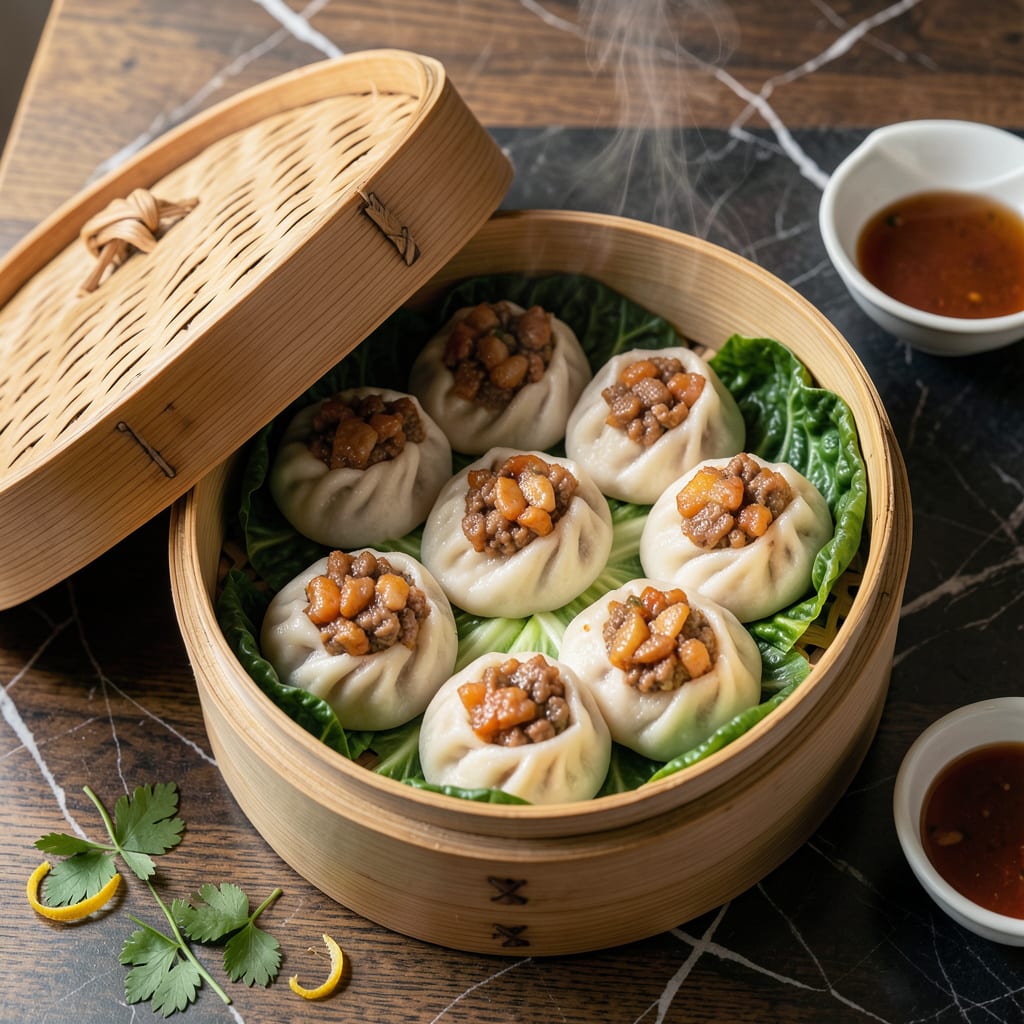
There’s something deeply satisfying about preparing dim sum at home using a traditional bamboo steamer. This method captures the authentic textures and flavors you’d expect from a professional kitchen.
With just a few simple ingredients and proper layering, you’ll achieve tender, fluffy results every time. The bamboo steamer’s natural material enhances the dish with subtle, aromatic steam.
Ingredients for Bamboo Steamer
Authentic dim sum ingredients for traditional bamboo steamer cooking at home.
| Ingredient | Amount | Notes |
|---|---|---|
| All-Purpose Flour 🌾 | 2 cups | Plus extra for dusting |
| Active Dry Yeast 🍞 | 1 tsp | Instant yeast works too |
| Granulated Sugar 🍚 | 1 tbsp | For activating yeast |
| Warm Water 💧 | ¾ cup | 110°F for yeast activation |
| Ground Pork 🐖 | ½ lb | Or substitute shrimp for variation |
| Shrimp 🦐 | ½ lb | Peeled and deveined, optional |
| Scallions 🧅 | 4 whole | Finely chopped, white parts only |
| Fresh Ginger Root 🌿 | 1 tbsp | Grated or minced |
| Soy Sauce 🫒 | 2 tbsp | Low-sodium preferred |
| Sesame Oil 🫒 | 1 tsp | For aromatic finish |
| Napa Cabbage Leaves 🥬 | 8 pieces | For lining steamer |
| Parchment Paper 📜 | 1 sheet | Cut into circles for steamer |
| Shaoxing Wine 🍶 | 1 tbsp | Or dry sherry substitute |
| Cornstarch 🌾 | 1 tbsp | For thickening filling |
| Salt 🧂 | ½ tsp | Divided for dough and filling |
The bamboo steamer itself is non-negotiable for authenticity. Asian markets carry the best quality ones, often for under $10. Look for unbleached bamboo—it imparts the most aromatic steam. For the Napa cabbage, Whole Foods or any well-stocked produce section will have it. The pork should be 70/30 ground for the right texture in dumplings, and ask your butcher to grind it fresh if possible.
No pork? Ground chicken or turkey work well, though the flavor will be milder. Shaoxing wine can be tricky—dry sherry at half the amount is your best bet. If you skip the shrimp, add an extra 1/4 lb of pork to keep the filling substantial. For gluten-free dumplings, swap the all-purpose flour for a rice flour blend, but expect a slightly different texture.
Store the steamer in a dry place to prevent mold—6-12 months if properly cared for. The filling keeps 1 day refrigerated before shaping, and cooked dumplings freeze beautifully for 3 months. Always steam from frozen, adding a few extra minutes.
Why You’ll Love This Recipe
- One Bowl Wonder: I mix the flour, yeast, sugar, and warm water right in the bowl—no fancy equipment, just my hands and a few minutes of kneading.
- Melt-in-Your-Mouth Filling: The ground pork cooks up juicy and tender in the steamer, soaking up all the flavors without drying out.
- Dim Sum at Home: Honestly, I make these for weekend brunches, but they’d be just as good packed in lunchboxes or served at a dinner party.
- Budget-Friendly Batch: A pound of ground pork and basic pantry staples stretch into dozens of buns, and leftovers reheat beautifully in the steamer.
Step-by-Step Instructions for Authentic Asian-Inspired Dim Sum at Home
Master the traditional technique with these authentic steps for perfect results every time.
Step 1: Prepare the Steamer and Dough
Line the bamboo steamer with the 8 pieces Napa cabbage leaves or cut the 1 sheet Parchment Paper into circles with holes poked in the center. This prevents sticking while allowing steam to circulate. In a bowl, combine the 2 cups All-Purpose Flour, 1 tsp Active Dry Yeast, 1 tbsp Granulated Sugar, and 0.25 tsp Salt.
Gradually add the 0.75 cup Warm Water while stirring until a shaggy dough forms. Knead on a lightly floured surface for 8-10 minutes until smooth and elastic. Cover and let rise in a warm place for 1 hour or until doubled in size.
Step 2: Create the Filling
In a bowl, combine the 0.5 lb Ground Pork, 0.5 lb Shrimp (finely chopped), 4 whole Scallions (finely chopped), 1 tbsp Fresh Ginger Root (grated), 2 tbsp Soy Sauce, 1 tbsp Shaoxing Wine, 1 tbsp Cornstarch, and remaining 0.25 tsp Salt. Mix thoroughly until sticky and uniform.
The cornstarch helps bind the filling while the Shaoxing wine adds depth. For best texture, chill the mixture for 15-20 minutes before assembly. This resting period allows the flavors to meld and makes the filling easier to handle.
Step 3: Assemble the Dumplings
Divide the risen dough into 16 equal portions and roll each into a thin circle, about 3 inches in diameter. Place 1 tablespoon of filling in the center of each wrapper. Pleat the edges to create a half-moon shape, pinching tightly to seal.
Arrange the dumplings in the prepared steamer, leaving 1 inch of space between each to allow for expansion. The pleating not only looks traditional but also creates expansion room as the filling heats and the dough steams.
Step 4: Steam to Perfection
Bring 2 inches of water to a rolling boil in a wok or large pot that accommodates your steamer. Place the steamer over the boiling water, cover with the lid, and steam for 12-15 minutes. Check the water level periodically and add more boiling water if needed.
The dumplings are done when the dough becomes translucent and the filling is cooked through. Avoid lifting the lid during the first 5 minutes to prevent temperature fluctuations that could affect the rise. Serve immediately with a drizzle of 1 tsp Sesame Oil for aromatic finish.
Pro Tips For Making Bamboo Steamer
- Proof the Dough: Let the yeast activate in warm water with sugar for 5-10 minutes until frothy—I learned this the hard way after killing my dough with water that was too hot.
- Chill the Pork: Pop the ground pork in the fridge for 20 minutes before shaping; it’s way easier to work with when cold and won’t stick to your fingers.
- Pre-Steam the Liners: Soak the bamboo steamer liners (or parchment) in warm water for 2 minutes first to prevent sticking—after ruining a batch, I now do this every time.
- Use a Lid Towel: Drape a thin towel over the bamboo lid to catch condensation drips; sounds weird, but it keeps your buns from getting soggy on top.
Pro Cooking Tips for Perfect Results
Steamer Preparation
Always soak your bamboo steamer in warm water for 10-15 minutes before use. This prevents cracking and creates a better seal. I learned this the hard way after ruining my first steamer by skipping this step. 💡
Water Level Control
Use a wok with a tight-fitting lid and maintain 2 inches of boiling water. The water should never touch the steamer basket. Add hot water (not cold) if topping up to avoid temperature drops.
Dough Consistency
Your dough should feel slightly tacky but not sticky after kneading. If too wet, add flour 1 tbsp at a time. If too dry, add water 1 tsp at a time. The windowpane test is your best check for proper gluten development.
Filling Texture
Chill your filling for 20 minutes before shaping. This makes it easier to handle and prevents the dumplings from collapsing during steaming. I use ice-cold water in my filling mixture for extra insurance.
Steaming Time
Don’t rush the process—12-15 minutes ensures the dough cooks through completely. The dumplings will expand significantly, so resist the urge to peek until at least the 5-minute mark. 🔥
Final Touches
Let the dumplings rest for 2 minutes after steaming before removing the lid. This prevents the sudden temperature change from causing them to deflate. A light drizzle of sesame oil just before serving enhances aroma.
Nutrition Facts
Frequently Asked Questions
Do I need to soak the steamer first?
Yes, soak the bamboo steamer in warm water for 10-15 minutes before use. This prevents cracking and ensures proper steaming.
What if my dumplings stick to the liner?
Use Napa cabbage leaves or parchment paper with holes to line the steamer. Lightly grease the liner with oil to prevent sticking.
Can I use a metal steamer instead?
A metal steamer works, but bamboo adds aromatic steam and better heat circulation. Avoid plastic steamers as they may melt.
How do I know when they’re done?
The dough turns translucent and the filling is cooked through after 12-15 minutes. Avoid opening the lid early.

- 6 Egg Cake Recipe with Oil: Light as Air With Buttery Moisture - October 4, 2026
- 4 Bean Casserole Recipe: One-Pan Heartiness With Smoky Paprika Depth - October 4, 2026
- 3-Ingredient Keto Mug Cake Recipe: Microwave Magic in 2 Minutes - October 4, 2026