
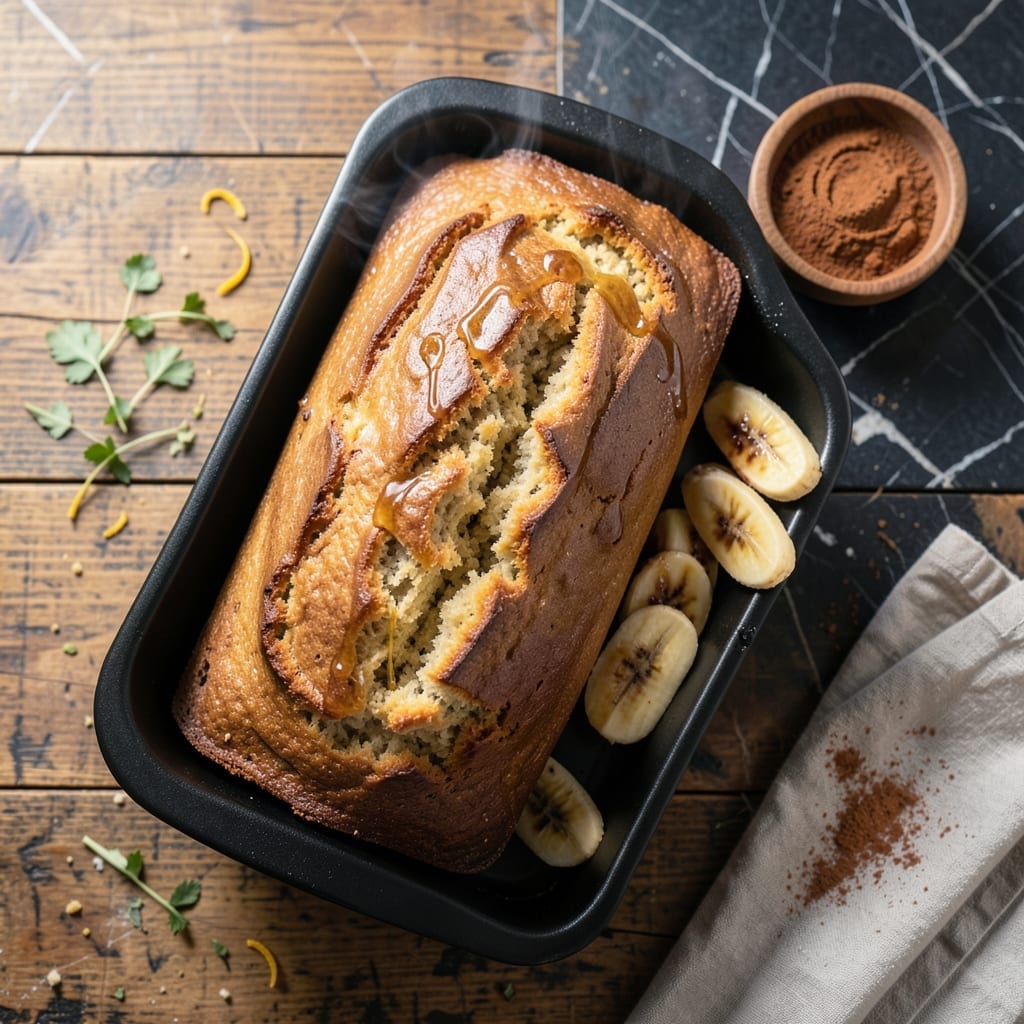
This no-nuts banana bread delivers moist, tender results every time. The secret is overripe bananas and a precise mixing method that prevents dryness.
With a soft crumb and golden crust, this recipe proves nut-free versions can be just as satisfying. Perfect for breakfast, snacks, or dessert.
Ingredients for Banana Bread Recipe No Nuts
Pantry staples plus overripe bananas create this tender, no-nuts loaf everyone loves.
| Ingredient | Amount | Notes |
|---|---|---|
| All-Purpose Flour 🌾 | 1 ½ cups | Sifted for lighter texture |
| Granulated Sugar 🍚 | ¾ cup | Fine white sugar preferred |
| Light Brown Sugar 🟤 | ½ cup | Packed, for moisture |
| Baking Soda 🧂 | 1 tsp | Ensures proper rise |
| Salt 🧂 | ½ tsp | Balances sweetness |
| Ground Cinnamon 🌿 | 1 tsp | Adds warm depth |
| Large Eggs 🥚 | 2 whole | Room temperature for even mixing |
| Vegetable Oil 🫒 | ½ cup | Neutral flavor preferred |
| Vanilla Extract 🌿 | 2 tsp | Pure extract for best flavor |
| Overripe Bananas 🍌 | 3 whole | Mashed, very ripe (black spots) |
The bananas are non-negotiable—overripe with black spots deliver maximum sweetness and moisture. King Arthur Flour is my go-to for all-purpose (consistent protein content), but any unbleached works. For the sugars, Domino or C&H dissolve evenly without graininess. The oil must be neutral; coconut oil adds flavor if you prefer that, but stick to refined to avoid coconut taste.
No bananas ripe enough? Roast firm bananas at 300°F for 15-20 minutes to concentrate sugars. Swap vegetable oil for melted butter or applesauce at a 1:1 ratio, though butter adds richness. Out of brown sugar? White sugar plus 1 tbsp molasses per cup works perfectly. The cinnamon can be omitted, but it’s worth including for warm, spiced depth.
Store cooled loaf wrapped in plastic wrap at room temperature for 2 days or refrigerated for 5 days. Slice before freezing (up to 3 months) for easy single servings. Reheat gently in a toaster oven to restore freshness.
Why You’ll Love This Recipe
- One Bowl Wonder: I dump everything straight into a single bowl—no fuss, no extra dishes. Honestly, cleanup takes less time than the bread takes to bake.
- Sweet Double Play: The combo of granulated and light brown sugar gives it that caramel-like depth. My kids lick the bowl clean before it even hits the oven.
- Breakfast or Dessert: I slice it thick for morning toast or warm it with ice cream after dinner. Between us, it works for both without any extra effort.
- Budget Stretcher: Overripe bananas get a second life here. I’ll be real: this recipe saves me from wasting fruit and money every single time.
Step-by-Step Instructions for Banana Bread
This method ensures a perfectly moist, tender loaf with a golden crust.
Step 1: Prepare and Mash the Bananas
Peel the 3 whole Overripe Bananas and place them in a large mixing bowl. The bananas should be very ripe with plenty of black spots on the peel—this means they’ll be sweeter and mash more easily.
Using a fork, mash the bananas until mostly smooth with a few small lumps remaining. The texture should resemble a thick puree. This step is crucial for both flavor and moisture in your finished bread. Set the mashed bananas aside while you prepare the other ingredients.
Step 2: Combine Dry Ingredients
In a medium bowl, whisk together the 1.5 cups All-Purpose Flour, 0.75 cup Granulated Sugar, 0.5 cup Light Brown Sugar, 1 tsp Baking Soda, 0.5 tsp Salt, and 1 tsp Ground Cinnamon. This ensures even distribution of the leavening agent and spices throughout the batter.
The light brown sugar adds moisture and a subtle caramel note. Make sure the baking soda is fresh—its effectiveness diminishes over time. The cinnamon provides a warm, aromatic depth that complements the banana flavor beautifully.
Step 3: Mix Wet Ingredients
To the bowl with mashed bananas, add the 0.5 cup Vegetable Oil, 2 whole Large Eggs, and 2 tsp Vanilla Extract. Whisk until the mixture is uniform and slightly frothy. The vegetable oil keeps the bread moist, while the eggs provide structure.
Real talk: using room temperature eggs ensures they emulsify better with the oil, creating a more stable batter. The vanilla extract should be pure, not imitation, for the best flavor. This wet mixture will be slightly thick but pourable.
Step 4: Combine Wet and Dry Ingredients
Gradually add the dry ingredients to the wet mixture, stirring just until combined. Be careful not to overmix—this can develop the gluten in the flour, resulting in a dense, tough bread. A few small lumps are perfectly fine.
The batter will be thick but still spreadable. If it seems too stiff, you can fold in a tablespoon or two of water, but with properly ripened bananas, this shouldn’t be necessary. The consistency should resemble a thick cake batter.
Step 5: Bake to Golden Perfection
Pour the batter into a greased 9×5-inch loaf pan and spread it evenly. Bake in a preheated 350°F oven for 50-60 minutes. The bread is done when a toothpick inserted into the center comes out clean or with just a few moist crumbs.
About halfway through baking, check that the top isn’t browning too quickly. If it is, tent the pan with aluminum foil. Let the bread cool in the pan for 10 minutes, then transfer it to a wire rack to cool completely before slicing. This resting period allows the structure to set and the flavors to meld.
Pro Tips For Making Banana Bread Recipe No Nuts
- Mash Bananas Well: Lumpy bananas mean uneven texture—I learned this the hard way after biting into a raw flour pocket. Use a fork and mash until mostly smooth, about 1-2 minutes.
- Use Ripe Bananas: The darker the peel, the sweeter the bread. I skip the yellow ones now—those black-spotted bananas add natural moisture and cut down on sugar needed.
- Don’t Overmix: Stir the wet and dry ingredients just until combined, even if the batter looks shaggy. Overmixing makes the bread dense, and nobody wants a brick disguised as banana bread.
- Test with a Toothpick: Pull it out at 50 minutes, then every 5 after that. If it comes out with a few moist crumbs (not wet batter), it’s done—I burned two loaves before I started checking early.
Troubleshooting This Dish
🥘 Too Dry or Tough?
Overmixing the batter or baking too long can make banana bread dense and dry. The gluten develops too much, squeezing out moisture.
Quick Fix: Mix just until combined and check for doneness at 50 minutes with a toothpick. Remove from the oven when a few moist crumbs cling.
🍳 Bread Didn’t Rise?
Old baking soda or baking powder loses its leavening power. Also, overmixing deflates the air bubbles needed for lift.
Quick Fix: Use fresh leavening agents and fold dry ingredients gently into wet ones. Avoid vigorous stirring.
⏰ Soggy or Undercooked Center?
Underbaking or using overly ripe bananas (which release too much liquid) can leave the center gummy. An oven that’s too cool may also be the culprit.
Quick Fix: Bake at 350°F (175°C) and tent with foil if the top browns too quickly. Test with a toothpick—it should come out clean or with a few dry crumbs.
🎯 Dense Texture?
Too much flour or insufficient leavening agents can weigh down the bread. Measuring flour incorrectly (packed vs. spooned) is a common mistake.
Quick Fix: Spoon flour into the measuring cup and level it off. Ensure you’re using the exact amount of baking soda or powder the recipe calls for.
Nutrition Facts

- 6 Egg Cake Recipe with Oil: Light as Air With Buttery Moisture - October 4, 2026
- 4 Bean Casserole Recipe: One-Pan Heartiness With Smoky Paprika Depth - October 4, 2026
- 3-Ingredient Keto Mug Cake Recipe: Microwave Magic in 2 Minutes - October 4, 2026