
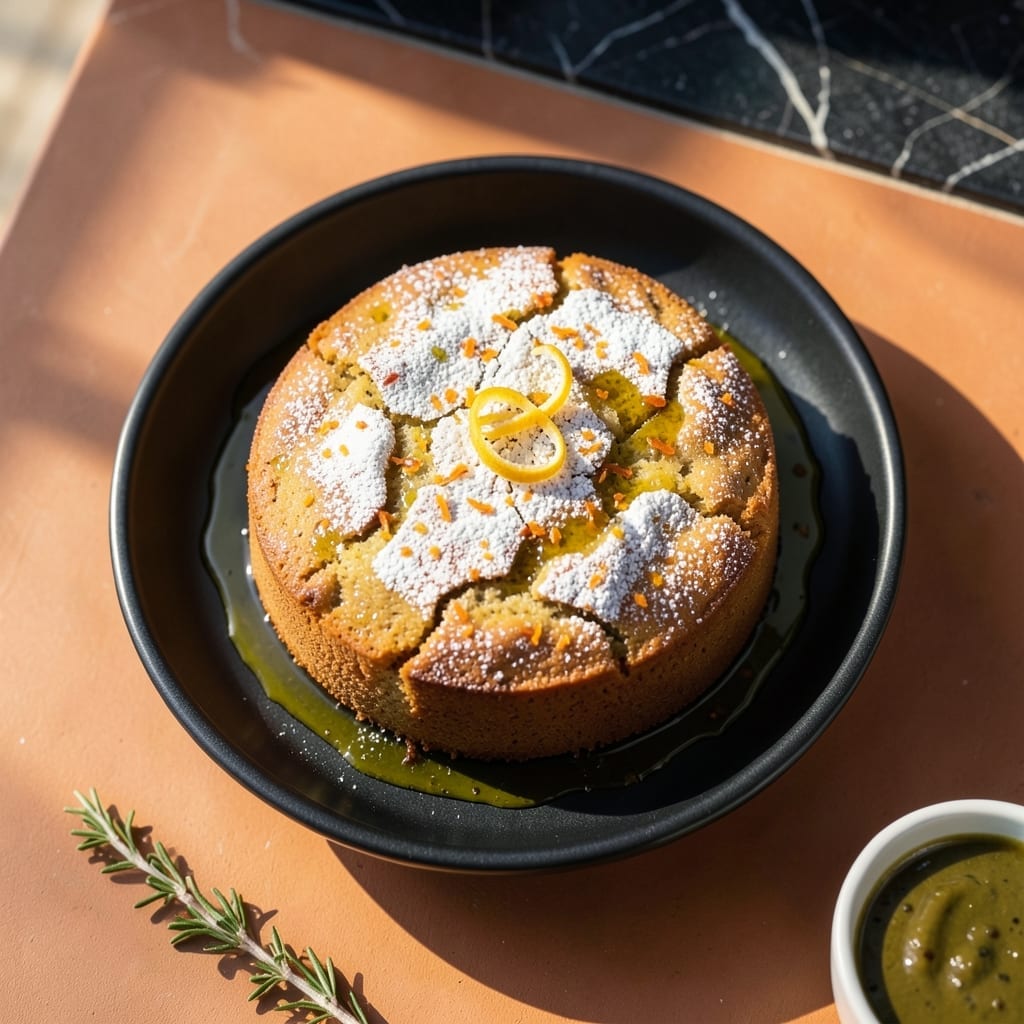
This olive oil cake captures the essence of Barcelona’s wine bars with its moist crumb and bright citrus notes.
I developed this recipe after falling for the simple yet sophisticated desserts served in Catalan wine bars. The olive oil base creates a tender texture that pairs beautifully with the zesty orange and lemon flavors.
What sets this cake apart is its ability to stay perfectly moist for days, with a delicate crumb that melts in your mouth. The citrus infusion adds a refreshing finish that’s characteristically Mediterranean.
Serve it dusted with powdered sugar or with a dollop of whipped cream for an authentic Barcelona experience.
Ingredients for Barcelona Wine Bar Olive Oil Cake
Pantry staples plus fresh citrus make this Mediterranean cake sing with authenticity.
| Ingredient | Amount | Notes |
|---|---|---|
| All-Purpose Flour 🌾 | 1 ½ cups | Sifted for even texture |
| Granulated Sugar 🍚 | 1 ¼ cups | Fine grain for best dissolution |
| Extra-Virgin Olive Oil 🫒 | ¾ cup | Fruity, high-quality preferred |
| Large Eggs 🥚 | 3 whole | Room temperature for even mixing |
| Whole Milk 🥛 | ½ cup | Full-fat for richness |
| Orange Zest 🍊 | 1 tbsp | From 1-2 oranges, finely grated |
| Orange Juice 🍊 | ½ cup | Freshly squeezed preferred |
| Lemon Zest 🍋 | 1 tsp | From 1 lemon, finely grated |
| Baking Powder 🧂 | 1 ½ tsp | Ensures proper rise |
| Baking Soda 🧂 | ½ tsp | Balances acidity from citrus |
| Salt 🧂 | ½ tsp | Fine sea salt preferred |
| Vanilla Extract 💧 | 1 tsp | Pure extract for best flavor |
| Powdered Sugar 🍚 | ¼ cup | For dusting finished cake |
The olive oil is non-negotiable here—use a good-quality extra-virgin with a fruity, peppery note. I grab mine from Trader Joe’s or a specialty store. The citrus matters too: navel oranges and Meyer lemons give the best flavor, but regular lemons work fine. Make sure to zest them before juicing (it’s easier that way). The flour doesn’t need to be fancy—just standard all-purpose, sifted to avoid lumps.
No oranges? Tangerines or clementines work in a pinch. Swap the milk for plain yogurt if you want extra moisture. Out of vanilla? A splash of orange liqueur (like Cointreau) adds depth. For a dairy-free twist, almond or oat milk works but might slightly change the crumb. The powdered sugar on top is optional—skip it if you prefer less sweetness.
This cake keeps 4-5 days at room temperature, wrapped in plastic. It also freezes beautifully for up to 3 months—thaw overnight before serving. Leftovers? Heat a slice for 10 seconds in the microwave for that fresh-baked feel (trust me on this one).
Why You’ll Love This Recipe
- I’ll be real: it tastes even better the next day, and stays moist for days on the counter.
- One Bowl Wonder: I just dump everything—flour, sugar, olive oil, eggs, milk—into one bowl, stir, and it’s ready for the oven.
- Rich Olive Oil Depth: That good extra-virgin olive oil gives it a fruity, almost buttery richness that’s way more interesting than plain butter.
- Brunch to Dessert: Honestly, it’s just as good with coffee in the morning as it is with ice cream at night.
Step-by-Step Instructions for Barcelona Wine Bar Olive Oil Cake
This method delivers a moist, citrus-kissed cake with a tender crumb every time.
Step 1: Combine Wet Ingredients for Maximum Flavor
In a large bowl, whisk together the 0.75 cup extra-virgin olive oil and 1.25 cups granulated sugar until fully combined. The oil should be fruity and high-quality—it’s the star of this Mediterranean-inspired cake. Add the 3 whole large eggs one at a time, whisking vigorously after each addition until the mixture is pale and slightly thickened.
Next, stir in the 0.5 cup whole milk, 0.5 cup orange juice, 1 tbsp orange zest, 1 tsp lemon zest, and 1 tsp vanilla extract. The citrus zests should be finely grated to distribute their bright, aromatic oils evenly. This wet mixture will look slightly emulsified, which is perfect for a tender texture.
Step 2: Incorporate Dry Ingredients Gently
In a separate bowl, whisk together the 1.5 cups all-purpose flour, 1.5 tsp baking powder, 0.5 tsp baking soda, and 0.5 tsp salt. Sifting the flour beforehand ensures a light, even crumb, but if you skipped that step, whisking well now will help break up any lumps.
Gradually add the dry ingredients to the wet mixture, folding with a silicone spatula just until no streaks of flour remain. Overmixing will develop gluten, leading to a dense cake—so stop as soon as the batter is uniform. The batter will be thick but pourable, with a glossy sheen from the olive oil.
Step 3: Bake Until Golden and Springy
Pour the batter into a greased 9-inch round cake pan lined with parchment paper. Smooth the top with the spatula and tap the pan once on the counter to release any air bubbles. Preheat your oven to 350°F and bake for 45-50 minutes, or until a toothpick inserted into the center comes out clean.
Watch for the edges to pull away slightly from the pan and the top to turn a deep golden brown. The cake should spring back when lightly pressed in the center. If the top browns too quickly, tent loosely with foil for the remaining bake time.
Step 4: Cool and Finish with Powdered Sugar
Let the cake cool in the pan for 10 minutes, then transfer it to a wire rack to cool completely. This resting period allows the cake to set, making it easier to slice without crumbling. The texture will be moist but sturdy, with a fine, even crumb.
Once fully cooled, dust the top generously with 0.25 cup powdered sugar. Use a fine-mesh sieve for an even, professional-looking finish. The sugar will contrast beautifully with the cake’s golden hue and add a touch of sweetness to each bite.
Pro Tips For Making Barcelona Wine Bar Olive Oil Cake
- Warm the Eggs: Pull your eggs out 30 minutes before mixing—I learned this the hard way after my first cake came out dense. Room temperature eggs emulsify better with the olive oil.
- Stream the Oil: Drizzle the olive oil in slowly while whisking, like you’re making mayo. Sounds weird, but it works: this actually changes the outcome for a smoother batter.
- Skip the Overmixing: As soon as the flour disappears, stop mixing. After burning three batches to tough, dry cakes, I finally figured out that overworking the gluten ruins the texture.
- Use Good Oil: Splurge on a fruity, high-quality extra-virgin olive oil here—it’s non-negotiable. My grandmother swore by this, and she was right: the flavor shines through in every bite.
Make-Ahead Tips for This Recipe
Room Temperature Storage
This cake stays fresh for 4-5 days at room temperature when wrapped tightly in plastic wrap or stored in an airtight container. The olive oil base keeps it moist longer than butter-based cakes. 💡
Freezer Preparation
For longer storage, wrap cooled cake in plastic wrap then aluminum foil before freezing. It keeps beautifully for up to 3 months. Slice before freezing for easy single servings.
Thawing Method
Transfer from freezer to fridge overnight for best results. For quick thawing, leave wrapped at room temperature for 2-3 hours. Avoid microwave thawing to preserve texture.
Reheating Slices
A 10-second microwave burst revives leftovers wonderfully. Or warm in 350°F oven for 5-10 minutes wrapped in foil. The citrus flavors will taste freshly baked. 🔥
Batter Prep Ahead
Mix wet and dry ingredients separately the night before. Combine just before baking for freshest results. The olive oil won’t separate like butter, making this a reliable make-ahead option.
Serving Temperature
This cake tastes best at room temperature. If refrigerated, let it sit out for 30 minutes before serving to allow flavors to fully bloom.
Nutrition Facts
Frequently Asked Questions
Can I use a different type of oil?
Stick with extra-virgin olive oil for authentic flavor, but any neutral oil like vegetable or canola works in a pinch. Avoid coconut oil as it will alter the texture and taste.
Why does the cake taste better the next day?
The olive oil keeps it moist, and the citrus flavors deepen overnight. This makes it perfect for preparing ahead of time.
Can I add other citrus fruits?
Lime zest or grapefruit juice can substitute for the lemon. Stick to 1 tbsp total zest and 0.5 cup juice for balance.
What if my cake sinks in the middle?
This usually means underbaking or opening the oven too soon. Check for doneness at 45 minutes and avoid peaking until then.

- 6 Egg Cake Recipe with Oil: Light as Air With Buttery Moisture - October 4, 2026
- 4 Bean Casserole Recipe: One-Pan Heartiness With Smoky Paprika Depth - October 4, 2026
- 3-Ingredient Keto Mug Cake Recipe: Microwave Magic in 2 Minutes - October 4, 2026