
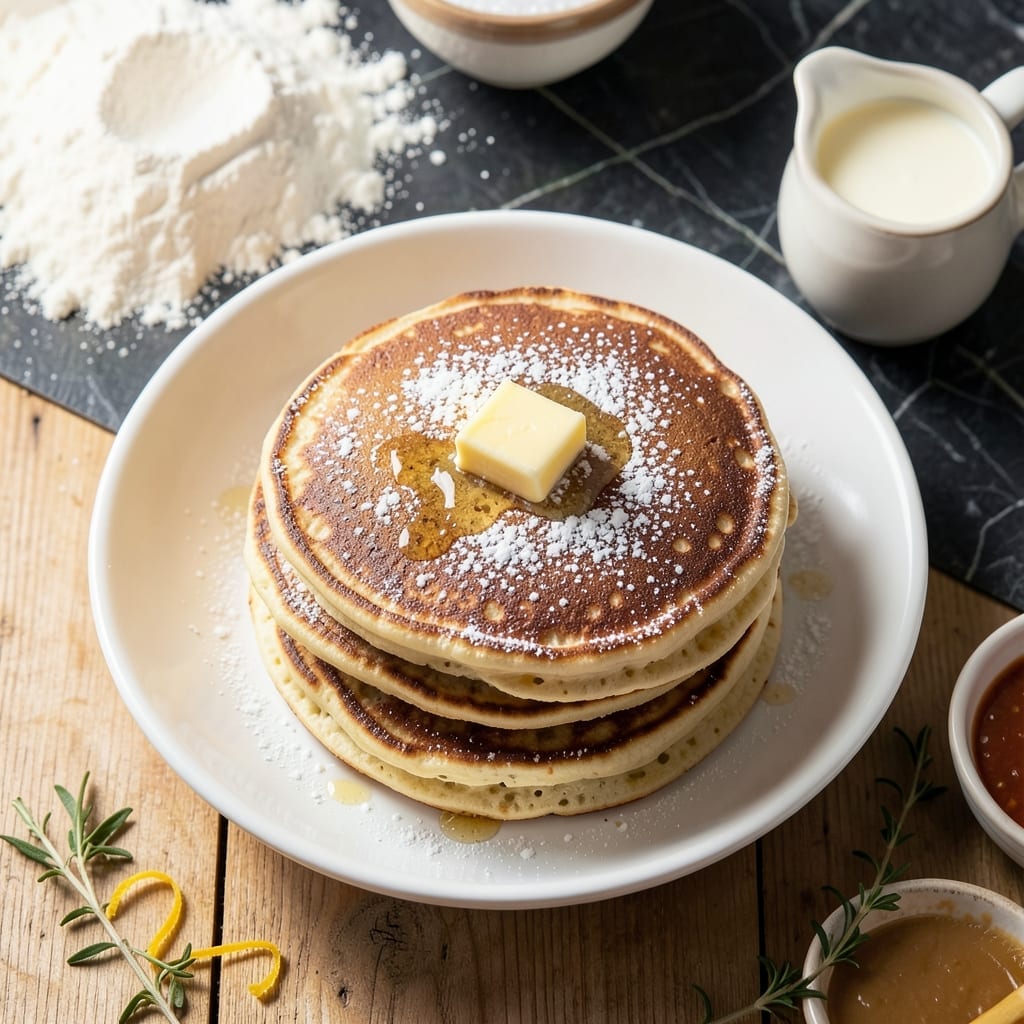
You don’t need baking powder to achieve tall, fluffy pancakes at home.
This proven method uses simple pantry staples and a basic mixing technique to create light, airy stacks ready in 15 minutes.
Ingredients for Basic Pancake Recipe Without Baking Powder
Simple pantry staples come together for light, airy stacks without baking powder.
| Ingredient | Amount | Notes |
|---|---|---|
| All-Purpose Flour 🌾 | 2 cups | Sifted for lighter texture |
| Granulated Sugar 🍚 | 2 tbsp | Adjust to taste preference |
| Salt 🧂 | ½ tsp | Fine sea salt preferred |
| Large Eggs 🥚 | 2 whole | Room temperature for best volume |
| Whole Milk 🥛 | 1 ¾ cups | Full-fat for richness |
| Unsalted Butter 🧈 | 4 tbsp | Melted and cooled slightly |
| White Vinegar 💧 | 1 tbsp | Reacts with milk for lift |
| Vanilla Extract 🌿 | 1 tsp | Pure extract for best flavor |
| Vegetable Oil 🫒 | 1 tbsp | For greasing the pan |
The flour is the foundation here. King Arthur or Gold Medal all-purpose work perfectly—no need for cake flour. Sift it to prevent lumps and ensure even distribution. The eggs should be at room temperature to maximize volume when beaten (cold eggs won’t whip as high). For the milk, whole milk creates the richest pancakes, but 2% works in a pinch.
No vinegar? Lemon juice at the same amount works just as well to react with the milk and create lift. Out of whole milk? Any milk will do, though the flavor will be slightly less rich. The butter can be swapped for coconut oil if you prefer a dairy-free option (though the recipe remains vegetarian). Vanilla is optional but adds depth—use pure extract, not imitation.
The batter keeps in the fridge for 24 hours—stir before using as it will thicken. Leftover pancakes reheat beautifully in a toaster or 350°F oven for 5 minutes. Freeze extras between parchment paper for up to 1 month.
Why You’ll Love This Recipe
- No Fuss Mix: I just dump, whisk, and cook—no hunting for baking powder in the back of the pantry.
- Soft & Sweet: The eggs and milk give them this tender, melt-in-your-mouth texture with a subtle sweetness.
- Breakfast or Dinner: Honestly, I’ve served these for Sunday brunch and late-night snacks with equal success.
Step-by-Step Instructions for Basic Pancakes Without Baking Powder
This method relies on a vinegar-milk reaction to achieve lift without chemical leaveners.
Step 1: Create the Buttermilk Substitute
In a medium bowl, combine the 1.75 cups Whole Milk and 1 tbsp White Vinegar. Let this mixture sit for 5 minutes until it thickens slightly and curdles. This creates a homemade buttermilk substitute that will react with the other ingredients to provide lift.
The vinegar’s acidity works with the milk to create the same tangy environment as buttermilk. You’ll see small curds forming and the mixture will look slightly separated—this is exactly what you want. Stir it briefly before using to distribute the curds evenly.
Step 2: Combine Dry Ingredients
In a large mixing bowl, whisk together the 2 cups All-Purpose Flour, 2 tbsp Granulated Sugar, and 0.5 tsp Salt. Sift the flour first if you prefer a lighter texture, though it’s not strictly necessary for this recipe.
The sugar adds subtle sweetness while the salt enhances all the flavors. Make sure these dry ingredients are well combined before adding the wet components. This prevents pockets of concentrated salt or sugar in your finished pancakes.
Step 3: Prepare the Wet Mixture
In a separate bowl, beat the 2 whole Large Eggs lightly, then add the soured milk mixture, 4 tbsp Unsalted Butter (melted and cooled slightly), and 1 tsp Vanilla Extract. Whisk until just combined—the butter should be warm but not hot to avoid cooking the eggs.
The melted butter adds richness and helps create tender pancakes. The vanilla extract provides depth of flavor that complements the subtle sweetness. Don’t overmix at this stage; a few small lumps are perfectly fine and will disappear during cooking.
Step 4: Form the Batter
Pour the wet ingredients into the dry ingredients. Using a wooden spoon or spatula, gently fold them together until just combined. The batter will be thick and slightly lumpy. Avoid overmixing, as this develops gluten which makes pancakes tough rather than tender.
If the batter seems too thick, add a splash more milk. It should be pourable but not runny. Let the batter rest for 5 minutes while you heat your pan—this allows the flour to fully hydrate and the vinegar-milk reaction to continue working.
Step 5: Cook the Pancakes
Heat a non-stick skillet or griddle over medium heat and add 1 tbsp Vegetable Oil to lightly grease the surface. Pour ¼ cup portions of batter onto the hot surface, leaving space between each pancake for spreading.
Cook until bubbles form on the surface and the edges look set, about 2-3 minutes. Flip and cook for another 1-2 minutes until golden brown on both sides. The vinegar-milk reaction ensures they rise slightly despite the absence of baking powder.
Transfer cooked pancakes to a warm plate and repeat with the remaining batter, adding more oil to the pan as needed. Serve immediately with your favorite toppings.
Pro Tips For Making Basic Pancake Recipe Without Baking Powder
- Whisk the Eggs: Beat the eggs vigorously for at least 30 seconds until frothy—this adds air to compensate for the missing baking powder and gives your pancakes lift.
- Rest the Batter: Let the batter sit for 10-15 minutes after mixing; I learned this the hard way when my first batch was tough and dense.
- Medium-Low Heat: After burning three batches, I finally figured out that pancakes without baking powder need steady, medium-low heat to cook through without scorching.
- Swap Milk for Buttermilk: Sounds weird, but it works: if you have buttermilk on hand, use it instead of whole milk for a subtle tang and better rise in your baking powder-free batter.
Serving Suggestions for This basic pancake recipe without baking powder
Plating Styles 🍽️
For a casual breakfast, stack your pancakes high and drizzle with maple syrup for a cozy, homey feel. A formal presentation can include a single pancake topped with fresh berries and a dusting of powdered sugar, served on a warm plate. For buffet-style serving, keep pancakes warm in a low oven (around 200°F) and arrange them on a tiered platter with toppings like whipped cream, nuts, or chocolate chips on the side.
Garnishing Techniques ✨
Elevate your pancakes with drizzles of honey or caramel, or add a sprinkle of cinnamon for warmth. Fresh fruit like sliced bananas, strawberries, or blueberries adds color and freshness. For a savory twist, try a dollop of Greek yogurt or a swirl of Nutella. Herbs like mint can also add a surprising pop of flavor and visual appeal.
Portion Sizes
For individual servings, aim for 2-3 medium-sized pancakes per person, depending on appetite. Family-style portions work well for gatherings—prepare a large batch and let everyone serve themselves. Use a 1/4-cup measure for consistent sizing, ensuring even cooking and easy flipping. Kids may prefer smaller, bite-sized pancakes for fun and ease.
Serving Temperature ⏰
Serve pancakes immediately after cooking for the best texture and warmth. If preparing ahead, place them in a single layer on a wire rack to prevent sogginess, then reheat in a toaster or oven. Stacking pancakes too early can trap steam, making them limp. For a crowd, keep them warm in the oven at 200°F until ready to serve.
Nutrition Facts

- 6 Egg Cake Recipe with Oil: Light as Air With Buttery Moisture - October 4, 2026
- 4 Bean Casserole Recipe: One-Pan Heartiness With Smoky Paprika Depth - October 4, 2026
- 3-Ingredient Keto Mug Cake Recipe: Microwave Magic in 2 Minutes - October 4, 2026