
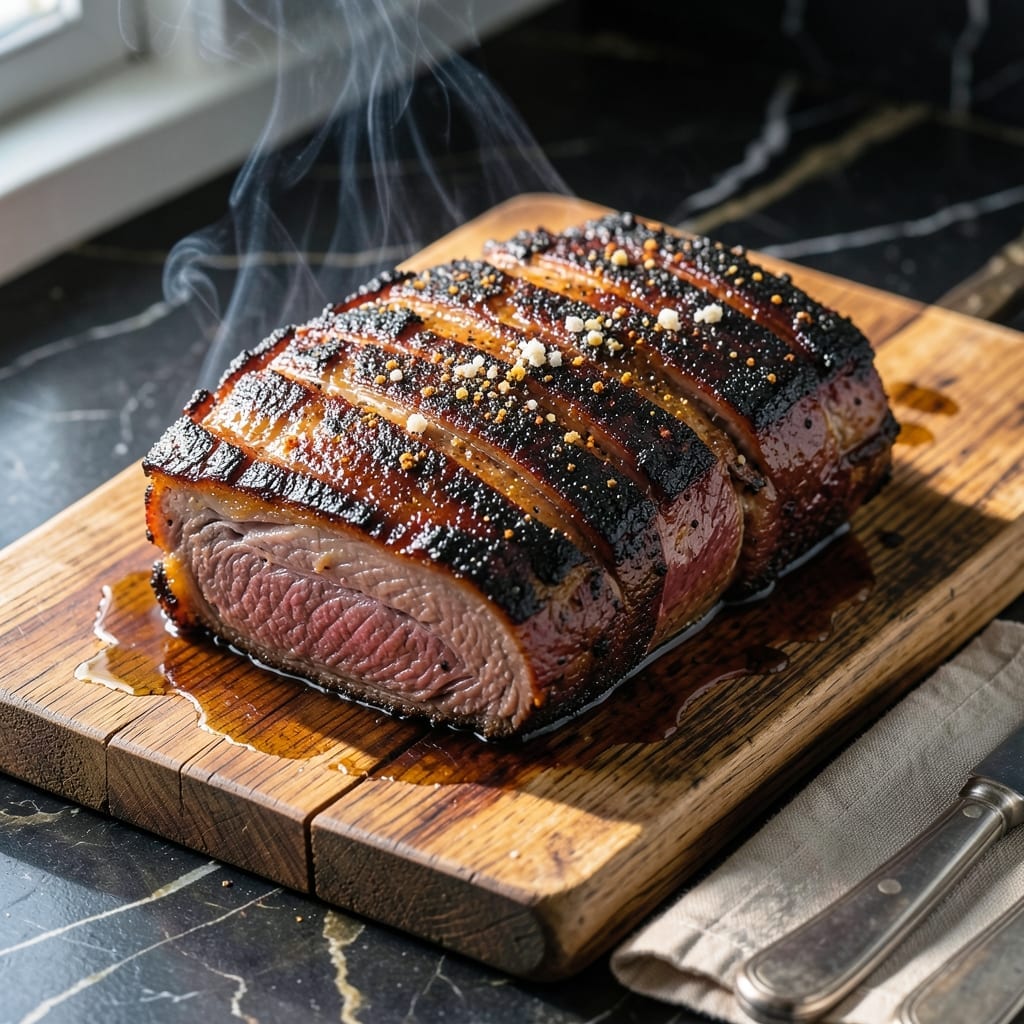
I’ve spent years perfecting my brisket point technique, and this low and slow method delivers the most tender results every time. The key is patience—rushing the process only leads to disappointment.
What makes this cut special is the marbling that renders down during smoking, creating that signature melt-in-your-mouth texture. I keep the seasoning simple to let the beef shine, but don’t skimp on the smoke.
You’ll know it’s done when the internal temperature hits that sweet spot and the meat bends like butter. The bark forms a perfect crust while the inside stays impossibly moist.
Resting is non-negotiable—this is where the magic happens. Slice against the grain for maximum tenderness. Here’s how to nail it.
Ingredients for Bbq Beef Brisket Point Recipe Smoked
Pantry staples and one amazing cut of beef. That’s all you need here.
| Ingredient | Amount | Notes |
|---|---|---|
| Beef Brisket Point 🥩 | 4 lb | Well-marbled, trimmed of excess fat |
| Coarse Kosher Salt 🧂 | ¼ cup | Diamond Crystal preferred |
| Coarse Black Pepper 🌶️ | ¼ cup | Freshly ground for bark |
| Garlic Powder 🧄 | 2 tbsp | High-quality for depth |
| Onion Powder 🧅 | 2 tbsp | Balances the rub perfectly |
| Paprika 🌶️ | 2 tbsp | Sweet or smoked variety |
| Brown Sugar 🍚 | ¼ cup | Light or dark for bark |
| Yellow Mustard 🟡 | ¼ cup | Binder for the rub |
| Hickory Wood Chunks 🪵 | 4 pieces | For consistent smoke |
| Apple Cider Vinegar 🍏 | ½ cup | For spritzing during cook |
| Beef Broth 🥣 | 2 cups | Low-sodium preferred |
| Unsalted Butter 🧈 | ½ cup | For wrapping stage |
The brisket point is non-negotiable—look for heavy marbling at Costco or your local butcher. The fat cap should be about a quarter-inch thick (they’ll trim it for you if you ask). I’ve had luck with Certified Angus Beef for consistent quality. Don’t stress about the exact weight; this rub works for anything in the 3-5 lb range (just scale it up if needed).
Out of paprika? Substitute with chili powder—it’ll add a little heat but still works. No hickory? Pecan or oak wood gives great results too. The mustard is just a binder (you won’t taste it), so Dijon or even olive oil can stand in. Brown sugar can be swapped for white, but the molasses notes in brown add depth to the bark (worth it if you’ve got it).
Trimmed brisket keeps in the fridge 2-3 days before cooking. Once smoked, it’s good for 4 days refrigerated or 3 months frozen. Slice only what you need—whole pieces reheat better for leftovers.
Why You’ll Love This Recipe
- Set It and Forget: That brisket point goes low and slow in the smoker while I do literally anything else.
- Crust Worth the Wait: The coarse salt and pepper build a bark so good I’d eat it plain.
- Feeds My Whole Crew: One point cut stretches to sandwiches, tacos, and next-day hash.
- Leftovers for Days: Honestly, it tastes even better sliced cold the morning after.
Step-by-Step Instructions for Smoked BBQ Beef Brisket Point
Here’s the method I use to transform this cut into competition-style brisket with a perfect bark.
Step 1: Trim and Apply the Rub
Begin by trimming the 4 lb Beef Brisket Point of any excess fat, leaving about ¼ inch for flavor and moisture. I find that a sharp knife works best for clean, controlled cuts. This step ensures the rub adheres properly and the smoke penetrates evenly.
In a bowl, mix the 0.25 cup Coarse Kosher Salt, 0.25 cup Coarse Black Pepper, 2 tbsp Garlic Powder, 2 tbsp Onion Powder, 2 tbsp Paprika, and 0.25 cup Brown Sugar. Brush the 0.25 cup Yellow Mustard all over the brisket as a binder, then coat it generously with the rub. Press firmly so it sticks. Let it rest for 1 hour at room temperature.
Step 2: Set Up the Smoker for Low and Slow
Preheat your smoker to 225°F using the 4 pieces Hickory Wood Chunks. Hickory gives a robust, classic smoke flavor that pairs perfectly with beef. Once the smoker is stable, place the brisket fat-side up on the grates. The fat cap will baste the meat as it renders down.
Add a water pan to the smoker to maintain humidity, which helps prevent the brisket from drying out during the long cook. Close the lid and resist the urge to peek—every time you open it, you lose heat and valuable cooking time.
Step 3: Smoke and Spritz for Bark Development
Smoke the brisket undisturbed for 4-5 hours until it develops a deep mahogany color. This is when the bark starts to form. I spritz the brisket every 45-60 minutes with a mixture of 0.5 cup Apple Cider Vinegar and 2 cups Beef Broth to keep it moist and enhance the bark.
Watch for the surface to turn dark and slightly crusty—this is the bark building. The spritz also helps regulate the temperature and adds a layer of flavor. Keep the smoker temperature steady; fluctuations can lead to uneven cooking.
Step 4: Wrap and Continue Cooking
Once the internal temperature reaches 165-170°F, it’s time to wrap. I use pink butcher paper for this step—it allows the brisket to breathe while still trapping enough steam to power through “the stall.” Spread 0.5 cup Unsalted Butter on the butcher paper before wrapping to add richness and moisture.
Return the wrapped brisket to the smoker and continue cooking until the internal temperature hits 200-203°F. This usually takes another 4-6 hours. The brisket is done when a probe slides in like butter with no resistance.
Step 5: Rest and Slice for Maximum Tenderness
Remove the brisket from the smoker and let it rest, still wrapped, in a cooler or warm oven for 1-2 hours. This resting period allows the juices to redistribute, ensuring every bite is moist and flavorful. Unwrap it and let it cool slightly before slicing.
Slice against the grain into ¼-inch thick pieces. The grain in the brisket point runs in a different direction than the flat, so pay attention and adjust your cuts. Serve immediately while warm, and enjoy the tender, smoky results of your low-and-slow effort.
Pro Tips For Making Bbq Beef Brisket Point Recipe Smoked
- Rest Overnight: After seasoning with salt, pepper, and powders, let the brisket point sit uncovered in the fridge for 12 hours—I learned this the hard way when my first attempt lacked that deep, penetrating flavor.
- Smoke Low and Slow: Keep your smoker at 225°F and resist the urge to rush it; my grandmother swore by this, and she was right: anything hotter and the fat won’t render properly.
- Skip the Early Wrap: Don’t wrap in foil or paper until the bark sets, usually after 4-5 hours—sounds weird, but it works: wrapping too soon steams the meat and ruins the crust.
- Use a Water Pan: Place a pan of water in the smoker to stabilize temperature and add moisture; I was skeptical until I tried it, and now my brisket stays juicy every time.
Make-Ahead Tips for Leftovers
Overnight Prep
Trim and apply the rub to your 4 lb Beef Brisket Point the night before. The salt in the rub will begin penetrating the meat overnight, enhancing flavor and tenderness. I cover mine loosely with plastic wrap and refrigerate for 12-16 hours before smoking. 💡
Rub Application
Let the seasoned brisket sit at room temperature for 1 hour before smoking. This takes the chill off and helps the smoker maintain consistent temperature. I use this time to prep my smoker and gather all my tools.
Wood Prep
Soak your 4 pieces Hickory Wood Chunks in water for 30-60 minutes before adding to the smoker. This prevents them from burning too quickly and ensures steady smoke production throughout the cook. I keep extra chunks ready for replenishing as needed.
Spritz Station
Prepare your spritz mixture in advance—combine 0.5 cup Apple Cider Vinegar and 2 cups Beef Broth in a spray bottle. Keep it in the fridge until ready to use. Cold spritz helps regulate the brisket’s surface temperature during the long cook.
Butcher Paper Prep
Have your pink butcher paper ready for the wrap stage. I pre-cut a 2-foot length and keep it near the smoker. Spread 0.5 cup Unsalted Butter on the paper just before wrapping to save time when the brisket hits 165-170°F internally.
Resting Setup
Prepare your resting environment in advance. I use a clean cooler lined with towels to maintain warmth. This allows the brisket to rest for 1-2 hours while staying at a safe temperature above 140°F. 🔥
Nutrition Facts
Frequently Asked Questions
What’s the ideal smoking temperature?
Maintain a steady 225°F throughout. This low heat allows the collagen to break down slowly, creating that signature tenderness. Avoid spikes above 250°F to prevent drying out.
How do I know when it’s done?
Use a meat thermometer to check internal temp. It’s ready at 200-203°F when a probe slides in like butter. The bark should be dark and crusty.
Can I use foil instead of butcher paper?
Yes, but butcher paper is preferred. Foil traps too much steam, softening the bark. If using foil, add 1 hour to the cook time after wrapping.
Why rest the brisket so long?
Resting for 1-2 hours lets juices redistribute. Slicing too soon causes moisture loss, resulting in dry meat. Keep it wrapped in a warm place.

- 6 Egg Cake Recipe with Oil: Light as Air With Buttery Moisture - October 4, 2026
- 4 Bean Casserole Recipe: One-Pan Heartiness With Smoky Paprika Depth - October 4, 2026
- 3-Ingredient Keto Mug Cake Recipe: Microwave Magic in 2 Minutes - October 4, 2026