
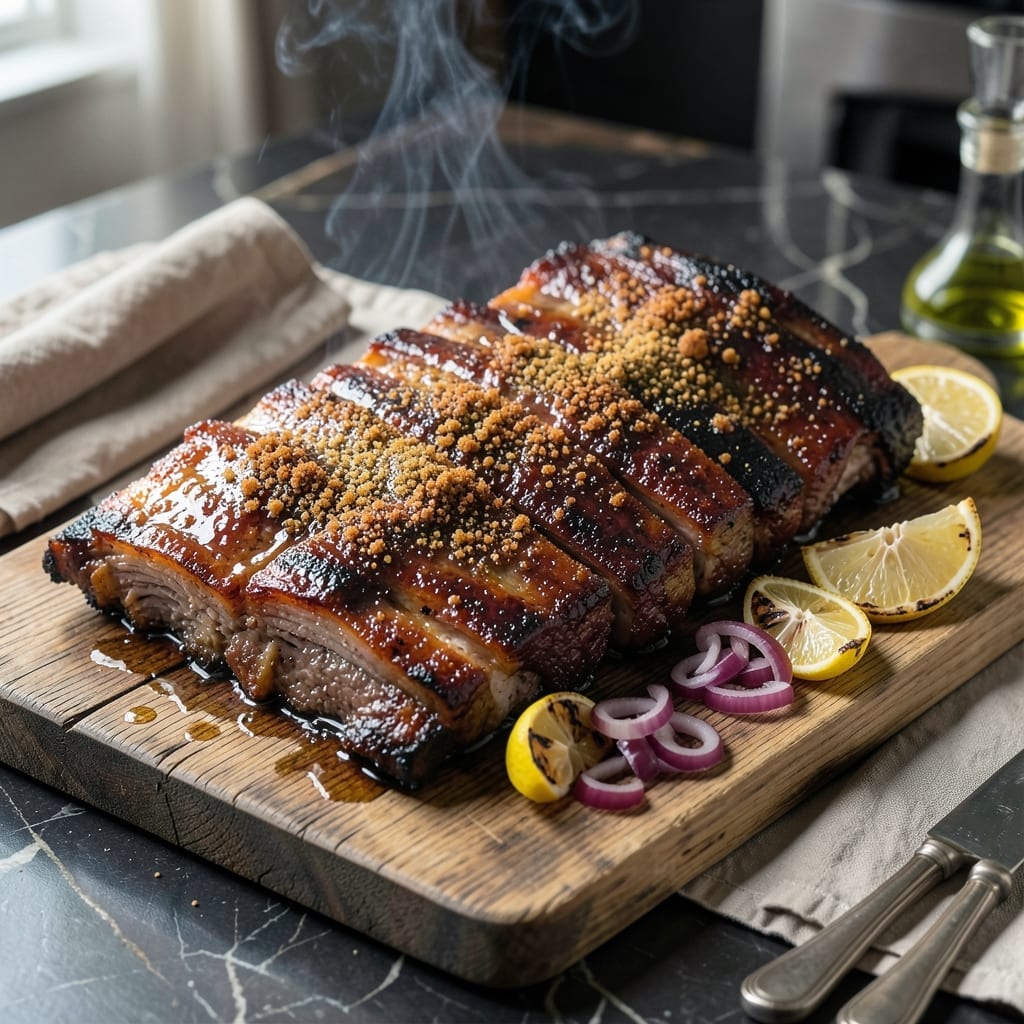
Achieving fall-off-the-bone beef ribs on the smoker is a game of patience and technique. This method delivers tender results every time without complicated steps.
The key is low and slow smoking at a steady temperature, allowing the connective tissue to break down gradually. A simple yet flavorful dry rub enhances the meat without overpowering its natural richness.
What emerges from the smoker is meat so tender it nearly collapses at the touch of a fork. The smoke creates a perfect bark that seals in juices while adding depth.
Resting the ribs after smoking ensures the juices redistribute for maximum flavor in every bite. The process is straightforward but demands attention to detail.
Ingredients for Bbq Beef Ribs Recipe Smoker
Quality beef ribs and a bold dry rub create that fall-apart texture you crave.
| Ingredient | Amount | Notes |
|---|---|---|
| Beef Back Ribs 🥩 | 4 lb | Full rack, membrane removed |
| Brown Sugar 🍚 | ½ cup | Light or dark variety |
| Kosher Salt 🧂 | 2 tbsp | Diamond Crystal preferred |
| Ground Black Pepper 🌶️ | 2 tbsp | Freshly cracked for best flavor |
| Paprika 🌶️ | 2 tbsp | Sweet or smoked variety |
| Garlic Powder 🧄 | 1 tbsp | Not garlic salt |
| Onion Powder 🧅 | 1 tbsp | Fresh ground preferred |
| Chili Powder 🌶️ | 1 tbsp | Mild or hot variety |
| Cayenne Pepper 🔥 | ½ tsp | Adjust for heat preference |
| Yellow Mustard 🟡 | ¼ cup | For binder in dry rub |
| Hickory Wood Chunks 🌳 | 4 pieces | For smoking, soaked in water |
| Apple Juice 🍏 | 2 cups | For spritzing during smoking |
The ribs are non-negotiable—beef back ribs with good marbling deliver the best texture. Costco or a trusted butcher will have full racks. Remove the membrane yourself (it’s easy with a paper towel and butter knife). For the wood, hickory gives that classic BBQ flavor, but apple or cherry work too if you want something milder.
No back ribs? Baby back ribs cook faster but still turn out great. Out of brown sugar? Turbinado or raw sugar at a 1:1 ratio. Want more depth in your rub? Add 1 tsp dried thyme or oregano. The mustard is just a binder—Dijon works too if that’s what you’ve got. Don’t skip soaking the wood chunks (30 minutes minimum).
Rubbed ribs can sit overnight in the fridge for deeper flavor penetration. Leftovers (if there are any) keep 4-5 days wrapped tight. Freeze for up to 3 months—reheat slowly to preserve that tender texture.
Why You’ll Love This Recipe
- Set It and Forget: The smoker does all the work while I sip iced tea on the porch.
- Sweet & Smoky: Brown sugar caramelizes into a sticky glaze that clings to every bite.
- Crowd Pleaser: I’ve served these at barbecues, and the platter’s always scraped clean.
- Next-Day Magic: Leftovers make killer sandwiches—just pile the meat on a bun and reheat.
Step-by-Step Instructions for Smoked Beef Back Ribs
Master these techniques to transform tough ribs into tender, smoky perfection every time.
Step 1: Apply the Dry Rub to the Beef Back Ribs
Begin by coating the 4 lb Beef Back Ribs with the 0.25 cup Yellow Mustard—this acts as a binder to help the rub adhere. The mustard flavor mellows during smoking, so don’t skip it.
In a bowl, combine the 0.5 cup Brown Sugar, 2 tbsp Kosher Salt, 2 tbsp Ground Black Pepper, 2 tbsp Paprika, 1 tbsp Garlic Powder, 1 tbsp Onion Powder, 1 tbsp Chili Powder, and 0.5 tsp Cayenne Pepper. Press this mixture generously onto all sides of the ribs, ensuring full coverage. Let them sit for 30-45 minutes while you prepare the smoker.
Step 2: Prepare the Smoker with Hickory Wood Chunks
Soak the 4 pieces Hickory Wood Chunks in water for at least 30 minutes to prevent them from burning too quickly. Meanwhile, set up your smoker for indirect heat at 225-250°F, which is ideal for low-and-slow cooking.
Once the smoker reaches temperature, add the soaked Hickory Wood Chunks to create a steady stream of thin blue smoke. Avoid thick white smoke, which can impart a bitter flavor. Place a water pan in the smoker to maintain humidity.
Step 3: Smoke the Ribs and Spritz with Apple Juice
Position the ribs bone-side down on the smoker grates. Smoke undisturbed for the first 3 hours to allow the bark to form. This step develops a flavorful crust that locks in moisture.
After the first 3 hours, begin spritzing the ribs every 45-60 minutes with the 2 cups Apple Juice to keep them moist. Continue smoking until the ribs reach an internal temperature of 195-203°F and the meat begins to pull back from the bones.
Step 4: Wrap and Finish for Maximum Tenderness
When the ribs develop a deep mahogany color and the bark is set, wrap them tightly in heavy-duty foil with a splash of the Apple Juice. This step, known as the Texas crutch, speeds up cooking and tenderizes the meat.
Return the wrapped ribs to the smoker and cook for another 1-2 hours until they are probe-tender. The internal temperature should reach 203-205°F, and a probe should slide in like butter with no resistance.
Step 5: Rest and Serve the Ribs
Remove the ribs from the smoker and let them rest, still wrapped, in a cooler or warm oven for 30-60 minutes. This allows the juices to redistribute, ensuring every bite is moist and flavorful.
Unwrap and serve immediately. The ribs should have a deep, smoky aroma, a crispy bark, and meat that falls cleanly from the bone with minimal effort. The result is tender, juicy ribs with a perfect balance of sweet and savory flavors.
Pro Tips For Making Bbq Beef Ribs Recipe Smoker
- Trim the Fat: Peel off the thick membrane and trim excess fat from the back of the ribs—this lets the rub penetrate and prevents chewy bites.
- Low and Slow: Keep your smoker steady at 225°F; I learned this the hard way after tough ribs from temperature swings.
- Rest Before Serving: Let the ribs rest wrapped in foil for 30 minutes after smoking—it redistributes the juices so they don’t run dry.
- Double the Rub: Don’t skimp on the brown sugar, salt, pepper, and paprika mix; coat both sides generously for a deep bark.
Pro Cooking Tips for bbq beef ribs recipe smoker
Temperature Control
Maintaining a steady 225-250°F in your smoker is non-negotiable for perfect ribs. I use a ThermoPro TP20 dual-probe thermometer to monitor both smoker temp and meat internal temp. Avoid temperature spikes—they can toughen the meat. 🌡️
Smoke Management
Use soaked hickory wood chunks and aim for thin blue smoke, not thick white smoke. White smoke adds bitter flavors. I add new wood every 45-60 minutes to maintain consistent smoke throughout the cook.
Bark Formation
Don’t spritz for the first 3 hours—this critical period builds the bark. After that, spritz with apple juice every 45 minutes to keep the surface moist without washing away the rub. The bark should be dark and slightly crispy when done.
The Texas Crutch
When ribs hit 195°F internal, wrap them tightly in foil with ¼ cup apple juice. This speeds cooking and prevents drying. I use heavy-duty foil and wrap twice for a perfect seal.
Probe Test
The ribs are done when a probe slides in like butter at 203-205°F. If it feels like pushing into warm butter, they’re ready. Resist the urge to rush—this test never lies. 💡
Resting Period
Rest wrapped ribs in a cooler for 1-2 hours. This step is magic—it lets juices redistribute. Skipping it means dry ribs, no matter how perfect the cook. I time my cook so resting aligns with mealtime.
Nutrition Facts
Frequently Asked Questions
How long do beef ribs take in a smoker?
Plan for 6-8 hours total at 225-250°F. The first 3 hours build the bark, then 1-2 hours wrapped. Probe when they hit 203-205°F.
Why did my ribs turn out tough?
Usually from cooking too hot or not long enough. Keep temps steady and don’t rush—beef ribs need time for collagen to break down. Always check with a probe, not just time.
Can I use other woods besides hickory?
Apple or cherry wood add sweeter notes, while oak gives a stronger flavor. Avoid soft woods like pine—they create bitter smoke.

- 6 Egg Cake Recipe with Oil: Light as Air With Buttery Moisture - October 4, 2026
- 4 Bean Casserole Recipe: One-Pan Heartiness With Smoky Paprika Depth - October 4, 2026
- 3-Ingredient Keto Mug Cake Recipe: Microwave Magic in 2 Minutes - October 4, 2026