
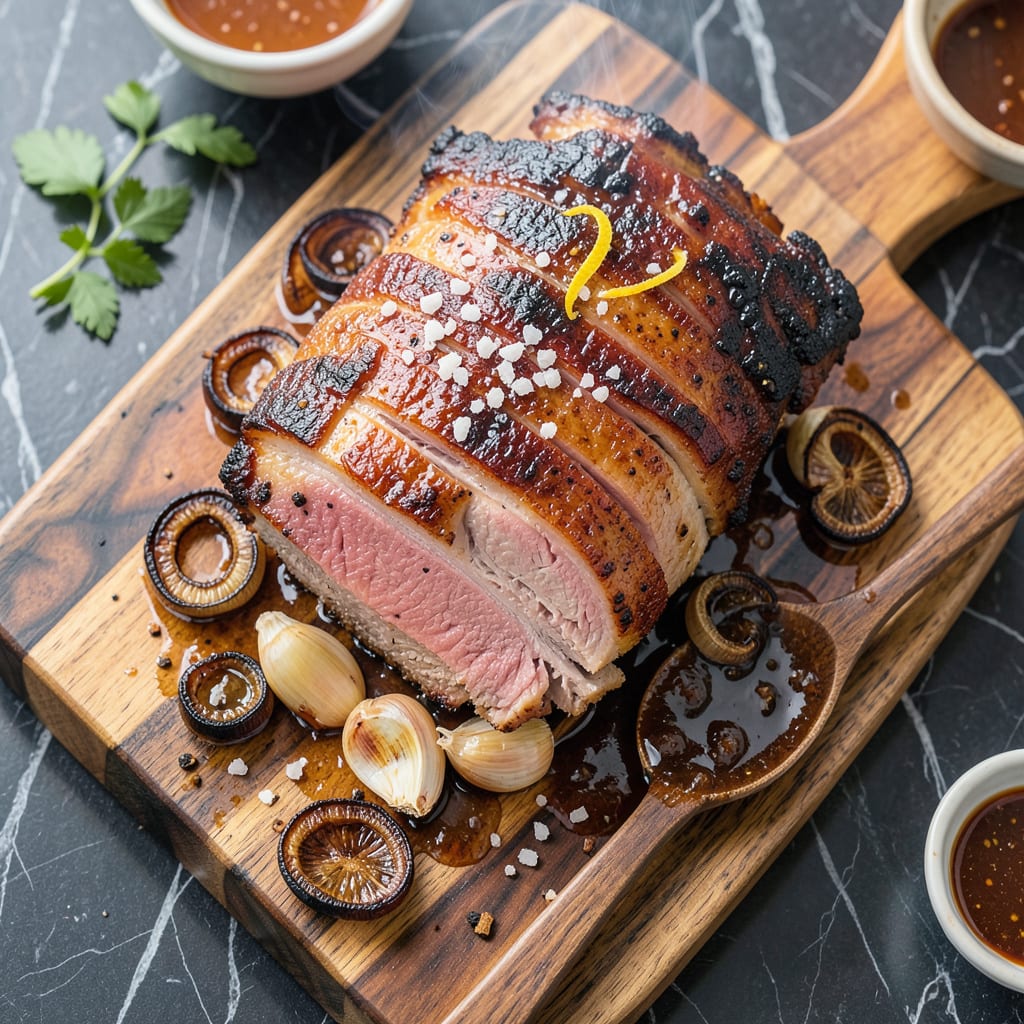
Achieving fall-off-the-bone tender BBQ pork butt doesn’t require a smoker—your oven can deliver the same mouthwatering results. This method transforms a tough cut into succulent, flavorful meat through precise temperature control and patience. The secret lies in low-and-slow cooking that breaks down collagen while preserving moisture.
By maintaining a consistent 250°F environment and allowing ample time (about 1.5 hours per pound), you’ll create pork that shreds effortlessly. A well-balanced dry rub and strategic resting period complete the process, ensuring every bite delivers that signature BBQ experience without specialized equipment.
Ingredients for Bbq Pork Butt Recipe Oven
Bone-in pork butt plus a bold dry rub—this is how oven BBQ magic starts.
| Ingredient | Amount | Notes |
|---|---|---|
| Bone-In Pork Butt 🥩 | 5 lb | Also called pork shoulder |
| Dark Brown Sugar 🍚 | ½ cup | Packed, for caramelization |
| Smoked Paprika 🌶️ | 2 tbsp | Sweet or hot variety |
| Garlic Powder 🧄 | 1 tbsp | Not garlic salt |
| Onion Powder 🧅 | 1 tbsp | Fresh ground preferred |
| Coarse Kosher Salt 🧂 | 1 ½ tbsp | Diamond Crystal preferred |
| Freshly Ground Black Pepper 🌶️ | 1 tbsp | Coarse grind for texture |
| Ground Cumin 🌿 | 1 tsp | Toasted for depth |
| Cayenne Pepper 🔥 | ½ tsp | Adjust for heat preference |
| Apple Cider Vinegar 🍏 | ¼ cup | Balances sweetness |
| Worcestershire Sauce 💧 | 2 tbsp | Anchovy-free if needed |
| Strong Brewed Coffee ☕ | ½ cup | Cooled, enhances depth |
| Yellow Mustard 🟡 | 2 tbsp | Binds the rub |
| Hickory Liquid Smoke 🌬️ | 1 tsp | Optional for smoky flavor |
[recipeingredientscaler]
The pork butt is everything here. Look for bone-in, well-marbled cuts—Costco or Whole Foods usually have good options. Five pounds feeds a crowd, but leftovers freeze beautifully. Don’t stress about exact weight; the 1.5 hours per pound rule works for cuts from 4 to 8 pounds. The brown sugar should be dark (more molasses = more flavor), and smoked paprika is non-negotiable—it’s doing most of the heavy lifting for that BBQ vibe.
No liquid smoke? Skip it—you won’t miss it. Out of apple cider vinegar? White vinegar plus a pinch of sugar works. The coffee might seem weird, but trust me—it deepens the flavor without tasting like coffee. For the Worcestershire, Annie’s Naturals makes a vegan version if that’s a concern. The mustard is just a binder; Dijon or spicy brown can sub in. Cayenne can be doubled if you like heat, or omitted entirely for sensitive palates.
Rub the pork the night before if you’re organized (better flavor penetration). Store wrapped meat in the fridge for up to 3 days pre-rubbed. Cooked pork keeps 4-5 days refrigerated, freezes for 3 months. The rub ingredients keep 6-12 months in a cool, dark pantry—just check that your spices still smell potent before using.
Why You’ll Love This Recipe
- I’ll be real: a bone-in pork butt gives you so much meat. First night? Pulled pork sandwiches. Next day? Tacos, nachos, or even fried rice. One cook, three meals—my wallet (and schedule) thank me.
- Set and Forget: Honestly, this might be the most hands-off recipe I make. Rub the pork butt with that dark brown sugar and smoked paprika mix, pop it in the oven, and let it do its thing for hours—no babysitting required.
- That Caramelized Crust: Here’s what sold me—the way the brown sugar and spices form this sticky, slightly crispy bark while the inside stays juicy. It’s the kind of flavor that makes you pause mid-bite just to appreciate it.
- Feeds a Crowd (Twice): I’ll be real: a bone-in pork butt gives you so much meat. First night? Pulled pork sandwiches. Next day? Tacos, nachos, or even fried rice. One cook, three meals—my wallet (and schedule) thank me.
Step-by-Step Instructions for BBQ Pork Butt in the Oven
Here’s the foolproof method I’ve perfected for achieving smoky, fall-apart tender pork without a smoker.
Step 1: Prepare the Pork Butt and Create the Rub
Start by patting the 5 lb bone-in pork butt completely dry with paper towels. This is crucial for helping the rub adhere properly and developing that beautiful bark we’re after. Don’t skip this step—moisture is the enemy of good bark.
In a medium bowl, combine the 0.5 cup dark brown sugar, 2 tbsp smoked paprika, 1 tbsp garlic powder, 1 tbsp onion powder, 1.5 tbsp coarse kosher salt, 1 tbsp freshly ground black pepper, 1 tsp ground cumin, and 0.5 tsp cayenne pepper. I like to use my fingers to break up any clumps in the brown sugar and thoroughly mix all the spices together. The sugar should be evenly distributed throughout the rub mixture.
Now here’s the thing—I always add the 2 tbsp yellow mustard directly to the pork butt first, rubbing it all over the meat like you’re applying sunscreen. This creates a sticky base that helps the rub cling better. Then generously apply the rub mixture, pressing it into the meat so it forms a nice crust. Use all of the rub—it might seem like a lot, but trust me on this.
Step 2: Create the Braising Liquid and Set Up the Oven
In a separate bowl, whisk together the 0.25 cup apple cider vinegar, 2 tbsp Worcestershire sauce, 0.5 cup strong brewed coffee, and 1 tsp hickory liquid smoke. The coffee might seem unusual, but it adds incredible depth to the final flavor without making the pork taste like coffee. Pour this mixture into the bottom of a large Dutch oven or heavy roasting pan.
Place a wire rack inside your Dutch oven (if you don’t have one, you can use crumpled foil to create a platform). This elevates the pork butt so it’s not sitting directly in the liquid, which helps create that coveted bark while still allowing the meat to benefit from the moisture below. Position the pork butt, fat side up, on the rack.
Preheat your oven to 300°F—this low-and-slow temperature is the secret to tender meat that doesn’t dry out. While the oven heats, let the pork sit at room temperature for about 20 minutes. This helps it cook more evenly and reduces the overall cooking time.
Step 3: Slow Roast Until Fork-Tender
Cover the Dutch oven tightly with its lid (or use heavy-duty foil if using a roasting pan) and place it in the preheated oven. Roast the pork butt for 4 hours without opening the oven. I know it’s tempting to peek, but every time you open that oven door, you’re adding 15-20 minutes to your cooking time.
After 4 hours, carefully remove the pork from the oven and check for doneness. The meat should be fork-tender—when you insert a fork and twist, the meat should pull apart easily. If it’s not quite there yet, return it to the oven and check every 30 minutes until it reaches that perfect tenderness. For a 5 lb pork butt, this usually takes between 5-6 hours total.
Here’s what I look for: the internal temperature should reach about 195-205°F (use a meat thermometer for accuracy), and when you wiggle the bone, it should move freely in the meat. The surface should be dark and crusty—that’s the bark we worked so hard to create.
Step 4: Rest and Shred the Pork
Once the pork butt is perfectly tender, transfer it to a large cutting board or serving platter. Cover loosely with foil and let it rest for 20-30 minutes. This resting period is crucial—it allows the juices to redistribute throughout the meat instead of running out when you cut into it. I promise this makes a noticeable difference in the final texture.
After resting, it’s time to shred the pork. I like to use two forks—one to hold the meat steady and one to pull it apart. Work against the grain of the meat, and don’t be afraid to really dig in. The bone should come out cleanly with minimal effort. As you shred, you’ll notice some pieces are more bark-covered than others—distribute these evenly throughout for maximum flavor in every bite.
While you’re shredding, skim off any excess fat from the braising liquid in the Dutch oven. Then, if you want extra moist pork, you can mix some of this liquid back into the shredded meat. I usually add about ½ cup of the braising liquid—just enough to keep everything juicy without making it soggy.
Essential Equipment for This Recipe
Dutch Oven Essentials
Your Dutch oven is the MVP here—I swear by my 6-quart Le Creuset for even heat distribution. The heavy enamel coating helps maintain that steady 300°F environment we need. Make sure yours has a tight-fitting lid to trap moisture. If you’re using a roasting pan instead, double-check it’s heavy-duty with a rack that fits inside. 🔥
Meat Thermometer
Don’t even think about making this without a probe thermometer. I use the ThermoWorks ChefAlarm—it’s worth every penny for that perfect 195-205°F internal temp reading. The difference between 190°F and 200°F is night and day in tenderness. Check multiple spots to avoid hitting fat pockets.
Wire Rack Setup
Elevating the pork is non-negotiable. I keep a stainless steel cooling rack (like the OXO Good Grips) just for this purpose. It fits perfectly in my Dutch oven and creates that air gap for bark formation. No rack? Crumple heavy-duty foil into coils to create a ½-inch platform—just ensure it’s stable enough to hold 5 lbs of meat.
Heavy-Duty Foil
If your Dutch oven lid isn’t snug, 18-inch heavy-duty aluminum foil becomes your best friend. I use Reynolds Wrap Heavy Duty to create an airtight seal over the pot. This prevents moisture loss during those critical 5-6 hours of cooking. Press the foil tightly around the rim for maximum heat retention.
Shredding Tools
Two sturdy forks are all you need, but I’ve grown fond of my bear claw meat shredders for large batches. The OXO brand has comfortable grips that save your hands when working with hot meat. Keep a pair of heat-resistant gloves nearby—trust me, that pork retains heat longer than you’d expect.
Basting Brush
For applying the mustard base and any mopping sauce, a silicone basting brush works best. I prefer the KitchenAid brand because the bristles don’t melt at high temps. The flat shape helps get into all those nooks and crannies of the pork butt. Rinse it immediately after use—dried rub is a nightmare to clean off later. 💡
Nutrition Facts

- 6 Egg Cake Recipe with Oil: Light as Air With Buttery Moisture - October 4, 2026
- 4 Bean Casserole Recipe: One-Pan Heartiness With Smoky Paprika Depth - October 4, 2026
- 3-Ingredient Keto Mug Cake Recipe: Microwave Magic in 2 Minutes - October 4, 2026