
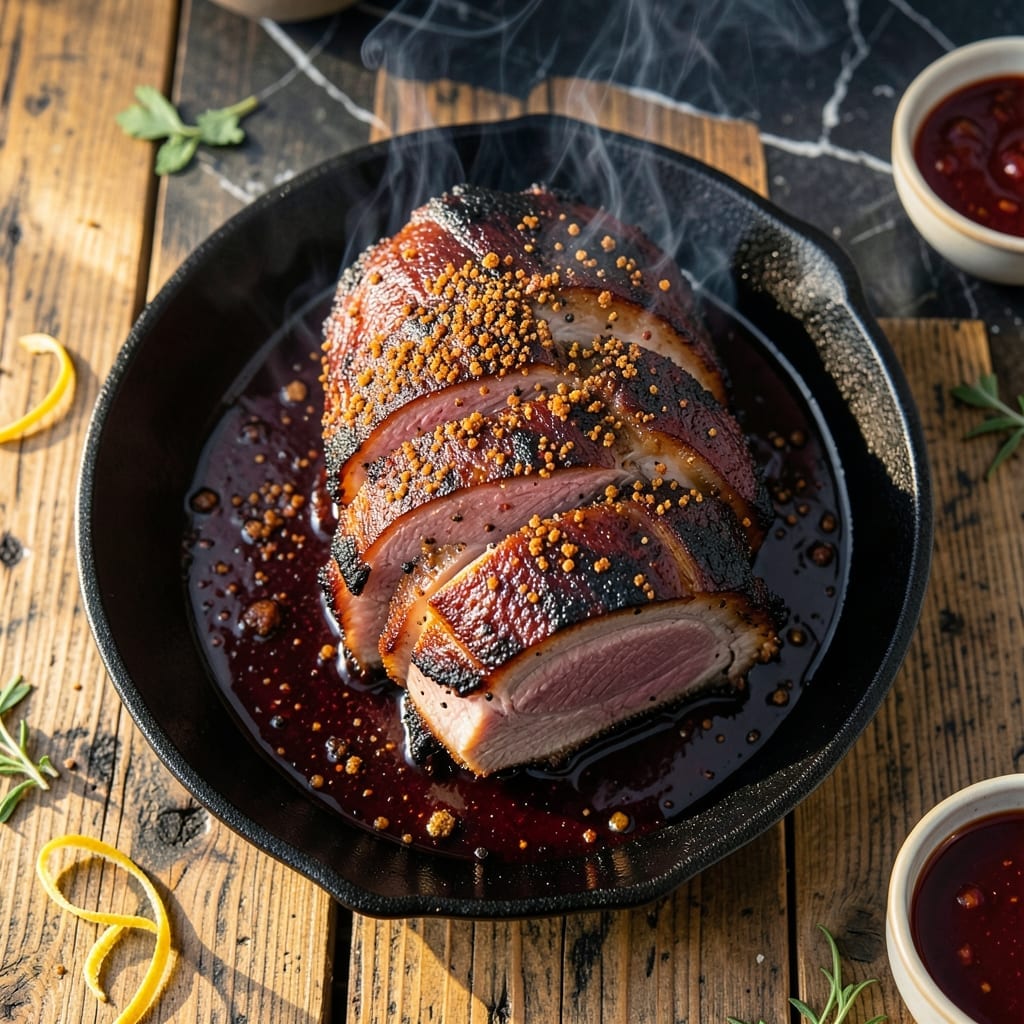
I’ve spent years fine-tuning my smoker technique, and this method for pork butt delivers the most tender, fall-apart meat every time. The key is patience—low heat and a long smoke session work magic on tough cuts.
What sets this apart is the simple dry rub and the way the smoke penetrates every bite. I keep the seasoning bold but balanced, letting the pork’s natural flavor shine through that perfect bark.
After hours on the smoker, you’ll pull out a pork butt with a dark, caramelized crust and meat so soft it nearly dissolves on your tongue. The smell alone will have neighbors knocking on your door.
Serve it shredded on buns, in tacos, or straight from the tray. This is the kind of BBQ that makes you look like a pitmaster without the fuss.
Ingredients for Bbq Pork Butt Recipe Smoker
Pantry spices and one big cut of pork. That’s all you need for this.
| Ingredient | Amount | Notes |
|---|---|---|
| Pork Butt 🐖 | 8 lb | Bone-in preferred for flavor |
| Brown Sugar 🍚 | ½ cup | Light or dark variety |
| Kosher Salt 🧂 | ¼ cup | Diamond Crystal preferred |
| Black Pepper 🌶️ | 2 tbsp | Freshly ground coarse |
| Paprika 🌶️ | 2 tbsp | Sweet or smoked variety |
| Garlic Powder 🧄 | 1 tbsp | Not garlic salt |
| Onion Powder 🧅 | 1 tbsp | Fine ground preferred |
| Ground Cumin 🌿 | 1 tsp | Toasted for deeper flavor |
| Cayenne Pepper 🔥 | ½ tsp | Adjust for heat preference |
| Yellow Mustard 🟡 | ¼ cup | Binder for dry rub |
| Apple Cider Vinegar 🍏 | ½ cup | For spritzing during smoke |
| Hickory Wood Chunks 🪵 | 4 pieces | Or chips for smoke |
| Apple Juice 🍎 | 2 cups | For moisture in pan |
The pork butt is non-negotiable—bone-in gives you that extra flavor and moisture. I grab mine from Costco when they have the big 8-pounders (perfect for a crowd). Look for good marbling; that fat renders down to keep things juicy. The brown sugar in the rub? Domino or C&H work great, but don’t stress over organic here (save that for the veggies).
Out of apple cider vinegar? White vinegar in a pinch—just cut the amount by half. No hickory? Cherry or pecan wood add a sweeter smoke. The mustard is just a binder, so Dijon works too (same amount). If you’re watching sodium, swap half the kosher salt for coarse sea salt—same texture, slightly less intensity.
Pork butt freezes beautifully raw for up to 12 months. Once smoked, shred and store in the fridge for 5 days or freeze for 3 months (the bark softens when reheated, but that meat stays perfect). Always let it rest at room temp for 30 minutes before slicing or shredding.
Why You’ll Love This Recipe
- Set It and Forget It: I just rub the pork butt with brown sugar, salt, and spices, then let the smoker do all the work for hours.
- Smoky Sweet Crust: That perfect bark from the brown sugar and paprika? It’s the reason I make this every weekend.
- Feeds a Hungry Crowd: One pork butt serves a dozen—great for Sunday dinner or meal prepping for the week.
- Leftovers for Days: Honestly, the pulled pork tastes even better the next day in sandwiches or tacos.
Step-by-Step Instructions for BBQ Pork Butt Smoker
Here’s the method I use to achieve that perfect melt-in-your-mouth texture every time.
Step 1: Prepare and Season the Pork Butt
Start by patting the 8 lb Pork Butt dry with paper towels. This helps the rub adhere better. In a bowl, mix together 0.5 cup Brown Sugar, 0.25 cup Kosher Salt, 2 tbsp Black Pepper, 2 tbsp Paprika, 1 tbsp Garlic Powder, 1 tbsp Onion Powder, 1 tsp Ground Cumin, and 0.5 tsp Cayenne Pepper.
Rub the 0.25 cup Yellow Mustard all over the pork butt—it acts as a binder. Then coat the pork evenly with the dry rub mixture, pressing it into the meat so it sticks. Let it sit at room temperature for 30-45 minutes while you prepare the smoker.
Step 2: Set Up the Smoker with Hickory Wood
Preheat your smoker to 225-250°F. Add the 4 pieces Hickory Wood Chunks to the smoker once it reaches temperature. You want a steady stream of thin, blue smoke—not thick white smoke, which can make the meat bitter.
Place a drip pan filled with the 2 cups Apple Juice under the grill grate where the pork will cook. This adds moisture to the smoking environment and prevents the pork from drying out. The apple juice also infuses a subtle sweetness into the meat.
Step 3: Smoke the Pork Butt Low and Slow
Place the pork butt on the grill grate, fat-side up. Insert a meat thermometer into the thickest part of the pork, avoiding the bone. Smoke undisturbed for 6-8 hours, maintaining the smoker temperature at 225-250°F.
Every 2-3 hours, spritz the pork with the 0.5 cup Apple Cider Vinegar to keep the surface moist and enhance the bark formation. You’ll know it’s ready for the next step when the internal temperature reaches 165-170°F.
Step 4: Wrap and Continue Cooking to Tenderness
Once the pork reaches 165-170°F, it will likely stall as the moisture evaporates. Wrap the pork tightly in pink butcher paper or aluminum foil to push through this stall. Return it to the smoker and continue cooking until the internal temperature hits 200-205°F.
This usually takes another 3-5 hours. The pork is done when a probe or fork slides in like butter with no resistance. This is the key to achieving that promised fall-apart tenderness.
Step 5: Rest and Shred the Pork
Remove the pork from the smoker and let it rest, wrapped, in a warm place for at least 1 hour. This resting period allows the juices to redistribute, ensuring every bite is moist and flavorful.
Unwrap the pork and shred it using two forks or your hands. Discard any large pieces of fat or the bone if it’s bone-in. Serve immediately, or mix in some of the juices from the wrapping for extra moisture and flavor.
Pro Tips For Making Bbq Pork Butt Recipe Smoker
- Start Low and Slow: Keep your smoker at 225°F—any higher and the pork butt will toughen up before it gets tender. I learned this the hard way after pulling dry, chewy meat off the grill.
- Trim the Fat Cap: Leave about 1/4 inch of fat on the pork butt for flavor, but trim the rest. Too much fat blocks the rub from penetrating, and you’ll end up with a greasy bark.
- Skip the Early Sauce: Resist the urge to mop with sauce in the first 4 hours—it’ll just burn. Wait until the bark forms, then add sauce in the last hour or after pulling.
- Rest Under Foil: After smoking, wrap the pork butt in foil and let it rest for at least 30 minutes. This keeps the juices inside instead of all over your cutting board.
Flavor Customization for bbq pork butt recipe smoker
Sweet Heat Rub
Double the brown sugar to 1 cup and add 1 tbsp chipotle powder for a sweeter, smokier profile. I love this with cherry wood instead of hickory. The sugar caramelizes beautifully during the long smoke. 🔥
Spice-Forward Blend
Swap the paprika for 2 tbsp ancho chili powder and add 1 tsp coriander for depth. This gives a more complex, earthy bark that pairs perfectly with a vinegar-based mop sauce.
Coffee-Infused Depth
Add 2 tbsp finely ground coffee to your dry rub. The coffee enhances the pork’s natural richness without making it taste like a cup of joe. I use Starbucks French Roast for boldness.
Herb-Crusted
Mix 1 tbsp dried rosemary and 1 tbsp dried thyme into your rub. These herbs add a fragrant, Mediterranean twist that works surprisingly well with the smoke. Brush with melted butter after shredding.
Asian Fusion
Replace garlic powder and onion powder with 2 tbsp Chinese five-spice powder. Use hoisin sauce in your spritz instead of vinegar. This creates a sticky, aromatic bark with serious umami. 💫
Texas-Style Bold
Increase black pepper to 3 tbsp and cayenne to 1 tsp for heat. Add 1 tbsp mustard powder to the rub. This gives that classic Texas bark with a serious kick.
Nutrition Facts
Frequently Asked Questions
Should I use bone-in or boneless pork?
Bone-in is ideal because it adds flavor and helps retain moisture during the long cook. The bone also conducts heat, leading to more even cooking. Boneless works in a pinch but may dry out faster.
How do I know when it’s done?
The pork is ready when it reaches 200-205°F internally and a probe slides in like butter. Don’t rely on time alone—always use a meat thermometer for accuracy.
Can I use a different type of wood?
Cherry or pecan add sweeter notes, while oak provides a more neutral smoke. Avoid softwoods like pine—they can impart bitter flavors.
Why did my bark turn out soft?
This usually happens if you wrap too early or don’t maintain consistent smoke. Spritz with apple cider vinegar every 2-3 hours to build a better crust.

- 6 Egg Cake Recipe with Oil: Light as Air With Buttery Moisture - October 4, 2026
- 4 Bean Casserole Recipe: One-Pan Heartiness With Smoky Paprika Depth - October 4, 2026
- 3-Ingredient Keto Mug Cake Recipe: Microwave Magic in 2 Minutes - October 4, 2026