
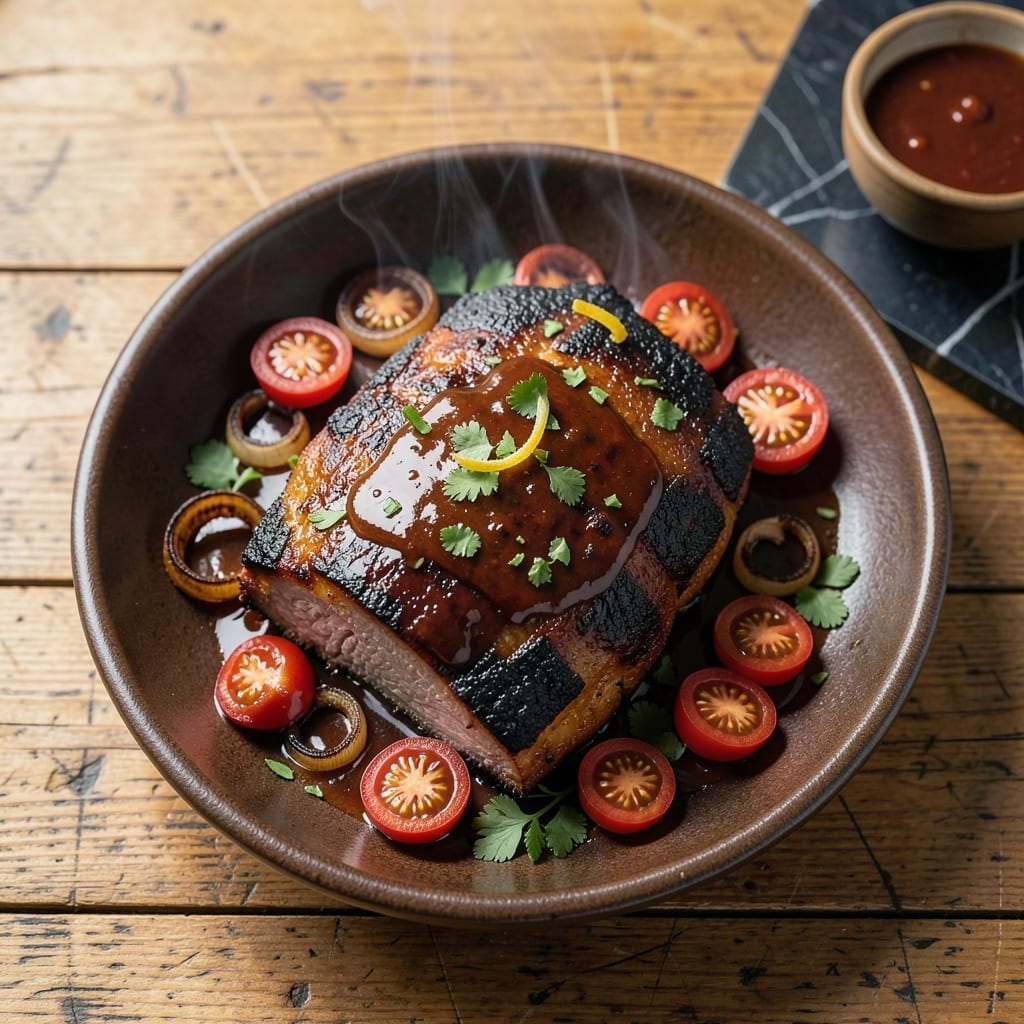
There’s an art to achieving fall-off-the-bone pork shoulder that separates good BBQ from great. This method relies on slow smoking with hickory wood to infuse deep, complex flavors while breaking down the meat’s connective tissue.
The process begins with a well-seasoned rub applied to the pork, allowing it to develop a flavorful bark during the long cook. Maintaining a consistent 225°F temperature in your smoker is crucial for that perfect tenderness we’re after.
After hours of low and slow cooking, the pork becomes so tender it nearly collapses at the touch of your fork. The hickory smoke penetrates every fiber, creating that signature BBQ flavor profile we all crave.
This isn’t just pulled pork—it’s a transformation of tough meat into something extraordinary through time, temperature, and technique.
Ingredients for Bbq Pork Shoulder Recipe Smoker
Slow smoked pork shoulder with hickory needs just these pantry spices and time.
| Ingredient | Amount | Notes |
|---|---|---|
| Pork Shoulder 🥩 | 8 lb | Bone-in, skin-on preferred |
| Hickory Wood Chunks 🪵 | 4 lb | For consistent smoke |
| Brown Sugar 🍚 | ½ cup | Light or dark variety |
| Kosher Salt 🧂 | ¼ cup | Diamond Crystal preferred |
| Black Pepper 🌶️ | 2 tbsp | Freshly ground coarse |
| Paprika 🌶️ | 2 tbsp | Sweet or smoked variety |
| Garlic Powder 🧄 | 1 tbsp | Not garlic salt |
| Onion Powder 🧅 | 1 tbsp | Fine grind preferred |
| Cayenne Pepper 🔥 | 1 tsp | Adjust for heat preference |
| Yellow Mustard 🟡 | ¼ cup | For rub binder |
| Apple Cider Vinegar 🍏 | ½ cup | For spritzing during cook |
| BBQ Sauce 🍯 | 2 cups | For finishing, optional |
| Apple Juice 🍎 | 1 cup | For spritzing moisture |
The pork shoulder is everything here—bone-in, skin-on gives the best bark and moisture. Look for 8-10 lb roasts at Costco or your local butcher (they’ll often cut to order). Hickory chunks (not chips) burn slower and give cleaner smoke. For the rub, Diamond Crystal kosher salt dissolves better than table salt, and its larger flakes let you control seasoning more precisely.
No hickory? Pecan or cherry wood both pair beautifully with pork. Out of apple juice for spritzing? Cider vinegar cut with water works in a pinch. For the rub, substitute 1 tbsp chipotle powder for the cayenne and paprika if you want smokier heat. Brown sugar can be swapped for turbinado (coarser texture, same flavor). The mustard binder is just for adhesion—olive oil works too.
Rubbed pork can sit overnight in the fridge (actually improves flavor). Cooked shoulder keeps 4-5 days refrigerated, 3 months frozen. Reheat gently in a slow cooker with a splash of apple juice to maintain moisture (don’t nuke it—that’s a crime against BBQ).
Why You’ll Love This Recipe
- Set and Forget: The smoker does all the work once I’ve rubbed the pork shoulder with brown sugar, salt, and pepper.
- Smoky Sweetness: Hickory wood chunks give it that deep, rich flavor that pairs perfectly with the caramelized crust.
- Feeds a Crowd: One pork shoulder yields enough for a weekend gathering or meal prep for the week.
- Leftovers Level Up: Shredded pork freezes beautifully, so I always have sandwiches or tacos ready to go.
Step-by-Step Instructions for BBQ Pork Shoulder
Here’s how I achieve competition-level tenderness with hickory smoke every single time.
Step 1: Apply the Rub for Maximum Bark Formation
Pat the 8 lb Pork Shoulder completely dry with paper towels—this is non-negotiable for crispy bark. In a bowl, combine the 0.5 cup Brown Sugar, 0.25 cup Kosher Salt, 2 tbsp Black Pepper, 2 tbsp Paprika, 1 tbsp Garlic Powder, 1 tbsp Onion Powder, and 1 tsp Cayenne Pepper.
Spread the 0.25 cup Yellow Mustard thinly over the entire surface of the pork shoulder—it acts as a binder and adds no mustard flavor. Press the rub mixture aggressively into every crevice of the meat, ensuring full coverage. Let it rest uncovered in the fridge for 1 hour to allow the salt to penetrate.
Step 2: Set Up Your Smoker for Low and Slow Cooking
Preheat your smoker to 225°F using the 4 lb Hickory Wood Chunks. You want clean, thin blue smoke, not thick white smoke. Place a water pan in the smoker to maintain moisture during the long cook. While the smoker preheats, remove the pork from the fridge and let it come to room temperature for 30 minutes.
When the smoker reaches 225°F and you see that perfect blue smoke, place the pork shoulder fat-side up on the grate. The fat cap will render down and baste the meat as it cooks. Close the lid and resist the urge to peek—every time you open it, you lose heat and add cooking time.
Step 3: Smoke and Spritz for Moisture Retention
Smoke the pork shoulder undisturbed for 6-8 hours until it develops a dark mahogany bark. After the first 4 hours, begin spritzing every 45-60 minutes with a 50/50 mix of the 0.5 cup Apple Cider Vinegar and 1 cup Apple Juice. This keeps the surface moist and prevents it from drying out.
You’ll know it’s ready for the next phase when the internal temperature hits 165-170°F. At this point, the connective tissue begins to break down, and you’ll hit the notorious “stall” where the temperature stops rising. Don’t panic—this is normal.
Step 4: Wrap and Power Through the Stall
Tightly wrap the pork shoulder in pink butcher paper (not foil) when the internal temperature reaches 170°F. The butcher paper breathes, allowing moisture to escape while protecting the bark. Return it to the smoker and continue cooking until the internal temperature reaches 200-205°F.
This phase typically takes another 3-5 hours, but trust the probe test over the thermometer. When a probe slides into the thickest part of the shoulder with no resistance—like butter—it’s done. The total cook time will likely be 12-16 hours, depending on your smoker’s consistency.
Step 5: Rest and Pull for Maximum Tenderness
Remove the pork shoulder from the smoker and wrap it in a clean towel, then place it in a cooler or insulated container to rest for at least 1 hour. This resting period allows the juices to redistribute and the collagen to fully render into gelatin, ensuring fall-off-the-bone tenderness.
After resting, unwrap the pork and discard any excess fat. Pull the meat apart using two forks or your hands—it should come apart with minimal effort. Toss with the 2 cups BBQ Sauce if desired, or serve the sauce on the side for dipping. The result should be juicy, smoky, and tender enough to melt in your mouth.
Pro Tips For Making Bbq Pork Shoulder Recipe Smoker
- Start Low and Slow: Keep your smoker between 225-250°F—any hotter and the pork shoulder dries out before it gets tender. I learned this the hard way after pulling a tough, overcooked shoulder at 275°F.
- Trim the Fat Cap: Leave about ¼ inch of fat on the pork shoulder for flavor, but trim excess—too much fat blocks smoke penetration and slows cooking.
- Soak the Wood: Submerge hickory chunks in water for at least 30 minutes before smoking to prevent them from burning up too fast and creating bitter ash.
- Rest Before Pulling: After smoking, wrap the shoulder in foil and let it rest for 45 minutes—this keeps the juices inside instead of all over your cutting board.
Perfect Pairings for This Dish
Classic BBQ Sides
No pulled pork spread is complete without creamy coleslaw—I use a vinegar-based version to cut through the richness. Baked beans with bacon and brown sugar complement the smoky flavors beautifully. These sides balance the meal perfectly. 🥗
Fresh Contrasts
A crisp green salad with a tangy vinaigrette refreshes your palate between bites of rich pork. Try pickled red onions on the side for a bright, acidic punch that enhances the meat’s depth.
Beverage Pairings
I reach for a cold lager like Shiner Bock—its clean, crisp profile doesn’t compete with the smoky flavors. For non-drinkers, sweet tea with lemon is a Southern classic that cleanses your palate. 🍺
Starchy Companions
Cornbread with a touch of honey soaks up BBQ juices wonderfully. Mac and cheese with a crispy breadcrumb topping adds comforting richness to your plate.
Finishing Touches
Keep extra BBQ sauce and pickle spears on the table for customization. A sprinkle of chopped green onions adds color and freshness to pulled pork sandwiches.
Nutrition Facts
Frequently Asked Questions
What’s the ideal internal temperature for pulled pork?
Target 200-205°F for perfect tenderness. The probe should slide in like butter—this ensures collagen has fully broken down.
Can I use other wood besides hickory?
Yes! Pecan or cherry wood add great flavor. Avoid mesquite—it can overpower the pork.
Why does the temperature stall during cooking?
The stall occurs around 165-170°F as moisture evaporates, cooling the meat. Wrap in butcher paper to push through it faster.
How long should I rest the pork before pulling?
Rest for at least 1 hour wrapped in a towel. This lets juices redistribute for maximum moisture.

- 6 Egg Cake Recipe with Oil: Light as Air With Buttery Moisture - October 4, 2026
- 4 Bean Casserole Recipe: One-Pan Heartiness With Smoky Paprika Depth - October 4, 2026
- 3-Ingredient Keto Mug Cake Recipe: Microwave Magic in 2 Minutes - October 4, 2026