
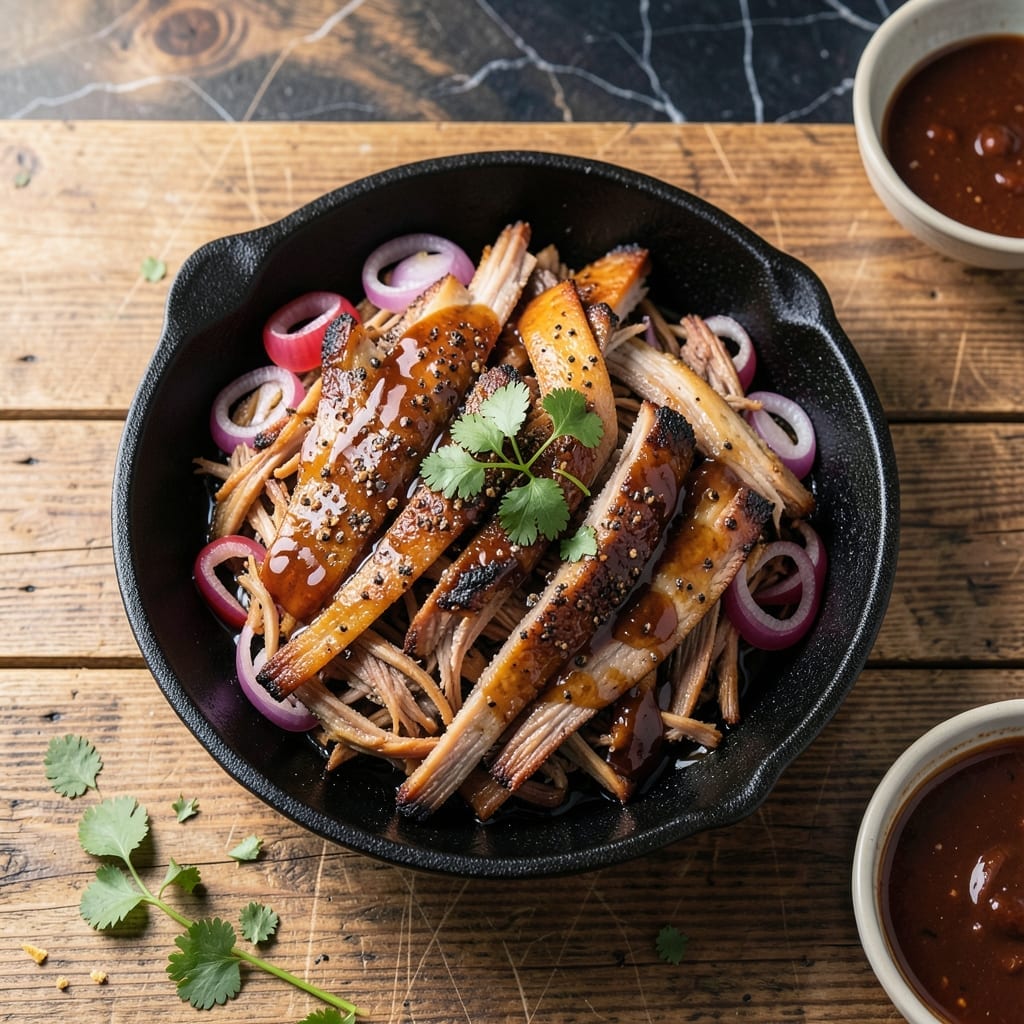
Achieving fall-off-the-bone pulled pork on the grill requires patience and precision. This method delivers tender, smoky results that rival any BBQ joint.
I’ve perfected this approach through years of trial, focusing on low, indirect heat to break down the pork shoulder slowly. The key is maintaining a consistent temperature between 225-250°F.
What emerges is meat so tender it shreds effortlessly, infused with deep, smoky flavor from hours over the coals. The bark forms a perfect crust, locking in juices.
Serve on buns with tangy coleslaw or pickles for the ultimate BBQ experience. Every bite delivers that promised tenderness.
Ingredients for Bbq Pulled Pork Recipe Grill
Pork shoulder and bold spices transform into that legendary smoky tenderness you crave.
| Ingredient | Amount | Notes |
|---|---|---|
| Pork Shoulder 🥩 | 5 lb | Bone-in preferred for flavor |
| BBQ Dry Rub 🌶️ | ½ cup | Store-bought or homemade blend |
| Kosher Salt 🧂 | 2 tbsp | Diamond Crystal brand preferred |
| Coarse Black Pepper 🌶️ | 2 tbsp | Freshly ground for best results |
| Brown Sugar 🍚 | ¼ cup | Light or dark variety |
| Apple Cider Vinegar 🍏 | ½ cup | For tangy mop sauce |
| Hickory Wood Chunks 🪵 | 4 pieces | Soaked in water for 30 minutes |
| BBQ Sauce 🍅 | 2 cups | Kansas City style recommended |
| Yellow Mustard 🟡 | ¼ cup | For binder in dry rub |
| Garlic Powder 🧄 | 1 tbsp | Fresh ground preferred |
| Onion Powder 🧅 | 1 tbsp | Essential for depth of flavor |
| Hamburger Buns 🍞 | 12 pieces | Soft brioche style preferred |
The pork shoulder is critical here—bone-in from a reputable butcher delivers the best fat content and flavor. Look for good marbling and a thick fat cap (about 1/4 inch). Costco and Whole Foods consistently carry quality cuts. Avoid pre-cubed pork; you need a whole piece for even cooking and bark formation. The weight is non-negotiable—anything under 4 pounds dries out too quickly.
No hickory chunks? Pecan or apple wood work beautifully (hickory’s boldness is ideal but not mandatory). Substitute liquid smoke at 1 tsp per pound if you must, but fresh wood is always better. For the BBQ sauce, Stubb’s Original or Sweet Baby Ray’s balance sweetness and tang. The apple cider vinegar can be swapped for white vinegar, but the apple’s mildness complements the pork better.
Store uncooked pork in the fridge for up to 3 days or freeze for 6 months. Cooked pulled pork keeps 4-5 days refrigerated or 3 months frozen. Always reheat gently with a splash of apple juice to maintain moisture.
Why You’ll Love This Recipe
- Set It and Forget: I toss the pork shoulder on the grill with the dry rub, then let the heat do the work—no babysitting required.
- Sweet and Smoky: Brown sugar in the rub caramelizes while the pork slow-cooks, giving that sticky, finger-licking glaze.
- Feeds the Whole Crew: One pork shoulder stretches into sandwiches, tacos, or sliders—honestly, it’s my go-to for parties.
- Leftovers for Days: The flavor gets even better overnight, so I make extra for easy lunches all week.
Step-by-Step Instructions for BBQ Pulled Pork on the Grill
Master the technique for achieving that perfect balance of smoky depth and melt-in-your-mouth texture.
Step 1: Prepare the Pork Shoulder with a Flavorful Rub
Begin by creating a robust dry rub foundation. In a bowl, combine the 0.5 cup BBQ dry rub, 2 tbsp kosher salt, 2 tbsp coarse black pepper, 0.25 cup brown sugar, 1 tbsp garlic powder, and 1 tbsp onion powder. The brown sugar will caramelize beautifully during the long cook.
Pat the 5 lb pork shoulder dry with paper towels to ensure the rub adheres properly. Apply a thin layer of the 0.25 cup yellow mustard as a binder—this creates a tacky surface for the rub to cling to. Massage the dry rub mixture all over the pork, pressing it in firmly. Let it rest at room temperature for 30 minutes while you prepare the grill.
Step 2: Set Up the Grill for Indirect Heat with Hickory Smoke
Arrange your charcoal for indirect cooking by banking the coals to one side of the grill. Soak the 4 pieces hickory wood chunks in water for 30 minutes to prevent them from burning too quickly. Once the coals are covered with white ash, add the soaked hickory chunks directly on top.
Maintain a consistent grill temperature of 250-275°F. Place a disposable aluminum pan filled with water on the empty side of the grill to help regulate temperature and add moisture. This setup creates the ideal environment for low-and-slow cooking, allowing the pork to become tender while absorbing that signature hickory smoke flavor.
Step 3: Smoke the Pork to Perfection
Place the pork shoulder on the grill grate over the indirect heat side, fat-side up. Insert a meat thermometer into the thickest part of the pork, avoiding the bone. Close the lid and let it smoke undisturbed for 4-5 hours, or until the internal temperature reaches 165°F.
During this time, resist the urge to peek—every time you open the lid, you lose valuable heat and smoke. After the first 2 hours, begin spritzing the pork every 45-60 minutes with a mixture of the 0.5 cup apple cider vinegar and water (equal parts) to keep the surface moist and build up a beautiful bark.
Step 4: Wrap and Finish the Cook
Once the pork hits 165°F, it will likely stall as the moisture evaporates. Wrap the pork tightly in pink butcher paper or heavy-duty aluminum foil to push through this plateau. Return it to the grill and continue cooking until the internal temperature reaches 200-205°F, about 2-3 more hours.
You’ll know it’s ready when a probe or fork slides into the meat with virtually no resistance, like butter. This is the hallmark of perfectly tender pulled pork. Remove the pork from the grill and let it rest, wrapped, for at least 1 hour—this allows the juices to redistribute and the collagen to fully break down.
Step 5: Shred and Sauce the Pork
Unwrap the pork and transfer it to a large cutting board or bowl. Using two forks or meat claws, shred the pork into bite-sized pieces, discarding any large fat chunks. The meat should pull apart effortlessly, with a smoky aroma that fills the air.
Toss the shredded pork with 2 cups BBQ sauce to coat evenly. I prefer to add about 1.5 cups initially and reserve the remaining 0.5 cup for serving, allowing everyone to adjust the sauciness to their preference. Serve immediately on the 12 pieces hamburger buns for the ultimate sandwich experience.
Pro Tips For Making Bbq Pulled Pork Recipe Grill
- Start Low and Slow: Keep your grill at 225-250°F and give the pork shoulder 6-8 hours—any hotter and the meat will toughen before it tenderizes. I learned this the hard way after my first batch came out like leather.
- Pat It Dry: Blot the pork shoulder with paper towels before applying the dry rub; excess moisture prevents the bark from forming. Sounds weird, but it works.
- Don’t Rush the Rest: Once it’s done, wrap the pork in foil and let it rest for at least 30 minutes—this keeps the juices from running all over your cutting board. I skip this when I’m lazy, but the dish is noticeably better when I don’t.
- Double the Rub: Use more dry rub than you think—about ¼ cup for a 4-pound shoulder. The sugar and spices need to build a thick crust to stand up to the long cook.
Essential Equipment for This Dish
Grill Essentials
Invest in a quality charcoal grill with good airflow control—I swear by my Weber 22-inch kettle. Its vent system lets me dial in that perfect 250°F temperature for hours of steady smoking. A chimney starter is non-negotiable for even, chemical-free coal ignition. 🔥
Temperature Control Tools
A dual-probe thermometer like the ThermoWorks Smoke tracks both grill and meat temps simultaneously. I clip the grill probe near the pork and insert the meat probe into the thickest part. This setup costs about $100 but prevents costly mistakes.
Smoke Management
Use a cast iron smoker box for wood chunks if your grill lacks built-in smoke features. I soak 4 hickory chunks for 30 minutes before adding them to the box. Place it directly over the coals for consistent smoke throughout the cook.
Pork Handling Gear
Heavy-duty nitrile gloves protect your hands when applying the rub to the raw 5 lb pork shoulder. I also keep a meat injectors handy for adding moisture if the pork seems dry during the long cook. The gloves run about $10 for a box of 100.
Resting and Serving
A large butcher paper roll is essential for wrapping the pork during its rest. I use pink butcher paper from a restaurant supply store—it breathes better than foil. For serving, meat claws make shredding effortless and feel satisfyingly primal. 💪
Cleanup Must-Haves
Keep a grill brush with a long handle and a disposable aluminum pan for catching drippings. I fill the pan with water during cooking to maintain moisture, then use it to collect ashes afterward. A shop vacuum designed for ash makes cleanup nearly effortless.
Nutrition Facts
Frequently Asked Questions
What’s the ideal internal temperature for shredding?
Pull it off at 200-205°F—the collagen fully breaks down here. Below 195°F, it may still be tough. Probe test: it should slide in like butter.
Can I use a gas grill instead of charcoal?
Yes, but add wood chips in a smoker box for that authentic flavor. Maintain 250°F indirect heat and avoid direct flames. Gas grills work, but charcoal adds depth.
How long should the pork rest after cooking?
Rest wrapped for at least 1 hour—up to 2 hours is even better. This lets juices redistribute. Skipping this step risks dry, uneven results.
What if my pork isn’t tender after 8 hours?
Check your grill temperature—it may be running too low. Wrap in foil with 0.5 cup apple juice and continue cooking until probe-tender. Patience wins here.

- 6 Egg Cake Recipe with Oil: Light as Air With Buttery Moisture - October 4, 2026
- 4 Bean Casserole Recipe: One-Pan Heartiness With Smoky Paprika Depth - October 4, 2026
- 3-Ingredient Keto Mug Cake Recipe: Microwave Magic in 2 Minutes - October 4, 2026