
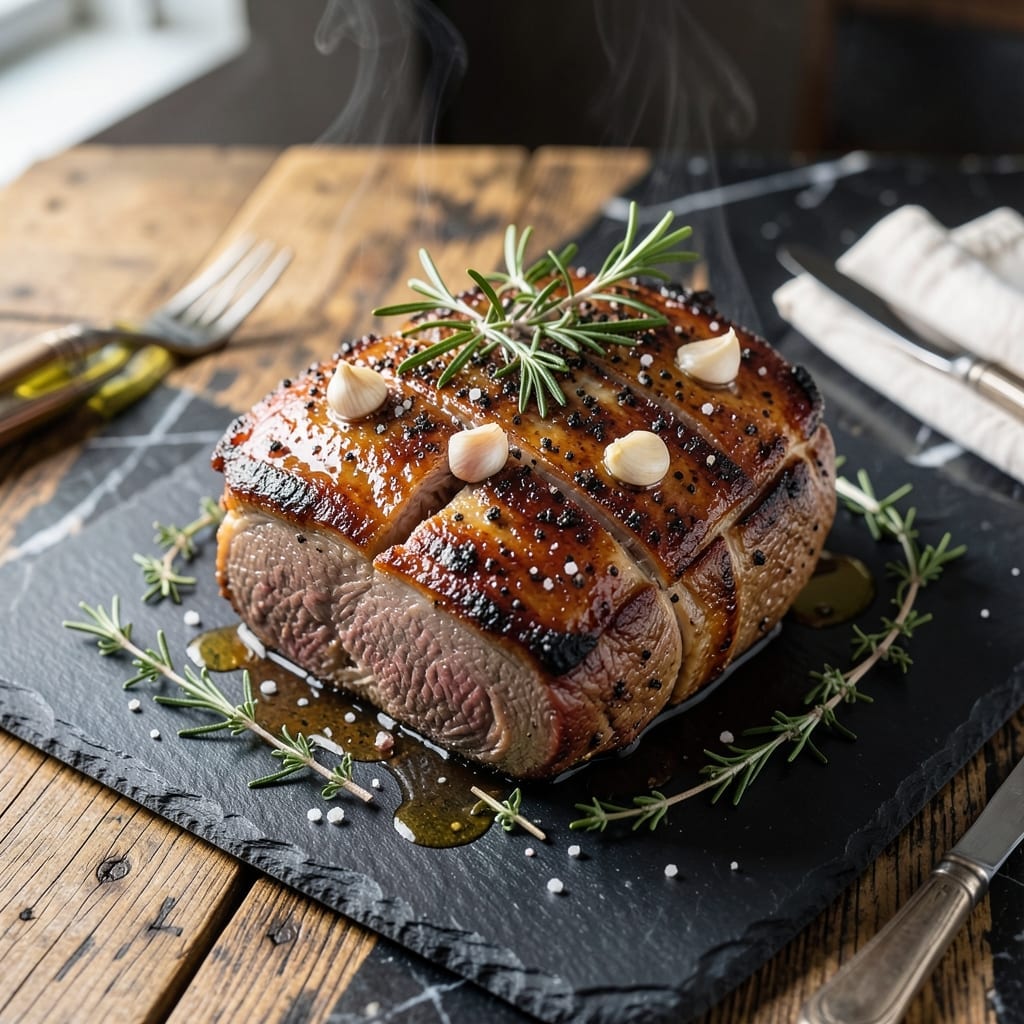
I’ve been perfecting this slow-roasted beef chuck rib for years, and it never fails to impress. This cut transforms into something magical with the right technique.
The secret is patience and the right temperature. A low and slow approach turns tough fibers into melt-in-your-mouth tenderness that rivals prime rib.
Simple seasonings and time work wonders here. No fancy marinades needed—just salt, pepper, and the oven doing its thing.
What comes out is a roast so tender it falls apart at the touch of a fork, with rich, beefy flavor in every bite.
Ingredients for Beef Chuck Rib Roast
Simple seasonings and one incredible cut make this dish unforgettable. Nothing extra needed here.
| Ingredient | Amount | Notes |
|---|---|---|
| Beef Chuck Rib Roast 🥩 | 3 lb | Bone-in preferred for flavor |
| Kosher Salt 🧂 | 1 ½ tbsp | Diamond Crystal preferred |
| Coarse Black Pepper 🌶️ | 1 tbsp | Freshly cracked preferred |
| Garlic Cloves 🧄 | 6 cloves | Smashed, unpeeled |
| Fresh Rosemary 🌿 | 3 whole | Sprigs, bruised |
| Fresh Thyme 🌿 | 4 whole | Sprigs, bruised |
| Extra-Virgin Olive Oil 🫒 | 2 tbsp | For searing and finishing |
| Red Wine 🍷 | 1 cup | Dry variety like Cabernet |
| Beef Stock 🥣 | 1 cup | Low-sodium preferred |
| Yellow Onion 🧅 | 1 whole | Quartered through root |
| Carrots 🥕 | 3 whole | Peeled, cut into chunks |
| Celery Stalks 🥬 | 2 whole | Cut into large pieces |
| Bay Leaves 🍃 | 2 whole | Dried or fresh |
| Unsalted Butter 🧈 | 2 tbsp | Optional for finishing |
The beef is everything here. Bone-in chuck rib roast from a trusted butcher gives you the deepest flavor—Costco has great options if you’re shopping big-box. Look for good marbling throughout the meat (those white fat streaks). I always let it sit at room temperature for 1 hour before roasting—even cooking starts with even temperature. Don’t trim the fat cap; it self-bastes during cooking.
No red wine? Substitute with extra beef stock plus 1 tbsp balsamic vinegar for depth. Fresh herbs are ideal, but dried work at one-third the amount. Short on time? Pre-cut mirepoix (onion, carrot, celery) from the grocery store saves chopping. The garlic can be left whole in the pan—no need to mince. If you’re avoiding alcohol entirely, beef broth alone still yields a rich result.
Leftovers keep beautifully—actually taste better the next day. Store in an airtight container for up to 5 days in the fridge or freeze for 3 months. Slice against the grain before storing for easier reheating. The rendered fat makes amazing roast potatoes later (don’t toss it!).
Why You’ll Love This Recipe
- Set and Forget: I rub the roast with salt, pepper, garlic, and rosemary, pop it in the oven, and walk away—no babysitting required.
- Sunday or Tuesday: Equally at home feeding a holiday crowd or just my family on a random weeknight.
- Leftovers for Days: One roast stretches into sandwiches, tacos, or stew—honestly, it’s the gift that keeps giving.
Step-by-Step Instructions for Beef Chuck Rib Roast
Here’s the method. Straightforward, tested, works every time.
Step 1: Season and Sear the Beef Chuck Rib Roast
Pat the 3 lb Beef Chuck Rib Roast completely dry with paper towels—this ensures a perfect sear. Season aggressively all over with the 1.5 tbsp Kosher Salt and 1 tbsp Coarse Black Pepper, pressing it into the meat so it adheres well. I always use freshly cracked pepper for the best flavor.
Heat the 2 tbsp Extra-Virgin Olive Oil in a large Dutch oven over medium-high heat until it shimmers. Add the roast and sear for 4-5 minutes per side until deeply browned. You’re looking for a rich, mahogany crust—this builds the foundation of flavor for the entire dish.
Step 2: Build the Aromatic Base
Remove the roast and set it aside. In the same pot, add the 1 whole Yellow Onion (quartered), 3 whole Carrots (peeled and chunked), and 2 whole Celery Stalks (cut into large pieces). Cook for 5 minutes until the vegetables begin to soften and brown.
Add the 6 cloves Garlic Cloves (smashed, unpeeled), 3 whole Fresh Rosemary (bruised), 4 whole Fresh Thyme (bruised), and 2 whole Bay Leaves. Stir for 1 minute until fragrant. This aromatic base will infuse the roast with layers of herbaceous depth.
Step 3: Deglaze and Braise to Tenderness
Pour in the 1 cup Red Wine and scrape up all the browned bits from the bottom of the pot with a wooden spoon. Let it simmer for 3-4 minutes until the liquid reduces by half. This deglazing step captures all that concentrated beefy flavor.
Return the roast to the pot, add the 1 cup Beef Stock, and bring to a simmer. Cover tightly and transfer to a preheated 325°F oven. Braise for 2.5-3 hours until the meat is fork-tender and nearly falling off the bone. The low and slow method guarantees that melt-in-your-mouth tenderness.
Step 4: Rest and Finish with Butter
Carefully transfer the roast to a cutting board and tent loosely with foil. Let it rest for 20 minutes—this allows the juices to redistribute, ensuring every slice is moist and flavorful. Skim any excess fat from the braising liquid if desired.
For a final touch of richness, stir the 2 tbsp Unsalted Butter into the warm braising liquid until melted. Serve the roast sliced or shredded, with the vegetables and sauce spooned over the top. The meat should pull apart effortlessly with a gentle tug.
Pro Tips For Making Beef Chuck Rib Roast
- Bring to Room Temp: Pull the roast out of the fridge 1-2 hours before cooking—cold meat seizes up and cooks unevenly, and I learned this the hard way with a tough, dry center.
- Crush the Garlic: Smash the garlic cloves with the flat of your knife before peeling; it releases more flavor into the meat and saves you from fishing out whole cloves later.
- Skip the High Heat: Resist the urge to blast it at 450°F—start at 325°F and go low and slow, or the chuck’s connective tissue won’t have time to break down properly.
- Rest It Long: Give it a full 15-20 minutes under foil after roasting—it keeps the juices from running all over the cutting board instead of staying in the meat, where they belong.
Best Sauces and Condiments for These Flavors
Classic Red Wine Sauce
Reduce the braising liquid from your roast by simmering for 10-15 minutes until thickened. I strain mine through a fine-mesh sieve for a smooth texture. The wine and beef stock create a deep, savory base that perfectly complements the meat. 🍷
Horse Radish Cream
Mix ½ cup sour cream with 2 tbsp prepared horseradish and 1 tsp Dijon mustard. This sharp, creamy condiment cuts through the richness beautifully. I always make extra for sandwiches the next day.
Chimichurri Sauce
Blend 1 cup fresh parsley, 3 garlic cloves, ¼ cup red wine vinegar, ½ cup olive oil, and ½ tsp red pepper flakes. This bright, herby sauce adds a fresh contrast to the rich, slow-cooked beef.
Creamy Garlic Mashed Potatoes
Use the rendered fat from your roast to make the most flavorful mashed potatoes. I fold in ½ cup grated Parmesan for extra depth. The beef juices soak into the potatoes beautifully. 💪
Pickled Vegetables
Quick-pickle 1 cup sliced red onion and 1 cup sliced radishes in ½ cup apple cider vinegar with 1 tbsp sugar and 1 tsp salt. The acidity balances the richness of the roast perfectly.
Gravy Option
Thicken the braising liquid with a cornstarch slurry (1 tbsp cornstarch + 1 tbsp water) for a traditional gravy. I whisk it in at the end for a glossy finish. Serve in a gravy boat for easy drizzling.
Nutrition Facts
Frequently Asked Questions
What temperature should the oven be?
Preheat your oven to 325°F for the perfect braising temperature. This low heat ensures the meat cooks slowly and evenly.
How do I know when it’s done?
The roast is ready when it reaches 195-203°F internally and pulls apart easily with a fork. This usually takes 2.5-3 hours.
Can I use a slow cooker instead?
Yes! Sear the meat first, then cook on low for 8-10 hours or high for 5-6 hours. The result will be just as tender.
What if my roast is tough?
It likely needs more time. Return it to the oven and check every 30 minutes until fork-tender. Patience is key!

- 6 Egg Cake Recipe with Oil: Light as Air With Buttery Moisture - October 4, 2026
- 4 Bean Casserole Recipe: One-Pan Heartiness With Smoky Paprika Depth - October 4, 2026
- 3-Ingredient Keto Mug Cake Recipe: Microwave Magic in 2 Minutes - October 4, 2026