
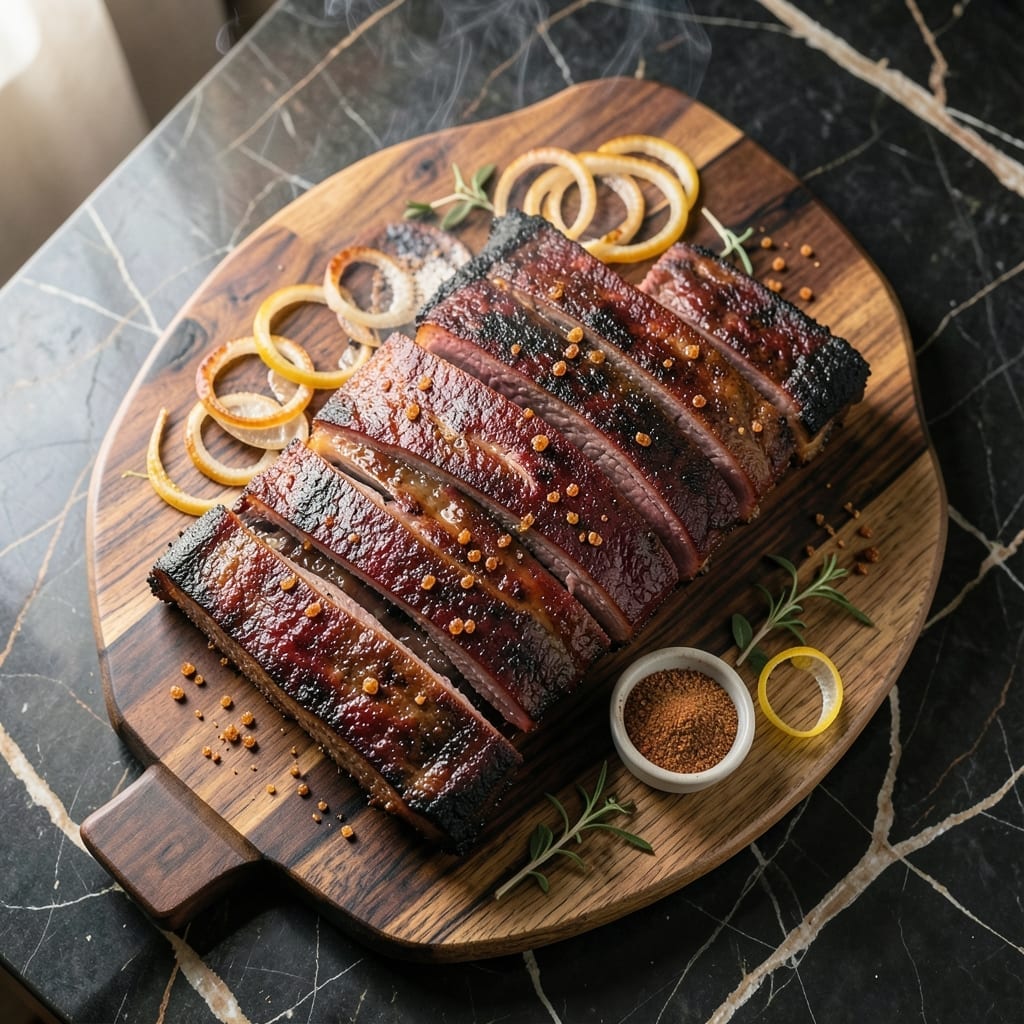
This recipe transforms beef back ribs into a showstopping dish with fall-off-the-bone tenderness and deep, smoky flavor. The slow-smoking process is what makes these ribs truly special, infusing every bite with rich, prehistoric taste.
I’ve perfected this method to ensure the meat stays juicy while developing a beautiful bark on the outside. The key is patience—low and slow cooking at 225°F for hours lets the collagen break down just right.
What you’ll get is ribs so tender they nearly melt in your mouth, with a robust crust that holds all the smoky goodness inside. These are ideal for impressing guests or treating yourself to a meal worth savoring.
Serve with classic BBQ sides like coleslaw or baked beans for the full experience.
Ingredients for Beef Dino Ribs
Pantry staples and a few key spices create this smoky, tender masterpiece.
| Ingredient | Amount | Notes |
|---|---|---|
| Beef Back Ribs 🥩 | 4 lb | Bone-in, membrane removed |
| Coarse Kosher Salt 🧂 | 2 tbsp | Diamond Crystal preferred |
| Black Pepper 🌶️ | 2 tbsp | Freshly ground, coarse |
| Garlic Powder 🧄 | 2 tbsp | Not garlic salt |
| Onion Powder 🧅 | 2 tbsp | Freshly ground preferred |
| Smoked Paprika 🌶️ | 1 tbsp | Sweet or hot variety |
| Brown Sugar 🍚 | ½ cup | Light or dark |
| Mustard Powder 🟡 | 1 tbsp | For bark formation |
| Apple Cider Vinegar 🍏 | ½ cup | For spritzing ribs |
| Olive Oil 🫒 | ¼ cup | For binder in rub |
| Hickory Wood Chunks 🪵 | 4 pieces | For smoking |
| Apple Juice 🍎 | 1 cup | For spritzing |
The beef back ribs are the star. Look for well-marbled meat with thick cuts—this ensures they hold up to the long smoke. Most butchers can cut them to order, or Costco often carries pre-packaged ribs. Remove the membrane yourself if not already done (it prevents the rub from penetrating). The coarse kosher salt is critical here—Diamond Crystal is the professional choice for even distribution.
Out of smoked paprika? Regular paprika plus half teaspoon liquid smoke works in a pinch. No apple cider vinegar? White vinegar or lemon juice can substitute, but the flavor will be sharper. For the wood, hickory gives that classic BBQ taste, but cherry or pecan wood adds a sweeter note. The brown sugar can be swapped for raw sugar if you prefer a deeper molasses flavor.
Store uncooked ribs in the fridge for up to 3 days or freeze for 6 months. Once smoked, they keep in the fridge for 4 days or freeze for 3 months. Always wrap tightly to prevent freezer burn.
Why You’ll Love This Recipe
- I’ll be real: the meat tastes even better the next day in tacos or sandwiches.
- Set It and Forget: I rub the ribs with salt, pepper, and those powders, then let the oven do the work for hours.
- That Garlic Punch: The garlic and onion powder crust on the beef back ribs is ridiculously good—crispy, savory, and worth every bite.
- Feeds My Crew: One slab of beef dino ribs serves my whole family, and honestly, it’s the only thing that gets everyone to the table on time.
Step-by-Step Instructions for Beef Dino Ribs
This method delivers tender, fall-off-the-bone meat with a perfect bark every time.
Step 1: Apply the Dry Rub to the Beef Back Ribs
In a bowl, combine the 2 tbsp Coarse Kosher Salt, 2 tbsp Black Pepper, 2 tbsp Garlic Powder, 2 tbsp Onion Powder, 1 tbsp Smoked Paprika, 0.5 cup Brown Sugar, and 1 tbsp Mustard Powder. Stir until evenly mixed.
Pat the 4 lb Beef Back Ribs dry with paper towels, then brush lightly with 0.25 cup Olive Oil. Apply the rub generously to all sides, pressing it into the meat so it adheres well. This creates the foundation for a flavorful bark. Let the ribs sit at room temperature for 30-45 minutes while you prepare the smoker.
Step 2: Set Up the Smoker with Hickory Wood
Preheat your smoker to 225°F using the 4 pieces Hickory Wood Chunks for a rich, smoky flavor. Maintain this temperature throughout the cook—stable heat is key to tender meat.
Once the smoker reaches temperature, place the ribs bone-side down on the grate. Position them away from direct heat to ensure even cooking. Close the lid and let the smoke work its magic. Avoid opening the lid unnecessarily, as this disrupts the cooking environment and prolongs the process.
Step 3: Smoke and Spritz for Moisture
Smoke the ribs undisturbed for 3 hours. After this time, begin spritzing every 45-60 minutes with a mixture of 0.5 cup Apple Cider Vinegar and 1 cup Apple Juice. This keeps the surface moist and enhances bark development.
Continue smoking until the ribs reach an internal temperature of 195-203°F, which typically takes 8-10 hours total. You’ll know they’re ready when the meat probes like butter and pulls back from the bones slightly.
Step 4: Rest and Serve
Once the ribs reach the desired tenderness, remove them from the smoker and wrap loosely in foil. Let them rest for 30-60 minutes—this allows the juices to redistribute, ensuring every bite is moist and flavorful.
Slice between the bones and serve immediately. The meat should pull away cleanly from the bone with minimal effort, and the bark should be dark, sticky, and packed with smoky-sweet flavor from the rub and spritz.
Pro Tips For Making Beef Dino Ribs
- Dry the Ribs First: Pat those beef back ribs bone-dry with paper towels before seasoning—I learned this the hard way after my first batch steamed instead of seared.
- Go Heavy on Salt: Use more coarse kosher salt than you think, especially on the meaty side; these ribs are thick and need it to penetrate.
- Low and Slow Wins: After a hot sear, drop the heat to 275°F and let them ride for 5-6 hours—rushing this just gives you tough meat.
- Skip the Sauce Early: Resist the urge to baste with anything until the last hour, or you’ll wash off that beautiful crust you worked so hard to build.
Dietary Considerations for This Recipe
Keto-Friendly Option
This dish is naturally low-carb if you adjust the rub. Replace brown sugar with 1:1 monk fruit sweetener—it caramelizes similarly without the sugar. The rest of the recipe stays the same, keeping net carbs under 5g per serving. 💪
Gluten-Free Adaptation
All ingredients here are naturally gluten-free, but check your spice blends for hidden fillers. I recommend Primal Palate or Simply Organic brands for certified gluten-free options. The cooking process itself doesn’t introduce gluten.
Low-Sodium Modifications
Cut the kosher salt by half and boost umami with 1 tbsp mushroom powder instead. The smoked paprika and garlic powder still deliver big flavor without excess sodium. I find this version just as satisfying.
Dairy-Free Note
This recipe is inherently dairy-free—no butter, cheese, or milk products are used. The only potential concern is cross-contamination in shared smokers. If that’s an issue, clean your smoker thoroughly or use dedicated equipment.
Paleo Considerations
For strict paleo, swap the brown sugar for coconut sugar and ensure your mustard powder has no additives. The rest aligns perfectly with paleo guidelines. The long smoking process preserves all the natural flavors.
Allergen Awareness
The primary allergen here is mustard powder. If you have a mustard allergy, omit it and add an extra 1 tsp onion powder for depth. Always verify spice labels for processing in facilities with common allergens. 💡
Nutrition Facts
Frequently Asked Questions
How long should I smoke them at 225°F?
Plan for 8-10 hours total. Smoke undisturbed for the first 3 hours, then spritz every 45-60 minutes until they reach 195-203°F internally.
Can I use a different type of wood?
Yes! While hickory is classic, cherry or pecan add sweeter notes. Avoid softwoods like pine, which can impart bitter flavors.
Why do they need to rest after smoking?
Resting for 30-60 minutes lets juices redistribute. Skip this step, and you’ll lose moisture when slicing.
How do I know when they’re done?
The meat should probe like butter and pull back from the bones. An internal temp of 195-203°F confirms tenderness.

- 6 Egg Cake Recipe with Oil: Light as Air With Buttery Moisture - October 4, 2026
- 4 Bean Casserole Recipe: One-Pan Heartiness With Smoky Paprika Depth - October 4, 2026
- 3-Ingredient Keto Mug Cake Recipe: Microwave Magic in 2 Minutes - October 4, 2026