
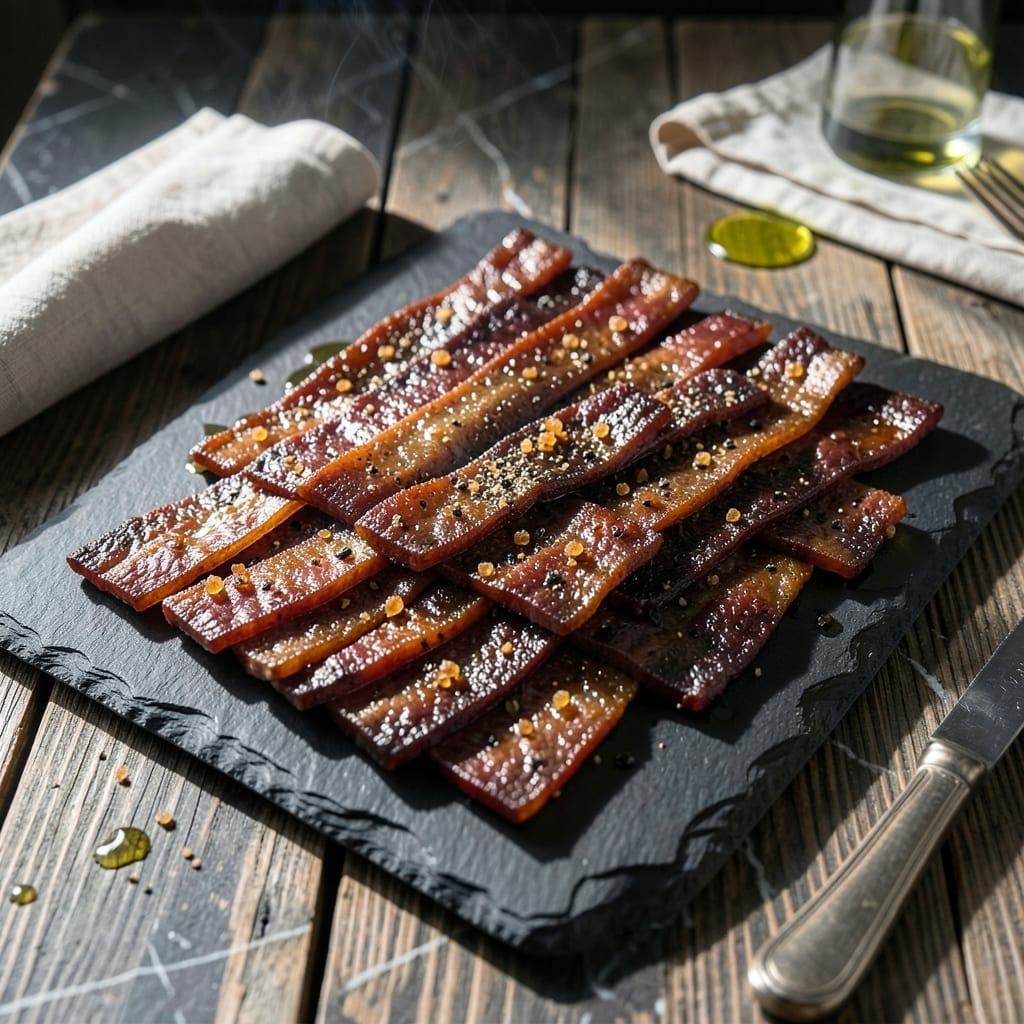
This smoker method transforms beef into chewy, deeply flavorful jerky with minimal effort. The low-and-slow approach ensures even drying while infusing rich, smoky notes throughout every strip.
Using simple ingredients and precise temperature control, this technique delivers consistent results. The marinade penetrates the meat, creating a perfect balance of savory and smoky in each bite.
Ingredients for Beef Jerky Recipe Smoker
Lean beef and bold marinade ingredients create these smoky, chewy strips with minimal effort.
| Ingredient | Amount | Notes |
|---|---|---|
| Beef Top Round 🥩 | 2 lb | Lean, sliced against the grain |
| Soy Sauce 🫒 | ¾ cup | Low-sodium preferred |
| Worcestershire Sauce 🫒 | ¼ cup | Anchovy-free if needed |
| Brown Sugar 🍚 | ½ cup | Light or dark variety |
| Black Pepper 🌶️ | 1 tbsp | Coarsely ground for texture |
| Garlic Powder 🧄 | 1 tbsp | Not garlic salt |
| Onion Powder 🧅 | 1 tbsp | Fresh ground preferred |
| Smoked Paprika 🌶️ | 1 tbsp | For authentic smokiness |
| Cayenne Pepper 🔥 | ½ tsp | Adjust to heat preference |
| Liquid Smoke 💨 | 1 tsp | Optional for extra depth |
| Salt 🧂 | 1 tsp | Kosher or sea salt |
| Apple Cider Vinegar 🍏 | 2 tbsp | For acidity balance |
The beef cut is critical here. Top round offers the ideal lean-to-fat ratio for proper drying without spoilage. Source from a reputable butcher or Whole Foods for consistent quality. Slice against the grain yourself—pre-sliced jerky meat often contains additives and varies in thickness, affecting the final texture significantly.
No Worcestershire? Coconut aminos provide a similar umami depth though the flavor profile differs slightly. Brown sugar can be swapped for honey or maple syrup (use 20% less). For heat-sensitive palates, reduce cayenne by half. Liquid smoke is optional but enhances the smoker effect—Wright’s or Colgin brands are reliable.
Marinated beef keeps in the fridge for 24-48 hours before smoking. Finished jerky stores in an airtight container at room temperature for 1-2 weeks, or freeze for 3 months (though it rarely lasts that long). Slice thickness uniformly for even drying throughout the batch.
Why You’ll Love This Recipe
- Set It and Forget: I slice the beef, mix the marinade, and let the smoker do all the work for hours.
- Sweet-Savory Punch: The brown sugar caramelizes while soy and Worcestershire pack that umami depth I crave.
- Trail or Tailgate: Honestly, it’s my secret weapon for camping trips, road trips, and even my kid’s lunchbox.
- Stretches Further: A whole top round turns into pounds of jerky that keep for weeks—my wallet thanks me.
Step-by-Step Instructions for Beef Jerky in a Smoker
Master the technique for perfectly textured jerky with deep, smoky flavor every time.
Step 1: Prepare and Marinate the Beef
Begin by partially freezing the 2 lb Beef Top Round for 30-45 minutes to firm it up. This makes slicing against the grain much easier and more precise. Slice into ¼-inch thick strips, maintaining uniform thickness for even drying.
In a large bowl, whisk together the 0.75 cup Soy Sauce, 0.25 cup Worcestershire Sauce, 0.5 cup Brown Sugar, 1 tbsp Black Pepper, 1 tbsp Garlic Powder, 1 tbsp Onion Powder, 1 tbsp Smoked Paprika, 0.5 tsp Cayenne Pepper, 1 tsp Liquid Smoke, 1 tsp Salt, and 2 tbsp Apple Cider Vinegar until the sugar dissolves. Submerge the beef strips completely in the marinade.
Cover and refrigerate for 12-24 hours, stirring once or twice to redistribute the marinade. This extended marinating time ensures maximum flavor penetration and begins the curing process for safe preservation.
Step 2: Pre-Smoke Drying Phase
Remove the beef strips from the marinade, allowing excess to drip off, but don’t rinse. Pat gently with paper towels to remove surface moisture—this prevents steaming instead of drying. Arrange the strips on wire racks, ensuring they don’t touch each other for proper air circulation.
Set your smoker to 165°F and place the racks inside. Smoke for 1-2 hours until the surface of the beef appears dry and develops a slight tacky texture, known as the “pellicle.” This sticky layer helps smoke adhere to the meat and is crucial for proper jerky formation.
Step 3: Low-Temperature Smoking
Reduce the smoker temperature to 145-155°F and maintain this range for 4-6 hours. Use a mild wood like hickory or apple for consistent, clean smoke. The jerky is ready when it bends but doesn’t break, with no moist spots remaining.
Check the thickest pieces for doneness—they should be pliable but not brittle. The internal temperature of the jerky should reach 160°F to ensure food safety. Rotate racks halfway through for even drying, as lower racks may dry faster due to heat rising.
Step 4: Cooling and Storage
Remove the jerky from the smoker and let it cool completely on the racks at room temperature for 1-2 hours. This cooling period allows the jerky to finish drying and develop its final texture. Resist the temptation to sample while warm—the texture changes significantly as it cools.
Once cooled, store in airtight containers or resealable bags. For maximum shelf life, refrigerate for up to 2 weeks or freeze for 3-4 months. The jerky should maintain its chewy texture and intense smoky flavor throughout storage.
Pro Tips For Making Beef Jerky Recipe Smoker
- Freeze First: Partially freeze the top round for 30-60 minutes before slicing—makes thin, even cuts way easier. I learned this the hard way after struggling with jagged strips that dried unevenly.
- Pat It Dry: After marinating, blot the beef strips thoroughly with paper towels. Sounds tedious, but it helps the smoker work its magic instead of steaming the meat.
- Watch the Temp: Keep your smoker between 160-180°F—any higher and you risk cooking the jerky instead of dehydrating it. After ruining a batch at 200°F, I now use a probe thermometer religiously.
- Skip the Fat: Trim every visible speck of fat from the top round. Fat doesn’t dry out and can go rancid, ruining your jerky’s shelf life—I was skeptical until I tried it and tasted the difference.
Dietary Considerations for This Recipe
Keto-Friendly Options
This beef jerky recipe is naturally keto-friendly, as it’s high in protein and low in carbs. To ensure it fits your macros, skip sugary marinades and opt for sugar-free alternatives like liquid smoke, soy sauce (or coconut aminos), and spices. A touch of erythritol or monk fruit sweetener can add sweetness without the carbs.
Gluten-Free
For a gluten-free version, replace soy sauce with tamari or coconut aminos. Always check labels on spices and seasonings to avoid hidden gluten. The rest of the recipe—beef, salt, and smoke—is naturally gluten-free, making it a safe, delicious snack.
Allergens
Beef jerky is typically free from common allergens like dairy, nuts, and eggs, but cross-contamination can occur if shared equipment is used. If allergies are a concern, use dedicated tools and verify all ingredient labels, especially for marinades or spice blends.
Vegetarian Modifications
While traditional jerky uses beef, you can make a vegetarian version with marinated tofu, seitan, or portobello mushrooms. Slice thinly, marinate in a smoky blend, and smoke until chewy. The process mirrors beef jerky but caters to plant-based diets.
Low-Sodium
To reduce sodium, cut back on salt in the marinade and use low-sodium soy sauce or skip it entirely. Boost flavor with herbs, garlic, and citrus instead. Smoking adds depth, so you won’t miss the salt while keeping it heart-healthy.
Nutrition Facts

- 6 Egg Cake Recipe with Oil: Light as Air With Buttery Moisture - October 4, 2026
- 4 Bean Casserole Recipe: One-Pan Heartiness With Smoky Paprika Depth - October 4, 2026
- 3-Ingredient Keto Mug Cake Recipe: Microwave Magic in 2 Minutes - October 4, 2026