
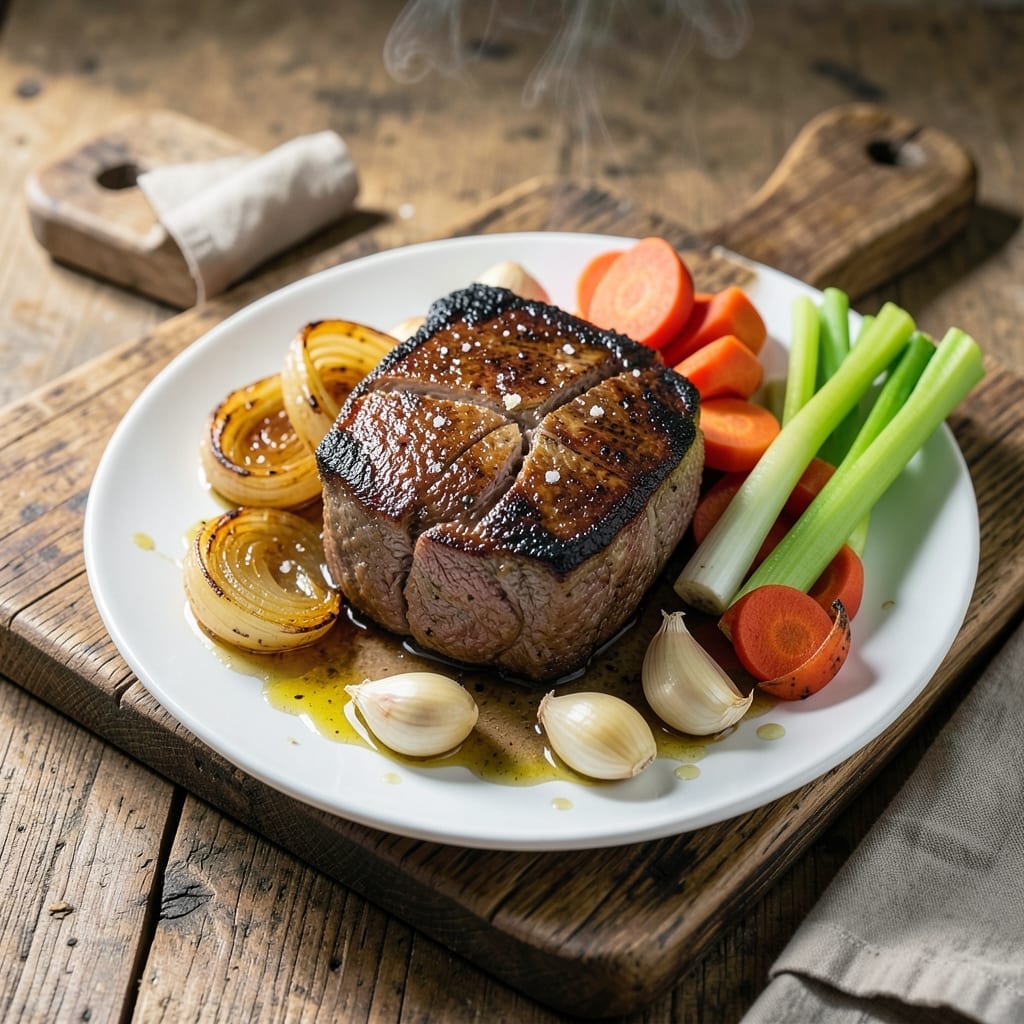
This slow-braised beef knuckle transforms a tough cut into meltingly tender perfection with minimal effort. The low, steady heat breaks down collagen into rich, velvety gelatin that coats every bite.
I developed this method after years of testing different cuts, and beef knuckle consistently delivers the best texture-to-flavor ratio. A simple aromatic base of onions, garlic, and bay leaves infuses the meat during its long, gentle cook.
The result is fall-apart beef with a deep, concentrated flavor that surpasses more expensive cuts. The braising liquid reduces into a glossy sauce that’s ideal for soaking up with crusty bread.
Serve with mashed potatoes or buttered egg noodles to complete the meal. This technique guarantees tender results every time.
Ingredients for Beef Knuckle
Transform a humble cut with these carefully selected ingredients for unmatched depth and tenderness.
| Ingredient | Amount | Notes |
|---|---|---|
| Beef Knuckle 🥩 | 2 ½ lb | Bone-in, trimmed of excess fat |
| Olive Oil 🫒 | 2 tbsp | Divided for searing and braising |
| Yellow Onions 🧅 | 2 whole | Large, thinly sliced |
| Garlic Cloves 🧄 | 6 cloves | Smashed, peeled |
| Carrots 🥕 | 3 whole | Peeled, cut into chunks |
| Celery Stalks 🌿 | 2 whole | Cut into large pieces |
| Bay Leaves 🍃 | 2 whole | Dried, for aromatic base |
| Dry Red Wine 🍷 | 2 cups | Bold variety like Cabernet Sauvignon |
| Beef Stock 🥣 | 3 cups | Low-sodium preferred |
| Tomato Paste 🍅 | 2 tbsp | For depth of flavor |
| Fresh Thyme 🌿 | 4 sprigs | Tied with kitchen twine |
| Kosher Salt 🧂 | 1 ½ tsp | Diamond Crystal brand preferred |
| Black Peppercorns 🌶️ | 1 tsp | Freshly cracked |
The beef knuckle is non-negotiable here—bone-in is ideal for collagen breakdown. Source from Whole Foods or Local Butcher for the best marbling. Look for pieces with a good fat cap (it renders down beautifully). The wine should be bold and dry—no cooking wine. A decent Cabernet Sauvignon works perfectly, and you can drink the rest with dinner.
No red wine? Beef broth with 1 tbsp balsamic vinegar per cup gets close. Fresh thyme is best, but dried at one-third the amount works. If you skip the tomato paste, add 1 tbsp ketchup (don’t judge). The carrots and celery can be swapped for parsnips or fennel—just keep the total veg volume similar.
This braise tastes even better the next day. Store in the fridge for up to 5 days or freeze for 3 months. The fat will solidify—skim it off before reheating. Serve with crusty bread to soak up that glossy, collagen-rich sauce.
Why You’ll Love This Recipe
- Hands-Off Cooking: I just sear the knuckle, add onions, garlic, and carrots, then let the oven do the work.
- Rich, Deep Flavor: The beef knuckle turns melt-in-your-mouth tender, soaking up the sweetness from the carrots and onions.
- Sunday Dinner Star: This is my go-to for family gatherings—it feels special but doesn’t require all-day attention.
- Stretches the Budget: One beef knuckle feeds my whole family for two meals, and the leftovers taste even better.
Step-by-Step Instructions for Beef Knuckle
Master the technique for fall-off-the-bone tenderness with these precise, professional steps.
Step 1: Sear the Beef Knuckle to Develop Flavor
Pat the 2.5 lb beef knuckle completely dry with paper towels. This ensures a proper sear rather than steaming. Season all sides aggressively with the 1.5 tsp kosher salt and freshly cracked 1 tsp black peppercorns. The salt should form a visible crust on the meat’s surface.
Heat 1 tbsp olive oil in a heavy Dutch oven over medium-high heat until shimmering. Add the beef knuckle and sear undisturbed for 4-5 minutes per side until deeply browned. You’re building the flavor foundation here—don’t rush. The meat should release easily from the pot when properly seared.
Step 2: Build the Aromatic Base
Remove the beef and set aside. In the same pot, add the remaining 1 tbsp olive oil if needed. Add the 2 whole yellow onions, 3 whole carrots, and 2 whole celery stalks. Sauté over medium heat for 5-6 minutes until the onions begin to soften and brown slightly at the edges.
Stir in the 2 tbsp tomato paste and cook for 1-2 minutes until it darkens slightly and coats the vegetables. Add the 6 cloves garlic cloves, 2 whole bay leaves, and 4 sprigs fresh thyme, cooking for another 30 seconds until fragrant. This step transforms the raw tomato paste into a rich, caramelized base.
Step 3: Deglaze and Begin the Braise
Pour in the 2 cups dry red wine and scrape up all the browned bits from the bottom of the pot with a wooden spoon. This deglazing step captures all the concentrated flavor from the searing process. Bring to a simmer and cook for 5 minutes until the liquid reduces by about half.
Return the beef knuckle to the pot along with any accumulated juices. Add the 3 cups beef stock. The liquid should come about two-thirds up the side of the meat. Bring to a gentle simmer—this is crucial. A rolling boil will make the meat tough rather than tender.
Step 4: Slow-Braise to Perfection
Once simmering, cover the pot and transfer to a 325°F oven. Braise for 2.5 to 3 hours, turning the beef knuckle every 45 minutes to ensure even cooking. You’ll know it’s ready when the meat pulls away from the bone easily and a fork inserts with no resistance.
Real talk: The low, steady heat breaks down the connective tissue in this tough cut, transforming it into meltingly tender perfection. If the liquid level drops below the meat during cooking, add a splash of water or additional stock to maintain the proper braising environment.
Pro Tips For Making Beef Knuckle
- Sear It Hard: I learned this the hard way—get your pan screaming hot before adding the beef knuckle, and don’t move it for at least 3-4 minutes per side to develop that deep crust.
- Soak the Knuckle: My grandmother swore by this, and she was right: soak the beef knuckle in cold water for 1-2 hours before cooking to draw out impurities and keep the broth clean.
- Skip the Chopping: Leave onions and carrots in large chunks—small pieces turn mushy during the long cook, while big ones hold their shape and flavor.
- Use a Pressure Cooker: Sounds weird, but it works: a pressure cooker cuts the cooking time from 6 hours to 90 minutes while keeping the meat fall-off-the-bone tender.
Wine and Beer Pairings for This Dish
Bold Red Wines
A full-bodied Cabernet Sauvignon from Napa Valley mirrors the wine used in braising, creating perfect harmony. Its dark fruit notes and firm tannins cut through the richness. I love Caymus or Robert Mondavi Reserve for this pairing. 🍷
Smooth Malbec
An Argentine Malbec offers plush blackberry and plum flavors that complement the deep beefy taste. The velvety texture matches the melting tenderness. Try Catena Zapata or Alamos—both are widely available and reasonably priced.
Earthy Syrah
A Syrah from the Rhône Valley brings peppery spice and smoky notes that enhance the dish’s complexity. The wine’s structure stands up to the hearty beef knuckle. Look for Guigal Côtes du Rhône for a reliable, affordable option.
Dark Beer Pairings
A robust porter or stout with coffee and chocolate notes works beautifully. Guinness or Founders Porter are excellent choices. The roasted malt flavors echo the caramelized edges of the beef.
Amber Ale Option
For a lighter beer, an amber ale with caramel and toasted malt notes complements without overwhelming. New Belgium Fat Tire or Sierra Nevada Pale Ale are great options. These beers cleanse the palate between bites.
Non-Alcoholic Choice
Try a sparkling black cherry soda like San Pellegrino Aranciata Rossa for a non-alcoholic pairing. Its deep fruit flavor and effervescence cut through the richness while matching the dish’s depth. ✨
Nutrition Facts
Frequently Asked Questions
What’s the best cooking method?
Slow-braising in the oven at 325°F for 2.5-3 hours yields the most tender results. This low and slow method breaks down the tough connective tissue perfectly.
Can I use a slow cooker instead?
Yes! Cook on low for 8-10 hours or high for 5-6 hours. The results will be just as tender, though the flavor development might be slightly less complex.
How do I know when it’s done?
The meat should pull away from the bone easily and a fork should insert with no resistance. If it’s still tough, give it another 30-45 minutes in the oven.
What if my braising liquid is too thin?
Remove the meat and simmer the liquid uncovered on the stovetop for 10-15 minutes until it reduces to your desired consistency. This concentrates the flavors beautifully.

- 6 Egg Cake Recipe with Oil: Light as Air With Buttery Moisture - October 4, 2026
- 4 Bean Casserole Recipe: One-Pan Heartiness With Smoky Paprika Depth - October 4, 2026
- 3-Ingredient Keto Mug Cake Recipe: Microwave Magic in 2 Minutes - October 4, 2026