
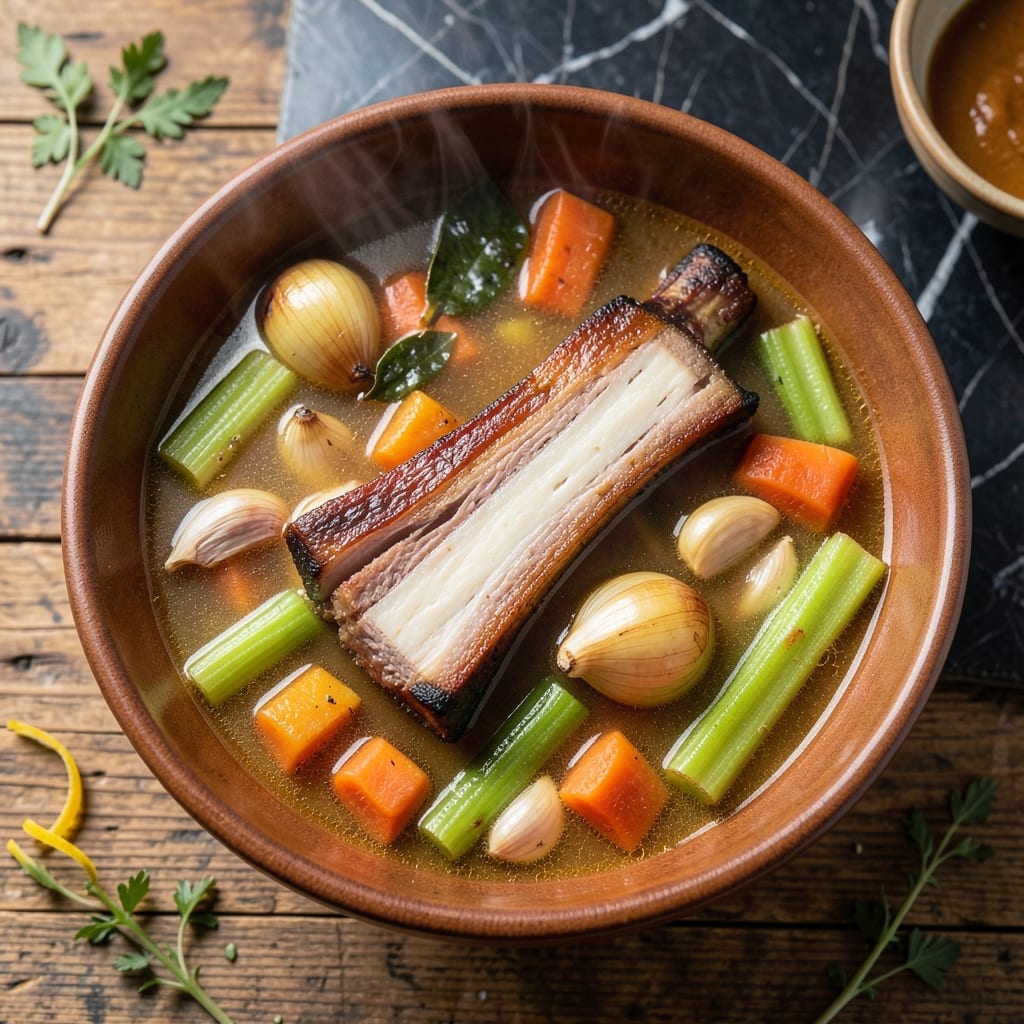
There’s an art to extracting the deep, velvety richness from beef marrow bones that transforms simple soup into something extraordinary. This time-honored technique yields a broth with unmatched depth and body.
The key lies in a slow simmer that gently coaxes out the marrow’s natural gelatin and flavor compounds. Proper preparation ensures a clear, rich broth without any bitter or impure notes that can develop from rushed methods.
What emerges is a golden liquid with a luxurious mouthfeel and complex taste that forms the perfect foundation for soups, stews, or sauces. The process rewards patience with results that store-bought versions simply cannot match.
The marrow itself becomes spreadable and decadent, offering a secondary reward to the already exceptional broth. This method preserves the integrity of both elements beautifully.
Ingredients for Beef Marrow Bones Recipe Soup
Transform simple ingredients into a luxurious, golden broth with unmatched depth and body.
| Ingredient | Amount | Notes |
|---|---|---|
| Beef Marrow Bones 🥩 | 2 lb | Cut into 3-inch pieces, preferably grass-fed |
| Yellow Onions 🧅 | 2 whole | Quartered, skin on for color |
| Carrots 🥕 | 3 whole | Halved crosswise, unpeeled |
| Celery Stalks 🥬 | 3 whole | Halved crosswise, leaves included |
| Garlic Cloves 🧄 | 6 cloves | Smashed, unpeeled |
| Bay Leaves 🍃 | 2 whole | Dried, whole leaves |
| Black Peppercorns 🌶️ | 1 tbsp | Whole, lightly crushed |
| Apple Cider Vinegar 🍏 | 2 tbsp | For brightness and clarity |
| Cold Water 💧 | 4 cups | Or enough to cover bones |
| Fresh Thyme Sprigs 🌿 | 4 whole | Optional, for aromatic depth |
| Fresh Parsley Sprigs 🌿 | 4 whole | Optional, for aromatic depth |
| Kosher Salt 🧂 | 1 tbsp | Added to taste at end |
The beef marrow bones are non-negotiable here. Source grass-fed from a trusted butcher—Whole Foods or local farms often carry them. Ask for bones cut into 3-inch pieces to maximize surface area. Look for rich color and marbling in the bone itself, which indicates quality. Avoid pre-packaged bones that may have been sitting too long; freshness is key for optimal gelatin extraction.
No marrow bones? Beef knuckle or shank bones work in a pinch (less marrow but still rich). The vinegar is essential—don’t substitute lemon juice, as it lacks the depth to extract minerals properly. For herbs, dried thyme and bay at half the amount can replace fresh. If using pre-cut bones, reduce simmer time slightly to prevent over-extraction and bitterness.
Strain and cool broth completely before storing. Skim off solidified fat (save for cooking) and refrigerate for up to 5 days or freeze for 6 months. The marrow can be scooped out post-roasting and spread on toast—use within 3 days for best texture.
Why You’ll Love This Recipe
- Set It and Forget: I toss everything into the pot and let it simmer—no constant stirring, no fuss.
- Rich and Deep: The marrow melts into the broth, and the garlic and onions make it ridiculously good.
- Freezer Friendly: I double the batch and freeze half for those nights I just can’t.
- Budget Stretcher: One pot of this feeds my family for two meals, and the bones cost less than steak.
Step-by-Step Instructions for Beef Marrow Bones Soup
Master the technique for extracting maximum richness from the bones with this professional approach.
Step 1: Roast the Beef Marrow Bones and Vegetables
Preheat your oven to 425°F. Arrange the 2 lb Beef Marrow Bones on a baking sheet, ensuring they are in a single layer. Surround them with the 2 whole Yellow Onions, 3 whole Carrots, 3 whole Celery Stalks, and 6 cloves Garlic Cloves, all prepared as specified. Roasting intensifies the depth of flavor in the broth.
Roast for 25-30 minutes, turning the bones and vegetables halfway through, until the bones develop a deep brown color and the vegetables begin to caramelize. This step is critical for achieving a robust, velvety broth with a complex flavor profile.
Step 2: Combine Ingredients and Simmer
Transfer the roasted bones and vegetables to a large stockpot. Add the 2 whole Bay Leaves, 1 tbsp Black Peppercorns, 2 tbsp Apple Cider Vinegar, 4 whole Fresh Thyme Sprigs, and 4 whole Fresh Parsley Sprigs. The vinegar helps extract minerals and collagen from the bones, resulting in a richer broth.
Pour in the 4 cups Cold Water, ensuring the bones are fully submerged. Bring the mixture to a boil over high heat, then reduce to a low simmer. Skim off any foam or impurities that rise to the surface during the first 10-15 minutes of simmering.
Step 3: Low and Slow Extraction
Cover the pot partially and maintain a gentle simmer for 4-6 hours. The low heat ensures a slow extraction of gelatin, collagen, and marrow from the bones, creating a silky, rich broth. Avoid boiling vigorously, as this can cause the broth to become cloudy and the fat to emulsify.
Occasionally skim off any fat or impurities that surface. The broth should develop a deep amber color and a rich, meaty aroma. The longer the simmer, the more velvety and flavorful the final result will be.
Step 4: Strain and Season
After simmering, remove the pot from the heat and let it cool slightly. Strain the broth through a fine-mesh sieve into a clean pot or large bowl, discarding the solids. This step ensures a smooth, clear broth without any sediment or particles.
Taste the broth and season with the 1 tbsp Kosher Salt, adding it gradually until the flavor is balanced. The salt enhances the natural richness of the broth without overpowering it. Use the broth immediately or store it for later use in soups, stews, or sauces.
Pro Tips For Making Beef Marrow Bones Recipe Soup
- Roast Bones First: I learned this the hard way—skip the raw marrow and roast the bones at 400°F for 20 minutes first to deepen the flavor and render some fat for the soup base.
- Skim the Foam: As the soup simmers, a layer of impurities rises to the top; skim it off with a spoon every 15 minutes for a cleaner, richer broth.
- Soak the Bones: Sounds weird, but it works: soak the marrow bones in cold water for 30 minutes before cooking to draw out excess blood and reduce cloudiness in the soup.
- Use Cold Water: Start the bones in cold water and bring to a slow simmer—this draws out the gelatin and flavor more effectively than dropping them into boiling water.
Flavor Customization for These Flavors
Herb Infusions
Swap fresh thyme and parsley for rosemary sprigs and sage leaves for a more robust, earthy profile. I love adding 1-2 star anise pods during simmering for a subtle licorice note that deepens the broth’s complexity. 🌿
Spice Variations
Boost warmth by adding 1 tsp coriander seeds or ½ tsp fennel seeds to the peppercorns. For heat, include 1 dried chili de árbol or ½ tsp red pepper flakes while simmering. These additions create a layered, aromatic base.
Umami Boosters
Enhance richness with 2 tbsp tomato paste or 1 tbsp soy sauce stirred in during the last hour of simmering. A splash of fish sauce (about 1 tsp) adds a savory depth that’s undetectable but transformative.
Acid Balance
Adjust brightness with 1 tbsp lemon juice or 1 tbsp white wine vinegar instead of apple cider vinegar. For a fruity twist, try 1 tbsp balsamic vinegar—it adds a subtle sweetness that pairs beautifully with the marrow’s richness.
Vegetable Swaps
Replace carrots and celery with 1 leek (cleaned and halved) and 1 fennel bulb (quartered) for a sweeter, more aromatic broth. Mushroom stems or porcini mushrooms add an extra meaty depth if you’re feeling adventurous. 🍄
Finishing Touches
Stir in 1 tbsp miso paste or 1 tsp truffle oil into the finished broth for a gourmet touch. Fresh ginger slices (about 3-4 thin slices) during simmering add a zesty kick that brightens the richness.
Nutrition Facts
Frequently Asked Questions
Why roast the bones first?
Roasting at 425°F for 25-30 minutes caramelizes the surface, deepening the broth’s color and flavor. This step creates a richer, more complex base compared to raw bones.
Can I use an Instant Pot?
Yes, but reduce the simmer time to 2-3 hours on high pressure. The results will be slightly less concentrated than stovetop but still flavorful.
How do I skim the foam?
Use a fine-mesh skimmer to remove foam during the first 15 minutes of simmering. Skim gently to avoid breaking up impurities.
What if my broth is cloudy?
Cloudiness often means boiling too hard. Next time, maintain a gentle simmer and avoid stirring. Strain through cheesecloth for clarity.

- 6 Egg Cake Recipe with Oil: Light as Air With Buttery Moisture - October 4, 2026
- 4 Bean Casserole Recipe: One-Pan Heartiness With Smoky Paprika Depth - October 4, 2026
- 3-Ingredient Keto Mug Cake Recipe: Microwave Magic in 2 Minutes - October 4, 2026