
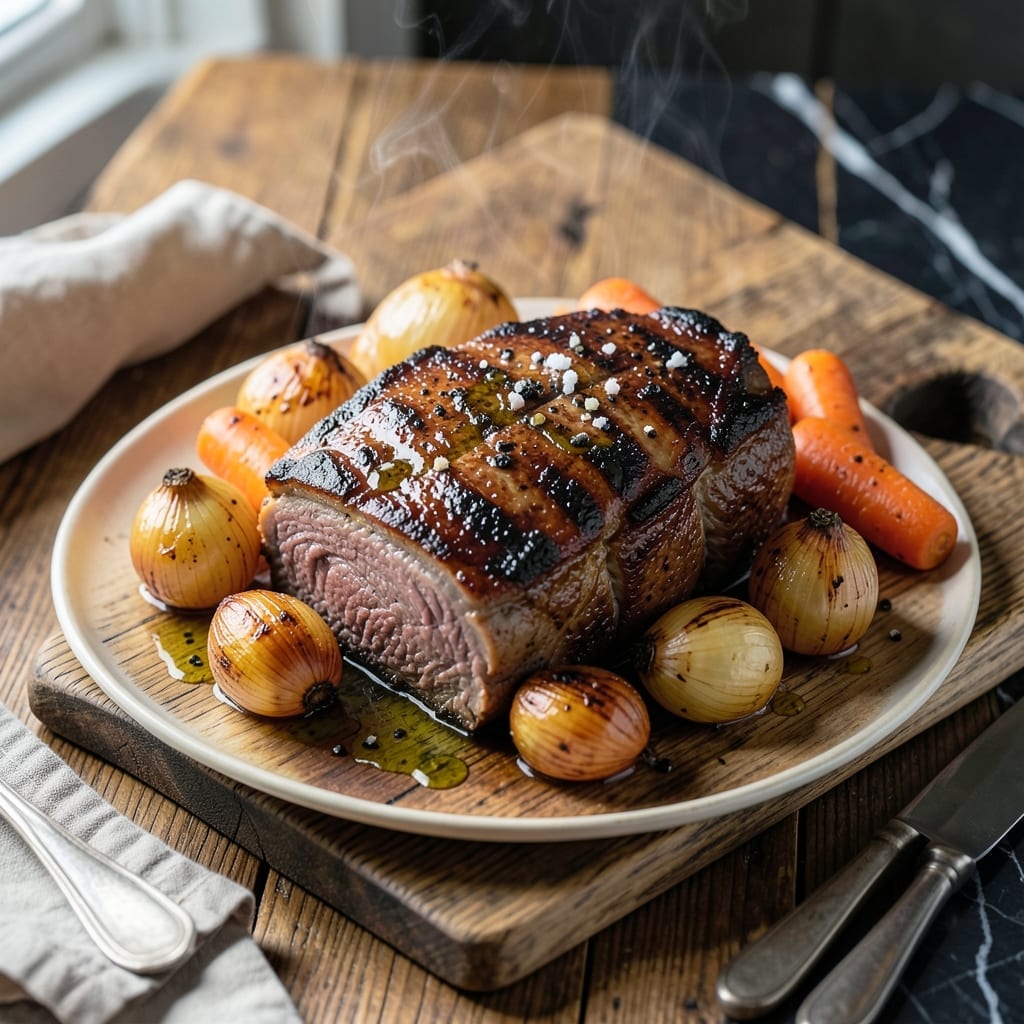
This slow-braised beef shoulder clod transforms a tough cut into melting tenderness with minimal effort. The secret lies in low, steady heat that breaks down collagen into gelatin, creating a sauce so rich it coats every bite.
I developed this method after years of testing, finding that a 3-hour braise at 300°F delivers the best results. The meat emerges fork-tender, with layers of flavor from the aromatic vegetables and red wine in the braising liquid.
What you get is beef that falls apart at the touch, swimming in a velvety sauce that begs for crusty bread. The shoulder clod’s marbling renders down during cooking, infusing every bite with deep, beefy richness.
Serve with mashed potatoes or buttered noodles to soak up that incredible sauce. This is comfort food at its most satisfying.
Ingredients for Beef Shoulder Clod
Slow-braised goodness starts with well-marbled beef and bold, simple ingredients ready to shine.
| Ingredient | Amount | Notes |
|---|---|---|
| Beef Shoulder Clod 🥩 | 3 lb | Well-marbled, trimmed of excess fat |
| Kosher Salt 🧂 | 1 ½ tsp | Divided for seasoning |
| Black Pepper 🌶️ | 1 tsp | Freshly ground preferred |
| Olive Oil 🫒 | 2 tbsp | For searing beef |
| Yellow Onion 🧅 | 1 whole | Large, roughly chopped |
| Carrots 🥕 | 3 whole | Peeled, cut into chunks |
| Celery Stalks 🌿 | 3 whole | Cut into large pieces |
| Garlic Cloves 🧄 | 6 cloves | Smashed, peeled |
| Tomato Paste 🍅 | 2 tbsp | For depth of flavor |
| Dry Red Wine 🍷 | 2 cups | Bold variety like Cabernet |
| Beef Stock 🥩 | 2 cups | Low-sodium preferred |
| Fresh Thyme Sprigs 🌿 | 4 whole | Tied with kitchen twine |
| Bay Leaves 🍃 | 2 whole | Dried, for aroma |
| All-Purpose Flour 🌾 | 2 tbsp | For thickening sauce |
The beef shoulder clod is non-negotiable here—look for good marbling at Whole Foods or ButcherBox. It’s a tough cut, but that’s what makes it perfect for low and slow cooking. Most butchers will cube it for you if you ask nicely (the good stuff, not the pre-packaged kind). A 3-pound piece feeds four generously, and leftovers are even better the next day.
No red wine? Beef broth with a splash of balsamic vinegar gets you 80% there. Fresh thyme is ideal but dried at one-third the amount works in a pinch. The tomato paste can be swapped with crushed tomatoes—just reduce the liquid slightly. If you’re short on time, pre-chopped mirepoix from the grocery store saves a few minutes (worth the extra minute to check for freshness).
Braised beef tastes even better the next day, so make it ahead if you can. Keeps 4-5 days in the fridge, freezes beautifully for 3 months. Store the sauce separately if you’re freezing—prevents it from absorbing too much liquid.
Why You’ll Love This Recipe
- Five Ingredient Magic: I love that this only needs beef shoulder clod, salt, pepper, olive oil, and an onion—no fancy shopping.
- Deep Beefy Richness: The shoulder clod gets so tender, and the caramelized onion adds this sweet depth that’s honestly hard to beat.
- Weeknight to Weekend: I’ve served this for casual dinners and Sunday suppers—works both times, no stress.
- Stretches the Budget: Between us, this cut is affordable, and leftovers make killer sandwiches the next day.
Step-by-Step Instructions for Slow-Braised Beef Shoulder Clod
This method transforms tough meat into fall-apart tender perfection with minimal effort.
Step 1: Season and Sear the Beef Shoulder Clod
Pat the 3 lb Beef Shoulder Clod completely dry with paper towels—this is crucial for a good sear. Season all over with 1.5 tsp Kosher Salt and 1 tsp Black Pepper, pressing the seasoning into the meat so it adheres well.
Heat 2 tbsp Olive Oil in a large Dutch oven over medium-high heat until shimmering. Sear the beef on all sides for 8-10 minutes total, turning occasionally, until deeply browned. You’ll know it’s ready to flip when the meat releases easily from the pot. This creates a flavorful crust that will deepen the sauce later.
Step 2: Sauté the Aromatic Vegetables
Remove the seared beef and set it aside on a plate. In the same pot, add the 1 whole Yellow Onion, 3 whole Carrots, and 3 whole Celery Stalks. Sauté for 5-6 minutes until the vegetables begin to soften and develop some color.
Push the vegetables to one side, then add 6 cloves Garlic Cloves and 2 tbsp Tomato Paste to the open space. Stir the tomato paste constantly for 1-2 minutes until it darkens slightly—this builds a rich, savory base for the braising liquid.
Step 3: Deglaze and Add Braising Liquid
Pour in 2 cups Dry Red Wine and scrape the bottom of the pot with a wooden spoon to release all the browned bits. Let it simmer for 3-4 minutes until the liquid reduces by about half. This step ensures all the flavorful fond is incorporated into the sauce.
Return the beef to the pot and add 2 cups Beef Stock, 4 whole Fresh Thyme Sprigs, and 2 whole Bay Leaves. The liquid should come about halfway up the beef. Bring to a simmer, then reduce the heat to low.
Step 4: Braise Until Tender
Cover the pot and let it braise gently for 3 to 3.5 hours. Check occasionally and turn the beef if needed to ensure even cooking. The beef is done when a fork slides in easily with no resistance—this is the sign of that promised melting tenderness.
Once the beef is tender, transfer it to a serving platter and cover loosely with foil to keep warm. The braising liquid will be thin at this point, but that’s about to change.
Step 5: Thicken the Sauce and Serve
Skim any excess fat from the surface of the braising liquid, then bring it to a gentle boil over medium heat. In a small bowl, whisk 2 tbsp All-Purpose Flour with 2 tbsp of the hot liquid to create a slurry. Stir this back into the pot and simmer for 5 minutes until the sauce thickens enough to coat the back of a spoon.
Strain the sauce if you prefer a smoother texture, or leave the vegetables in for a rustic finish. Pour the sauce over the beef and serve immediately. The meat should pull apart effortlessly, soaked in a rich, deeply flavored sauce.
Pro Tips For Making Beef Shoulder Clod
- Sear It Hard: Use a screaming-hot pan with olive oil to get a deep crust on the beef shoulder clod—this locks in juices and adds serious flavor.
- Season Overnight: Salt the beef shoulder clod generously the night before cooking; it penetrates deep and guarantees a well-seasoned bite.
- Skip the Rush: I learned this the hard way—don’t slice into the meat right after cooking; let it rest 15 minutes under foil to redistribute the juices.
- Dice Onions Fine: After burning three batches, I finally figured out that finely diced yellow onion melts into the dish better, avoiding chewy bits.
Common Mistakes When Making This Recipe
Skipping the Sear
I’ve learned the hard way that skipping the sear means missing out on the Maillard reaction—that chemical process that creates deep, complex flavors. The 8-10 minute sear over medium-high heat builds a crust that infuses the braising liquid with richness. Skip it, and your dish will taste flat. 🔥
Rushing the Braise
Beef shoulder clod needs time for collagen to break down into gelatin. Cutting the 3 to 3.5 hour braise short results in tough, chewy meat instead of that promised melting tenderness. Low and slow is non-negotiable here.
Overcrowding the Pot
Using a pot that’s too small causes uneven cooking and steams the beef instead of braising it. A large Dutch oven gives the meat space to cook properly. I use a 7-quart Le Creuset for this recipe.
Skipping the Deglaze
Those browned bits on the bottom of the pot are pure flavor. Pouring in 2 cups Dry Red Wine and scraping them up ensures every bit of flavor ends up in your sauce. Don’t skip this step—it’s the difference between good and incredible.
Not Skimming Fat
After braising, there’s often a layer of fat on top of the liquid. Skim it off before thickening the sauce, or you’ll end up with a greasy finish. I use a fine-mesh skimmer for this.
Over-Thickening the Sauce
The sauce should coat the back of a spoon, not be as thick as gravy. Start with 2 tbsp All-Purpose Flour for the slurry, and add more only if needed. The sauce will thicken slightly as it cools.
Nutrition Facts
Frequently Asked Questions
What’s the best cooking method for this cut?
Slow-braising is ideal. Cook it covered at 300°F for 3-3.5 hours until fork-tender. This transforms the tough fibers into gelatin for that signature melt-in-your-mouth texture.
Can I use a slow cooker instead?
Yes! Sear the beef first, then cook on low for 8-10 hours or high for 5-6 hours. The result will be just as tender but with less hands-on time.
How do I know when it’s done?
The beef is ready when a fork slides in with no resistance. If it feels tough, give it more time—collagen needs those extra minutes to break down completely.
What can I substitute for red wine?
Use 2 cups beef broth with 1 tbsp balsamic vinegar for similar depth. The acidity helps tenderize while adding rich flavor.

- 6 Egg Cake Recipe with Oil: Light as Air With Buttery Moisture - October 4, 2026
- 4 Bean Casserole Recipe: One-Pan Heartiness With Smoky Paprika Depth - October 4, 2026
- 3-Ingredient Keto Mug Cake Recipe: Microwave Magic in 2 Minutes - October 4, 2026