
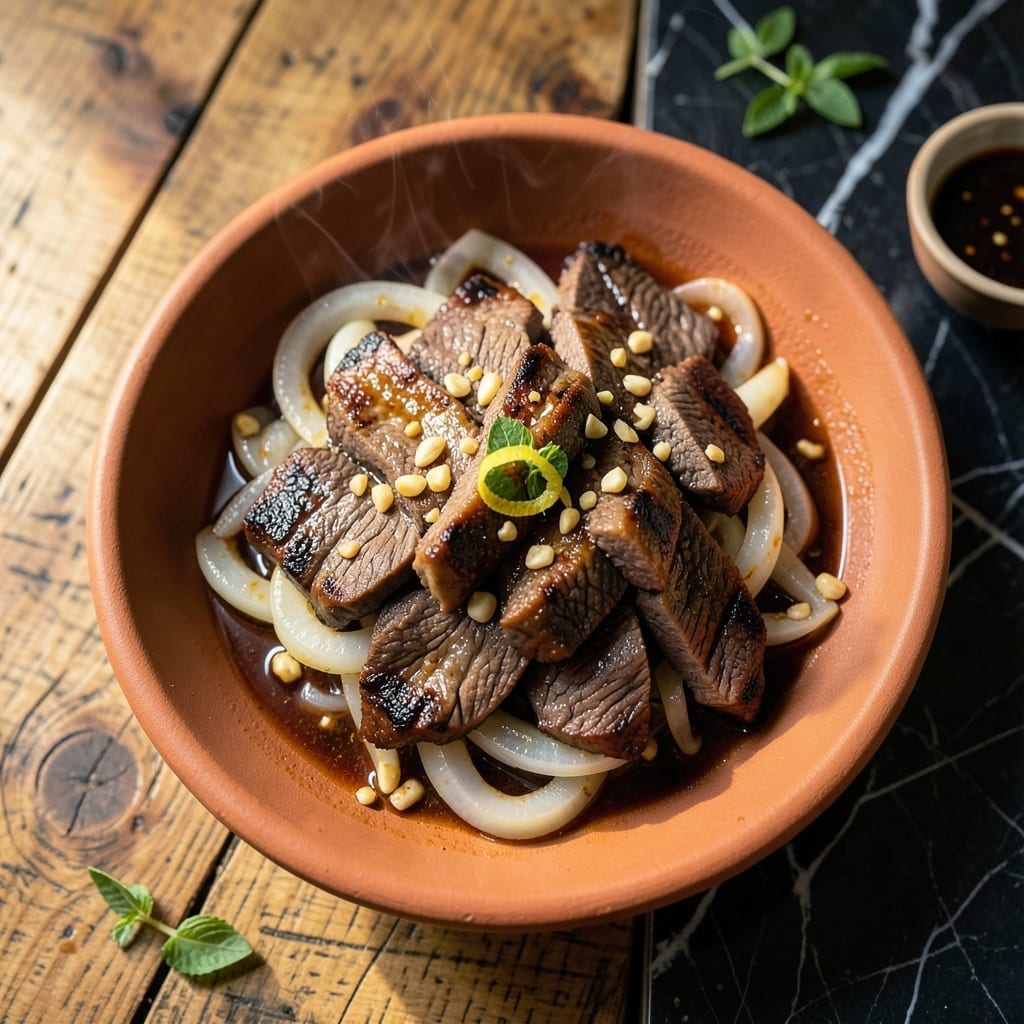
This Filipino-style beef dish transforms tough cuts into tender, flavorful morsels that melt in your mouth. The secret lies in a simple marinade and proper cooking technique that breaks down the fibers without drying out the meat.
I developed this method after years of experimenting with different approaches to achieve that perfect balance of softness and rich, savory taste. The soy sauce and calamansi marinade works its magic while the beef rests, ensuring every bite is packed with flavor.
When cooked just right, you’ll get pieces that are incredibly tender yet still hold their shape, swimming in a lightly thickened sauce that’s perfect over rice. The aroma alone will have everyone gathering around the table.
This recipe stays true to traditional Filipino flavors while being simple enough for any home cook to master.
Ingredients for Beef Steak Agujas
Transform tough beef into melt-in-your-mouth pieces with this simple ingredient lineup.
| Ingredient | Amount | Notes |
|---|---|---|
| Beef Sirloin 🥩 | 1 ½ lb | Cut into thin strips against the grain |
| Soy Sauce 🫒 | ½ cup | Low-sodium preferred for control |
| Calamansi Juice 🍋 | ¼ cup | Freshly squeezed if available |
| Garlic Cloves 🧄 | 6 cloves | Minced for maximum flavor infusion |
| Onion 🧅 | 1 whole | Medium, thinly sliced |
| Ground Black Pepper 🌶️ | 1 tsp | Freshly cracked for best aroma |
| Brown Sugar 🍚 | 2 tbsp | Balances acidity in marinade |
| Cornstarch 🌾 | 1 tbsp | For thickening the sauce |
| Water 💧 | ½ cup | For deglazing and sauce base |
| Vegetable Oil 🫒 | 2 tbsp | High smoke point for searing |
| Bay Leaves 🌿 | 2 pieces | Dried, for aromatic depth |
| Salt 🧂 | ½ tsp | Adjust to taste at end |
The beef cut is critical here. Sirloin offers the perfect balance of flavor and tenderness for this dish. Look for well-marbled pieces at Whole Foods or your local butcher—avoid pre-cut stew meat, as it’s often from tougher muscles. Asian markets often stock calamansi, but Key lime or regular lime works in a pinch (just reduce the quantity slightly).
No calamansi? Lemon juice with a pinch of orange zest mimics the citrusy brightness. For a deeper umami punch, swap half the soy sauce for fish sauce (ensure it’s Filipino-style like Datu Puti). Cornstarch can be replaced with potato starch at a 1:1 ratio. The brown sugar adds balance—coconut sugar is a great alternative if you prefer less refinement.
Marinate the beef for at least 1 hour (overnight for maximum tenderness). Cooked leftovers keep in the fridge for 4-5 days or freeze for up to 3 months. Reheat gently to avoid toughening the meat.
Why You’ll Love This Recipe
- One Pan Wonder: I just toss the sirloin with soy sauce, calamansi, garlic and onions in a single pan—minimal cleanup, maximum flavor.
- Umami Bomb: The soy sauce and calamansi create this tangy-savory balance that makes the beef ridicuously good.
- Weeknight Hero: Honestly, it’s my go-to for busy evenings when I need something hearty on the table fast.
- Budget Stretcher: A pound of sirloin feeds four with leftovers that taste even better the next day.
Step-by-Step Instructions for Filipino-Style Beef Steak Agujas
Master the technique for fall-apart tender beef with this straightforward, tested method.
Step 1: Marinate the Beef Sirloin Strips
In a large bowl, combine the 1.5 lb beef sirloin strips with 0.5 cup soy sauce, 0.25 cup calamansi juice, minced 6 cloves garlic cloves, 1 whole onion (thinly sliced), 1 tsp ground black pepper, and 2 tbsp brown sugar. Mix thoroughly to ensure every piece is evenly coated.
The calamansi juice tenderizes the meat while the brown sugar balances its acidity. Cover and refrigerate for at least 1 hour, but overnight marination yields the most tender results. The longer it sits, the deeper the flavors penetrate.
Step 2: Sear the Beef to Lock in Flavors
Heat 2 tbsp vegetable oil in a large skillet over medium-high heat until it shimmers. Remove the beef from the marinade (reserve the marinade) and sear in batches to avoid overcrowding. Cook for 3-4 minutes per side until deeply browned.
Don’t stir the beef too soon—let it develop a rich crust before flipping. The searing step creates a flavorful fond in the pan that will later enhance the sauce. Transfer the seared beef to a plate and set aside.
Step 3: Build the Sauce with Aromatics
In the same skillet, sauté the reserved onion and garlic cloves from the marinade over medium heat for 2 minutes until fragrant. Pour in the reserved marinade and add 2 pieces bay leaves and 0.5 cup water. Bring to a simmer and cook for 3 minutes.
This step infuses the sauce with the deep, savory flavors of the marinade. The bay leaves add an aromatic depth characteristic of Filipino cooking. Stir occasionally to prevent sticking.
Step 4: Thicken and Finish the Dish
Return the seared beef to the skillet along with any accumulated juices. Stir in 1 tbsp cornstarch mixed with 2 tablespoons of the sauce to create a slurry. Simmer for 5-7 minutes until the sauce thickens and coats the beef evenly.
Season with 0.5 tsp salt to taste, though the soy sauce provides most of the needed saltiness. The sauce should be glossy and cling to the beef, creating a rich, savory finish. Remove the bay leaves before serving.
Step 5: Rest and Serve
Let the beef rest in the sauce for 5 minutes off the heat. This allows the flavors to meld and the meat to reabsorb some of the juices. The beef should be fork-tender, with the sauce generously clinging to each piece.
Serve hot over steamed rice, garnished with additional sliced onion if desired. The beef will be incredibly tender, with a perfect balance of savory, tangy, and slightly sweet flavors.
Pro Tips For Making Beef Steak Agujas
- Sear the sirloin hot: I learned this the hard way—crank the pan to high heat before adding the beef sirloin strips. A screaming hot pan locks in the juices and gives that caramelized crust that makes beef steak agujas irresistible.
- Marinate 30 minutes minimum: Sounds weird, but letting the beef sit in soy sauce, calamansi, and garlic for at least 30 minutes (or overnight if you’re organized) actually changes the outcome—it tenderizes the meat and lets the flavors sink deep.
- Skip the overcrowding: After burning three batches, I finally figured out that cooking the beef in a single layer, even if it means two rounds, guarantees each piece sears properly instead of steaming in its own juices.
- Use fresh calamansi: Bottled juice works in a pinch, but fresh calamansi makes a real difference—its bright, tart punch cuts through the richness of the beef and soy in a way the bottled stuff just can’t.
Pro Cooking Tips for This Recipe
Marinade Mastery
For maximum tenderness, I always marinate the beef for at least 4 hours, though overnight is ideal. The calamansi juice breaks down tough fibers while the brown sugar prevents the acid from making the meat mushy. Use a zip-top bag to ensure even coating. 💡
Perfect Searing
Don’t rush the sear—wait until your pan is ripping hot and the oil shimmers. Sear the beef in single-layer batches to avoid steaming. I use a cast-iron skillet for the best crust. The fond left behind is pure flavor gold.
Sauce Thickness
Mix your cornstarch slurry with cold water to prevent lumps. Add it slowly while stirring constantly. For a glossier finish, I sometimes use 1 tsp potato starch instead—it creates a silkier texture.
Bay Leaf Trick
Crush your dried bay leaves slightly before adding to release more aroma. Remove them before serving, but don’t skip this step—they add a subtle depth that’s distinctly Filipino. I learned this from my lola’s kitchen.
Resting Time
Let the beef rest in the sauce for 5-10 minutes off heat. This lets the meat reabsorb juices and the flavors meld. Cover with a lid to keep warm. Serving too soon means missed tenderness. 🔥
Serving Temp
This dish tastes best served at 160-170°F. If reheating, add a splash of water and warm gently. The sauce should be just loose enough to drizzle over rice but thick enough to cling to the beef.
Nutrition Facts
Frequently Asked Questions
Can I use a different cut of beef?
Yes, but choose wisely. Flank steak or ribeye work well, though sirloin is ideal for tenderness. Avoid tough cuts like chuck unless you extend marinating to 8+ hours.
What if I don’t have calamansi?
Substitute with 1:1 lime juice plus a pinch of orange zest. The flavor won’t be identical, but it provides the needed acidity. Avoid lemon juice—it’s too harsh.
How do I prevent the sauce from being too salty?
Use low-sodium soy sauce and taste before adding extra salt. The marinade reduces significantly during cooking, concentrating flavors. Dilute with 1-2 tbsp water if needed.
Can I make this in a slow cooker?
Yes! Sear the beef first, then cook on low for 6-7 hours. Skip the cornstarch until the last 30 minutes to thicken. Stir occasionally for even cooking.

- 6 Egg Cake Recipe with Oil: Light as Air With Buttery Moisture - October 4, 2026
- 4 Bean Casserole Recipe: One-Pan Heartiness With Smoky Paprika Depth - October 4, 2026
- 3-Ingredient Keto Mug Cake Recipe: Microwave Magic in 2 Minutes - October 4, 2026