
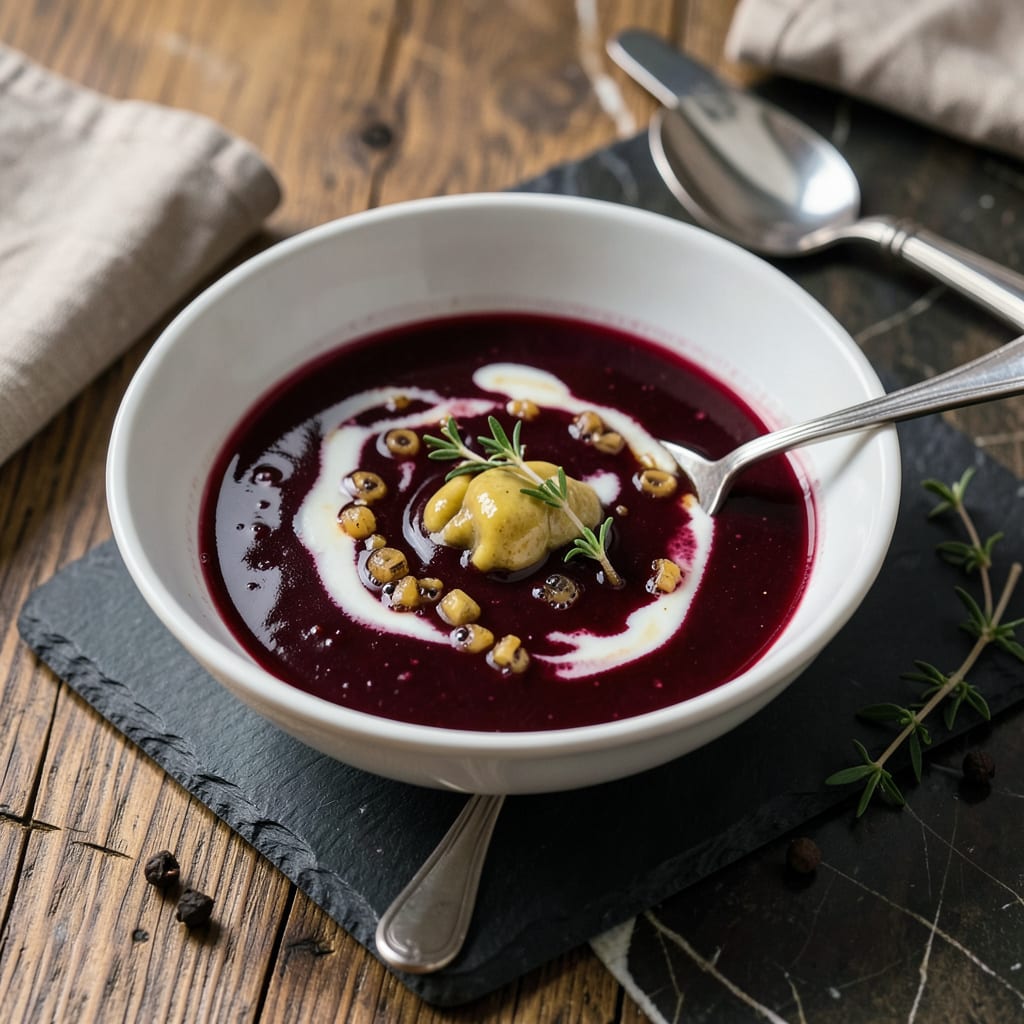
A perfectly cooked beef tenderloin deserves an equally impressive sauce—one that enhances rather than overpowers its delicate flavor. This velvety reduction transforms good steak into a restaurant-worthy centerpiece. The foundation begins with rich beef stock, dry red wine, and aromatic shallots, simmered until reduced by half for concentrated depth.
The finishing touch comes from whole butter whisked in off-heat, creating a glossy emulsion that clings beautifully to each slice. A splash of Dijon mustard adds subtle complexity, while fresh thyme provides aromatic brightness. Make this sauce while your tenderloin rests—it comes together in the same 15 minutes and keeps warm beautifully for serving.
Ingredients for Beef Tenderloin Sauce
Nine ingredients transform beef stock and wine into that steakhouse-worthy sauce you’ve been chasing.
| Ingredient | Amount | Notes |
|---|---|---|
| Dry Red Wine 🍷 | 1 ½ cups | Bold, full-bodied variety like Cabernet |
| High-Quality Beef Stock 🥩 | 2 cups | Low-sodium preferred for control |
| Shallots 🧅 | 2 whole | Finely minced for even distribution |
| Unsalted Butter 🧈 | ½ cup | European-style for richer flavor |
| Dijon Mustard 🟡 | 1 tbsp | Smooth, not grainy variety |
| Fresh Thyme Sprigs 🌿 | 4 sprigs | Leaves stripped, stems discarded |
| Kosher Salt 🧂 | ½ tsp | Diamond Crystal preferred for balance |
| Freshly Ground Black Pepper 🌶️ | ¼ tsp | Coarse grind for texture |
| Worcestershire Sauce 💧 | 1 tsp | Lea & Perrins recommended |
The wine and stock are non-negotiable here—splurge on a decent Cabernet (nothing under $12) and homemade or high-end beef stock. I grab mine from Whole Foods or make it from scratch with beef bones. The shallots? Look for firm bulbs with dry skins (no sprouting). European butter has higher fat content, so it emulsifies better—Plugrá or Kerrygold are my go-tos. Don’t skip the fresh thyme; dried just won’t give that bright, aromatic finish (worth the extra minute to strip the leaves).
No red wine? Port or even a bold Zinfandel work in a pinch. Out of shallots? Half a small yellow onion gets you close. The Dijon mustard can be swapped for whole-grain if you like texture, but cut back to half the amount—it’s stronger. For a gluten-free version, Coconut aminos replaces Worcestershire (though the flavor profile shifts slightly). If your sauce breaks, a splash of hot water while whisking vigorously usually brings it back together (don’t panic).
This sauce holds beautifully for 1 hour in a warm spot (not boiling). Store leftovers in an airtight container—3 days in the fridge, 3 months frozen. Reheat gently over low, whisking constantly to prevent separation. I always make a double batch; it’s just as easy and freezes like a dream (ice cube trays for perfect single-serving portions).
Why You’ll Love This Recipe
- One-Pot Magic: I love that this sauce comes together in a single skillet—no blender, no straining, just a quick simmer while the beef rests. The shallots soften right in the pan, and the wine reduces into this glossy, rich base without any fuss.
- That Umami Punch: The combo of dry red wine and Dijon mustard hits just right—deep, tangy, and a little sharp, but then the butter swoops in to round it all out. Honestly, I’ve caught myself licking the spoon before it even hits the plate.
- Steakhouse at Home: This isn’t just for fancy dinners. I’ll drizzle it over weeknight pan-seared steaks, stir it into mashed potatoes, or even toss it with roasted veggies. Between us, it’s the reason my husband thinks I’m a better cook than I am.
- Leftovers? Lucky You: The flavor gets even deeper overnight, so I always make extra. Toss it with pasta the next day, or thin it with a splash of stock for a quick French dip sandwich sauce. No waste, just bonus meals.
Step-by-Step Instructions for Beef Tenderloin Sauce
This sauce comes together faster than you think—just follow these steps for restaurant-quality results.
Step 1: Sauté the Shallots and Build the Base
Start by finely mincing the 2 whole shallots—you want them almost paste-like for even flavor distribution. In a medium saucepan over medium heat, melt 2 tablespoons of the 0.5 cup unsalted butter until it foams but doesn’t brown. Add the minced shallots and cook for 4-5 minutes, stirring frequently, until they turn translucent and slightly caramelized.
This step is crucial—don’t rush it. The shallots should soften completely without burning, developing a sweet, mellow flavor that forms the foundation of your sauce. You’ll know they’re ready when they lose their sharp bite and turn a light golden color. Add the 4 sprigs fresh thyme sprigs (leaves only) and cook for another 30 seconds until fragrant.
Step 2: Deglaze with Wine and Reduce
Pour in the 1.5 cups dry red wine and increase the heat to medium-high. Let it come to a rolling simmer, then reduce the heat to maintain a steady bubble. You’re looking to reduce the wine by about half—this takes 8-10 minutes. The alcohol will cook off, leaving behind concentrated fruit flavors that balance the richness of the butter.
As it reduces, you’ll notice the liquid darkens and becomes more syrupy. Scrape the bottom of the pan occasionally with a wooden spoon to incorporate any browned bits—these add depth to your final sauce. The mixture should coat the back of a spoon lightly when it’s ready for the next step. Don’t walk away during this phase; wine reduces quickly and can become too bitter if over-reduced.
Step 3: Incorporate Stock and Seasonings
Add the 2 cups high-quality beef stock and bring the mixture back to a simmer. Stir in the 1 tbsp Dijon mustard, 0.5 tsp kosher salt, 0.25 tsp freshly ground black pepper, and 1 tsp Worcestershire sauce. Reduce the heat to medium-low and let it simmer gently for 15-20 minutes until the liquid reduces by about one-third.
The sauce should thicken slightly and develop a glossy sheen. Taste as you go—this is your chance to adjust the seasoning. The Worcestershire adds umami depth, while the mustard provides a subtle tang that cuts through the richness. You’re aiming for a balance where no single flavor dominates, but they all work in harmony.
Step 4: Finish with Butter for Velvety Texture
Remove the sauce from heat and let it cool slightly for 2 minutes. This prevents the butter from separating when you add it. Cut the remaining butter into small cubes and whisk them into the sauce one at a time, allowing each to fully incorporate before adding the next. This technique, called “monter au beurre,” creates an emulsified, velvety texture that clings beautifully to your beef tenderloin.
The finished sauce should be thick enough to coat the back of a spoon but still pourable. If it’s too thick, whisk in a splash of warm water. Strain through a fine-mesh sieve for an ultra-smooth consistency, though I often skip this step for a more rustic texture. Serve immediately while warm and glossy.
Creative Variations of These Flavors
Port Wine Reduction
Swap the dry red wine for 1.5 cups ruby port—it adds a luscious sweetness that pairs beautifully with beef’s richness. The reduction process remains the same, but you’ll notice deeper fruit notes and a slightly syrupy consistency. I love this variation for holiday meals when you want something extra special. 💫
Creamy Mushroom Addition
After reducing the wine, add 1 cup finely chopped cremini mushrooms and sauté until tender. The mushrooms absorb the sauce’s flavors while adding earthy depth. For extra richness, stir in 2 tablespoons crème fraîche at the end instead of one butter cube. This creates a luxurious, velvety texture that’s perfect for special occasions.
Herb-Infused Butter
Elevate the finishing butter by infusing it with 2 crushed garlic cloves and 1 tablespoon chopped rosemary. Gently melt the butter with these aromatics, then strain before whisking into your sauce. The garlic adds subtle warmth while rosemary provides piney brightness that cuts through the richness.
Spicy Chipotle Twist
For a smoky kick, add 1 teaspoon adobo sauce (from canned chipotles) when incorporating the stock. The heat builds gradually, so taste before adding more. I recommend serving this variation with a cooling dollop of sour cream to balance the spice. The smokiness complements grilled tenderloin exceptionally well.
Balsamic Glaze Swirl
Drizzle 1 tablespoon aged balsamic glaze into the finished sauce and swirl gently with a fork—don’t overmix. The glaze creates beautiful marbled patterns and adds a sweet-tart complexity. This works particularly well when serving with roasted vegetables, as the acidity brightens the entire plate.
Cognac Flambé
For dramatic flair, deglaze with ¼ cup cognac instead of wine, carefully flambéing to burn off the alcohol. The caramelized notes from the flambé process add incredible depth. Just be sure to remove the pan from heat when adding the cognac, and stand back when igniting. The result is worth the extra caution. 🔥
Nutrition Facts

- 6 Egg Cake Recipe with Oil: Light as Air With Buttery Moisture - October 4, 2026
- 4 Bean Casserole Recipe: One-Pan Heartiness With Smoky Paprika Depth - October 4, 2026
- 3-Ingredient Keto Mug Cake Recipe: Microwave Magic in 2 Minutes - October 4, 2026