
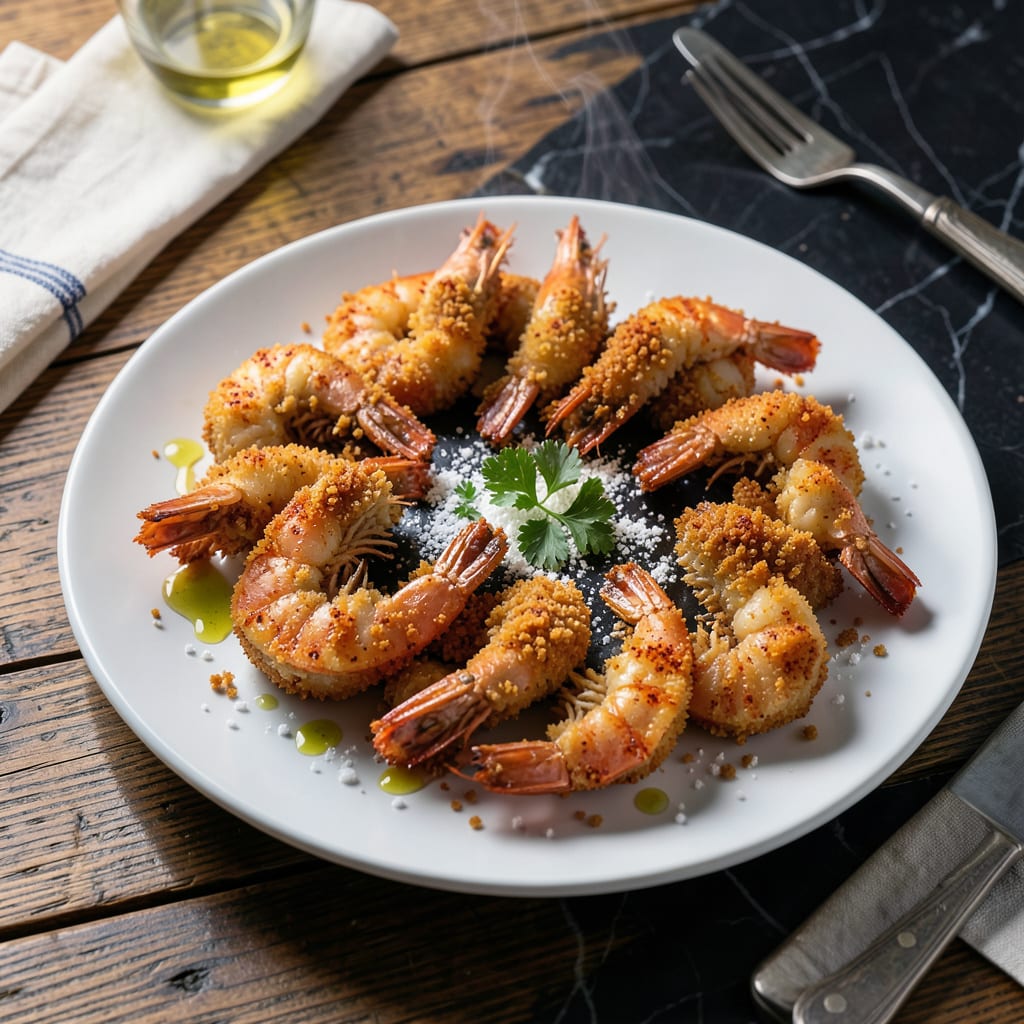
This breaded shrimp delivers a golden crust that shatters with every bite. The secret lies in a double-coating method that locks in moisture while creating maximum crunch.
I developed this technique after testing countless variations—only this approach guarantees perfectly crispy results every time. The shrimp stay juicy inside while the coating achieves restaurant-quality texture.
Ingredients for Best Breaded Shrimp
Quality seafood meets a perfectly seasoned double-coating for unmatched crunch and flavor in every bite.
| Ingredient | Amount | Notes |
|---|---|---|
| Large Shrimp 🦐 | 1 ½ lb | Peeled, deveined, tails on |
| All-Purpose Flour 🌾 | 1 cup | For initial dredging |
| Large Eggs 🥚 | 2 whole | Beaten for egg wash |
| Panko Breadcrumbs 🍞 | 2 cups | Japanese-style for extra crunch |
| Cornstarch 🌾 | ¼ cup | For crispier coating |
| Garlic Powder 🧄 | 1 tsp | Enhances savory depth |
| Onion Powder 🧅 | 1 tsp | Balances seasoning blend |
| Paprika 🌶️ | 1 tsp | Sweet or smoked variety |
| Salt 🧂 | 1 ½ tsp | Kosher or sea salt preferred |
| Black Pepper 🌶️ | ½ tsp | Freshly ground for best flavor |
| Cayenne Pepper 🔥 | ¼ tsp | Optional for subtle heat |
| Neutral Oil 🫒 | 3 cups | For deep frying, like vegetable or canola |
| Lemon Wedges 🍋 | 4 pieces | For serving garnish |
[recipeingredientscaler]
The shrimp quality cannot be overstated. Wild-caught Gulf shrimp or U-15 size (15 shrimp per pound) deliver the best texture and flavor. Whole Foods and local seafood markets are reliable sources. Panko breadcrumbs are non-negotiable here—their coarse texture is what creates that signature shatter. For the flour, standard all-purpose works, but a touch of cornstarch adds extra crispiness to the initial dredge.
No panko on hand? Crushed cornflakes or Ritz crackers can substitute in a pinch, though the texture won’t be identical. For a gluten-free version, use almond flour or gluten-free breadcrumbs. Shrimp allergies? This technique works equally well with chicken tenders. The oil should have a high smoke point—peanut oil is ideal for frying but vegetable or canola oil are fine too.
Fry in small batches to avoid crowding the pan, which can lower the oil temperature and make the shrimp greasy. Leftovers keep in an airtight container in the fridge for up to 2 days, though they’re best eaten immediately. Reheat in a 375°F oven for 10-12 minutes to restore some crispiness.
Why You’ll Love This Recipe
- One Bowl Wonder: I just toss the shrimp in flour, dip in egg, then roll in panko—no fancy techniques, no mess.
- Crispy Perfection: That panko-cornstarch combo gives it a shatteringly crisp crust with juicy shrimp inside. Honestly, it’s the only way I’ll eat breaded shrimp now.
- Weeknight Hero: I’ve served this for quick dinners, game day snacks, even packed it cold in lunchboxes.
- Budget Stretcher: A pound of shrimp goes further than you’d think, especially when the coating is this light and airy.
Step-by-Step Instructions for Breaded Shrimp
Master the technique for achieving an ultra-crispy coating that stays put through frying and serving.
Step 1: Prepare the Breading Stations
Set up three shallow dishes in a row. In the first, combine the 1 cup all-purpose flour, 0.25 cup cornstarch, 1 tsp garlic powder, 1 tsp onion powder, 1 tsp paprika, 1.5 tsp salt, 0.5 tsp black pepper, and 0.25 tsp cayenne pepper.
Whisk until evenly distributed—the cornstarch is your secret weapon for extra crunch. In the second dish, beat the 2 whole large eggs until uniform. Place the 2 cups panko breadcrumbs in the third dish, breaking up any large clumps with your fingers.
Step 2: Coat the Shrimp in Layers
Pat the 1.5 lb large shrimp completely dry with paper towels. This removes moisture that would prevent the coating from adhering. Working in batches, dredge each shrimp in the flour mixture, shaking off excess so it’s lightly dusted but not caked on.
Dip into the beaten eggs, allowing excess to drip off for 5 seconds. Then press into the panko, turning to coat all sides. The breadcrumbs should cling in a thick, even layer. Place on a wire rack set over a baking sheet to maintain air circulation and prevent sogginess.
Step 3: Heat the Oil Properly
Pour 3 cups neutral oil into a heavy-bottomed pot or Dutch oven, filling it no more than halfway to prevent overflow. Heat over medium-high heat to 350-375°F—use a deep-fry thermometer for accuracy. The oil is ready when a pinch of panko dropped in sizzles and rises immediately to the surface.
Maintaining the correct temperature is crucial. If the oil is too cool, the shrimp will absorb grease and become heavy. If too hot, the outside will burn before the inside cooks through. Adjust the heat as needed to keep it steady.
Step 4: Fry to Golden Perfection
Carefully lower 4-5 shrimp at a time into the hot oil using tongs. Avoid crowding the pot, which would drop the oil temperature. Fry for 2-3 minutes per side until the coating is deep golden brown and the shrimp are opaque throughout.
Transfer to a paper towel-lined plate to drain. The internal temperature should reach 145°F—the shrimp will finish cooking slightly from residual heat. Work in batches, allowing the oil to return to temperature between each.
Serve immediately with the 4 pieces lemon wedges for a bright contrast to the rich, crispy shrimp. The coating should audibly crack when bitten into.
Pro Tips For Making Best Breaded Shrimp
- Dry the Shrimp: Pat those large shrimp bone dry with paper towels before dredging—any moisture left on the surface keeps the breading from sticking properly, and I learned this the hard way after my first few batches slid right off.
- Chill the Breaded Shrimp: Let the breaded shrimp rest in the fridge for 15-20 minutes before frying. This helps the coating set, so you get a crispier crust that doesn’t flake off in the oil.
- Use Cold Oil First: Start with oil at 350°F and drop a test piece in first—if it sizzles immediately and floats, you’re good. Too hot and the outside burns before the shrimp cooks through.
- Swap Half the Flour: Replace half the all-purpose flour with cornstarch in your dredge. It creates a lighter, crispier crust that stays crunchy longer—sounds weird, but it works.
Troubleshooting This Recipe
Coating Falls Off
If your breading isn’t sticking, the shrimp likely weren’t dry enough before dredging. Pat them completely dry with paper towels first. Also, let the egg-washed shrimp rest for 2 minutes before pressing into panko to help adhesion. 💡
Oil Temperature Drops
Crowding the pot is the usual culprit. Fry only 4-5 shrimp at a time and wait 2-3 minutes between batches for oil to recover. Use a deep-fry thermometer to monitor—350-375°F is ideal.
Soggy Results
This happens when oil isn’t hot enough. Test with a panko pinch—it should sizzle and rise immediately. Also, drain on a wire rack (not paper towels) to prevent steam from softening the coating. 🔥
Uneven Browning
Inconsistent oil temperature causes this. Stir gently during frying for even exposure. If using a home setup, rotate the pot occasionally for hot spots. Aim for deep golden brown on all sides.
Greasy Texture
Lower the oil temp slightly if shrimp are absorbing too much. Also, shake off excess flour and egg before breading—thick clumps trap oil. Drain on paper towels briefly before serving.
Bland Flavor
Boost your seasoning blend. Add ½ tsp more salt or a pinch of Cajun seasoning to the flour mix. For extra punch, stir 1 tsp hot sauce into the egg wash.
Nutrition Facts
Frequently Asked Questions
What oil works best for frying?
Use a neutral oil with a high smoke point like peanut, vegetable, or canola. These maintain 350-375°F without burning and won’t impart unwanted flavors.
Can I bake instead of fry?
Yes! Place breaded shrimp on a rack over a baking sheet at 400°F for 12-15 minutes, flipping halfway. Spray lightly with oil for extra crispiness.
How do I keep the coating crispy?
Drain on a wire rack, not paper towels, to prevent steam. Serve immediately and avoid covering, which traps moisture.
What size shrimp is best?
Use large or jumbo shrimp (16-20 count per pound). Smaller sizes can overcook, while larger ones hold up better to frying.

- 6 Egg Cake Recipe with Oil: Light as Air With Buttery Moisture - October 4, 2026
- 4 Bean Casserole Recipe: One-Pan Heartiness With Smoky Paprika Depth - October 4, 2026
- 3-Ingredient Keto Mug Cake Recipe: Microwave Magic in 2 Minutes - October 4, 2026