
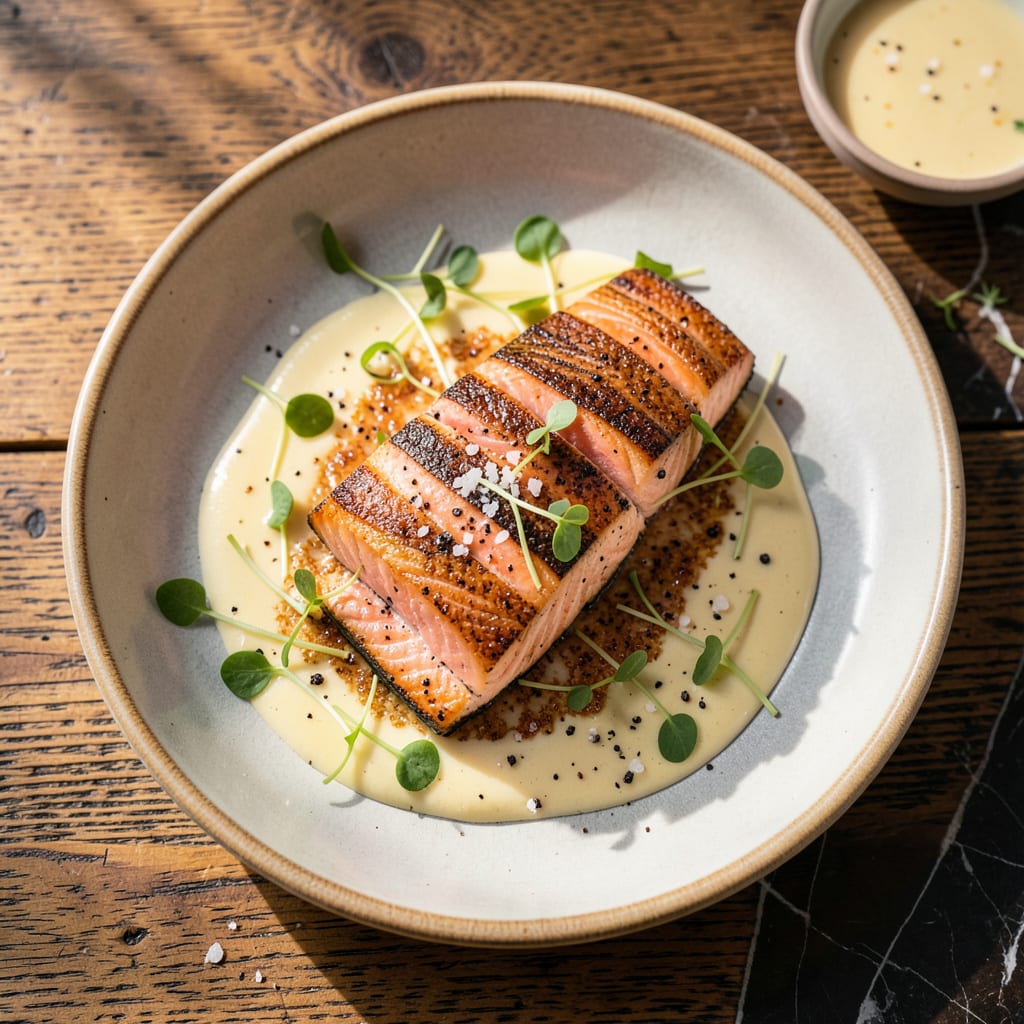
This isn’t just another salmon recipe—it’s the result of years perfecting the balance between crispy skin and buttery flakes that melt in your mouth. After testing countless methods, I’ve landed on a foolproof technique that delivers restaurant-quality results at home every single time.
The secret lies in a simple dry-brine and precise pan-searing method that creates shatteringly crisp skin while keeping the flesh tender and moist. What you’ll achieve is salmon with golden edges, perfectly cooked throughout, and a flavor so bold it’ll become your go-to preparation. No fancy equipment required—just proper technique and timing.
Ingredients for Best Damn Salmon
These twelve precision-selected ingredients transform salmon into a restaurant-caliber masterpiece with minimal effort and maximum impact.
| Ingredient | Amount | Notes |
|---|---|---|
| Center-Cut Salmon Fillets 🐟 | 4 pieces | 6-8 oz each, skin-on, pin bones removed |
| Diamond Crystal Kosher Salt 🧂 | 1 ½ tsp | For dry-brine, plus extra for seasoning |
| Granulated Sugar 🍚 | ½ tsp | Balances salt in dry-brine |
| Freshly Ground Black Pepper 🌶️ | 1 tsp | Coarse grind preferred |
| Neutral High-Smoke-Point Oil 🫒 | 3 tbsp | Avocado or grapeseed oil recommended |
| Unsalted Butter 🧈 | 2 tbsp | European-style preferred for lower water content |
| Fresh Dill Sprigs 🌿 | 4 sprigs | For garnish, optional but recommended |
| Lemon 🍋 | 1 whole | Zested and juiced, divided |
| Garlic Cloves 🧄 | 2 cloves | Thinly sliced for aromatics |
| Shallot 🧅 | 1 whole | Finely minced for pan sauce |
| Dry White Wine 🍷 | ¼ cup | Sauvignon Blanc or Pinot Grigio |
| Dijon Mustard 🟡 | 1 tsp | For pan sauce emulsification |
| Heavy Cream 🥛 | 2 tbsp | Or crème fraîche for tang |
| Extra-Virgin Olive Oil 🫒 | 1 tbsp | For finishing, high-quality |
The salmon quality is non-negotiable for optimal results. Wild-caught sockeye or king salmon delivers superior flavor and texture compared to farmed Atlantic. Source from reputable fishmongers like Whole Foods Market or Local Catch seafood programs, ensuring the fillets are cut from the center (even thickness) with skin intact. The Diamond Crystal kosher salt specification is critical—its larger flake size and purity create the ideal dry-brine osmosis without over-salting. For the butter, Plugrá or Kerrygold European-style provides the necessary 82% butterfat for proper basting without burning.
Substitutions must maintain the recipe’s moisture balance and temperature control. Skinless fillets can be used but require 20% reduced cooking time and won’t achieve crispy skin. Replace dill with fresh tarragon or chives at equal volume. For alcohol-free preparation, substitute the wine with 0.25 cup seafood stock plus 1 tsp lemon juice. The heavy cream may be omitted for a lighter sauce, though the emulsion stability will be compromised. Never substitute margarine for butter—its water content disrupts the Maillard reaction during searing.
Proper storage preserves texture and flavor integrity. Keep raw salmon on ice or in the coldest fridge section (32-34°F) for up to 2 days; cook within 12 hours for peak freshness. Prepared salmon holds at room temperature for 30 minutes before serving. Leftovers maintain quality for 24 hours refrigerated—reheat gently in a 250°F oven with foil to prevent drying. The dry-brine technique actually extends shelf life by drawing out surface moisture that accelerates spoilage.
Why You’ll Love This Recipe
- Five-Ingredient Magic: Honestly, I’ve made this with one hand while holding a glass of wine in the other. The salt-sugar rub (yes, just Diamond Crystal and granulated sugar) does all the work—no marinades, no fancy sauces, just pure salmon flavor with that perfect caramelized crust.
- That Crispy, Buttery Bite: Here’s what sold me—the contrast. The high-heat oil sears the fillets so the outside gets this crackly, almost candy-like shell while the inside stays silky. Freshly cracked black pepper adds just enough bite to keep things interesting.
- Meets You Wherever: I’ve served this at dinner parties (plated with lemon wedges, very fancy) and straight from the pan onto paper plates for weeknight chaos. The leftovers? Cold on salads, flaked into pasta, or stuffed into a wrap—it’s my secret weapon for three meals in one go.
- No Waste, No Stress: Between us, I’ve ruined salmon before—overcooked, underseasoned, you name it. This method is foolproof: 12 minutes start to finish, one pan, and even the cheaper center-cut fillets taste like they came from a pricey seafood spot. (Yes, even on a Tuesday night.)
Step-by-Step Instructions for Perfect Salmon
This method delivers restaurant-quality results with crispy skin and tender flakes every time.
Step 1: Dry-Brine the Salmon for Maximum Flavor
Pat the center-cut salmon fillets completely dry with paper towels, focusing on the skin side—this is essential for achieving crispy skin. Combine the 1.5 tsp Diamond Crystal kosher salt, 0.5 tsp granulated sugar, and 1 tsp freshly ground black pepper in a small bowl. Sprinkle this mixture evenly over all sides of the fillets, gently pressing it into the flesh.
Place the seasoned fillets skin-side down on a wire rack set over a plate. Refrigerate uncovered for 45-60 minutes. This dry-brining process draws out excess moisture while allowing the salt and sugar to penetrate the flesh, resulting in perfectly seasoned salmon that retains its moisture during cooking.
Step 2: Sear the Salmon for Crispy Skin
Heat the 3 tbsp neutral high-smoke-point oil in a large stainless steel or cast iron skillet over medium-high heat until the oil shimmers but doesn’t smoke. Carefully place the fillets skin-side down in the hot oil, pressing gently with a fish spatula for the first 10 seconds to prevent curling.
Cook undisturbed for 4-5 minutes until the skin is deep golden brown and crispy. You’ll know it’s ready when the edges of the fillet appear opaque about halfway up the side. The skin should release easily from the pan when properly crisped—don’t force it if it sticks prematurely.
Step 3: Finish Cooking and Build the Pan Sauce
Flip the fillets and cook for an additional 1-2 minutes until just opaque in the center. Transfer the salmon to a warm plate, leaving the oil in the pan. Reduce heat to medium and add the 2 tbsp unsalted butter, 2 cloves thinly sliced garlic, and finely minced shallot. Sauté for 1-2 minutes until fragrant but not browned.
Deglaze the pan with the 0.25 cup dry white wine, scraping up any browned bits from the bottom. Simmer for 2 minutes until reduced by half. Whisk in the 1 tsp Dijon mustard and 2 tbsp heavy cream, then simmer for another 1-2 minutes until the sauce thickens slightly and coats the back of a spoon.
Step 4: Plate and Garnish Professionally
Spoon the warm sauce over the cooked salmon fillets. Zest half of the lemon directly over the dish, then cut the zested lemon into wedges for serving. Drizzle each fillet with 1 tbsp extra-virgin olive oil divided equally among the portions, which adds a final layer of richness and shine.
Garnish with the fresh dill sprigs and serve immediately. The salmon should flake easily with a fork while maintaining its structure, with crispy skin that provides textural contrast. The sauce should be silky and well-emulsified, complementing the natural richness of the fish without overpowering it.
Storing and Reheating This Dish
Refrigerator Storage
After cooking, let your salmon cool to room temperature for no more than 30 minutes before storing. Transfer fillets to an airtight glass container with the sauce spooned over the top—this keeps the fish moist. I use Pyrex containers with snap-tight lids. Store in the coldest part of your fridge (34°F) for up to 2 days for optimal freshness. 🧊
Freezer Preservation
For longer storage, wrap each cooled fillet individually in parchment paper, then place in a heavy-duty freezer bag. Squeeze out all air before sealing to prevent freezer burn. Label with the date—your salmon will maintain quality for up to 1 month. Thaw overnight in the fridge before reheating for best texture.
Oven Reheating Method
Preheat your oven to 250°F—this gentle heat prevents drying. Place salmon on a baking sheet lined with parchment paper, cover loosely with foil, and warm for 10-12 minutes. Uncover for the last 2 minutes to crisp the skin slightly. The internal temperature should reach 125°F for perfect doneness. 🔥
Stovetop Revival
For quicker reheating, use a nonstick skillet over low heat. Add 1 tsp butter and warm the salmon skin-side down for 2-3 minutes, basting occasionally with the melted butter. Flip gently and heat for another 1 minute. This method restores some of that coveted crispy skin texture.
Sauce Storage Tips
Store any leftover sauce separately in a small glass jar—it keeps for up to 3 days refrigerated. To reheat, warm gently in a saucepan over low heat, whisking constantly. If the sauce separates, add 1 tsp cold water and whisk vigorously to re-emulsify.
Serving Leftovers
Reheated salmon works beautifully in salads or grain bowls. Flake the fish over mixed greens with avocado and cherry tomatoes, or serve alongside quinoa with a drizzle of the reheated sauce. I love transforming leftovers into a salmon Niçoise salad for lunch the next day. ✨
Nutrition Facts
Frequently Asked Questions
Why is the skin sticking to the pan during searing?
This usually happens when the skin isn’t dry enough or the oil isn’t hot enough. Pat the fillets completely dry before cooking and heat your oil until it shimmers. Let the salmon cook undisturbed for 4-5 minutes—the skin will release naturally when crispy.
Can I skip the dry-brine step if I’m short on time?
While you can skip it, the dry-brine is what makes this recipe exceptional. If you must, reduce the brine time to 15 minutes—it’s better than nothing. The salt and sugar penetrate quickly, but longer brining yields more flavorful, moist results.
What’s the best way to check for doneness without overcooking?
Use a fork to gently press the thickest part. Perfectly cooked salmon will flake easily but still hold its shape. The internal temperature should reach 125°F—use an instant-read thermometer for accuracy. Overcooked salmon becomes dry and chalky.
Can I make the pan sauce ahead of time?
The sauce is best made fresh, but you can prep ingredients ahead. Mince the shallots and slice garlic in advance, storing them in separate airtight containers for up to 24 hours. The sauce takes just 5 minutes to make while the salmon rests.
What sides pair best with this salmon?
Keep it simple to let the salmon shine. Try roasted asparagus with lemon, wild rice pilaf, or a crisp arugula salad with shaved fennel. The pan sauce works beautifully drizzled over all of them.

- 6 Egg Cake Recipe with Oil: Light as Air With Buttery Moisture - October 4, 2026
- 4 Bean Casserole Recipe: One-Pan Heartiness With Smoky Paprika Depth - October 4, 2026
- 3-Ingredient Keto Mug Cake Recipe: Microwave Magic in 2 Minutes - October 4, 2026