
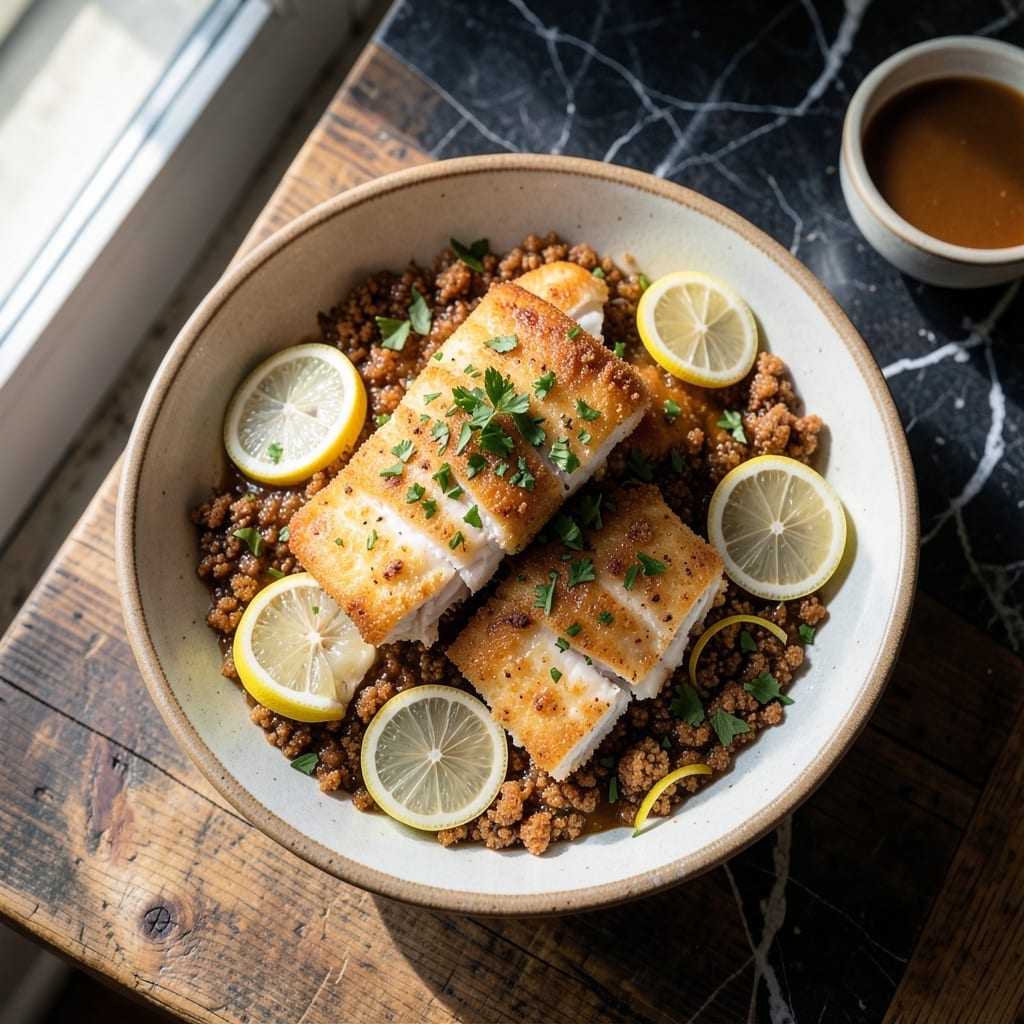
Achieving the best fish fry at home comes down to two things: a crispy golden coating and perfectly flaky centers. This method delivers both without fail.
The secret lies in a double-dredge technique using seasoned flour and cornmeal for extra crunch. Hot oil at the right temperature ensures the exterior cooks fast while the inside stays moist and tender.
You’ll get fish that shatters at the first bite, revealing tender flakes inside. The coating stays crispy even after resting, making it ideal for serving a crowd.
Serve with lemon wedges and tartar sauce for a classic presentation that never disappoints.
Ingredients for Best Fish Fry
Crispy coating and flaky centers start with these quality ingredients ready for frying.
| Ingredient | Amount | Notes |
|---|---|---|
| White Fish Fillets 🐟 | 1 ½ lb | Cod or haddock preferred |
| All-Purpose Flour 🌾 | 1 cup | For initial dredging |
| Cornmeal 🌽 | ¾ cup | Fine or medium grind |
| Paprika 🌶️ | 1 tbsp | Sweet or smoked variety |
| Garlic Powder 🧄 | 1 tsp | Not garlic salt |
| Onion Powder 🧅 | 1 tsp | For depth of flavor |
| Salt 🧂 | 1 tsp | Kosher or sea salt |
| Black Pepper 🌶️ | ½ tsp | Freshly ground preferred |
| Large Eggs 🥚 | 2 whole | Beaten for egg wash |
| Buttermilk 🥛 | ½ cup | For soaking fish |
| Vegetable Oil 🫒 | 2 cups | For deep frying |
| Lemon Wedges 🍋 | 4 pieces | For serving |
The fish is the foundation here. Cod or haddock give you that perfect flaky texture—avoid anything too oily like salmon. Most seafood counters will cut fillets to order, which ensures freshness. I recommend Whole Foods or a trusted local fishmonger for the best selection. Look for bright, firm flesh that smells clean, not fishy. The cornmeal adds the signature crunch, so don’t substitute with flour here.
No buttermilk? Whole milk with a tablespoon of vinegar works in a pinch. Short on cornmeal? Crushed cornflakes at a 1:1 ratio give a similar texture. The paprika can be swapped for cayenne if you want heat. If you’re avoiding eggs, a cornstarch slurry can bind the coating, though the texture won’t be quite as crispy. The oil must be neutral-flavored—peanut or canola oil are ideal.
Fry the fish in batches to avoid crowding the pan (keeps the oil temp steady). Leftover cooked fish stores in the fridge for 2-3 days, but it’s best fresh. The coating will soften over time, so reheat in the oven to revive some crunch. Never reuse frying oil—discard after cooling.
Why You’ll Love This Recipe
- One Pan Easy: I just coat, fry, and serve—no complicated steps, and the cornmeal gives it that perfect crunch without extra effort.
- Flavor Bomb: The paprika and garlic powder in the coating make every bite ridiculously good. That golden crust? Pure satisfaction.
- Feeds Everyone: Honestly, it’s my go-to for weeknights, game days, or even a quick lunch. Kids and adults both devour it.
- Budget Friendly: White fish fillets stretch far, and the pantry staples keep costs low. Leftovers? Still crispy and delicious the next day.
Step-by-Step Instructions for Fish Fry
Achieve perfect crispiness and flaky interiors with this tested method every time.
Step 1: Season and Dredge the Fish
Pat the 1.5 lb white fish fillets completely dry with paper towels—moisture prevents the coating from adhering. Season both sides lightly with the 1 tsp salt and 0.5 tsp black pepper to enhance the natural flavor.
In a shallow dish, combine the 1 cup all-purpose flour, 0.75 cup cornmeal, 1 tbsp paprika, 1 tsp garlic powder, and 1 tsp onion powder. Dredge each fillet in the mixture, pressing gently so the coating clings evenly on all sides. This initial layer creates the foundation for that golden, crispy crust.
Step 2: Create the Egg Wash and Coat
In a separate bowl, whisk the 2 whole large eggs with the 0.5 cup buttermilk until fully combined. The buttermilk adds tang and helps the coating brown beautifully.
Dip each dredged fillet into the egg wash, allowing any excess to drip off briefly. Then, return it to the flour-cornmeal mixture and press again to form a thick, even coating. This double-dipping is the secret to an extra-crispy exterior that stays put during frying.
Step 3: Heat the Oil and Test for Readiness
Pour the 2 cups vegetable oil into a deep, heavy-bottomed skillet or Dutch oven, filling it no more than halfway. Heat over medium-high heat until it reaches 350-375°F on a deep-fry thermometer.
To test without a thermometer, drop in a pinch of the flour mixture—if it sizzles immediately and floats to the surface, the oil is ready. Maintaining the correct temperature ensures the fish cooks through without absorbing excess oil, giving you that light, crispy texture.
Step 4: Fry Until Golden and Crisp
Carefully lower 2-3 fillets into the hot oil, avoiding overcrowding which can lower the temperature. Fry for 3-4 minutes per side until the coating is deep golden brown and crisp.
The fish is done when it floats easily and the crust is uniform in color. Use a slotted spatula to transfer the fried fillets to a paper towel-lined plate to drain excess oil. The internal flakiness should be visible as the coating crackles slightly when pressed.
Step 5: Serve Immediately with Lemon
Let the fish rest for 2-3 minutes to allow the coating to set. Serve hot with the 4 pieces lemon wedges on the side for a bright, zesty finish.
The contrast of the crispy exterior and tender, flaky fish inside is best enjoyed fresh from the fryer. Squeeze a lemon wedge over each serving to cut through the richness and enhance the flavors perfectly.
Pro Tips For Making Best Fish Fry
- Heat the Oil First: I learned this the hard way—crank the oil to 350°F before adding the fish, or you’ll end up with greasy, sad fillets instead of that crispy crust.
- Pat the Fish Dry: Sounds tedious, but a quick paper towel dab removes moisture so the cornmeal-flour mix actually sticks and fries up golden.
- Skip the Overcrowding: Resist the urge to fry all the fillets at once—too many lowers the oil temp and turns your batch into a soggy mess. Two at a time, max.
- Add Ice to Batter: My grandmother swore by this: stir a tablespoon of ice water into the flour-cornmeal mix right before dredging for a lighter, crunchier coating.
Regional Styles of These Flavors
Southern Style
In the South, we often use catfish fillets instead of cod or haddock. The coating includes 1 tsp cayenne pepper for a subtle kick. I love serving it with hot sauce and coleslaw on the side. This version brings that classic Southern comfort to your table. 💛
Midwestern Beer Batter
Midwesterners swear by a beer batter made with 1 cup cold lager and 1 cup flour. The carbonation creates an airy, crispy shell. I recommend using Leinenkugel’s for an authentic Wisconsin touch. The beer adds a light, malty flavor to the dish.
New England Clam Shack
New England style often uses haddock and a thinner, saltier crust. Add 1 tbsp Old Bay seasoning to the flour mix for that classic coastal taste. I always pair it with french fries and a side of clams for the full seaside experience.
Cajun Spice
For a Louisiana twist, mix 1 tbsp Cajun seasoning like Tony Chachere’s into your dredge. Use catfish or redfish for authenticity. The bold spices and crispy texture make this version unforgettable. Serve with remoulade sauce for dipping.
British Pub Style
Across the pond, they use cod and often add 1 tsp baking powder to the flour for extra lift. Serve with mushy peas and chips (thick-cut fries) for a true pub experience. I love the light, airy texture this method creates.
Pacific Northwest
In the Northwest, salmon or halibut are popular choices. Add 1 tbsp fresh dill to the coating mix for a bright, herbal note. The rich, oily fish pairs perfectly with the crispy crust. Serve with a lemon-dill aioli for a fresh, local twist. 🌟
Nutrition Facts
Frequently Asked Questions
What’s the ideal oil temperature for frying?
Maintain oil at 350-375°F for perfect crispiness. Use a thermometer for accuracy, or test with a pinch of flour—it should sizzle immediately.
Can I use frozen fish fillets?
Yes, but thaw completely in the fridge first and pat dry. Frozen fish releases moisture, which can prevent the coating from sticking properly.
How do I keep the fish crispy after frying?
Drain on a wire rack instead of paper towels to avoid steam. Serve immediately, or keep warm in a 200°F oven for up to 10 minutes.
Why is my coating falling off?
This usually happens if the fish isn’t dry before dredging or the oil isn’t hot enough. Pat fillets thoroughly and ensure oil reaches 350°F before adding fish.

- 6 Egg Cake Recipe with Oil: Light as Air With Buttery Moisture - October 4, 2026
- 4 Bean Casserole Recipe: One-Pan Heartiness With Smoky Paprika Depth - October 4, 2026
- 3-Ingredient Keto Mug Cake Recipe: Microwave Magic in 2 Minutes - October 4, 2026