
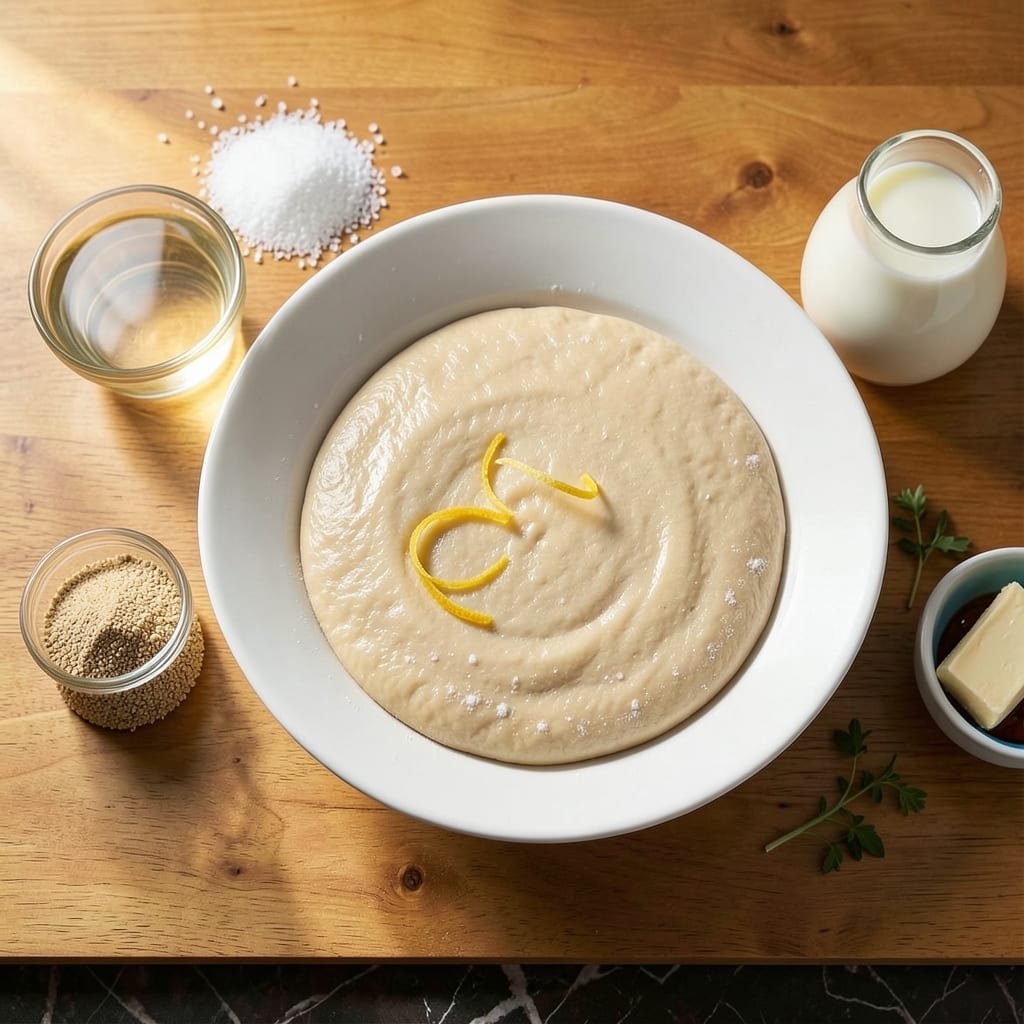
Achieving the perfect siopao dough requires precision and the right technique to guarantee pillowy soft results every time.
This method focuses on activating the yeast properly and allowing the dough to rise until doubled in size. The secret lies in the gentle handling of the dough to maintain its light texture.
What you’ll get is a batch of fluffy, airy buns with a slightly sweet taste that pairs beautifully with any filling. The steaming process ensures they stay moist and tender.
Follow these steps carefully, and you’ll have restaurant-quality siopao that’s impossible to resist.
Ingredients for Best Siopao Dough
Precision ingredients create that pillowy soft texture you expect from authentic steamed buns.
| Ingredient | Amount | Notes |
|---|---|---|
| All-Purpose Flour 🌾 | 4 cups | Sifted for better texture |
| Granulated Sugar 🍚 | ¼ cup | For activating yeast and sweetness |
| Active Dry Yeast 🍞 | 1 tbsp | Proofed in warm water |
| Warm Water 💧 | 1 ¼ cups | 110-115°F for yeast activation |
| Whole Milk 🥛 | ¼ cup | Warmed to room temperature |
| Unsalted Butter 🧈 | ¼ cup | Melted and cooled slightly |
| Large Egg 🥚 | 1 whole | Room temperature for even mixing |
| Baking Powder 🧂 | 1 tsp | For extra lift in dough |
| Salt 🧂 | 1 tsp | Fine grain for even distribution |
| Vegetable Oil 🫒 | 1 tbsp | For greasing dough and bowl |
The flour forms the foundation—King Arthur or Gold Medal all-purpose delivers consistent results. Yeast quality is critical; check the expiration date and store it in the freezer for longevity. Milk adds tenderness, but whole milk (not skim) provides the necessary fat content. Butter should be unsalted to control sodium levels precisely.
No whole milk? Heavy cream diluted with water works in a pinch. Out of eggs? 1/4 cup unsweetened applesauce can substitute, though texture may vary slightly. For a richer flavor, replace water with coconut milk. The baking powder ensures a light crumb—aluminum-free is preferred to avoid metallic aftertaste.
Store yeast in an airtight container in the freezer for up to 1 year. The dough itself can rest overnight in the fridge (covered tightly) before shaping. Baked siopao freeze well for 3 months—steam to reheat.
Why You’ll Love This Recipe
- No-Fuss Mixing: I just dump the flour, sugar, yeast, warm water, and milk together—no fancy steps, just a smooth dough every time.
- Buttery Sweetness: The whole milk and sugar give it that subtle richness that makes the dough taste indulgent on its own.
- Meal Prep Hero: I make a big batch on Sunday and freeze the dough balls for quick siopao any day of the week.
- Budget Stretcher: Honestly, all-purpose flour and pantry staples keep this cheaper than buying store-bought versions.
Step-by-Step Instructions for Pillowy Soft Siopao Dough
Master the technique for creating the perfect, airy texture that defines exceptional siopao.
Step 1: Activate the Yeast for Maximum Rise
In a small bowl, combine the 1 tbsp Active Dry Yeast with the 0.25 cup Granulated Sugar and 1.25 cups Warm Water heated to 110-115°F. The sugar provides immediate food for the yeast while the precise temperature ensures activation without killing the organisms.
Let the mixture stand for 5-7 minutes until it becomes frothy with a thick foam layer on top. This visual confirmation means the yeast is alive and ready to leaven your dough. If no foam appears, your water was either too hot or too cold—start over with fresh ingredients.
Step 2: Combine Wet Ingredients for Rich Flavor Base
In a large mixing bowl, whisk together the 0.25 cup Whole Milk (warmed to room temperature), 1 whole Large Egg, 0.25 cup Unsalted Butter (melted and cooled slightly), and the activated yeast mixture. The combination of milk and butter creates a tender crumb while the egg adds structure and richness.
Use a fork to ensure all components are thoroughly emulsified. The mixture should appear smooth and slightly opaque. At this stage, you’re building the flavor foundation that will make your siopao dough stand out from basic steamed buns.
Step 3: Incorporate Dry Ingredients for Perfect Structure
In a separate bowl, sift together the 4 cups All-Purpose Flour, 1 tsp Baking Powder, and 1 tsp Salt. Sifting aerates the flour and ensures even distribution of leavening agents, which is crucial for consistent texture throughout the dough.
Gradually add the dry ingredients to the wet mixture, about 1 cup at a time, mixing with a wooden spoon until a shaggy dough forms. The dough will be sticky at this stage—this is normal and indicates proper hydration. The salt regulates yeast activity while the baking powder provides additional lift for that signature pillowy texture.
Step 4: Knead to Develop Gluten for Elastic Dough
Turn the dough onto a lightly floured surface and knead for 8-10 minutes until smooth and elastic. I use the heel of my hand to push the dough away, then fold it back over itself in a rhythmic motion. The dough should become supple and slightly tacky but not stick to your hands.
You’ll know the gluten has developed properly when you can stretch a small piece thin enough to see light through it without tearing (the windowpane test). This elastic network is what gives siopao its characteristic chewy yet soft texture. If the dough resists stretching, continue kneading for another 2-3 minutes.
Step 5: First Rise for Maximum Volume
Lightly grease a large bowl with the 1 tbsp Vegetable Oil, then place the dough inside, turning to coat all sides. Cover with a damp kitchen towel and let rise in a warm, draft-free place for 1-1.5 hours or until doubled in size. The ideal rising temperature is 80-85°F.
To test if the dough has risen sufficiently, gently press two fingers about ½ inch into the dough. If the indentations remain, the dough is ready for the next step. This first rise allows the yeast to ferment the sugars, developing flavor and creating the airy structure that makes siopao so light and fluffy.
Pro Tips For Making Best Siopao Dough
- Test the Yeast: Always bloom your active dry yeast in warm water with a pinch of sugar first—if it doesn’t foam within 5-10 minutes, your dough won’t rise. I learned this the hard way after wasting a whole batch of flour.
- Use Warm Milk: Swap cold milk for warm (around 110°F) to activate the yeast faster and create a softer, more pliable dough. Sounds obvious, but I used to skip this and wondered why my siopao was dense.
- Avoid Over-Flouring: Resist the urge to dump extra flour on your counter when kneading—too much makes the dough tough. Just dust lightly and keep your hands floured instead.
- Rest Twice: Let the dough rise once after kneading, then again after shaping. Skipping the second rest gives you flat, sad siopao—ask me how I know.
Pro Cooking Tips for Great best siopao dough
Yeast Activation Perfection
For foolproof yeast activation, I always use a kitchen thermometer to verify my water is exactly 110-115°F. Anything hotter kills the yeast, while cooler water slows activation. The foam should resemble a creamy head on beer within 5-7 minutes. 🌡️
Dough Temperature Control
The ideal environment for rising is 80-85°F. I create this by placing my dough bowl in the oven with the light on or on top of the refrigerator. Avoid drafty areas or direct heat sources, which can cause uneven rising or create a crust on the dough surface.
Kneading Technique
When kneading, use the heel of your hand to push rather than pull the dough. This develops gluten more effectively. A stand mixer with a dough hook works well too—6-8 minutes on medium speed. The dough is ready when it passes the windowpane test and springs back when poked.
Resting Between Shapes
After dividing and shaping your siopao, let them rest for 15-20 minutes before steaming. This final rest allows the gluten to relax, preventing the buns from shrinking during steaming. Cover with a damp towel to prevent drying.
Steaming Setup
Use a bamboo steamer lined with parchment paper (poke holes for steam circulation). Bring water to a rolling boil before adding buns. Steam for 12-15 minutes over high heat. Never lift the lid during steaming—it causes temperature drops and uneven cooking. 🔥
Testing Doneness
Siopao are done when they’ve puffed significantly and the dough springs back when gently pressed. If unsure, steam an extra 1-2 minutes. Over-steaming makes them dense, while under-steaming leaves the center gummy. Let cool slightly before handling.
Nutrition Facts
Frequently Asked Questions
Why does my dough not rise properly?
Old yeast or incorrect water temperature (110-115°F) are common culprits. Always check yeast expiration and use a thermometer. A drafty rising spot can also slow fermentation.
Can I make the dough ahead of time?
Yes! After kneading, refrigerate the dough (covered tightly) for up to 24 hours. This slow rise enhances flavor. Let it warm to room temperature before shaping.
How do I prevent dense siopao?
Avoid over-kneading or skipping the 1-1.5 hour first rise. Underproofed dough or lifting the steamer lid too soon can also cause density.
What’s the best flour for siopao?
All-purpose flour works perfectly, but for extra softness, replace 1 cup with cake flour. Sift first for a lighter texture.

- 6 Egg Cake Recipe with Oil: Light as Air With Buttery Moisture - October 4, 2026
- 4 Bean Casserole Recipe: One-Pan Heartiness With Smoky Paprika Depth - October 4, 2026
- 3-Ingredient Keto Mug Cake Recipe: Microwave Magic in 2 Minutes - October 4, 2026