
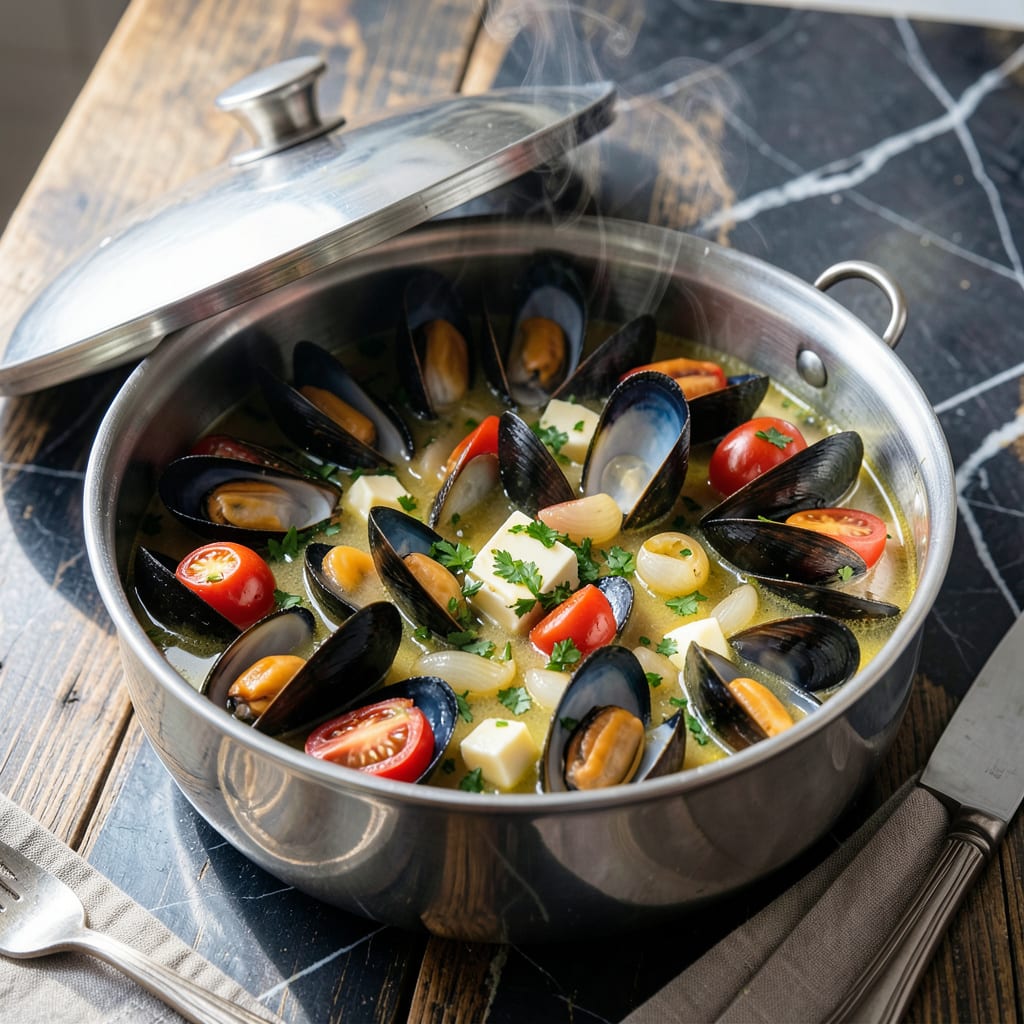
I’ve refined this method over years to deliver the best steamed mussels every time—tender, briny, and infused with white wine and garlic.
The key is high heat and a covered pot to trap steam, allowing the mussels to open in just 5 minutes while absorbing the aromatic broth.
Ingredients for Best Steamed Mussels
Fresh mussels and a handful of aromatics create this restaurant-quality seafood dish.
| Ingredient | Amount | Notes |
|---|---|---|
| Fresh Mussels 🦪 | 4 lb | Cleaned and debearded |
| Dry White Wine 🍷 | 1 ½ cups | Sauvignon Blanc or Pinot Grigio |
| Garlic Cloves 🧄 | 6 cloves | Thinly sliced |
| Shallots 🧅 | 2 whole | Finely diced |
| Unsalted Butter 🧈 | ½ cup | Cut into small cubes |
| Fresh Parsley 🌿 | ½ cup | Chopped, for garnish |
| Fresh Thyme Sprigs 🍃 | 4 pieces | Whole sprigs |
| Bay Leaves 🌿 | 2 pieces | Dried or fresh |
| Lemon 🍋 | 1 whole | Zested and juiced |
| Crushed Red Pepper Flakes 🌶️ | ½ tsp | Optional for heat |
| Kosher Salt 🧂 | 1 tsp | Adjust to taste |
| Freshly Ground Black Pepper 🌶️ | ½ tsp | To taste |
[recipeingredientscaler]
The mussels must be fresh and smell briny—like the ocean, not fishy. Whole Foods or local seafood markets are best for quality. Look for closed shells (they should snap shut when tapped). Avoid any with broken or open shells that won’t close. For wine, dry whites like Sauvignon Blanc work perfectly. Don’t use cooking wine; it’s too salty and harsh.
No white wine? Dry vermouth or chicken stock with a splash of lemon juice works in a pinch. Fresh shallots can be swapped for yellow onion at a 1:1 ratio. If you’re out of thyme, substitute rosemary or oregano. For extra richness, add a splash of heavy cream at the end. The butter can be replaced with olive oil for a lighter finish.
Steamed mussels are best eaten immediately, but leftovers keep in the fridge for 1-2 days. Store them in their broth in an airtight container. Reheat gently in a covered pot—don’t overcook, or they’ll get rubbery. The broth itself freezes well for 1 month if you want to save it for another use.
Why You’ll Love This Recipe
- 20-Minute Meal: One pot, a splash of wine, and those mussels steam themselves while I set the table.
- Garlic-Butter Bliss: The shallots and garlic melt into the butter-wine broth—honestly, I could drink it with a spoon.
- Date Night Ready: I’ve served this for anniversary dinners and casual Tuesdays, and it always feels special.
- Leftovers? No Problem: Any extras become next-day linguine in that leftover broth, so nothing goes to waste.
Step-by-Step Instructions for Steamed Mussels
This professional approach guarantees perfectly cooked mussels with a flavorful white wine broth.
Step 1: Prep the Aromatics and Mussels
Finely dice the 2 whole Shallots and thinly slice the 6 cloves Garlic Cloves. I always prep these first because they form the flavor base that will infuse the cooking liquid.
Rinse the 4 lb Fresh Mussels under cold water, scrubbing the shells to remove any debris. Discard any mussels that are open and don’t close when tapped, or have broken shells. Pull off any beards that might still be attached.
Step 2: Build the Flavor Base
In a large pot with a tight-fitting lid, melt the 0.5 cup Unsalted Butter over medium heat. Add the diced shallots and cook for 2-3 minutes until they become translucent and fragrant.
Stir in the sliced garlic, 4 pieces Fresh Thyme Sprigs, 2 pieces Bay Leaves, and 0.5 tsp Crushed Red Pepper Flakes. Cook for 1 minute until the garlic begins to turn golden—don’t let it brown. This creates a rich aromatic foundation for the mussels.
Step 3: Steam the Mussels in White Wine
Pour in the 1.5 cups Dry White Wine and bring to a simmer. Add the cleaned mussels to the pot, then cover with the lid. Increase heat to high.
Let the mussels steam for 5-7 minutes, shaking the pot occasionally to redistribute them. You’ll know they’re done when all the shells have opened wide and the liquid has turned fragrant and opaque. Discard any mussels that remain closed after cooking.
Step 4: Finish with Lemon and Seasonings
Remove the pot from heat. Zest the 1 whole Lemon directly into the pot, then add its juice. Stir in the 1 tsp Kosher Salt and 0.5 tsp Freshly Ground Black Pepper.
Taste the broth and adjust seasoning if needed. The acid from the lemon should brighten the flavors, while the salt enhances the natural sweetness of the mussels. The broth should be aromatic and well-balanced.
Step 5: Garnish and Serve Immediately
Using a slotted spoon, transfer the mussels to serving bowls. Spoon the broth over them, dividing it evenly. Sprinkle with the 0.5 cup Fresh Parsley for a fresh, colorful finish.
Serve immediately with crusty bread to soak up the delicious liquid. The mussels should be plump and tender, with a briny-sweet flavor that pairs perfectly with the white wine and garlic broth.
Pro Tips For Making Best Steamed Mussels
- Cover the Pot: Keep the lid on tight once the wine starts simmering—steam is what opens the mussels, and peeking just slows the process.
- Scrub the Beards: Pull off the stringy beards and scrub the shells under cold water to remove grit; I learned this the hard way after crunching on sand more than once.
- Toss Closed Mussels: After steaming, any mussels that stay shut should go straight in the trash—no amount of extra cooking will make them safe to eat.
- Finish with Butter: Swirl in the unsalted butter at the very end, off the heat, so it melts into the broth without breaking into greasy globs.
Regional Styles of These Flavors
Belgian Classic
In Belgium, they keep it simple with mussels steamed in white wine and aromatics, just like our recipe. The key difference is using celery and leeks alongside shallots. They often add a touch of cream at the end for richness.
French Provençal Style
Provençal cooks add tomatoes, saffron, and fennel to their mussels. The saffron gives the broth a golden hue and a floral note. I love this version with a sprinkle of herbes de Provence for extra aroma. 🌿
Thai Coconut Curry
For a Southeast Asian twist, swap the white wine for coconut milk and red curry paste. Add lemongrass, ginger, and lime leaves to the pot. The result is creamy, spicy, and fragrant—perfect with jasmine rice.
Portuguese Cataplana
In Portugal, mussels are often cooked in a Cataplana, a clamshell-shaped copper pan. They use pimentón (smoked paprika), coriander, and bell peppers for a smoky, slightly sweet broth. Serve with crusty bread to soak it all up.
Italian White Wine
Italian cooks often add san marzano tomatoes and basil to their mussels. A splash of Pino Grigio and a finish of Parmigiano-Reggiano make it distinctly Italian. This version pairs beautifully with linguine. 🍷
Spanish Marmitako
In Spain’s Basque region, mussels are cooked in a marmitako style with potatoes, onions, and peppers. The dish originated as a fisherman’s stew, but the mussels steal the show with their briny depth.
Nutrition Facts
Frequently Asked Questions
What kind of wine works best?
Use a dry white like Sauvignon Blanc or Pinot Grigio. Avoid sweet wines or cooking wine, as they can overpower the mussels’ natural flavor.
How do I know when they’re done?
They’re ready when all shells open wide after 5-7 minutes of steaming. Discard any that stay closed—they may be unsafe to eat.
Can I make this ahead of time?
Best served fresh, but leftovers keep in the fridge for 1-2 days. Reheat gently in a covered pot to avoid rubbery texture.
What if I don’t have white wine?
Try dry vermouth or chicken stock with a splash of lemon juice. These substitutes work well in a pinch.

- 6 Egg Cake Recipe with Oil: Light as Air With Buttery Moisture - October 4, 2026
- 4 Bean Casserole Recipe: One-Pan Heartiness With Smoky Paprika Depth - October 4, 2026
- 3-Ingredient Keto Mug Cake Recipe: Microwave Magic in 2 Minutes - October 4, 2026