
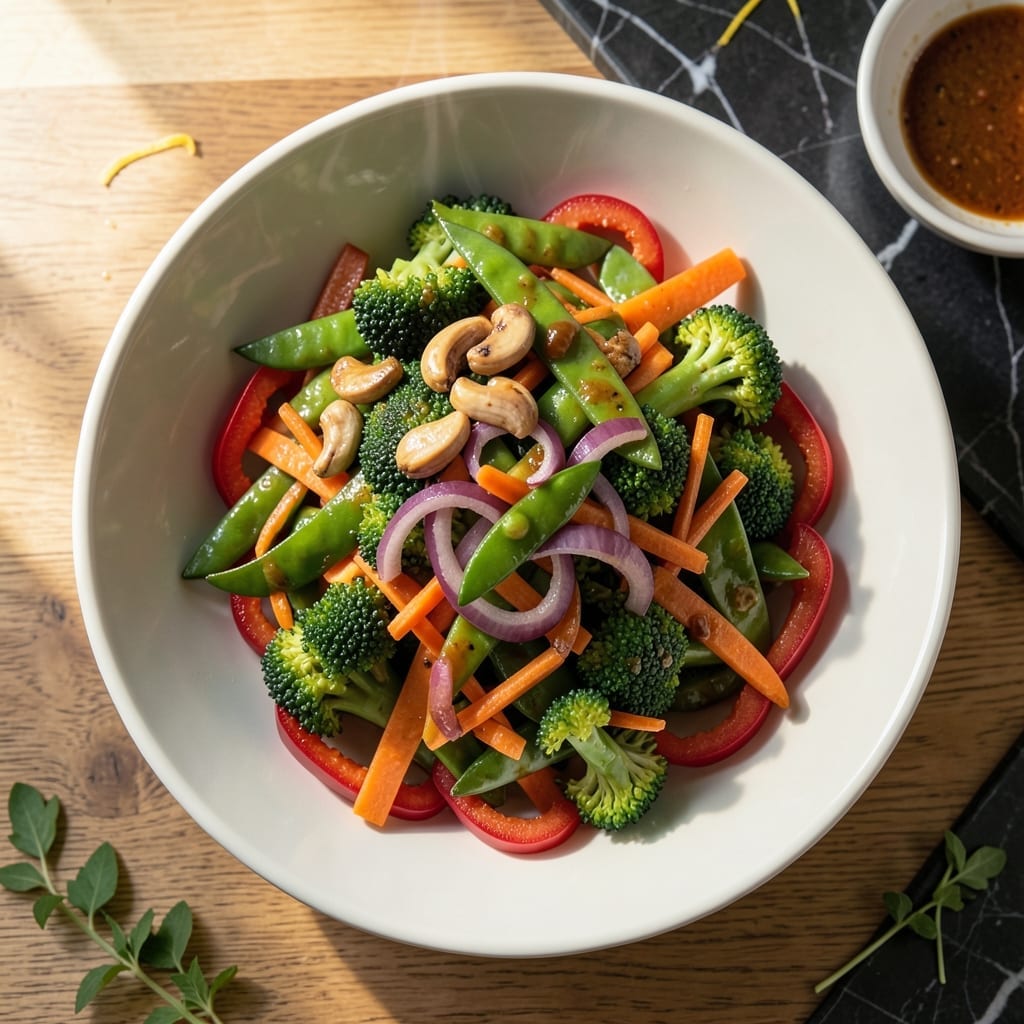
I’ve refined this vegetable stir fry to deliver the best balance of texture and flavor you’ll find at home. The key is high heat and precise timing to maintain each vegetable’s natural crunch and vibrant color.
This method uses a simple sauce that enhances rather than overpowers the fresh produce. A hot wok or skillet ensures quick cooking, preserving the crispness that makes this dish stand out from others.
You’ll achieve a colorful, restaurant-quality stir fry with minimal effort. Every bite offers a mix of tender-crisp vegetables coated in a light, savory glaze that’s both satisfying and nutritious.
Ready in 15 minutes, it’s the perfect solution for a healthy, flavorful meal any day of the week.
Ingredients for Best Vegetable Stir Fry
Rainbow vegetables and a punchy sauce bring this vibrant dish to life in minutes.
| Ingredient | Amount | Notes |
|---|---|---|
| Red Bell Pepper 🌶️ | 1 whole | Thinly sliced for even cooking |
| Broccoli Crowns 🥦 | 2 cups | Cut into small florets |
| Carrots 🥕 | 2 whole | Julienned or thinly sliced |
| Snap Peas 🌱 | 1 cup | Fresh or thawed frozen |
| Red Onion 🧅 | 1 whole | Thinly sliced into strips |
| Garlic Cloves 🧄 | 3 cloves | Minced for sauce |
| Fresh Ginger 🌿 | 1 tbsp | Peeled and grated |
| Soy Sauce 💧 | 3 tbsp | Low-sodium preferred |
| Rice Vinegar 🍶 | 1 tbsp | Or substitute apple cider vinegar |
| Maple Syrup 🍁 | 1 tbsp | For balancing sweetness |
| Sesame Oil 🫒 | 1 tsp | Toasted for depth of flavor |
| Cornstarch 🌾 | 1 tsp | For thickening sauce |
| Vegetable Oil 🫒 | 2 tbsp | High smoke point essential |
| Green Onions 🌿 | ¼ cup | Thinly sliced for garnish |
| Sesame Seeds 🌰 | 1 tbsp | Toasted for garnish |
The vegetables need to be fresh and crisp—look for vibrant colors and firm textures at your local market or Whole Foods. Bell peppers should be glossy, broccoli florets tight, and snap peas snappy enough to break when bent. Ginger and garlic are non-negotiable here; fresh is the only way to get that bright, zesty kick the sauce demands. Skip the pre-minced stuff in jars (it tastes like regret).
No snap peas? Snow peas or sliced zucchini work just as well. Out of maple syrup? Agave nectar or coconut sugar can step in. Soy sauce can be swapped for tamari (gluten-free) or coconut aminos if you’re avoiding soy. For extra crunch, add water chestnuts or baby corn. The cornstarch can be omitted if you prefer a lighter sauce, but it does help it cling to the veggies beautifully.
This tastes best fresh off the heat, but leftovers keep 3-4 days in the fridge. Reheat with a splash of water or oil to bring the veggies back to life. The sauce thickens as it cools, so thin it out if needed. Garnish with extra sesame seeds right before serving for maximum crunch.
Why You’ll Love This Recipe
- One Pan Wonder: I toss the bell peppers, broccoli, and snap peas in, stir occasionally, and dinner’s ready—no multiple pots or complicated steps.
- Crave-Worthy Crunch: The snap peas and carrots stay crisp while the red onion adds just the right bite to every forkful.
- Meal Prep Hero: I make a big batch on Sunday and it stays fresh all week for lunches. Honestly, it tastes even better the next day.
- Budget Friendly: A pound of fresh veggies goes a long way, and I save a ton compared to takeout.
Step-by-Step Instructions for Vegetable Stir Fry
Master the wok with this technique-driven approach to vibrant, restaurant-quality vegetables in minutes.
Step 1: Prep Vegetables for Even Cooking
Thinly slice the red bell pepper into uniform strips and cut the 2 cups broccoli crowns into small, bite-sized florets. I always separate the broccoli stems and slice them thinly too—waste not, want not. Peel and julienne the 2 whole carrots into matchsticks or thin slices.
Slice the red onion into thin strips, trim the 1 cup snap peas if needed, and keep them whole. This consistent sizing ensures everything cooks at the same rate. Have all your vegetables prepped and ready before you start cooking—stir-frying happens fast and there’s no time to chop once the heat is on.
Step 2: Create the Stir Fry Sauce
In a small bowl, whisk together the 3 tbsp soy sauce, 1 tbsp rice vinegar, 1 tbsp maple syrup, and 1 tsp sesame oil. The maple syrup balances the saltiness of the soy sauce perfectly while adding a subtle depth.
Next, mince the 3 cloves garlic cloves and peel and grate the 1 tbsp fresh ginger. Add these to the sauce mixture. In a separate tiny bowl, mix the 1 tsp cornstarch with 1 tablespoon of cold water to create a slurry. This will thicken your sauce to that perfect glossy consistency. Keep both bowls close to your cooking station.
Step 3: Stir Fry Vegetables to Perfection
Heat a large skillet or wok over high heat until it’s screaming hot—this is crucial for that authentic wok hei flavor. Add the 2 tbsp vegetable oil and swirl to coat the pan. The oil should shimmer but not smoke.
Add the red onion, red bell pepper, carrots, and broccoli crowns to the pan. Stir-fry for 3-4 minutes until the vegetables are bright in color and just beginning to soften. Then add the snap peas and cook for an additional 1-2 minutes. The snap peas cook faster, so we add them later to maintain that perfect crunch.
Step 4: Combine and Finish with Sauce
Pour the sauce mixture over the vegetables and stir to coat evenly. Add the cornstarch slurry and toss everything together. Cook for 1-2 minutes until the sauce has thickened and glazes the vegetables beautifully.
The sauce should coat the back of a spoon and have a glossy sheen. If it’s too thick, add a splash of water. If it’s too thin, let it cook for another 30 seconds—the cornstarch will continue to work its magic. Taste and adjust seasoning if needed, though the soy sauce typically provides enough saltiness.
Step 5: Garnish and Serve Immediately
Transfer the stir fry to a serving platter and sprinkle with the 0.25 cup green onions and 1 tbsp sesame seeds. The green onions add a fresh, oniony bite while the toasted sesame seeds provide a delightful nutty crunch.
Serve immediately while hot—the vegetables should retain a slight crispness, and the sauce should be clinging to each piece. This dish is all about timing and temperature control, so don’t let it sit. The colors should be vibrant, the textures varied, and the flavors perfectly balanced between sweet, salty, and umami.
Pro Tips For Making Best Vegetable Stir Fry
- Crank the Heat: High, screaming heat is non-negotiable—your wok or pan should be so hot a drop of water sizzles and evaporates instantly. I learned this the hard way after too many limp, sad veggies.
- Cut Uniformly: Slice all your broccoli, carrots, and bell peppers into even, thin pieces—about ¼-inch thick—so they cook at the same rate. Sounds tedious, but it actually changes the outcome.
- Skip the Crowding: Stir-fry in batches if needed, because overloading the pan steams the vegetables instead of searing them. After burning three batches, I finally figured out patience wins here.
- Parboil Broccoli: Blanch the broccoli crowns for 60 seconds in boiling water before stir-frying—it guarantees they finish tender-crisp without turning mushy. My grandmother swore by this, and she was right.
Dietary Considerations for This Dish
Gluten-Free Option
Swap the soy sauce for tamari to make this dish gluten-free. Tamari is naturally brewed without wheat and has a richer, deeper flavor that works beautifully. I always keep a bottle of San-J Tamari in my pantry for this exact reason.
Low-Sodium Adaptation
Use low-sodium soy sauce and reduce the amount to 2 tbsp. Boost flavor with extra garlic and ginger—I often add an additional ½ tsp of each. The result is just as delicious without the excess salt. 💪
Vegan and Allergen-Free
This recipe is naturally vegan, free from dairy, eggs, and animal products. It’s also nut-free if you skip the garnish or use sunflower seeds instead of sesame. Always check labels on sauces to ensure no hidden allergens.
Low-Carb Version
Replace the maple syrup with 1 tsp erythritol or monk fruit sweetener to reduce carbs. The sauce will still have that sweet-savory balance without the sugar. I find the flavor difference minimal.
Keto-Friendly Swaps
For a keto approach, reduce the carrots to 1 whole and add 1 cup sliced zucchini or mushrooms. These are lower in carbs but still provide great texture and color. 🔥
Extra Protein Boost
Add 1 cup cubed tofu or chickpeas for extra protein. Press the tofu first to remove excess moisture, then pan-fry until golden before adding to the stir fry. This keeps the dish hearty and satisfying.
Nutrition Facts
Frequently Asked Questions
Can I use frozen vegetables instead of fresh?
Yes, but thaw and drain them first to prevent excess moisture in your stir fry. Frozen veggies may soften quicker, so reduce cooking time by 1-2 minutes to maintain texture.
What’s the best oil for stir frying?
Use oils with a high smoke point like vegetable, peanut, or avocado oil. Avoid olive oil as it can burn at high heat. Sesame oil adds flavor but has a lower smoke point.
How do I keep my stir fry from getting soggy?
Cook in small batches to avoid overcrowding the pan and use high heat. Pat vegetables dry before cooking and don’t add sauce until the very end.
Can I make this ahead of time?
Prep vegetables in advance but cook just before serving for best texture. Leftovers keep 3-4 days in the fridge—reheat quickly in a hot pan to restore crispness.

- 6 Egg Cake Recipe with Oil: Light as Air With Buttery Moisture - October 4, 2026
- 4 Bean Casserole Recipe: One-Pan Heartiness With Smoky Paprika Depth - October 4, 2026
- 3-Ingredient Keto Mug Cake Recipe: Microwave Magic in 2 Minutes - October 4, 2026