
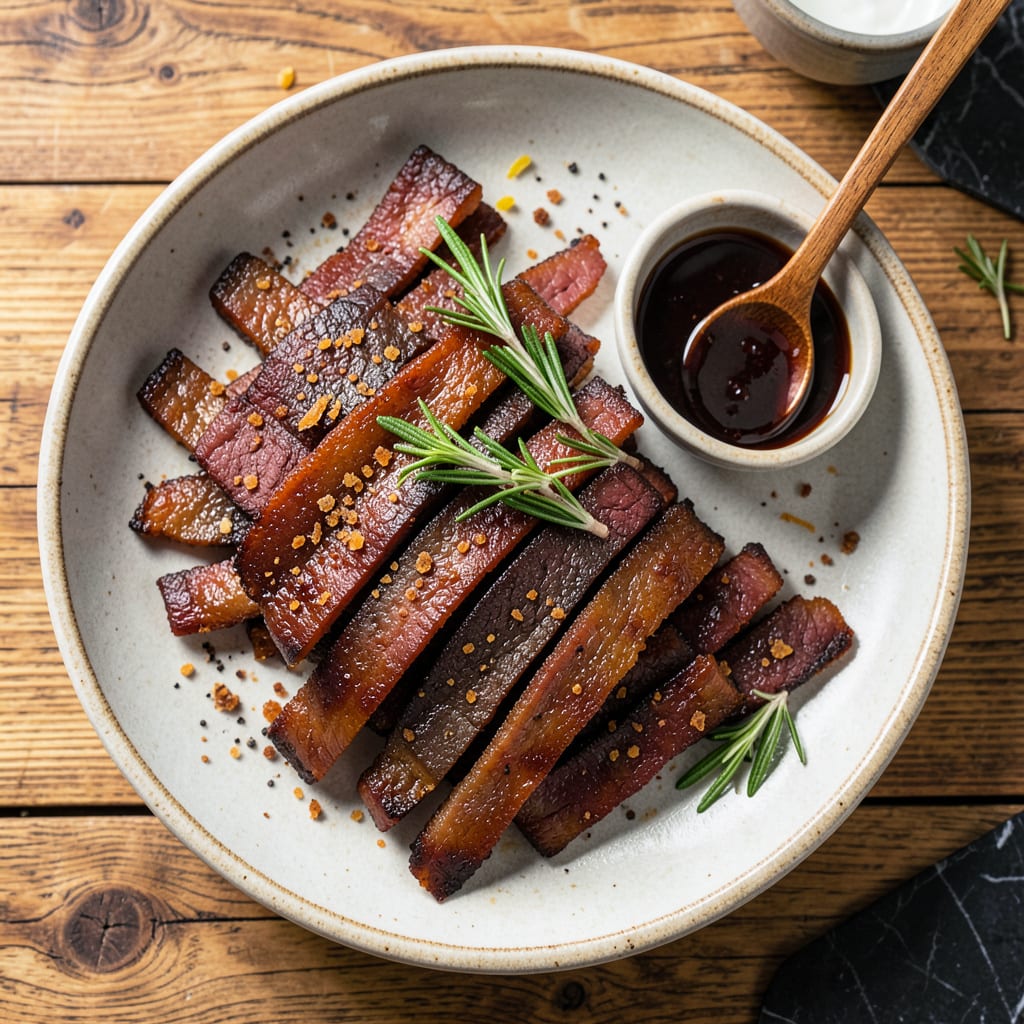
Making the best venison jerky at home requires precision, but the results are worth every step. This recipe delivers tender, smoky bites that rival commercial brands—without artificial preservatives or excessive sodium. The secret lies in the marinade balance and proper drying technique.
I’ve perfected this method through years of trial, ensuring consistent texture and deep flavor penetration. Whether you’re prepping for a hunting trip or just want a protein-packed snack, this jerky stays fresh for weeks when stored properly. Follow the steps carefully for restaurant-quality results every time.
Ingredients for Best Venison Jerky
Precision ingredients deliver restaurant-quality venison jerky with deep smoky flavor and ideal tenderness.
| Ingredient | Amount | Notes |
|---|---|---|
| Venison Top Round 🦌 | 2 ½ lb | Lean, sliced 1/4-inch thick |
| Worcestershire Sauce 🫕 | ½ cup | Lea & Perrins preferred |
| Soy Sauce 🫕 | ½ cup | Low-sodium for balance |
| Liquid Smoke 💨 | 2 tbsp | Hickory or mesquite flavor |
| Brown Sugar 🍚 | ⅓ cup | Light or dark variety |
| Garlic Powder 🧄 | 1 tbsp | Freshly ground preferred |
| Onion Powder 🧅 | 1 tbsp | High-quality for depth |
| Black Pepper 🌶️ | 2 tsp | Coarse grind for texture |
| Smoked Paprika 🌶️ | 1 tbsp | Spanish variety recommended |
| Cayenne Pepper 🔥 | ½ tsp | Adjust for heat preference |
| Curing Salt (Prague Powder #1) 🧂 | 1 tsp | Critical for preservation |
| Water 💧 | ¼ cup | For marinade dilution |
| Apple Cider Vinegar 🍎 | 2 tbsp | For acidity balance |
| Mustard Powder 🌭 | 1 tsp | Optional for depth |
The venison selection determines final texture. Top round offers the optimal lean-to-fat ratio for jerky—avoid cuts with visible fat marbling. Source from local butchers specializing in game meats, or process your own harvest. For the curing salt, Prague Powder #1 is non-negotiable; verify it contains 6.25% nitrite. Liquid smoke brands vary significantly—Wright’s provides consistent hickory notes without chemical aftertaste. Measure spices by weight for professional accuracy when scaling batches.
Sodium-sensitive individuals can reduce soy sauce by 25% and compensate with additional Worcestershire. For gluten-free adaptation, substitute coconut aminos at a 1:1 ratio. Brown sugar alternatives like coconut sugar work but may darken the jerky. When testing heat levels, begin with half the cayenne—venison absorbs capsaicin more intensely than beef. The apple cider vinegar stabilizes pH; rice vinegar may be used but lacks malic acid complexity.
Marinated venison keeps refrigerated for 48 hours before drying. Post-dehydration, store in vacuum-sealed bags with oxygen absorbers for 3-4 months at room temperature. For extended shelf life, refrigerate for up to 6 months or freeze for 12 months. Always label batches with preparation date and spice profile—flavor intensity evolves during storage.
Why You’ll Love This Recipe
- No Knives Needed: I slice the venison while it’s still slightly frozen—clean cuts, no struggle. The top round’s lean texture means no fatty bits to trim, just uniform strips ready for marinade in minutes.
- Smoky-Sweet Obsession: That first bite where the brown sugar caramelizes just enough against the liquid smoke? It’s like campfire meets candy. The Worcestershire and soy sauce add this deep umami punch that makes store-bought jerky taste flat.
- Trail to Tailgate: Honestly, I’ve packed this for hunting trips, tossed it in kids’ lunchboxes, and watched it disappear at football parties. The batch makes enough to share (if you’re feeling generous) or stash for those I-need-protein-NOW moments.
- Pantry Hero: Between us, a 3-pound top round costs me less than fancy beef jerky—and yields way more. The marinade uses stuff I already keep around, so no last-minute grocery runs. Dries overnight while I sleep, then keeps for weeks. My kind of math.
Step-by-Step Instructions for Venison Jerky
This method ensures perfectly seasoned, tender jerky with ideal texture and smoky depth in every bite.
Step 1: Prepare and Slice the Venison
Begin by partially freezing the 2.5 lb venison top round for 30-45 minutes to firm it up for easier slicing. Using a sharp slicing knife, cut the meat against the grain into ¼-inch thick strips. This thickness ensures proper drying while maintaining tenderness.
Consistent thickness is critical—varying strip sizes will dry unevenly. As you work, trim away any visible fat or connective tissue, as these won’t dry properly and can cause spoilage. Arrange the sliced venison on a clean tray and pat completely dry with paper towels to remove surface moisture.
Step 2: Create the Marinade and Cure
In a large bowl, whisk together the 0.5 cup Worcestershire sauce, 0.5 cup soy sauce, 2 tbsp liquid smoke, 0.33 cup brown sugar, 1 tbsp garlic powder, 1 tbsp onion powder, 2 tsp black pepper, 1 tbsp smoked paprika, 0.5 tsp cayenne pepper, 1 tsp curing salt, 0.25 cup water, 2 tbsp apple cider vinegar, and 1 tsp mustard powder. The curing salt is essential for food safety and proper preservation.
Continue whisking until the brown sugar fully dissolves and the mixture becomes homogeneous. The marinade should be deeply aromatic with a balance of sweet, smoky, and savory notes. This blend not only flavors the meat but also begins the preservation process.
Step 3: Marinate the Venison Thoroughly
Transfer the sliced venison to the marinade, ensuring each piece is fully submerged. Cover the bowl and refrigerate for 12-24 hours, stirring occasionally to redistribute the meat. The longer marinating time allows the flavors to penetrate deeply while the curing salt works throughout the tissue.
After 12 hours, check that the meat has absorbed much of the liquid and developed a rich, mahogany color. The strips should feel slightly tacky but not wet to the touch. This indicates the marinade has properly adhered to the surface, which is crucial for even drying.
Step 4: Dry the Jerky to Perfection
Arrange the marinated strips on dehydrator trays or wire racks, leaving ¼-inch space between pieces for proper airflow. Set your dehydrator to 160°F or preheat your oven to its lowest setting (typically 170°F with the door slightly ajar). The target internal temperature for safe jerky is 160°F for venison.
Dry for 4-6 hours, rotating the trays halfway through if using a dehydrator. The jerky is done when the strips are dry to the touch but still pliable—they should bend without snapping. Test a piece by letting it cool completely; properly dried jerky will be chewy but not brittle.
Step 5: Condition and Store the Jerky
Allow the finished jerky to cool completely at room temperature for 1 hour. This conditioning period equalizes moisture throughout the pieces. Pat any excess oil from the surface with a paper towel if needed.
Store in airtight containers with paper towels to absorb any residual moisture. For maximum shelf life (up to 2 months), refrigerate or freeze. The jerky should maintain its smoky aroma and chewy texture when properly stored, with no signs of moisture on the surface.
Perfect Pairings for These Flavors
Trail Mix Partners
Pair your jerky with a homemade trail mix featuring smoked almonds, dried cranberries, and dark chocolate chunks. The saltiness of the jerky contrasts beautifully with the sweet-tart fruit and rich chocolate. I like using 70% cacao chocolate for balance without overpowering the smoky notes. 🌲
Craft Beer Pairings
A robust porter or stout enhances the jerky’s deep flavors—try Guinness or a local craft option with coffee undertones. For hop lovers, an IPA cuts through the richness. I discovered this combo during camping trips, and it’s been my go-to ever since.
Cheese Board Additions
Add your jerky to a charcuterie board with aged cheddar, Manchego, and water crackers. The sharpness of the cheese complements the smoky-sweet jerky. I arrange mine with honey drizzle and fig jam for an elevated snack experience.
Dipping Sauces
Create a quick dipping sauce by mixing ¼ cup mayonnaise, 1 tbsp sriracha, and 1 tsp smoked paprika. The creamy heat balances the jerky’s intensity. For a sweeter option, blend 2 tbsp BBQ sauce with 1 tsp mustard. These pairings work great for game-day snacks.
Backpacking Meals
Combine jerky with instant couscous and dehydrated vegetables for a lightweight backpacking meal. Just add boiling water and let sit for 5 minutes. The jerky rehydrates slightly, adding protein and flavor to your trail lunch. I always pack extra for energy boosts.
Wine Alternatives
For wine lovers, a Zinfandel with its bold fruit notes pairs surprisingly well with venison jerky. The wine’s peppery finish mirrors the jerky’s spice profile. I prefer California Zins from Dry Creek Valley for their jammy richness that stands up to the smoky flavors. 🍷
Nutrition Facts

- 6 Egg Cake Recipe with Oil: Light as Air With Buttery Moisture - October 4, 2026
- 4 Bean Casserole Recipe: One-Pan Heartiness With Smoky Paprika Depth - October 4, 2026
- 3-Ingredient Keto Mug Cake Recipe: Microwave Magic in 2 Minutes - October 4, 2026