
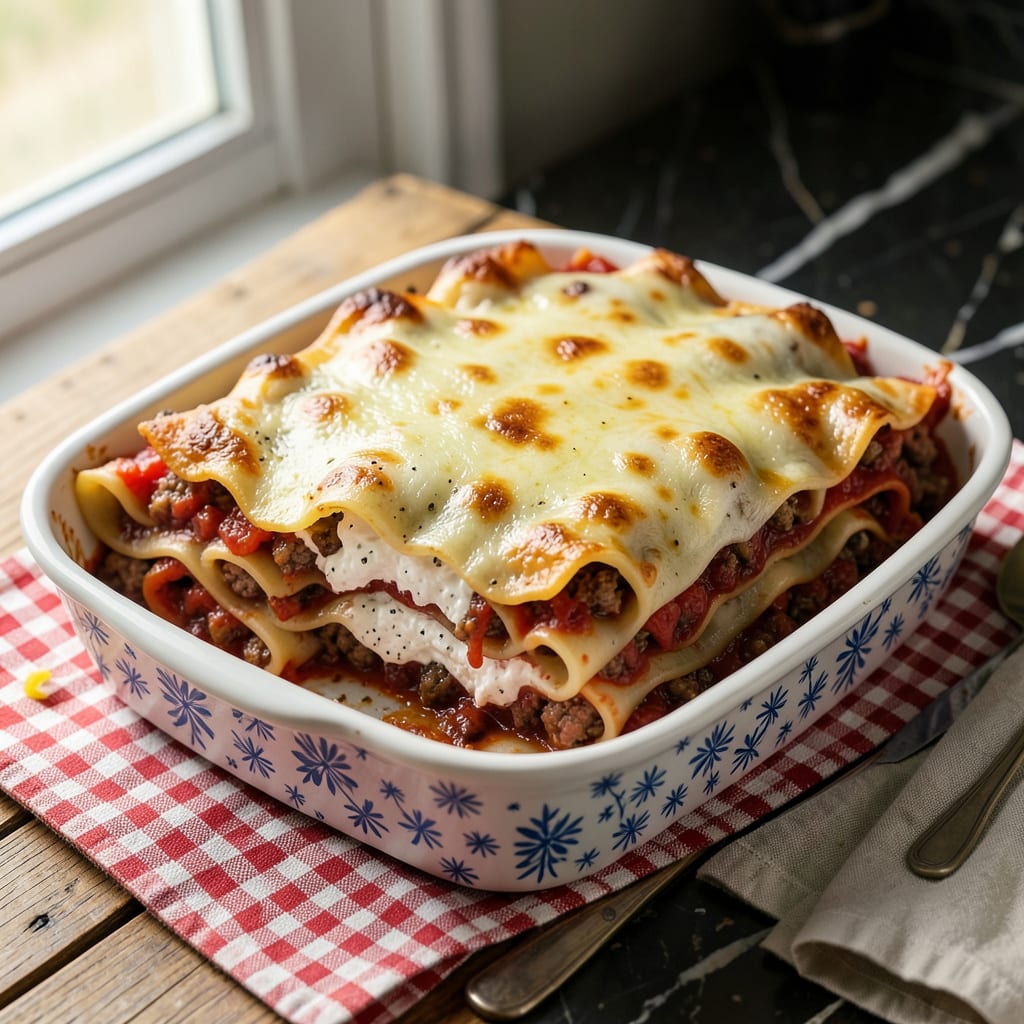
This 1960s Betty Crocker lasagna brings vintage comfort to your modern kitchen. The recipe reflects the casserole-heavy era of mid-century home cooking, where family meals centered around hearty, layered dishes that could feed a crowd. With simple ingredients like ground beef, canned tomatoes, and rich cheeses, it delivers the nostalgic flavors of a bygone era.
The layering technique—pasta, meat sauce, and cheese repeated—creates that signature lasagna structure. Baked at 375°F until bubbling and golden, this dish captures the essence of 1960s convenience without sacrificing homemade warmth. Perfect for recreating a taste of the past with today’s ingredients.
Ingredients for Betty Crocker Lasagna Recipe 1960s
These twelve ingredients recreate the 1960s Betty Crocker lasagna experience with modern supermarket convenience.
| Ingredient | Amount | Notes |
|---|---|---|
| Ground Beef 🥩 | 1 ½ lb | 80/20 lean-to-fat ratio preferred |
| Lasagna Noodles 🍝 | 12 pieces | Oven-ready or traditional boiled |
| Canned Tomato Sauce 🍅 | 28 oz | Two 14-oz cans, unseasoned |
| Canned Tomato Paste 🍅 | 6 oz | One small can, no salt added |
| Ricotta Cheese 🧀 | 15 oz | Whole-milk for authentic texture |
| Mozzarella Cheese 🧀 | 8 oz | Shredded, low-moisture variety |
| Parmesan Cheese 🧀 | 1 cup | Freshly grated from wedge |
| Yellow Onion 🧅 | 1 whole | Medium-sized, finely diced |
| Garlic Cloves 🧄 | 3 cloves | Minced to uniform consistency |
| Dried Oregano 🌿 | 1 tbsp | Mediterranean variety preferred |
| Dried Basil 🍃 | 1 tbsp | Crushed between palms |
| Granulated Sugar 🍚 | 1 tsp | Balances tomato acidity |
| Kosher Salt 🧂 | 1 ½ tsp | Diamond Crystal brand recommended |
| Ground Black Pepper 🌶️ | ½ tsp | Freshly cracked preferred |
| Olive Oil 🫒 | 2 tbsp | Extra-virgin for sautéing |
The beef foundation requires 80/20 ground chuck for authentic fat content and flavor development. Optimal quality comes from butcher-fresh grinding, though standard supermarket packages suffice. San Marzano canned tomatoes elevate the sauce, but any unseasoned tomato sauce maintains structural integrity. Ricotta selection demands whole-milk varieties—Galbani or Sorrento brands deliver the requisite creaminess without excessive moisture release during baking.
Substitution flexibility exists within structural parameters. Ground turkey or Italian sausage may replace beef at 1:1 ratio, adjusting seasoning accordingly. Cottage cheese (drained) substitutes ricotta at equal volume, though texture varies slightly. For tomato products, crushed tomatoes with added purée can replace sauce/paste combination—reduce liquid by 25%. Dried herbs maintain potency for 6-12 months when stored in airtight containers away from light and heat sources.
Component preparation enables efficient assembly. Brown beef mixture completely and cool before layering to prevent soggy noodles. Cheeses may be pre-shredded 24 hours in advance when stored refrigerated in sealed containers. Assembled but unbaked lasagna keeps refrigerated for 12 hours or frozen for 1 month—thaw overnight before baking. Baked lasagna maintains quality refrigerated for 4 days or frozen for 3 months.
Why You’ll Love This Recipe
- No-Boil Noodles: Honestly, the 1960s Betty Crocker trick of just layering dry lasagna noodles straight from the box? Life-changing. No waiting for water to boil, no sticky noodles to drain—just pour that canned tomato sauce right over them and let the oven do the work.
- That Ricotta Magic: Here’s what sold me—the way the ricotta cheese turns golden and slightly crispy on top while staying creamy underneath. Mixed with just a pinch of salt and layered between the beefy tomato paste sauce? It’s the kind of comfort food that makes you pause mid-bite.
- Weeknight Hero: I’ve made this on Sundays for meal prep and slapped it together at 6 p.m. on a Wednesday when I forgot to plan dinner. The canned ingredients mean no last-minute grocery runs, and it feeds my family of four with enough left for lunch (yes, even on a Tuesday night).
- Budget Stretcher: Between us, this recipe costs me about $12 total—ground beef on sale, store-brand ricotta, and those pantry staples like tomato paste and sauce. And because it’s so filling, I can sneak in extra veggies (finely chopped spinach in the ricotta, anyone?) without complaints. My wallet and my kids both approve.
Step-by-Step Instructions for Classic 1960s-Style Lasagna
The layering technique and slow baking process create that nostalgic, comforting texture reminiscent of mid-century home cooking.
Step 1: Prepare the Meat Sauce Foundation
Heat the 2 tablespoons olive oil in a large Dutch oven over medium heat until shimmering. Add the finely diced yellow onion and cook for 5-7 minutes until translucent and beginning to soften at the edges. This slow cooking develops the onion’s natural sweetness without browning.
Add the 1.5 lb ground beef, breaking it apart with a wooden spoon into small, even pieces. Cook until the meat loses its pink color and develops a light crust, about 8-10 minutes. The beef should be well-browned but not dry—this builds the rich, meaty foundation essential for authentic 1960s lasagna character.
Stir in the minced garlic cloves and cook for 30 seconds until fragrant. Immediately add the 28 oz canned tomato sauce, 6 oz canned tomato paste, 1 tablespoon dried oregano, 1 tablespoon dried basil, 1 teaspoon granulated sugar, 1.5 teaspoons kosher salt, and 0.5 teaspoon ground black pepper. The sugar balances the tomato acidity, creating that classic retro sweetness.
Reduce heat to low and simmer uncovered for 30 minutes, stirring occasionally, until the sauce thickens to a spreadable consistency. The sauce should coat the back of a spoon and leave a clear trail when you run your finger through it. This reduction concentrates the flavors and prevents a watery lasagna.
Step 2: Prepare the Cheese Mixture and Noodles
While the sauce simmers, combine the 15 oz ricotta cheese, ½ cup of the parmesan cheese (reserving the other half for topping), and ¼ teaspoon kosher salt in a medium bowl. Mix thoroughly with a rubber spatula until completely smooth and homogeneous. The ricotta should have no lumps—this ensures even distribution throughout the layers.
If using traditional lasagna noodles, cook them in salted boiling water for 2 minutes less than package directions indicate. They should be pliable but still slightly firm to the bite. Drain and lay them flat on a clean kitchen towel to prevent sticking. For oven-ready noodles, simply have them ready—they’ll absorb moisture during baking.
Shred the 8 oz mozzarella cheese if not pre-shredded, keeping it in a separate bowl. The low-moisture variety prevents excess liquid from making the lasagna soggy. Grate the remaining ½ cup parmesan cheese and set aside for the final topping layer.
Step 3: Assemble the Lasagna Layers
Preheat the oven to 375°F. Spread 1 cup of the meat sauce evenly across the bottom of a 9×13-inch baking dish. This initial layer prevents the noodles from sticking and creates a flavorful base.
Arrange 4 lasagna noodles lengthwise over the sauce, slightly overlapping if necessary. Spread one-third of the ricotta mixture evenly over the noodles, then sprinkle with one-third of the mozzarella. Ladle 1½ cups of meat sauce over the cheese, spreading to the edges. The layers should be even but not compressed—this maintains the classic 1960s-style height and texture.
Repeat this layering process two more times: noodles, ricotta, mozzarella, and sauce. For the final top layer, arrange the remaining 4 noodles, then spread the remaining meat sauce evenly over them. Sprinkle with the reserved ½ cup parmesan cheese and any remaining mozzarella.
The top should be completely covered with sauce to prevent the noodles from drying out during baking. The cheese topping will create a golden, slightly crispy crust that was characteristic of mid-century casserole dishes.
Step 4: Bake to Perfection
Cover the baking dish tightly with aluminum foil that has been lightly sprayed with cooking spray to prevent sticking. Bake on the center oven rack for 25 minutes. This initial covered baking allows the noodles to absorb moisture and become tender without drying out.
Remove the foil and continue baking for an additional 20-25 minutes until the top is golden brown and the edges are bubbling vigorously. The lasagna should have a slight jiggle in the center when shaken gently—this indicates it’s set but still moist. The internal temperature at the center should reach 165°F.
The corners should be deeply caramelized, and the cheese topping should have developed some golden-brown spots. These visual cues indicate proper doneness and flavor development through Maillard browning reactions.
Step 5: Rest and Serve
Remove the lasagna from the oven and let it rest uncovered at room temperature for 15 minutes. This resting period is crucial—it allows the layers to set and the sauces to thicken slightly, making for cleaner slices when served. Cutting too soon will result in a runny presentation.
Use a sharp chef’s knife to cut into 6 equal portions, wiping the knife clean between cuts for neat presentation. The layers should be distinct but cohesive, with the cheese slightly pulled between slices. Serve on warmed plates with any accumulated juices spooned over the top.
The finished lasagna should have a firm but tender noodle texture, rich meaty sauce in every bite, and a perfect balance of creamy ricotta and melted mozzarella. The top should have developed a thin, golden crust that provides textural contrast to the softer layers beneath.
Perfect Pairings for This betty crocker lasagna recipe 1960s
Classic Garlic Bread
A 1960s-style garlic bread made with a French baguette, ½ cup softened butter, 4 minced garlic cloves, and 2 tbsp chopped parsley complements the lasagna perfectly. I toast it under the broiler for 2-3 minutes until golden—just enough to get that crispy edge without burning. 🍞
Simple Caesar Salad
Toss 6 cups romaine lettuce with ¼ cup Caesar dressing (I love Cardini’s for that classic taste), ¼ cup grated parmesan, and ½ cup garlic croutons. The crisp, tangy flavors cut through the lasagna’s richness, balancing every bite.
Italian Red Wine
A medium-bodied Chianti or Sangiovese pairs beautifully with the tomato-based meat sauce. The wine’s acidity and cherry notes enhance the lasagna’s savory depth. I recommend Ruffino Chianti—it’s affordable and widely available. 🍷
Classic Lemonade
For a non-alcoholic option, serve fresh-squeezed lemonade with 1 tbsp honey per glass. The bright citrus cleanses the palate between bites of cheesy lasagna. I add a sprig of mint for a refreshing touch.
Steamed Green Beans
Lightly steam 1 lb fresh green beans for 5-6 minutes until tender-crisp. Toss with 1 tbsp butter and ¼ tsp garlic salt. This simple side adds color and a fresh contrast to the hearty lasagna.
Vanilla Ice Cream
Serve vanilla ice cream (I prefer Breyers) with a drizzle of hot fudge for dessert. The creamy sweetness provides a nostalgic finish to your 1960s-inspired meal. A classic combo that never disappoints! ✨
Nutrition Facts
Frequently Asked Questions
Why does this recipe use canned tomatoes instead of fresh?
Canned tomatoes were a pantry staple in 1960s cooking for their convenience and consistent quality year-round. Betty Crocker recipes often relied on them because they provided reliable flavor and texture without seasonal variations. The canning process also enhances the tomatoes’ natural sweetness, which balances beautifully with the rich meat and cheese layers.
Can I substitute cottage cheese for ricotta?
Yes, you can substitute cottage cheese, but there are a few key adjustments. Drain it well and blend until smooth to mimic ricotta’s texture. The flavor will be slightly tangier, which was actually common in many 1960s casserole recipes. Some vintage cookbooks even recommended this swap for budget-friendly versions.
How do I prevent the lasagna from turning out watery?
To avoid a watery result, simmer your meat sauce uncovered for the full 30 minutes to reduce excess liquid. Also, use low-moisture mozzarella and let the assembled lasagna rest for 15 minutes before cutting. This resting period allows the layers to set properly, just like the original recipe intended.
What’s the best way to reheat leftovers?
Cover individual portions with foil and warm in a 350°F oven for 20-25 minutes. This gentle reheating preserves the layers’ texture better than microwaving. For that freshly-baked taste, uncover for the last 5 minutes to crisp the cheese topping. The 1960s version was often reheated this way for family meals throughout the week.

- 6 Egg Cake Recipe with Oil: Light as Air With Buttery Moisture - October 4, 2026
- 4 Bean Casserole Recipe: One-Pan Heartiness With Smoky Paprika Depth - October 4, 2026
- 3-Ingredient Keto Mug Cake Recipe: Microwave Magic in 2 Minutes - October 4, 2026