
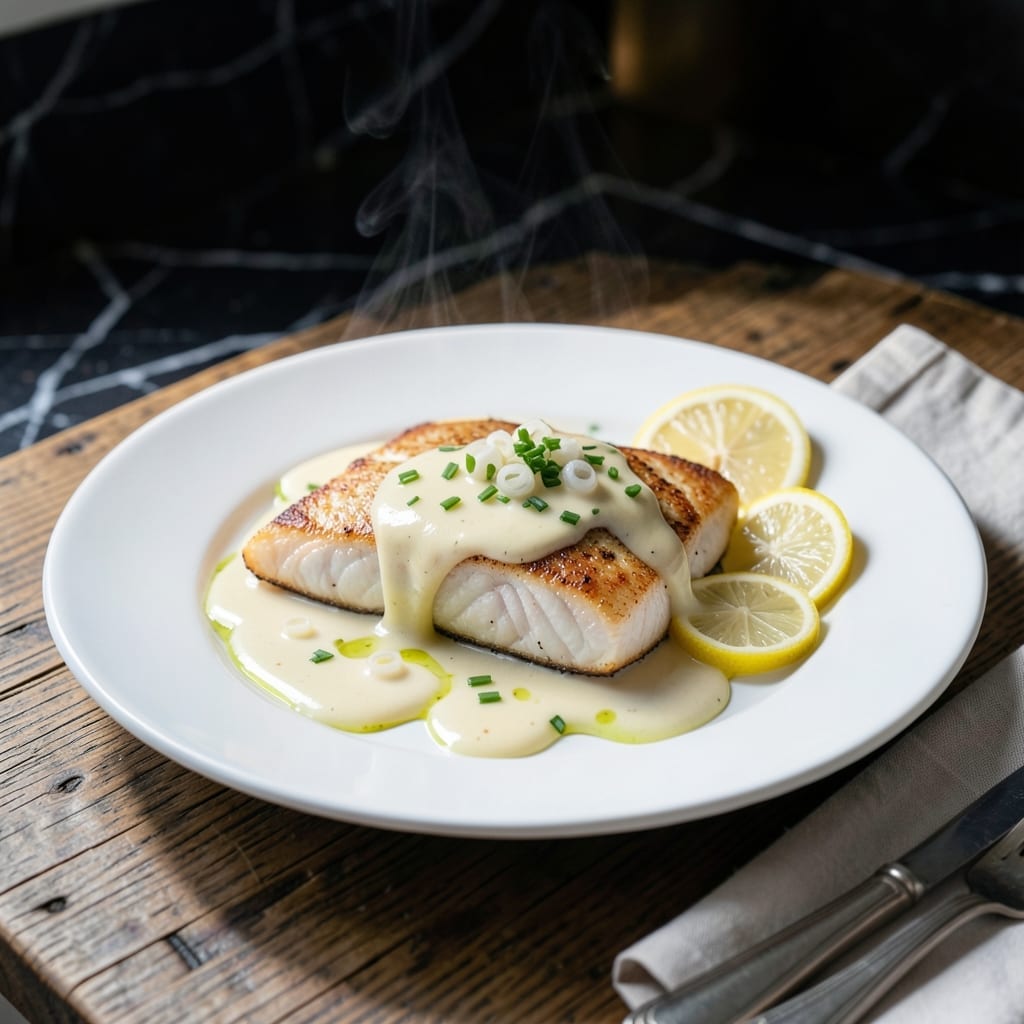
There’s a reason beurre blanc remains the gold standard for fish sauces—its velvety texture and bright acidity elevate seafood to restaurant quality.
This French emulsion combines butter, white wine, and vinegar into a silky, luxurious sauce that clings beautifully to delicate fillets. The technique requires patience but delivers unmatched depth of flavor.
What makes this version special is the perfect balance between richness and tang. The sauce should coat the back of a spoon, never breaking or separating.
Serve it spooned over poached salmon, grilled halibut, or seared scallops for an elegant finish that impresses every time.
Ingredients for Beurre Blanc Recipe for Fish
Eight classic ingredients transform into a French restaurant masterpiece for seafood.
| Ingredient | Amount | Notes |
|---|---|---|
| Dry White Wine 🍷 | ½ cup | Sauvignon Blanc or Pinot Grigio preferred |
| White Wine Vinegar 💧 | 2 tbsp | Champagne vinegar as alternative |
| Shallots 🧅 | 2 tbsp | Finely minced for even distribution |
| Unsalted Butter 🧈 | 1 cup | Cold, cut into small cubes |
| Heavy Cream 🥛 | 2 tbsp | Optional for extra stability |
| Fresh Lemon Juice 🍋 | 1 tsp | For finishing acidity adjustment |
| Sea Salt 🧂 | ¼ tsp | Fine grain for even seasoning |
| White Pepper 🌶️ | 0.125 tsp | Freshly ground for subtle heat |
The wine is non-negotiable for authentic flavor. Sauvignon Blanc or Pinot Grigio from Trader Joe’s offers excellent value without overpowering the sauce. Shallots should be fresh and firm—avoid any with soft spots. For the butter, Plugrá or Kerrygold deliver consistent quality. The higher fat content in European-style butters provides superior mouthfeel in the finished emulsion.
Need a wine substitute? White grape juice with a splash of rice vinegar mimics the acidity. No shallots? Finely diced white onion at half the quantity works. The heavy cream is optional but recommended for beginners—it helps prevent breaking. For a lighter version, skip it entirely. Fresh lemon juice at the end gives you control over the final acidity balance.
This sauce is best used immediately but can be held in a thermos at 140°F for up to 1 hour. Never refrigerate and reheat—it will separate. If it does break, whisk in a splash of cold water or ice cube to bring it back together.
Why You’ll Love This Recipe
- One Pan Magic: I love that it comes together in a single saucepan—just reduce the wine and vinegar with shallots, then whisk in butter and cream.
- Rich and Tangy: The white wine and vinegar cut through the richness of the butter, creating a sauce that’s luxurious but balanced.
- Dinner Party Hero: Honestly, it turns a simple pan-seared fish into something restaurant-worthy with almost no extra effort.
- Budget Luxury: A little butter and cream go a long way, and a splash of dry white wine keeps it affordable.
Step-by-Step Instructions for Beurre Blanc
Master this classic French sauce with precise technique and optimal temperature control.
Step 1: Reduce Wine, Vinegar, and Shallots
Combine the 0.5 cup dry white wine, 2 tbsp white wine vinegar, and 2 tbsp shallots in a heavy-bottomed saucepan. Place over medium heat and bring to a gentle simmer.
Cook for 8-10 minutes until the liquid reduces by about three-quarters and the shallots appear nearly dry. The mixture should look syrupy and coat the back of a spoon. This reduction concentrates the flavors and removes the raw alcohol taste from the wine.
Watch carefully during the final minutes—once the liquid level drops, it can burn quickly. Remove from heat immediately when the reduction reaches the proper consistency and the shallots are translucent.
Step 2: Incorporate Heavy Cream
Return the saucepan to low heat and add the 2 tbsp heavy cream. Stir to combine and let the mixture simmer for 1-2 minutes until it thickens slightly.
The cream adds stability to the emulsion and mellows the acidity from the wine-vinegar reduction. This step creates a base that will better incorporate the butter. The mixture should look glossy and slightly syrupy before moving to the next step.
Step 3: Emulsify with Cold Butter
Reduce heat to the lowest possible setting. Begin adding the 1 cup unsalted butter (cold, cut into small cubes) 1-2 pieces at a time, whisking constantly in a circular motion.
Each addition of butter should be fully incorporated before adding more. The sauce should thicken and become creamy as the butter emulsifies. If the sauce looks greasy or begins to separate, immediately remove from heat and whisk vigorously for 10-15 seconds to re-emulsify before continuing.
This process should take 8-10 minutes total. The finished sauce should coat the back of a spoon and leave a clean path when you run your finger through it.
Step 4: Finish and Season
Once all butter is incorporated, remove the sauce from heat. Stir in the 1 tsp fresh lemon juice, 0.25 tsp sea salt, and 0.125 tsp white pepper. The lemon juice brightens the flavor, while the salt and pepper provide balance.
Taste and adjust seasoning if needed, though be cautious with additional salt as the reduction may already be quite concentrated. The sauce should be rich, velvety, and slightly tangy with a pale ivory color.
If the sauce is too thick, whisk in 1-2 tsp warm water to achieve the desired consistency. Serve immediately over fish while warm, as beurre blanc can separate if held too long.
Pro Tips For Making Beurre Blanc Recipe For Fish
- Keep It Low: I learned this the hard way—beurre blanc breaks if the heat’s too high. Use medium-low and whisk constantly, especially when adding the butter.
- Fine Chop Shallots: Sounds tedious, but mincing the shallots almost to a paste guarantees they melt into the sauce instead of floating around like sad little bits.
- Cold Butter Only: Skip the softened butter—cold, cubed unsalted butter emulsifies better and gives that silky texture. I was skeptical until I tried it.
- Deglaze First: After cooking the shallots in wine and vinegar, let the liquid reduce by half before adding cream. This concentrates the flavor so your sauce isn’t watery.
Serving Suggestions for Leftovers
Fish Pairings
This sauce transforms poached salmon into a luxurious meal. The buttery richness complements the fish’s natural oils perfectly. I also love it over grilled halibut—the slightly charred exterior contrasts beautifully with the velvety sauce. 💛
Seafood Variations
Try it with seared scallops for an elegant appetizer. The sauce creates a glossy pool around each scallop that’s perfect for dipping. Pan-seared cod also pairs wonderfully, especially when finished with a squeeze of fresh lemon.
Plating Tips
Spoon the sauce generously over the fish, letting it cascade down the sides. Garnish with chopped fresh chives or microgreens for color. I like to add a few edible flowers for special occasions.
Side Dish Ideas
Serve with steamed asparagus or roasted baby potatoes to soak up the sauce. A simple mixed greens salad with a light vinaigrette balances the richness. The sauce is so versatile it works with almost any vegetable.
Temperature Note
Always serve this sauce warm but not hot. The ideal temperature is around 140°F—hot enough to be fluid but cool enough to maintain the emulsion. If it gets too cold, gently warm it in a double boiler. ⚡
Portion Guidance
Plan for about ¼ cup sauce per serving. This allows enough to coat the fish without overwhelming it. Leftovers? Unfortunately, this sauce doesn’t reheat well, so make only what you need.
Nutrition Facts
Frequently Asked Questions
What wine works best for this sauce?
Sauvignon Blanc or Pinot Grigio are ideal for their crisp acidity. Avoid oaky Chardonnays as they can overpower the delicate flavor. A dry wine is essential for proper reduction.
Can I make this ahead of time?
It’s best served immediately, but you can hold it in a thermos at 140°F for up to 1 hour. Never refrigerate and reheat—this will cause the emulsion to break.
How do I fix a broken emulsion?
Remove from heat and whisk in a splash of cold water or an ice cube. The temperature shock often brings the sauce back together. If persistent, start a new reduction with 1 tbsp of the broken sauce.
Can I use salted butter?
Not recommended. The salt content is unpredictable and may over-season your sauce. Stick with unsalted butter and adjust seasoning at the end with sea salt.

- 6 Egg Cake Recipe with Oil: Light as Air With Buttery Moisture - October 4, 2026
- 4 Bean Casserole Recipe: One-Pan Heartiness With Smoky Paprika Depth - October 4, 2026
- 3-Ingredient Keto Mug Cake Recipe: Microwave Magic in 2 Minutes - October 4, 2026