
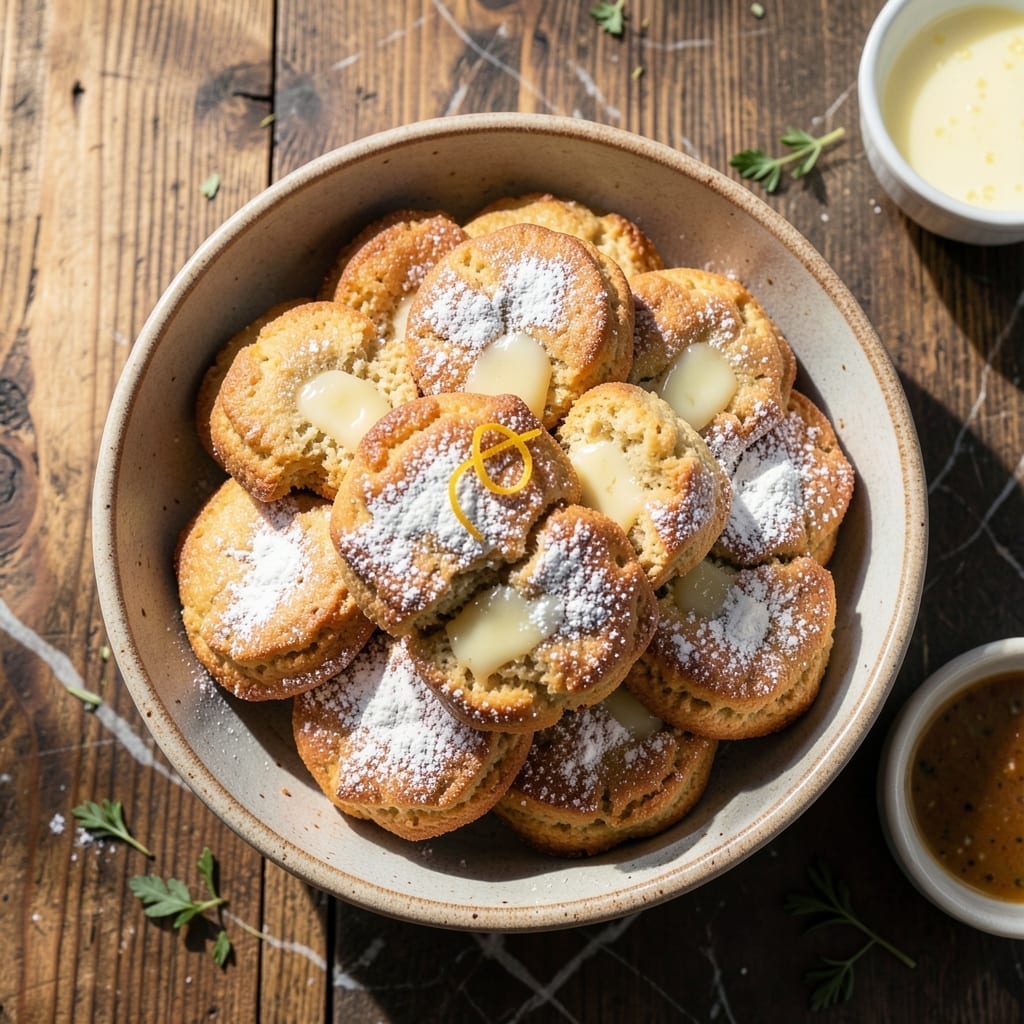
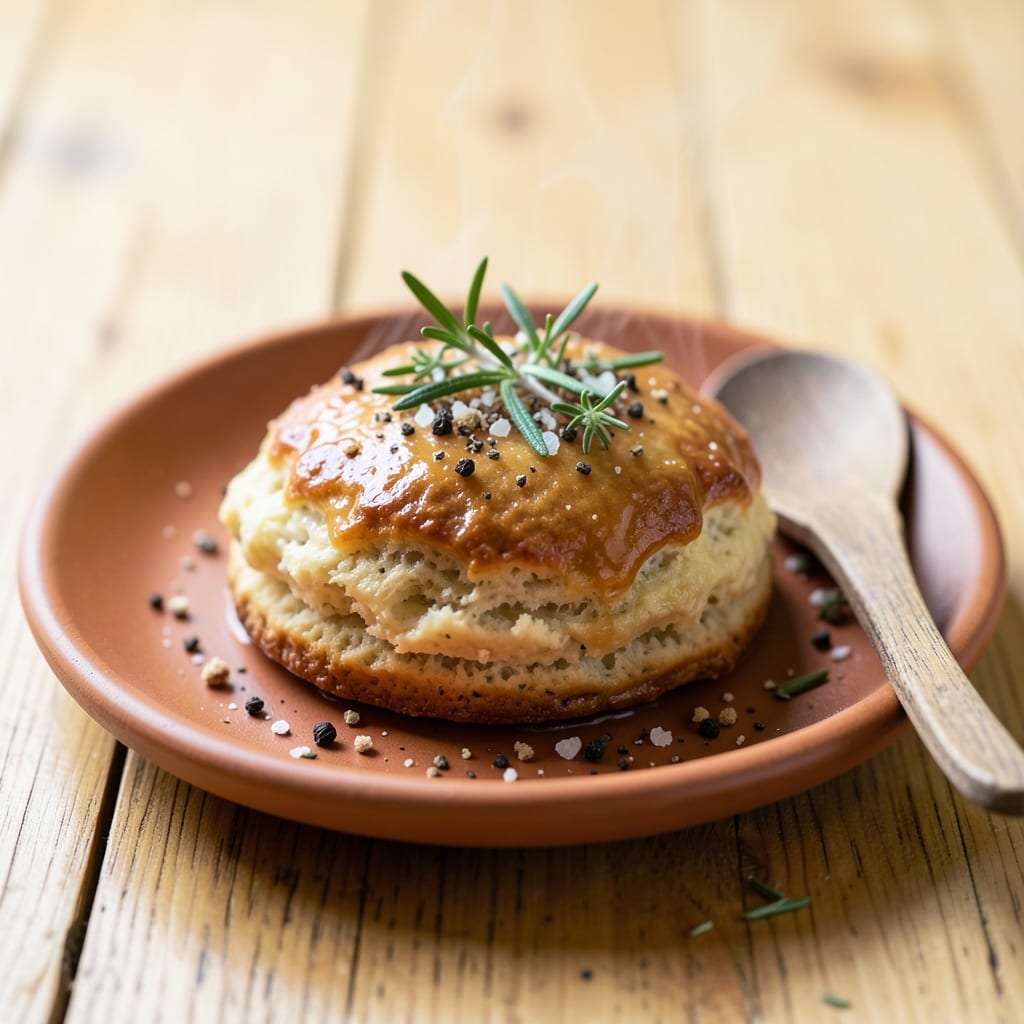
This recipe proves you don’t need buttermilk to achieve flaky, tender layers in homemade biscuits. A simple substitution using pantry staples delivers the same rich texture and rise.
With just a few ingredients and a straightforward method, you’ll get golden biscuits that pull apart beautifully. The secret lies in the technique, not the dairy.
Ingredients for Biscuit Recipe No Buttermilk
Eight pantry staples create flaky, golden biscuits without buttermilk in sight.
| Ingredient | Amount | Notes |
|---|---|---|
| All-Purpose Flour 🌾 | 2 cups | Plus extra for dusting surface |
| Baking Powder 🧂 | 1 tbsp | Aluminum-free preferred for clean flavor |
| Granulated Sugar 🍚 | 1 tsp | Balances the saltiness |
| Salt 🧂 | ¾ tsp | Fine sea salt recommended |
| Unsalted Butter 🧈 | ½ cup | Very cold, cubed for flakiness |
| Whole Milk 🥛 | ¾ cup | Cold, for tender layers |
| White Vinegar 🧪 | 1 tbsp | Creates buttermilk substitute with milk |
| Baking Soda 🧂 | ½ tsp | Activates with vinegar for rise |
The butter must stay ice cold—cut it into small cubes and return to the fridge between steps. Use high-quality all-purpose flour like King Arthur for consistent results. The baking powder should be fresh and aluminum-free to avoid metallic aftertaste. Most supermarkets carry suitable brands, but bulk bins often have the freshest options.
No white vinegar? Lemon juice or apple cider vinegar work equally well for the milk mixture. For a richer flavor, swap whole milk for 2% or half-and-half. If avoiding dairy entirely, use unsweetened almond milk with vinegar. The sugar can be omitted, but it adds subtle sweetness that balances the salt.
Baked biscuits are best served warm but will keep in an airtight container for 2-3 days. Reheat in a 350°F oven for 5-10 minutes to restore flakiness. The dough can be frozen for up to 1 month—thaw before baking.
Why You’ll Love This Recipe
- No Fuss Mixing: I just stir flour, baking powder, sugar, salt, and cold butter—no last-minute buttermilk runs.
- Buttery Layers: The butter creates flaky, golden layers that taste richer than any buttermilk biscuit I’ve tried.
- Breakfast to Dinner: Honestly, these work with jam at dawn, alongside stew at dusk, or as a snack in between.
- Pantry Stable: All-purpose flour and baking powder mean I can bake these anytime without special ingredients.
Step-by-Step Instructions for Biscuits Without Buttermilk
Master this technique for tall, flaky layers using only pantry staples you already have on hand.
Step 1: Create the Buttermilk Substitute
In a measuring cup, combine the 0.75 cup Whole Milk with the 1 tbsp White Vinegar. Stir gently and let it sit at room temperature for 5-10 minutes until the mixture curdles and thickens slightly.
This acidified milk mimics buttermilk’s tang and reacts with the 0.5 tsp Baking Soda to create lift. The mixture should look slightly lumpy—this is normal and confirms the vinegar has properly soured the milk.
Step 2: Mix Dry Ingredients for Structure
In a large bowl, whisk together the 2 cups All-Purpose Flour, 1 tbsp Baking Powder, 1 tsp Granulated Sugar, and 0.75 tsp Salt until fully combined. The baking powder provides the primary leavening, while the sugar balances the saltiness.
Make sure to break up any lumps in the flour mixture. Using aluminum-free baking powder, as suggested in the ingredients, ensures a clean flavor without metallic aftertaste. This dry blend creates the structural foundation for your flaky layers.
Step 3: Cut in Cold Butter for Flakiness
Add the 0.5 cup Unsalted Butter (very cold and cubed) to the dry ingredients. Using a pastry cutter or your fingers, work the butter into the flour until the mixture resembles coarse crumbs with pea-sized butter pieces visible throughout.
The key to flakiness lies in keeping the butter cold—it creates steam pockets during baking that separate the dough into distinct layers. Work quickly to prevent the butter from melting, and don’t overmix; visible butter flakes are essential for that signature flaky texture.
Step 4: Combine Wet and Dry Ingredients
Pour the soured milk mixture into the butter-flour combination. Using a wooden spoon or silicone spatula, gently fold the liquid into the dry ingredients just until the dough begins to come together. The mixture will be shaggy and slightly sticky.
Don’t overwork the dough—this develops gluten, which makes biscuits tough instead of tender. The dough should hold together when pressed but still have visible butter streaks. The vinegar in your milk substitute will react with the baking soda to provide additional lift.
Step 5: Shape, Cut, and Bake to Golden Perfection
Turn the dough onto a lightly floured surface and gently pat it into a 1-inch thick rectangle. Fold the dough in half like a book, then pat down again to 1-inch thickness. This lamination technique creates additional layers for extra flakiness.
Using a 2.5-inch biscuit cutter, press straight down without twisting to cut out biscuits. Twisting seals the edges and prevents rise. Place the biscuits on a parchment-lined baking sheet, touching slightly for softer sides or apart for crispier edges. Bake at 450°F for 12-15 minutes until the tops are golden brown.
Pro Tips For Making Biscuit Recipe No Buttermilk
- Chill the Butter: Cut your unsalted butter into small cubes and freeze for 10 minutes before mixing—I learned this the hard way after my first few batches spread flat.
- Don’t Overmix: Stir just until the dough comes together, even if it looks shaggy. After burning three batches, I finally figured out overworking develops tough biscuits.
- Use Ice Water: Replace buttermilk with ice-cold water, about 3/4 cup for 2 cups of flour. Sounds weird, but it works and keeps the butter from melting prematurely.
- Hot Oven Start: Preheat to 450°F and bake immediately after shaping. My grandmother swore by this, and she was right: it gives biscuits that initial rise boost.
Wine and Beer Pairings for This biscuit recipe no buttermilk
Beer Pairings
Buttery, flaky biscuits call for beers with a crisp finish or malty sweetness. A Pilsner like Samuel Adams Noble Pils offers a light, slightly bitter contrast that cuts through the richness. For a richer pairing, try a Brown Ale such as Alesmith Nautical Nut Brown—its caramel and nutty notes complement the biscuit’s warmth beautifully.
Wine Pairings
For wine lovers, a glass of Chardonnay with buttery oak notes, like Kendall-Jackson Vintner’s Reserve, mirrors the biscuit’s richness. If you prefer something lighter, a Sparkling Rosé such as Domaine Carneros Brut Rosé adds a refreshing, fruity lift that balances the dish’s savory simplicity.
Non-Alcoholic Options
Skip the alcohol without missing the flavor! A sparkling apple cider like Martinelli’s Gold brings a sweet, effervescent contrast. For a cozy touch, try chilled hibiscus tea—its tart, floral notes pair surprisingly well with warm, flaky layers. 🍏✨
Nutrition Facts

- 6 Egg Cake Recipe with Oil: Light as Air With Buttery Moisture - October 4, 2026
- 4 Bean Casserole Recipe: One-Pan Heartiness With Smoky Paprika Depth - October 4, 2026
- 3-Ingredient Keto Mug Cake Recipe: Microwave Magic in 2 Minutes - October 4, 2026