
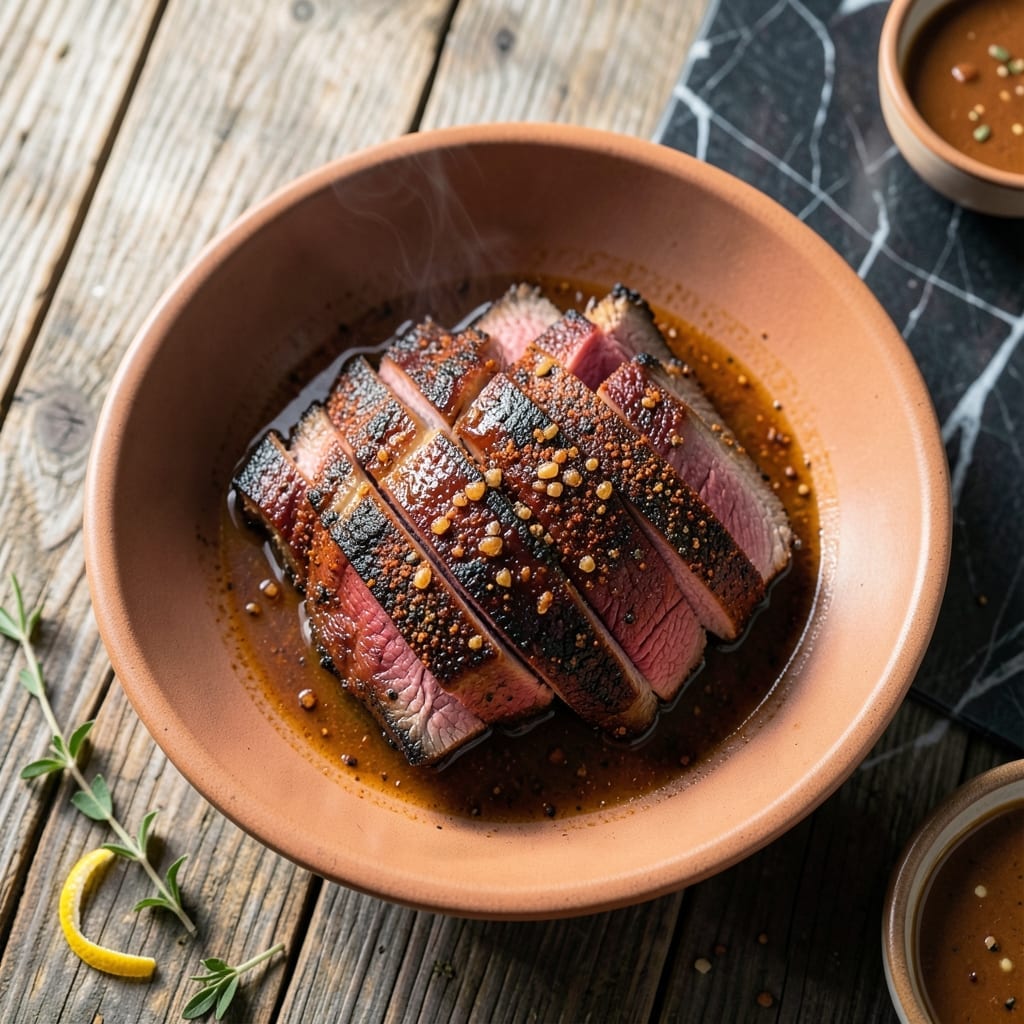
Achieving smoky depth with bison brisket doesn’t require a smoker—just your oven and a proven technique. This method delivers tender, flavorful meat with a rich crust that rivals traditional barbecue.
The key is a low-and-slow approach at 275°F, allowing the connective tissue to break down gradually. A dry rub with smoked paprika and brown sugar builds complex layers of flavor without overpowering the bison’s natural richness.
After hours of patient cooking, the brisket emerges fall-apart tender, with a deep mahogany bark that seals in juices. Resting is non-negotiable—it ensures every slice stays moist and flavorful.
Serve with classic sides for a meal that feels like a special occasion. Here’s how to get it right every time.
Ingredients for Bison Brisket Recipe Oven
A few bold spices, quality bison, and your oven transform into something extraordinary.
| Ingredient | Amount | Notes |
|---|---|---|
| Bison Brisket 🥩 | 4 lb | Trimmed of excess fat |
| Smoked Paprika 🌶️ | 2 tbsp | For smoky depth |
| Brown Sugar 🍚 | ½ cup | Light or dark variety |
| Kosher Salt 🧂 | 2 tbsp | Diamond Crystal preferred |
| Black Pepper 🌶️ | 2 tbsp | Freshly ground for best flavor |
| Garlic Powder 🧄 | 1 tbsp | Not garlic salt |
| Onion Powder 🧅 | 1 tbsp | Balances sweetness |
| Ground Cumin 🌿 | 1 tsp | Adds earthy warmth |
| Cayenne Pepper 🔥 | ½ tsp | Adjust for heat preference |
| Olive Oil 🫒 | 2 tbsp | For binding dry rub |
| Apple Cider Vinegar 💧 | ¼ cup | For tangy brightness |
| Beef Stock 🥣 | 1 cup | Low-sodium preferred |
| Yellow Mustard 🟡 | 2 tbsp | For binding rub to meat |
The bison brisket is the star—look for well-marbled cuts from specialty butchers or reputable suppliers like Snake River Farms. The dry rub ingredients should be fresh; smoked paprika loses potency after 6 months. Brown sugar adds caramelization, but coconut sugar works if you prefer a deeper molasses note. Don’t skip the kosher salt—it adheres better than table salt to the meat’s surface.
No bison brisket? Beef brisket is a fine substitute, though cooking time may vary slightly. Out of smoked paprika? Chipotle powder adds heat and smoke. For the stock, vegetable broth keeps it lighter, or use water in a pinch. Apple cider vinegar can be swapped with white vinegar, but reduce by half for sharpness. The mustard is just a binder—Dijon works too.
The dry rub keeps for 3 months in an airtight container. Brisket leftovers freeze beautifully for up to 6 months. Let the meat rest at room temperature for 30 minutes before slicing—this keeps it juicy and tender.
Why You’ll Love This Recipe
- Set It and Forget It: The oven does all the work while I relax—just season, cover, and let the bison brisket slow-cook to perfection.
- Sweet and Smoky: The brown sugar and smoked paprika create a caramelized crust that’s honestly irresistible.
- Crowd Pleaser: It’s my go-to for Sunday dinners, and even the pickiest eaters clean their plates.
- Leftovers for Days: One brisket means sandwiches, tacos, or stew for the whole week—no waste, no stress.
Step-by-Step Instructions for Bison Brisket Oven
This method delivers tender, smoky bison brisket using your oven for perfect results every time.
Step 1: Prepare the Dry Rub and Season the Brisket
In a bowl, combine the 2 tbsp smoked paprika, 0.5 cup brown sugar, 2 tbsp kosher salt, 2 tbsp black pepper, 1 tbsp garlic powder, 1 tbsp onion powder, 1 tsp ground cumin, and 0.5 tsp cayenne pepper. Whisk until fully blended into a uniform mixture.
Pat the 4 lb bison brisket dry with paper towels to ensure the rub adheres properly. I always trim any visible excess fat first for even seasoning. Rub the 2 tbsp yellow mustard all over the meat—this acts as a binder for the dry rub.
Press the spice mixture onto all surfaces of the brisket, creating an even, thick coating. The mustard will help it stick and form a beautiful bark during cooking.
Step 2: Sear the Brisket for Depth of Flavor
Preheat your oven to 325°F. Heat the 2 tbsp olive oil in a large Dutch oven over medium-high heat. When it shimmers, add the brisket fat-side down. Sear for 4-5 minutes until deeply browned and caramelized.
Flip and sear the other side for another 4-5 minutes. You’ll see a dark crust forming—that’s the flavor foundation. Remove the brisket and set aside temporarily.
Deglaze the pot with the 0.25 cup apple cider vinegar, scraping up all the browned bits. These fond bits will dissolve into the liquid, adding incredible depth to your cooking environment.
Step 3: Slow Cook in the Oven with Liquid
Return the brisket to the Dutch oven, fat-side up. Pour the 1 cup beef stock around the meat, not over it—this prevents washing off your carefully applied rub. The liquid should come about halfway up the brisket.
Cover tightly with the lid and transfer to the preheated oven. Cook for 3-4 hours, depending on your specific cut. You’re looking for an internal temperature of 195-205°F when probe-tender.
The brisket is done when a meat thermometer slides in like butter with no resistance. I check at the 3-hour mark and then every 30 minutes after that to avoid overcooking.
Step 4: Rest and Slice the Brisket
Carefully remove the brisket from the Dutch oven and transfer to a cutting board. Tent loosely with foil and let it rest for 20-30 minutes. This resting period allows the juices to redistribute throughout the meat.
While resting, the internal temperature will rise another 5-10°F due to carryover cooking. Don’t skip this step—it’s what separates good brisket from great brisket.
Slice against the grain into ½-inch thick pieces. The muscle fibers will be shorter, making each bite more tender. Serve with some of the cooking liquid spooned over the top for added moisture and flavor.
Pro Tips For Making Bison Brisket Recipe Oven
- Low and Slow Wins: Bison brisket is leaner than beef, so cook it at 275°F—any hotter and it’ll turn tough. I learned this the hard way after pulling a dry, chewy first attempt out at 325°F.
- Rub It Right: Mix your smoked paprika, brown sugar, salt, and pepper with a little oil to make a paste—it’ll stick better to the brisket and form a proper crust.
- Don’t Rush Resting: Give it at least 15 minutes under foil after baking—bison brisket needs that time to redistribute its juices, or you’ll lose half of them on the cutting board.
- Skip the Water Pan: Sounds weird, but it works: Bison doesn’t need extra moisture in the oven like beef brisket often does. Just tent it loosely with foil to keep it from drying out.
Essential Equipment for Great bison brisket recipe oven
Dutch Oven Essential
A heavy Dutch oven is non-negotiable—I swear by my Lodge 7-quart for even heat distribution. The cast iron retains temperature perfectly for the 3-4 hour cook, and the tight lid seals in moisture. Don’t substitute with a thin pot; it won’t handle the low-and-slow process the same way. 🔥
Meat Thermometer
An instant-read meat thermometer is your best friend here. I use a ThermoWorks MK4 for accuracy within 1°F. Check internal temp in the thickest part, avoiding fat pockets. You’re aiming for 195-205°F for that perfect probe-tender texture.
Tongs and Turners
Long-handled tongs are crucial for flipping the brisket without piercing it. I prefer 12-inch locking tongs for control. A fish spatula also works well for lifting the meat from the Dutch oven. These tools protect your hands from the hot surfaces.
Resting Setup
After cooking, you’ll need a large cutting board and aluminum foil for resting. I use a bamboo board with a groove to catch juices. The foil tent keeps the brisket warm while allowing steam to escape, preventing sogginess.
Optional Upgrades
A remote probe thermometer like the ThermoWorks Smoke lets you monitor temps without opening the oven. I also love a silicon brush for applying the mustard binder evenly. These aren’t essential but make the process smoother.
Cleanup Helpers
Have paper towels and a bench scraper ready for cleanup. The Dutch oven’s fond will be stubborn, so soak it in warm, soapy water immediately after serving. This saves you hours of scrubbing later.
Nutrition Facts
Frequently Asked Questions
What’s the ideal internal temperature for doneness?
Aim for an internal temp of 195-205°F. The meat should feel like butter when probed. This ensures the connective tissue has fully broken down for fall-apart tenderness.
Can I use a regular roasting pan instead of a Dutch oven?
Not ideal. A Dutch oven retains heat better and has a tight lid to trap moisture. A roasting pan may dry out the meat or cook unevenly.
How long should I rest the brisket before slicing?
Rest for 20-30 minutes tented with foil. This lets juices redistribute, preventing dry meat when you slice. Skipping this step ruins texture.
Why does the recipe call for searing first?
Searing develops a deep crust (bark) that locks in juices and adds complex flavor. It also creates fond in the pan for extra richness in the cooking liquid.

- 6 Egg Cake Recipe with Oil: Light as Air With Buttery Moisture - October 4, 2026
- 4 Bean Casserole Recipe: One-Pan Heartiness With Smoky Paprika Depth - October 4, 2026
- 3-Ingredient Keto Mug Cake Recipe: Microwave Magic in 2 Minutes - October 4, 2026