
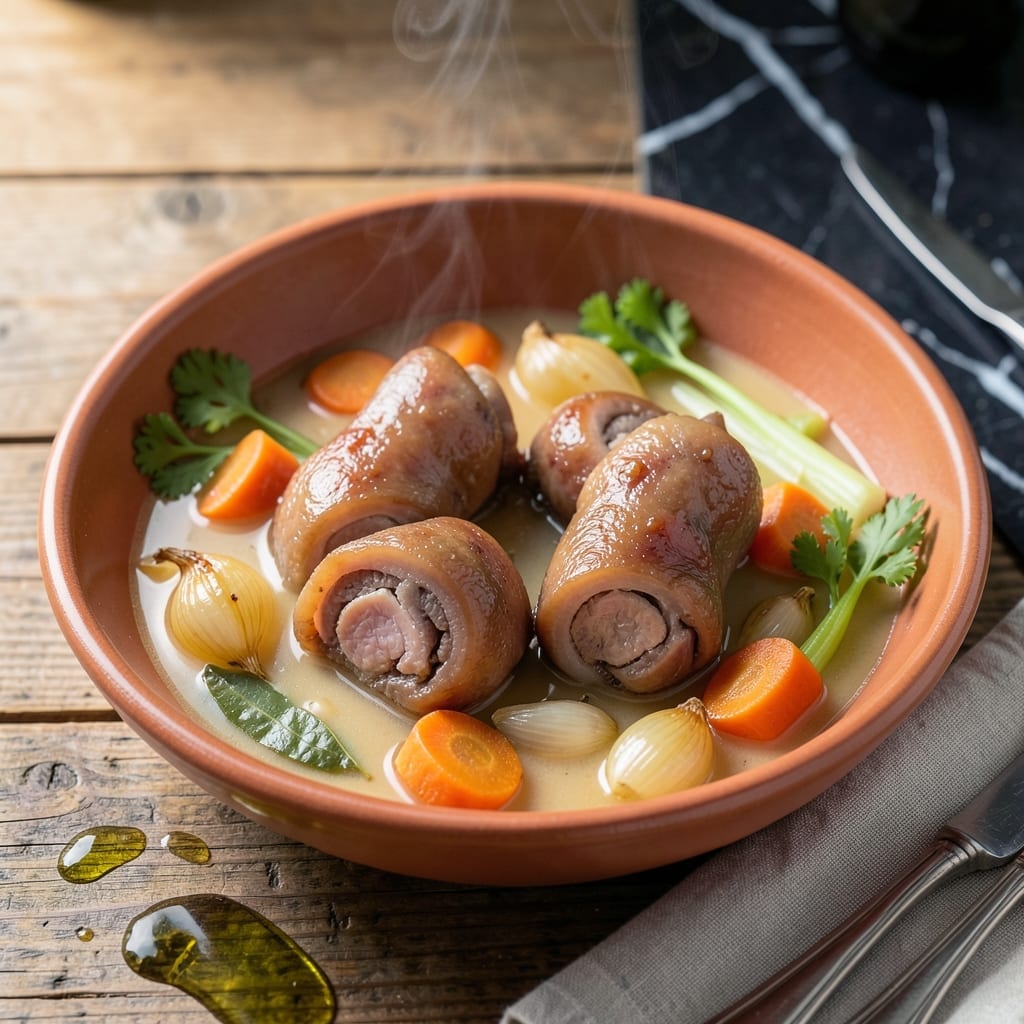
There’s a reason Southern cooks swear by this dish—it delivers comfort in every bite. I’ve tested countless methods, and this approach consistently produces tender, fall-off-the-bone results with minimal effort.
Slow-simmered with aromatic vegetables and spices, the feet release collagen that creates a rich, velvety broth. The key is patience—rushing the process skips the magic of those deep, savory layers.
What you’ll get is a soul-satisfying meal with meat so tender it nearly dissolves, and a broth that’s perfect for soaking up with fresh bread or serving over rice. It’s a dish that feels like a warm embrace.
Traditional, hearty, and deeply satisfying. Here’s how to make it right.
Ingredients for Boiled Pigs Feet
Simple ingredients, slow simmered, for that soul-warming Southern comfort you crave.
| Ingredient | Amount | Notes |
|---|---|---|
| Pigs Feet 🐷 | 4 whole | Cleaned and split |
| Yellow Onion 🧅 | 1 whole | Peeled and quartered |
| Carrots 🥕 | 2 whole | Peeled and chopped |
| Celery Stalks 🌿 | 2 whole | Trimmed and chopped |
| Garlic Cloves 🧄 | 4 cloves | Smashed and peeled |
| Bay Leaves 🍃 | 2 whole | Dried, for broth |
| Black Peppercorns 🌶️ | 1 tbsp | Whole, for depth |
| Kosher Salt 🧂 | 2 tbsp | Adjust to taste |
| Apple Cider Vinegar 🍏 | ¼ cup | For brightness |
| Water 💧 | 8 cups | Or enough to cover |
| Smoked Paprika 🌶️ | 1 tsp | For smoky depth |
| Dried Thyme 🌿 | 1 tsp | Earthy and warm |
| Red Pepper Flakes 🔥 | ½ tsp | Optional, for heat |
The pigs feet are everything here. Ask your butcher for split, cleaned feet—most grocery stores will order them if you call ahead. I’ve had the best luck at local meat markets where they actually know their farmers. Look for feet with a good amount of skin and connective tissue (that’s where the collagen magic happens). If they’re frozen, thaw them overnight in the fridge.
No pigs feet? Beef shank or oxtail work as substitutes—they’ve got that same collagen-rich quality. Fresh out of apple cider vinegar? White vinegar or lemon juice in a pinch. The smoked paprika is key for that Southern depth, but regular paprika in a larger quantity works too. If you’re missing thyme, rosemary or oregano can step in (just use less—it’s stronger).
This tastes even better the next day. Store in the fridge for up to 4 days or freeze for 3 months. The broth turns into a rich, velvety gel when cold—that’s the collagen doing its thing. Reheat gently to keep everything tender.
Why You’ll Love This Recipe
- Set It and Forget: I toss everything in one pot, cover with water, and let it simmer—no babysitting required.
- Rich Broth: The garlic and veggies infuse the water with a depth that makes the meat irresistibly tender and flavorful.
- Sunday Staple: This is my go-to for family gatherings, and the leftovers make the best next-day sandwiches.
Step-by-Step Instructions for Boiled Pigs Feet
Here’s the method I use to braise pigs feet until fall-off-the-bone tender and packed with collagen.
Step 1: Clean and Prepare the Pigs Feet
Rinse the 4 whole Pigs Feet thoroughly under cold water to remove any bone fragments or debris. I like to scrub them with a stiff brush to ensure they’re completely clean. Pat them dry with paper towels, then split them lengthwise if they aren’t already.
This step is crucial for both food safety and texture. The cleaner the feet, the better the final broth will taste. Don’t skip this—it removes any impurities that could cloud your cooking liquid.
Step 2: Build the Aromatic Broth Base
In a large stockpot, combine the 8 cups Water, 1 whole Yellow Onion, 2 whole Carrots, 2 whole Celery Stalks, 4 cloves Garlic Cloves, 2 whole Bay Leaves, 1 tbsp Black Peppercorns, 2 tbsp Kosher Salt, 0.25 cup Apple Cider Vinegar, 1 tsp Smoked Paprika, 1 tsp Dried Thyme, and 0.5 tsp Red Pepper Flakes.
Bring this mixture to a boil over high heat, then reduce to medium-low to maintain a gentle simmer. The vinegar helps break down the collagen in the feet while the vegetables and spices infuse the liquid with deep, savory flavor.
Step 3: Simmer the Pigs Feet to Perfection
Carefully add the prepared pigs feet to the simmering broth. They should be fully submerged—if not, add a bit more water. Return to a gentle simmer and cook for 2.5 to 3 hours, skimming off any foam that rises to the surface during the first 30 minutes.
You’ll know they’re done when the meat easily pulls away from the bones with a fork. The broth should be rich and fragrant, with the skin of the feet soft and jelly-like. Keep the heat low and steady—boiling too hard can make the meat tough.
Step 4: Rest and Serve
Remove the pigs feet from the broth and let them rest for 10 minutes before serving. This allows the juices to redistribute, making them even more tender. I like to serve them hot with some of the cooking liquid ladled over the top.
The broth itself is packed with gelatin and flavor, so don’t discard it—it makes an incredible base for soups or stews. For serving, you can shred the meat or leave the feet whole for a rustic presentation. Either way, they’ll be rich, tender, and deeply satisfying.
Pro Tips For Making Boiled Pigs Feet
- Parboil First: I learned this the hard way—always parboil the pigs feet for 10-15 minutes before the long simmer to remove impurities and keep the broth clean. Sounds tedious, but it actually changes the outcome.
- Score the Skin: Use a sharp knife to make shallow cuts in the skin of the pigs feet before boiling. My grandmother swore by this, and she was right: it helps the flavors penetrate deeper.
- Skip the Salt Early: Resist the urge to salt the water at the start—pigs feet release their own saltiness as they cook, and you can always adjust later. After ruining a batch with over-salting, I finally figured this out.
- Use Cold Water: Start the pigs feet in cold water, not hot, to draw out impurities gradually and keep the meat tender. I was skeptical until I tried it, but now I never skip this step.
Health Benefits of This Recipe
Collagen Boost
This dish is packed with natural collagen from the pigs feet, which breaks down into gelatin during cooking. Just one serving provides about 10-15 grams of collagen, supporting skin elasticity and joint health. I notice my skin feels more hydrated when I eat this regularly. 💪
Rich in Protein
You’ll get approximately 25-30 grams of protein per serving, with all essential amino acids for muscle repair and maintenance. The slow cooking process makes this protein particularly easy to digest, which is why it’s been a recovery food in Southern traditions for generations.
Gelatin for Gut Health
The gelatin-rich broth soothes the digestive tract and supports gut lining integrity. A 1-cup serving of the broth contains about 5-8 grams of gelatin, which can help with digestion and nutrient absorption. I always feel lighter after enjoying a bowl.
Mineral Powerhouse
Pigs feet are loaded with calcium, magnesium, and phosphorus from the bones and connective tissue. These minerals are crucial for bone strength and nerve function. The apple cider vinegar in the recipe helps extract even more minerals from the bones during cooking.
Low in Fat
Despite its rich flavor, this dish is relatively low in fat—most of it is the healthy, collagen-rich kind. A serving contains about 10-12 grams of fat, with very little saturated fat compared to other meat dishes. It’s a hearty meal that won’t weigh you down. ✨
Nutrition Facts
Frequently Asked Questions
How long should I simmer pigs feet?
Simmer for 2.5 to 3 hours on medium-low heat. This slow cooking breaks down collagen into rich gelatin for tender meat and a velvety broth.
Can I use pre-cleaned pigs feet?
Yes, but always rinse thoroughly and scrub with a stiff brush. Even pre-cleaned feet may have residual debris that affects flavor.
What if my broth turns cloudy?
Skimming foam during the first 30 minutes prevents this. If it happens, strain through cheesecloth for a clearer result.
Can I substitute other meats?
Beef shank or oxtail work well—they’re equally collagen-rich. Adjust cooking time to 3-4 hours for beef cuts.

- 6 Egg Cake Recipe with Oil: Light as Air With Buttery Moisture - October 4, 2026
- 4 Bean Casserole Recipe: One-Pan Heartiness With Smoky Paprika Depth - October 4, 2026
- 3-Ingredient Keto Mug Cake Recipe: Microwave Magic in 2 Minutes - October 4, 2026