
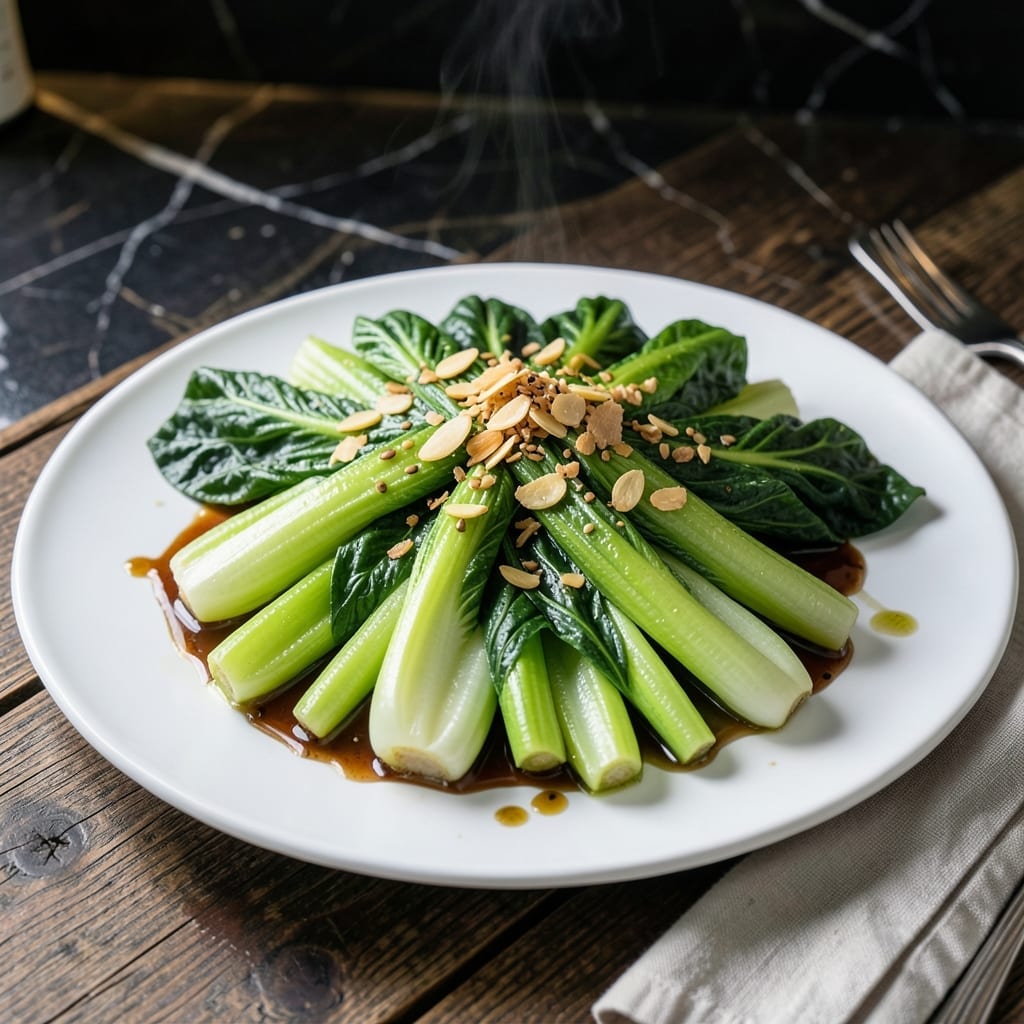
This stir-fry transforms humble bok choy into a restaurant-quality dish with minimal effort. The key lies in high heat and proper timing to achieve that signature crisp-tender texture.
I’ve perfected this method through years of trial and error, focusing on the balance between garlic’s pungency and ginger’s warmth. A hot wok or skillet ensures the vegetables cook quickly while retaining their vibrant color and snap.
The result is a side dish that’s both simple and sophisticated, with each bite delivering the fresh, slightly peppery flavor of bok choy enhanced by aromatic seasonings. It pairs beautifully with rice or noodles.
Ready in under 15 minutes, this is a go-to for busy weeknights when you want something healthy and flavorful without the fuss.
Ingredients for Bok Choy Asian
Fresh veggies and bold flavors come together for restaurant-style results in minutes.
| Ingredient | Amount | Notes |
|---|---|---|
| Baby Bok Choy 🥬 | 1 ½ lb | Trimmed, quartered lengthwise |
| Garlic Cloves 🧄 | 6 cloves | Thinly sliced for even cooking |
| Fresh Ginger Root 🌿 | 2 tbsp | Peeled, julienned or minced |
| Soy Sauce 🫒 | 3 tbsp | Use low-sodium for control |
| Toasted Sesame Oil 🫒 | 1 tbsp | For finishing aroma |
| Vegetable Oil 🫒 | 2 tbsp | High smoke point for stir-fry |
| Rice Vinegar 💧 | 1 tbsp | Adds bright acidity |
| Agave Nectar 🍯 | 1 tsp | Balances salty flavors |
| Red Pepper Flakes 🌶️ | ½ tsp | Adjust for heat preference |
| Sesame Seeds 🌰 | 1 tbsp | Toasted for garnish |
| Green Onions 🧅 | 3 whole | Thinly sliced on bias |
| Kosher Salt 🧂 | ½ tsp | To taste |
Bok choy is the star here. Baby bok choy from Whole Foods or your local Asian market has the best texture—tender but crisp. Look for vibrant green leaves with firm stems, no wilting. The ginger and garlic need to be fresh; those sad little jars just won’t cut it. I grab mine from the produce section weekly. If you’re making a big batch, Costco sometimes carries bok choy in bulk.
No baby bok choy? Regular bok choy works—just cut it into smaller pieces so it cooks evenly. Out of agave? Maple syrup or coconut sugar at half the amount. Skip the toasted sesame oil? A drizzle of regular sesame oil at the end still adds that nutty depth. The soy sauce can be swapped for tamari if you need gluten-free. Fresh ginger is non-negotiable though—it’s what gives this dish its zing.
Leftover stir-fry keeps 3-4 days in the fridge, but it’s best fresh. Store bok choy unwashed in a bag with a paper towel to absorb moisture. Ginger and garlic keep 2 weeks in the fridge. Sesame oil lasts 6 months in a cool, dark place.
Why You’ll Love This Recipe
- I’ll be real: a big bunch of baby bok choy costs less than a fancy salad and feeds us twice.
- One Pan Wonder: Honestly, I just toss the baby bok choy with minced garlic, ginger, and a splash of soy sauce—one pan, five minutes, done.
- Umami Bomb: The combo of toasted sesame oil and soy sauce hits that savory depth I crave every single time.
- Weeknight MVP: Between us, this pairs just as well with rice as it does with grilled chicken or tofu.
Step-by-Step Instructions for Stir-Fried Bok Choy With Garlic and Ginger
Master this wok technique and you’ll get restaurant-quality results with every crisp-tender bite.
Step 1: Prep the Aromatics and Vegetables
Thinly slice the 6 cloves Garlic Cloves and peel and mince the 2 tbsp Fresh Ginger Root. I like to keep these separate because they cook at slightly different rates—the garlic burns more easily. Trim the 1.5 lb Baby Bok Choy and quarter it lengthwise so each piece has both stem and leaf attached.
Thinly slice the 3 whole Green Onions on a bias for visual appeal. This prep ensures even cooking and maximum flavor infusion. Have all your ingredients measured and ready—stir-frying moves fast and you won’t have time to chop once you start cooking.
Step 2: Blanch the Bok Choy for Even Cooking
Heat a large pot of water to boiling. Add the quartered Baby Bok Choy and blanch for exactly 30 seconds. You want the leaves to just wilt slightly while the stems remain crisp. This head start ensures the stems cook through without overcooking the delicate leaves.
Drain immediately in a colander and rinse under cold water to stop the cooking process. Shake off excess water but don’t pat dry—you want a little moisture to create steam in the wok. This technique guarantees perfectly crisp-tender results every time.
Step 3: Stir-Fry the Aromatics and Combine
Heat the 2 tbsp Vegetable Oil in a wok or large skillet over high heat until shimmering. Add the minced Fresh Ginger Root and cook for 15 seconds until fragrant. Then add the sliced Garlic Cloves and cook for another 10 seconds, stirring constantly to prevent burning.
Add the blanched Baby Bok Choy and stir-fry for 1-2 minutes until heated through. The leaves should be bright green and the stems just tender. This quick cooking preserves the vibrant color and crisp texture that makes this dish special.
Step 4: Finish with the Sauce and Garnish
Reduce heat to medium and add the 3 tbsp Soy Sauce, 1 tbsp Rice Vinegar, 1 tsp Agave Nectar, 0.5 tsp Red Pepper Flakes, and 0.5 tsp Kosher Salt. Toss everything together for 30 seconds until the bok choy is evenly coated and the sauce has thickened slightly.
Drizzle with the 1 tbsp Toasted Sesame Oil and sprinkle with the sliced Green Onions and 1 tbsp Sesame Seeds. The sesame oil adds a nutty aroma that takes this dish to the next level. Serve immediately while hot—the contrast of crisp stems and tender leaves is best right out of the wok.
Pro Tips For Making Bok Choy Asian
- Sear the Cut Side: Always halve the baby bok choy lengthwise and press the cut side down first in a hot pan—this gives you those coveted caramelized edges that soak up the soy-garlic flavor.
- Grate the Ginger: Skip the mincing and use a microplane to grate the ginger; it melts into the sauce faster and you’ll avoid those annoying fibrous strings in every bite.
- Skip the Overcrowding: I learned this the hard way—if you dump all the bok choy in at once, it steams instead of sears, and you’ll end up with soggy greens instead of crisp-tender leaves.
- Finish with Sesame Oil: Toasted sesame oil loses its aroma if cooked too long, so drizzle it in at the very end—about 1 teaspoon is all you need to add that nutty depth.
Flavor Customization for This Recipe
Spicy Kick
Add extra heat with 1 tsp gochujang or ½ tsp Sambal Oelek to the sauce. The Korean chili paste adds depth, while the Indonesian chili sauce brings pure fire. I love how this transforms the dish with minimal effort. 🌶️
Sweet Glaze
For a sweeter profile, increase the agave nectar to 1 tbsp and add 1 tsp honey. The caramelization creates a glossy, sticky coating that clings to each leaf. It balances the soy sauce’s saltiness beautifully.
Umami Boost
Stir in 1 tbsp oyster sauce or 1 tsp fish sauce with the soy sauce. Oyster sauce adds richness, while fish sauce delivers a funky, savory depth. Both elevate the dish to restaurant-level complexity.
Citrus Twist
Swap the rice vinegar for lime juice or add zest of 1 lime to the sauce. The bright acidity cuts through the richness and adds a refreshing note. I often do this in summer for a lighter take.
Herb Freshness
Finish with ¼ cup chopped cilantro or Thai basil leaves. Cilantro adds a citrusy note, while Thai basil brings an anise-like aroma. Both add a pop of color and freshness. 💛
Nutty Crunch
Toast 2 tbsp crushed peanuts or cashews and sprinkle on top. The crunch contrasts the tender bok choy, and the nutty flavor complements the sesame notes. I always keep peanuts on hand for this.
Nutrition Facts
Frequently Asked Questions
Can I use regular bok choy instead of baby?
Yes, but cut it into 2-inch pieces for even cooking. Regular bok choy has thicker stems that need more time to soften while keeping the leaves tender.
How do I prevent soggy bok choy?
Use high heat and avoid overcrowding the pan. Cook in batches if needed and blot excess water after blanching. This keeps the texture crisp-tender.
What’s the best oil for stir-frying?
Use oils with a high smoke point like vegetable, peanut, or avocado. Avoid olive oil as it can burn at stir-fry temperatures.
Can I make this ahead of time?
Prep ingredients in advance, but cook just before serving. Stir-fried bok choy loses its crispness if stored, though leftovers keep 2-3 days in the fridge.

- 6 Egg Cake Recipe with Oil: Light as Air With Buttery Moisture - October 4, 2026
- 4 Bean Casserole Recipe: One-Pan Heartiness With Smoky Paprika Depth - October 4, 2026
- 3-Ingredient Keto Mug Cake Recipe: Microwave Magic in 2 Minutes - October 4, 2026