
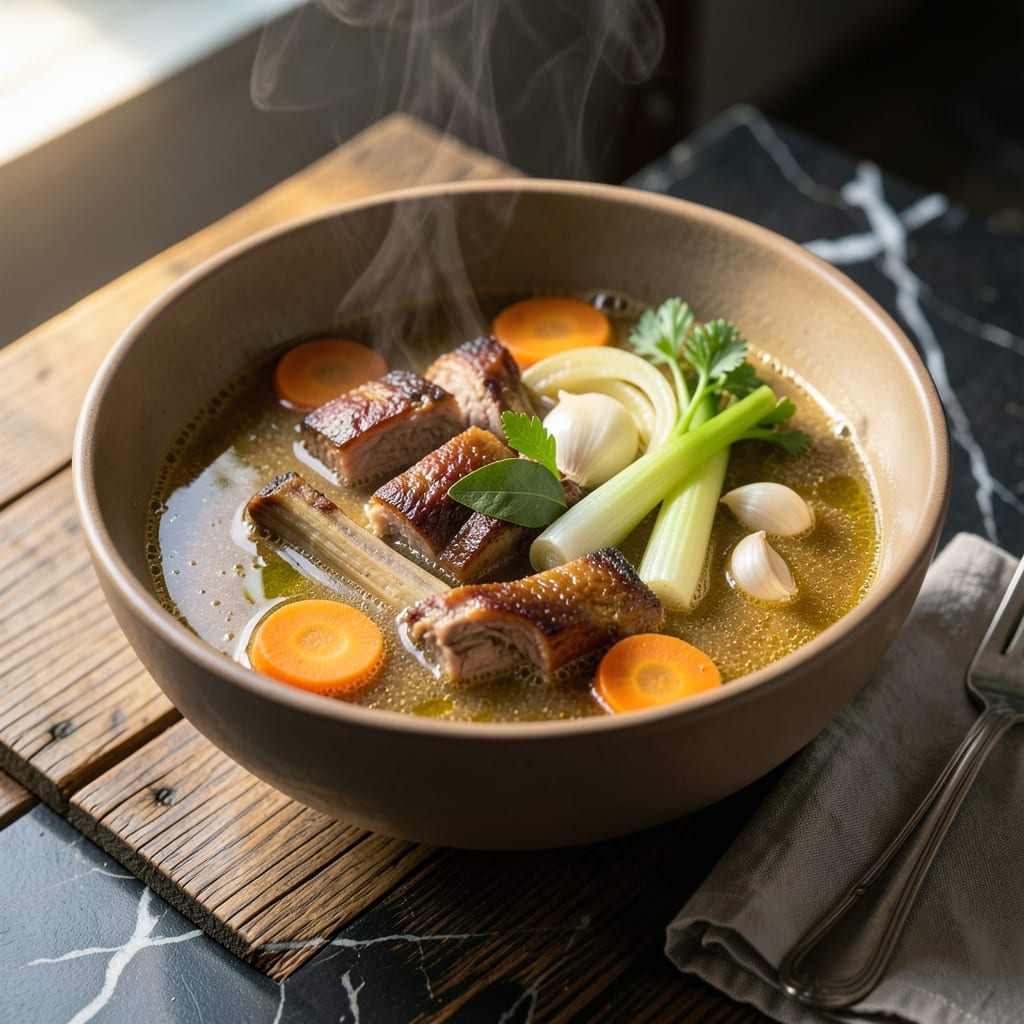
There’s a reason chefs swear by pork bone broth—it delivers deep, savory richness that elevates any dish it touches. This recipe unlocks that potential with a simple, time-tested method.
Slow simmering extracts every bit of flavor from the bones, creating a golden, collagen-rich liquid perfect for soups, sauces, or sipping on its own.
Ingredients for Bone Broth Recipe Pork
Rich, collagen-packed ingredients create a golden base for soups, sauces, or sipping solo.
| Ingredient | Amount | Notes |
|---|---|---|
| Pork Bones 🍖 | 2 lb | Marrow and knuckle preferred |
| Yellow Onion 🧅 | 2 whole | Quartered, skins on |
| Carrots 🥕 | 3 whole | Roughly chopped, unpeeled |
| Celery Stalks 🌿 | 3 whole | Including leaves, chopped |
| Garlic Cloves 🧄 | 6 cloves | Smashed, skins on |
| Bay Leaves 🍃 | 2 whole | Dried, whole leaves |
| Black Peppercorns 🌶️ | 1 tbsp | Whole, lightly crushed |
| Apple Cider Vinegar 🍏 | 2 tbsp | Raw, unfiltered preferred |
| Cold Water 💧 | 4 cups | Filtered, to cover bones |
| Sea Salt 🧂 | 1 tsp | Added to taste at end |
| Fresh Thyme Sprigs 🌿 | 4 whole | Optional, for depth |
| Fresh Parsley Stems 🌿 | ½ cup | Tied in cheesecloth bundle |
[recipeingredientscaler]
The bones are everything here. Pork marrow and knuckle bones yield the most gelatinous, flavorful broth. Source from a trusted butcher shop or high-quality grocery like Whole Foods—ask for grass-fed if available. The onion skins add color and depth (don’t peel them). A mix of joint and meaty bones gives you both body and flavor. Roasting the bones first (400°F for 30 minutes) deepens the final taste significantly.
No pork bones? Beef bones at a 1:1 ratio work well, though the flavor profile shifts. Missing apple cider vinegar? White vinegar or lemon juice at the same amount extracts collagen just as effectively. The vegetable trio (onion, carrot, celery) is non-negotiable for classic mirepoix depth. Frozen vegetable scraps work in a pinch—save ends and peels in the freezer specifically for broth.
Broth keeps 5 days refrigerated in airtight containers. For longer storage, strain and freeze in ice cube trays, then transfer to freezer bags for 6 months. The fat cap on top is normal—skim it off before using or leave it for extra richness. Always bring to a boil before storing to ensure safety.
Why You’ll Love This Recipe
- Set and Forget: I toss everything in the pot and let the slow cooker do the work overnight.
- Rich and Deep: The pork bones and garlic simmer into the most velvety, savory broth I’ve ever tasted.
- Meal Prep Magic: I use it as a base for soups, stews, or just sip it warm when I need a pick-me-up.
- Budget Stretch: Pork bones are cheap, and this makes gallons of broth that freezes beautifully.
Step-by-Step Instructions for Pork Bone Broth
Master the simmering technique for a deeply flavorful, nutrient-rich broth every time.
Step 1: Roast the Pork Bones for Depth of Flavor
Preheat your oven to 400°F. Arrange the 2 lb Pork Bones on a baking sheet in a single layer. Roast for 30-40 minutes until the bones develop a deep golden-brown color and any exposed marrow begins to caramelize.
This roasting step is essential—it transforms the bones’ natural gelatin into rich, complex flavors that define a superior broth. You’ll notice the aroma shift from raw meat to deeply savory as the Maillard reaction works its magic.
Step 2: Prepare Aromatics and Begin the Simmer
Transfer the roasted pork bones to a large stockpot. Add the 2 whole Yellow Onion (quartered with skins on), 3 whole Carrots (roughly chopped, unpeeled), 3 whole Celery Stalks (including leaves, chopped), 6 cloves Garlic Cloves (smashed, skins on), 2 whole Bay Leaves, 1 tbsp Black Peppercorns (lightly crushed), and 2 tbsp Apple Cider Vinegar.
The vinegar helps extract minerals from the bones, while the vegetable skins and stems contribute earthy depth. Pour in the 4 cups Cold Water—just enough to cover the bones. Bring to a boil over high heat.
Step 3: Skim and Simmer for Maximum Extraction
Once boiling, reduce the heat to low to maintain a gentle simmer. A vigorous boil will cloud your broth. As foam rises to the surface during the first 30 minutes, skim it off with a fine-mesh strainer or spoon.
Add the 4 whole Fresh Thyme Sprigs and the 0.5 cup Fresh Parsley Stems tied in a cheesecloth bundle for easy removal later. Partially cover the pot and simmer for 12-24 hours—the longer, the richer the gelatin extraction. You’ll see the liquid transform from a pale gold to a deep amber as collagen breaks down.
Step 4: Strain and Finish with Precision
Carefully strain the broth through a fine-mesh sieve into a clean pot, discarding all solids. Press gently on the vegetables to extract every bit of liquid, but avoid squeezing the bones—this can release bitter compounds into your broth.
Taste and season with the 1 tsp Sea Salt, adding more if needed. The broth should taste rich and balanced, not overly salty. For the clearest result, let it cool completely before refrigerating—this allows fat to solidify on top for easy removal.
Pro Tips For Making Bone Broth Recipe Pork
- Roast the Bones First: Toss pork bones with a little oil and roast at 400°F for 20-30 minutes until deeply browned—I learned this the hard way when my first few batches tasted flat.
- Skip the Peeling: Leave the skins on the onion, carrots, and celery. Sounds weird, but it works: the peels add color and depth, and you’ll save 10 minutes of prep.
- Simmer, Don’t Boil: Keep the heat low enough that tiny bubbles just occasionally break the surface. After burning three batches, I finally figured out that a rolling boil makes broth cloudy and bitter.
- Add Vinegar Last: Splash in 2 tablespoons of apple cider vinegar during the last hour—it pulls more collagen from the bones without making the broth sour.
Pro Cooking Tips for This Recipe
💡 Master the Heat
Start with a low and slow simmer to extract maximum gelatin and flavor from pork bones. A rolling boil can make the broth cloudy, so keep the heat at 180–200°F (82–93°C). Use a heavy pot to maintain steady temperatures and prevent hot spots.
⏰ Timing Secrets
For pork bone broth, 12–24 hours of simmering is ideal. Shorter times yield lighter flavors, while longer cooks deepen richness. Check periodically and skim off any foam for a cleaner finish.
🎯 Flavor Boosters
Add apple cider vinegar (1-2 tbsp) at the start to help break down collagen. Roast pork bones first for a deeper, caramelized taste. A splash of fish sauce or soy sauce toward the end adds umami without overpowering.
✨ Texture Tips
For a velvety mouthfeel, include pork feet or trotter in your bone mix—they’re rich in gelatin. Strain through a fine-mesh sieve or cheesecloth for a silky-smooth broth. Chill to easily remove solidified fat before storing.
Nutrition Facts

- 6 Egg Cake Recipe with Oil: Light as Air With Buttery Moisture - October 4, 2026
- 4 Bean Casserole Recipe: One-Pan Heartiness With Smoky Paprika Depth - October 4, 2026
- 3-Ingredient Keto Mug Cake Recipe: Microwave Magic in 2 Minutes - October 4, 2026