
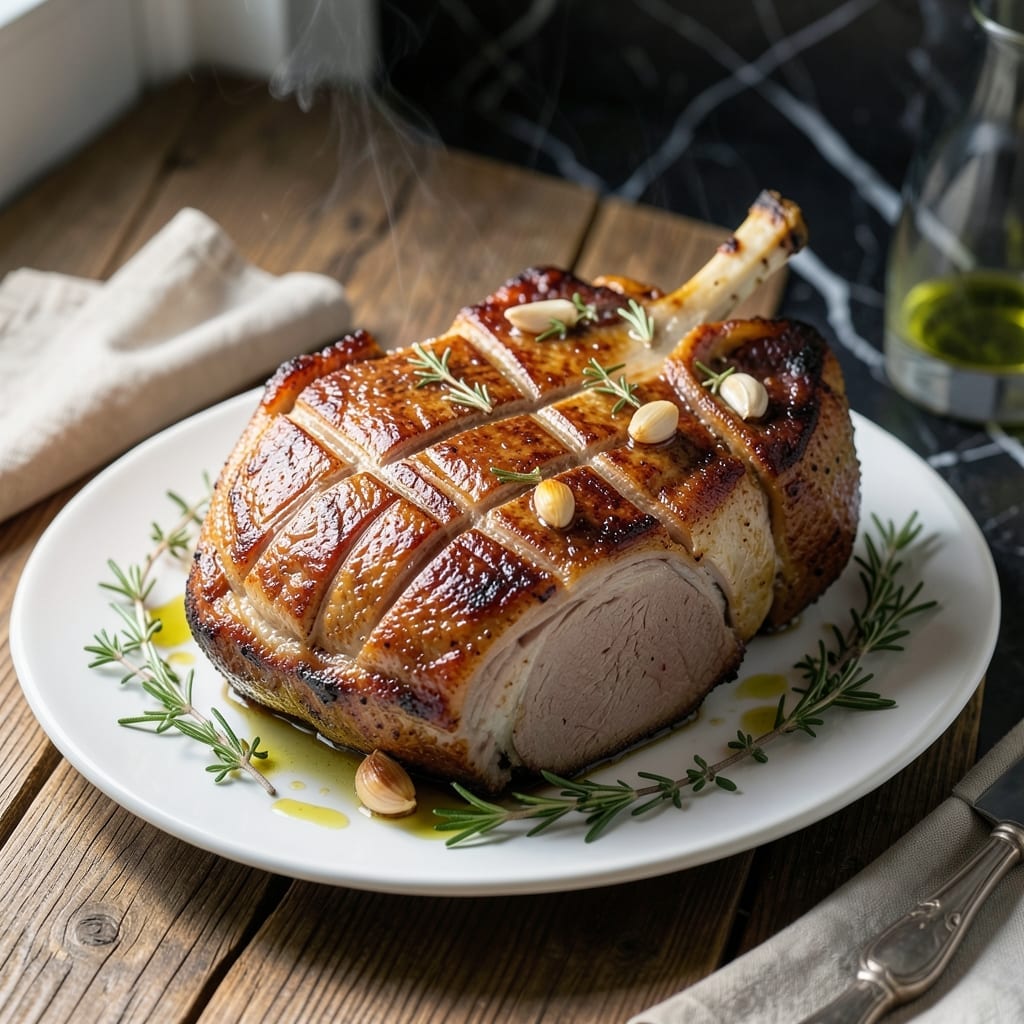
This herb-crusted pork rib roast delivers a showstopping holiday centerpiece with minimal effort. The bone-in cut ensures juicy, flavorful meat that impresses every guest at the table.
I developed this method after years of testing, focusing on a simple herb crust that forms a golden, fragrant seal. The roast cooks evenly, with the bone adding depth to every bite.
The result is tender, succulent pork with a perfectly crisp crust. Resting before carving ensures all those delicious juices stay locked in.
Serve with roasted vegetables or mashed potatoes for a complete meal. This recipe turns a special occasion into an unforgettable dining experience.
Ingredients for Bone-in Pork Rib Roast
A bone-in pork roast and fresh herbs create this impressive holiday centerpiece with ease.
| Ingredient | Amount | Notes |
|---|---|---|
| Bone-In Pork Rib Roast 🥩 | 4 lb | Rib end preferred for flavor |
| Kosher Salt 🧂 | 1 ½ tbsp | Diamond Crystal preferred |
| Black Pepper 🌶️ | 1 tbsp | Freshly ground coarse |
| Fresh Rosemary 🌿 | 3 tbsp | Finely chopped stems removed |
| Fresh Thyme 🍃 | 3 tbsp | Leaves stripped from stems |
| Garlic Cloves 🧄 | 6 cloves | Minced to fine paste |
| Dijon Mustard 🟡 | 3 tbsp | Smooth not whole grain |
| Olive Oil 🫒 | 2 tbsp | Extra-virgin for richness |
| Unsalted Butter 🧈 | 4 tbsp | Softened to room temperature |
| Dry White Wine 🍷 | ½ cup | For deglazing pan |
| Chicken Stock 🥣 | 1 cup | Low-sodium preferred |
| All-Purpose Flour 🌾 | 2 tbsp | For thickening pan sauce |
The pork rib roast is the star here. Look for a bone-in cut with good marbling—this ensures juicy, flavorful meat. Whole Foods or Costco often carry high-quality options. The bone adds depth, so don’t skip it for boneless. For the herbs, fresh rosemary and thyme are non-negotiable; dried won’t give the same vibrant flavor. A well-stocked produce section should have these year-round.
No fresh herbs? Dried at one-third the amount, but the crust won’t be as fragrant. Out of white wine? Apple cider vinegar with a splash of water works for deglazing. Chicken stock can be swapped for vegetable stock (use low-sodium to control seasoning). The Dijon mustard adds tang—whole grain works but won’t adhere as smoothly to the roast.
Rest the roast before carving—this keeps it juicy. Leftovers store well, sealed, for 4-5 days in the fridge or 3 months frozen. Slice against the grain for serving. The pan sauce reheats beautifully, so make extra.
Why You’ll Love This Recipe
- Set It and Forget: I rub the roast with salt, pepper, and fresh herbs, then let the oven do all the work.
- Herb-Crusted Perfection: The rosemary and thyme form this insane crust that cracks with every slice—pure flavor in every bite.
- Sunday Dinner Star: It’s my go-to for holidays, but honestly, it’s just as good on a random Tuesday with the family.
- Leftovers for Days: One roast feeds us for two meals, and the sandwiches the next day? Even better than the first serving.
Step-by-Step Instructions for Herb-Crusted Bone-In Pork Rib Roast
This method transforms the roast into a showstopping centerpiece with minimal effort.
Step 1: Prepare and Season the Roast
Pat the 4 lb Bone-In Pork Rib Roast completely dry with paper towels. This critical step ensures the herb crust adheres properly and promotes even browning. Score the fat cap in a crosshatch pattern, cutting about ¼ inch deep—this helps render fat and allows seasonings to penetrate.
In a small bowl, combine the 1.5 tbsp Kosher Salt, 1 tbsp Black Pepper, 3 tbsp Fresh Rosemary, 3 tbsp Fresh Thyme, and 6 cloves Garlic Cloves (minced to a paste). Rub this mixture all over the roast, pressing firmly into the scored fat and meat. The roast should look heavily seasoned—this creates the flavorful crust.
Step 2: Apply the Mustard-Butter Glaze
In a separate bowl, whisk together the 3 tbsp Dijon Mustard, 2 tbsp Olive Oil, and 4 tbsp Unsalted Butter (softened) until smooth. Brush this mixture evenly over the entire surface of the roast, including the sides. The mustard adds tang while the butter creates a rich, golden crust during roasting.
Place the roast fat-side up on a rack set in a roasting pan. Let it sit at room temperature for 1 hour before roasting—this ensures even cooking throughout. The glaze should look glossy and coat the roast completely with no bare spots.
Step 3: Roast to Perfection
Preheat your oven to 450°F. Roast the pork for 20 minutes at this high temperature to develop a deep, caramelized crust. Then reduce the heat to 325°F and continue roasting for 1.5 to 2 hours, or until the internal temperature reaches 145°F in the thickest part of the meat.
Baste the roast with pan juices every 30 minutes during cooking. You’ll know it’s done when the crust is deep golden brown and the juices run clear when pierced with a knife. The fat cap should be crispy and the meat should pull away slightly from the bone.
Step 4: Rest and Make the Pan Sauce
Transfer the roast to a cutting board and tent loosely with foil. Let it rest for 20 minutes—this allows the juices to redistribute, ensuring moist, tender slices. Meanwhile, place the roasting pan on the stovetop over medium heat.
Add the 0.5 cup Dry White Wine to the pan and scrape up all the browned bits with a wooden spoon. Stir in the 2 tbsp All-Purpose Flour and cook for 1 minute. Whisk in the 1 cup Chicken Stock and simmer for 5-7 minutes until the sauce thickens enough to coat the back of a spoon. Strain and serve with the carved roast.
Pro Tips For Making Bone-In Pork Rib Roast
- Dry the Roast: Pat the pork rib roast completely dry with paper towels before seasoning—this guarantees a better crust and helps the salt and herbs actually stick. I learned this the hard way after wondering why my first few roasts looked pale and sad.
- Room Temp First: Pull the roast out of the fridge at least 1 hour before cooking so it cooks evenly. Cold meat seizes up, and you’ll end up with a dry exterior by the time the center hits 145°F.
- Skip the Overcrowd: If using a roasting rack, make sure it’s elevated with space underneath—steam from the pan will soften the crust. Sounds weird, but flipping the roast halfway through also prevents uneven browning.
- Rest Under Foil: Tent the roast with foil and let it rest for 15-20 minutes after pulling it from the oven. This keeps the juices inside the meat instead of pooling on your cutting board.
Regional Styles of This Dish
French Style
In France, this roast becomes Côte de Porc aux Herbes de Provence. I rub the meat with Herbes de Provence blend, adding 1 tsp lavender and 1 tsp fennel seeds to the herb crust. The French often serve it with a mustard cream sauce made from the pan drippings. 🌿
Southern US
Southern cooks typically use a dry rub with 2 tbsp brown sugar, 1 tbsp smoked paprika, and 1 tsp cayenne. I like to add 1/4 cup apple cider vinegar to the pan sauce for tang. This version pairs beautifully with collard greens and cornbread.
German Approach
Germans often prepare this as Schweinerücken with a beer and caraway crust. I mix 1/2 cup dark beer with 1 tbsp caraway seeds and 1 tbsp whole grain mustard for the glaze. Serve with sauerkraut and boiled potatoes for an authentic meal.
Italian Variation
Italian cooks use rosemary, sage, and lemon zest in their herb crust. I add 1/4 cup grated Pecorino Romano to the breadcrumb topping. The pan sauce often includes 1/2 cup dry white wine and 1/4 cup chicken stock for extra depth.
British Sunday Roast
For a British take, I use English mustard instead of Dijon and add 1 tsp ground coriander to the herb mix. The roast is traditionally served with Yorkshire pudding and roasted parsnips. Don’t forget the horseradish sauce on the side! 💛
Nutrition Facts
Frequently Asked Questions
How do I know when it’s done cooking?
Use a meat thermometer to check the internal temperature. It’s ready at 145°F in the thickest part. The crust should be deep golden brown and juices clear.
Can I use boneless pork instead?
Yes, but bone-in adds flavor and moisture. If using boneless, reduce cooking time by 20-30% and check temperature frequently to avoid drying out.
How long should I rest it before carving?
Let it rest for at least 20 minutes after removing from the oven. This keeps the juices inside for tender, flavorful slices.
What can I substitute for white wine in the sauce?
Use apple cider vinegar mixed with water or broth. The acidity helps deglaze the pan and adds depth to the sauce.

- 6 Egg Cake Recipe with Oil: Light as Air With Buttery Moisture - October 4, 2026
- 4 Bean Casserole Recipe: One-Pan Heartiness With Smoky Paprika Depth - October 4, 2026
- 3-Ingredient Keto Mug Cake Recipe: Microwave Magic in 2 Minutes - October 4, 2026