
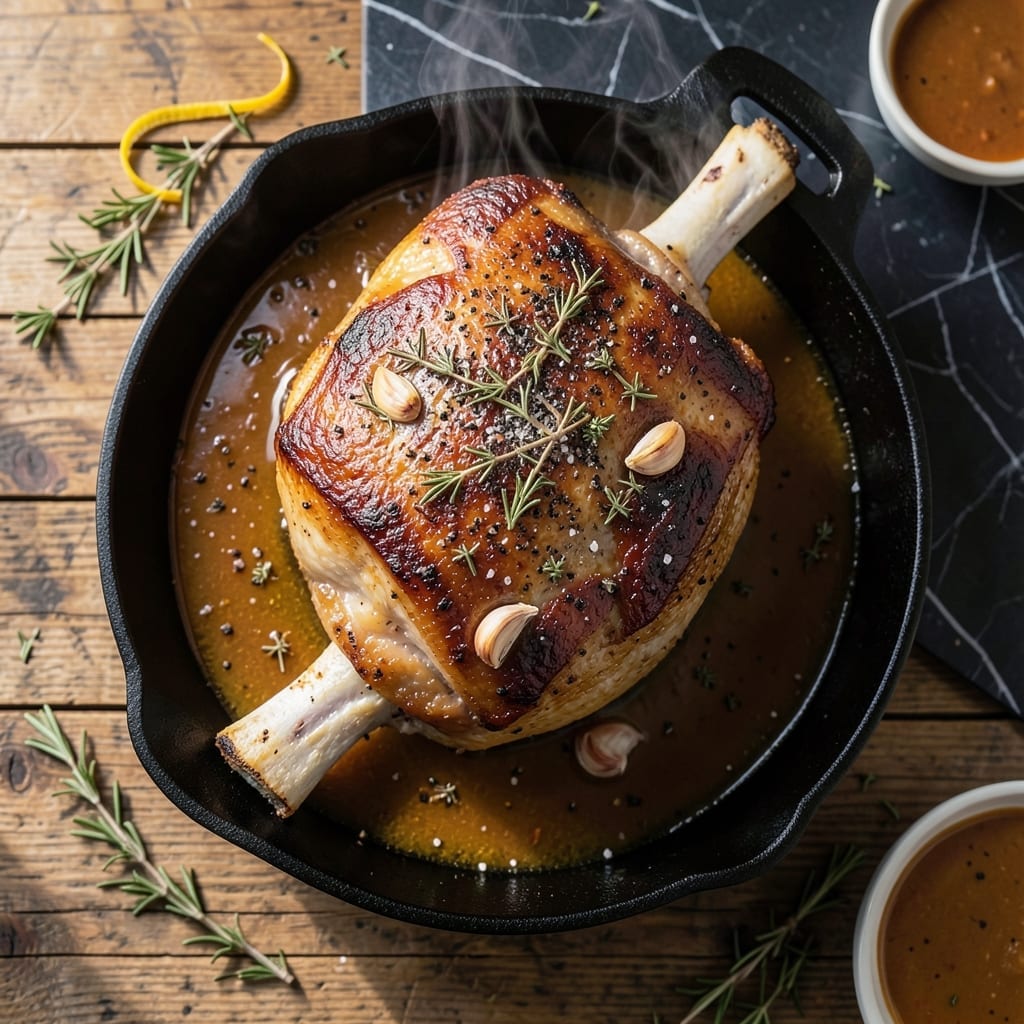
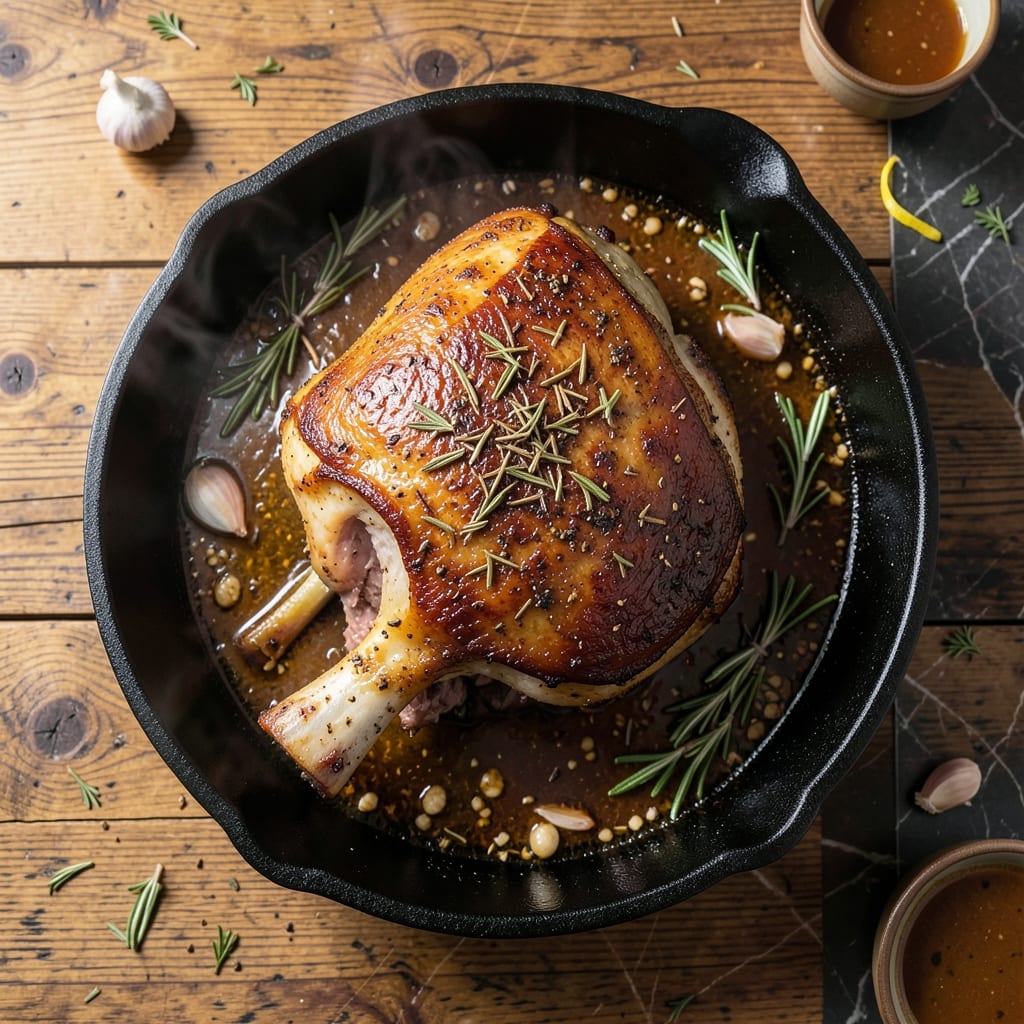
This bone-in pork shoulder roast delivers tender, flavorful meat with a herb-crusted caramelized exterior. A proven method for achieving juicy, fall-off-the-bone results in your home oven.
With a simple spice rub and low-and-slow roasting, this dish transforms an affordable cut into a showstopping centerpiece. Perfect for Sunday dinners or special occasions.
Ingredients for Bone-in Pork Shoulder Roast Recipe Oven
Transform an affordable cut with a bold herb rub and slow roasting. Nothing beats this centerpiece.
| Ingredient | Amount | Notes |
|---|---|---|
| Bone-In Pork Shoulder 🥩 | 4 lb | Skin-on, fat cap intact |
| Kosher Salt 🧂 | 1 ½ tbsp | Diamond Crystal preferred |
| Freshly Ground Black Pepper 🌶️ | 1 tbsp | Coarsely ground for texture |
| Dried Rosemary 🌿 | 1 tbsp | Crushed to release oils |
| Dried Thyme 🍃 | 1 tbsp | Rubbed between fingers |
| Garlic Powder 🧄 | 1 tbsp | Not garlic salt |
| Onion Powder 🧅 | 1 tbsp | Fine grind preferred |
| Smoked Paprika 🌶️ | 1 tsp | For depth and color |
| Olive Oil 🫒 | 2 tbsp | Extra-virgin for richness |
| Yellow Onion 🧅 | 1 whole | Quartered for roasting bed |
| Carrots 🥕 | 3 whole | Cut into 2-inch chunks |
| Celery Stalks 🥬 | 3 whole | Cut into 2-inch chunks |
| Chicken Stock 🍲 | 1 cup | Low-sodium preferred |
| Fresh Parsley 🌿 | ¼ cup | Chopped, for garnish |
Optimal quality requires a well-marbled bone-in pork shoulder—look for skin-on cuts with a thick fat cap at Whole Foods or Costco. Professional kitchens use Diamond Crystal kosher salt for its clean flavor and consistent texture. The dried herbs should be freshly purchased (within 6 months) for maximum potency. Avoid pre-ground black pepper; freshly grinding ensures superior aroma and flavor release.
Substitutions must maintain the dish’s structural integrity. Pork butt can replace shoulder, though it lacks the bone for self-basting. If fresh herbs are unavailable, use dried at one-third the amount. For smoke depth without paprika, a pinch of ground chipotle works. The chicken stock can be swapped for vegetable stock if needed, though the meatier base complements the pork better.
Store the pork shoulder unopened in its packaging for up to 3 days in the fridge. Once opened, cook within 24 hours. The herb rub can be mixed and stored in an airtight container for 1 week. Leftovers keep for 4-5 days refrigerated or freeze for 3 months without texture degradation.
Why You’ll Love This Recipe
- Set It and Forget: Honestly, I just rub the pork shoulder with salt, pepper, rosemary, and thyme, then let the oven do all the work.
- Crispy Outside, Tender Inside: That bone-in cut stays juicy while the outside gets this incredible herb-crusted bark.
- Feeds a Hungry Crowd: I made this for Sunday dinner and had enough for tacos the next day—my kids actually fought over the leftovers.
- Budget-Friendly Centerpiece: A big pork shoulder costs less than fancy cuts but tastes like I spent hours in the kitchen.
Step-by-Step Instructions for Bone-In Pork Shoulder Roast Oven
This method delivers a perfectly herb-crusted roast with fall-apart tenderness every time.
Step 1: Prepare the Herb Crust and Season the Pork
In a small bowl, combine the 1.5 tbsp Kosher Salt, 1 tbsp Freshly Ground Black Pepper, 1 tbsp Dried Rosemary, 1 tbsp Dried Thyme, 1 tbsp Garlic Powder, 1 tbsp Onion Powder, and 1 tsp Smoked Paprika. I crush the rosemary and thyme between my fingers to release their aromatic oils.
Pat the 4 lb Bone-In Pork Shoulder completely dry with paper towels. This ensures the seasoning adheres properly. Rub the entire surface of the pork with 2 tbsp Olive Oil, then massage the herb mixture aggressively into every crevice. The fat cap should be well coated—this forms the flavorful crust.
Step 2: Create the Aromatic Roasting Bed
Position a rack in the lower third of your oven and preheat to 325°F. While the oven heats, prepare your roasting pan. Roughly chop the 1 whole Yellow Onion, 3 whole Carrots, and 3 whole Celery Stalks into 2-inch chunks and scatter them across the bottom of a heavy roasting pan.
These vegetables will elevate the pork, allowing hot air to circulate underneath for even cooking. They’ll also caramelize during roasting, adding depth to the pan juices. Place the seasoned pork shoulder on top of the vegetables, fat cap side up.
Step 3: Slow Roast to Perfection
Pour the 1 cup Chicken Stock into the pan around the vegetables—this prevents burning and creates steam for the first half of cooking. Cover the pan tightly with foil or a lid and transfer to the preheated oven.
Roast for 3 hours, then carefully remove the foil. The pork should be well on its way to tenderness. Return to the oven uncovered for an additional 1 to 1.5 hours, basting occasionally with the pan juices, until the internal temperature reaches 195-200°F and the meat pulls apart easily with a fork.
Step 4: Rest and Serve with Pan Juices
Transfer the pork to a cutting board and tent loosely with foil. Let it rest for 20-30 minutes—this allows the juices to redistribute for maximum moisture. Skim excess fat from the pan juices if desired, then strain the vegetables and reduce the liquid on the stovetop for 5 minutes to intensify the flavor.
Shred or slice the pork as desired. Spoon the reduced pan juices over the meat and garnish with 0.25 cup Fresh Parsley before serving. The exterior should have a deep, caramelized crust while the interior remains impossibly tender and juicy.
Pro Tips For Making Bone-In Pork Shoulder Roast Recipe Oven
- Dry the Roast: Pat the pork shoulder thoroughly dry with paper towels before seasoning—I learned this the hard way after my first roast steamed instead of browned.
- Start Hot, Finish Low: Sear the pork at 450°F for 20-30 minutes first, then drop to 300°F to finish. This gives you that perfect crust without drying it out.
- Don’t Skip the Rest: Let the roast rest under foil for at least 15 minutes after pulling it from the oven—it keeps all the juices inside where they belong.
- Rub Overnight: Mix your salt, pepper, rosemary, and thyme into the pork the night before. Sounds like extra work, but it actually changes the outcome in a big way.
Common Mistakes When Making This Recipe
🔥 Skipping the Sear
Skipping the searing step can leave your pork shoulder lacking that rich, caramelized crust. Searing locks in juices and adds depth of flavor to the roast.
Fix: Heat a heavy pan or Dutch oven over high heat, sear the pork shoulder on all sides until golden brown before transferring to the oven.
🌡️ Underseasoning the Meat
Pork shoulder has a mild flavor, so underseasoning can result in a bland roast. A simple rub of salt and pepper may not be enough for a bone-in cut.
Fix: Use a generous dry rub with herbs, garlic, paprika, and brown sugar for a flavorful crust. Let it sit on the meat for at least 30 minutes before cooking.
⏰ Pulling It Out Too Early
Bone-in pork shoulder needs time to tenderize. Pulling it out too soon can leave the meat tough and chewy instead of fall-apart tender.
Fix: Cook until the internal temperature reaches 195–205°F (90–96°C). Use a meat thermometer and check multiple spots, especially near the bone.
🥘 Not Using Enough Liquid
Without enough moisture, the pork can dry out during the long roast. Even oven cooking needs a little liquid to keep things juicy.
Fix: Add 1–2 cups of broth, apple cider, or water to the pan. Baste the roast every hour or cover it loosely with foil to retain moisture.
Nutrition Facts

- 6 Egg Cake Recipe with Oil: Light as Air With Buttery Moisture - October 4, 2026
- 4 Bean Casserole Recipe: One-Pan Heartiness With Smoky Paprika Depth - October 4, 2026
- 3-Ingredient Keto Mug Cake Recipe: Microwave Magic in 2 Minutes - October 4, 2026