
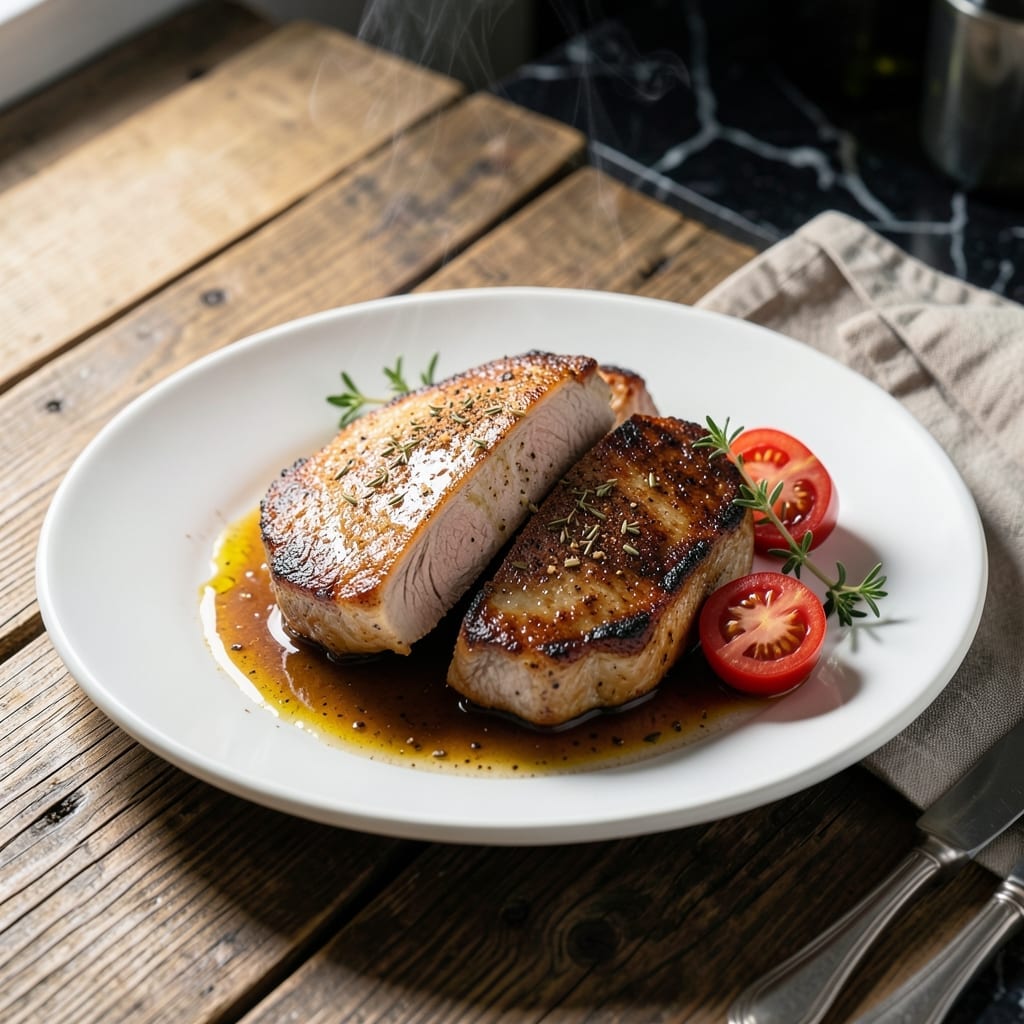
Achieving perfectly juicy pork chops at home is easier than you think with this proven pan-searing method.
I’ve refined this technique over years of testing to ensure the meat stays tender and flavorful every time. The key is precise timing and temperature control.
With just a few simple ingredients and a hot skillet, you’ll create pork chops with a golden crust and a juicy, tender center.
This method delivers restaurant-quality results with minimal effort. Here’s how to master it.
Ingredients for Boneless Pork Chop
Center-cut pork chops and a handful of pantry staples create restaurant-quality results at home.
| Ingredient | Amount | Notes |
|---|---|---|
| Boneless Pork Chops 🥩 | 1 ½ lb | Center-cut, 1-inch thick preferred |
| Kosher Salt 🧂 | 1 ½ tsp | Diamond Crystal preferred for even seasoning |
| Freshly Ground Black Pepper 🌶️ | 1 tsp | Coarse grind for texture |
| Garlic Powder 🧄 | 1 tsp | Not garlic salt, for depth |
| Smoked Paprika 🌶️ | ½ tsp | Adds subtle smokiness |
| Dried Thyme 🍃 | ½ tsp | Rubbed between fingers to release oils |
| Olive Oil 🫒 | 3 tbsp | High smoke point, extra-virgin acceptable |
| Unsalted Butter 🧈 | 2 tbsp | For basting, enhances crust |
| Fresh Rosemary Sprigs 🌿 | 2 whole | Optional, for aromatic basting |
| Fresh Garlic Cloves 🧄 | 2 cloves | Smashed, for infusing oil |
| Lemon Wedges 🍋 | 4 pieces | For serving, brightens finish |
The pork chops are the foundation. Center-cut, bone-in (if available) provides more even cooking, but boneless works perfectly for this method. Thickness matters—aim for 1 to 1.5 inches for that juicy center. Source from a trusted butcher or Whole Foods for consistent quality. Look for pale pink color with some marbling; avoid any with grayish hues or off smells.
No smoked paprika? Regular paprika with a pinch of cayenne works. Dried thyme can be swapped for dried sage or oregano at equal amounts. If you’re out of garlic powder, fresh minced garlic at twice the quantity adds brightness. The olive oil can be any neutral oil with a high smoke point, like avocado or grapeseed. Salt the chops at least 40 minutes ahead for deeper seasoning.
Pork chops are best cooked fresh but can be brined and refrigerated for 24 hours ahead. Leftovers keep 3-4 days in the fridge—reheat gently to avoid drying out. For longer storage, freeze uncooked seasoned chops for up to 3 months.
Why You’ll Love This Recipe
- 5-Minute Seasoning: Honestly, it’s just salt, pepper, garlic powder, and smoked paprika—no fancy prep, no long marinade.
- Smoky Depth: That smoked paprika gives every bite a rich, wood-fired taste without firing up a grill.
- Meal Prep Hero: I cook a double batch on Sunday and we’re set for lunches all week.
- Budget Stretcher: Boneless chops stay tender and cost half what steak does, yet feel just as special.
Step-by-Step Instructions for Pan-Seared Boneless Pork Chops
Precision in timing and temperature ensures juicy pork chops with a perfect golden crust every time.
Step 1: Season the Boneless Pork Chops
Pat the 1.5 lb Boneless Pork Chops completely dry with paper towels. This step is non-negotiable—moisture prevents proper browning. I rub both sides generously with the 1.5 tsp Kosher Salt, 1 tsp Freshly Ground Black Pepper, 1 tsp Garlic Powder, 0.5 tsp Smoked Paprika, and 0.5 tsp Dried Thyme.
Rub the dried thyme between your fingers as you sprinkle to release its aromatic oils. Let the seasoned chops rest at room temperature for 15-20 minutes. This allows the salt to penetrate the meat, ensuring even seasoning throughout and a better crust.
Step 2: Sear the Chops to Golden Perfection
Heat a heavy skillet (cast iron works best) over medium-high heat. Add 2 tbsp of the 3 tbsp Olive Oil and swirl to coat the pan. When the oil shimmers but isn’t smoking, add the pork chops.
Cook undisturbed for 4-5 minutes per side until a deep golden brown crust forms. Resist the urge to move them—this creates the Maillard reaction that develops complex flavors. The chops should release easily from the pan when ready to flip.
Step 3: Baste with Aromatics for Added Depth
Reduce heat to medium and add the remaining 1 tbsp Olive Oil, 2 tbsp Unsalted Butter, 2 cloves Fresh Garlic Cloves (lightly smashed), and 2 whole Fresh Rosemary Sprigs to the pan.
Tilt the skillet and baste the chops continuously with the foaming butter for 1-2 minutes. The garlic and rosemary infuse the butter with aromatic compounds that penetrate the meat. Watch closely—you want the butter golden, not browned.
Step 4: Rest and Serve for Maximum Juiciness
Transfer the pork chops to a warm plate and let rest for 5-10 minutes. This allows the muscle fibers to relax and juices to redistribute. Tent loosely with foil to keep warm without steaming the crust.
Serve immediately with the 4 pieces Lemon Wedges on the side. The acidity cuts through the richness and brightens each bite. Squeeze a wedge over the chops just before eating to enhance the flavors. The internal temperature should read 145°F for perfect doneness.
Pro Tips For Making Boneless Pork Chop
- Dry the Chops: Pat them thoroughly dry with paper towels before seasoning—I learned this the hard way after my first three batches steamed instead of seared.
- Rest Before Cooking: Let the seasoned chops sit at room temperature for 15-20 minutes; cold meat seizes up and cooks unevenly, no matter the heat.
- Skip the Overcrowding: Cook in batches if needed—squeezing too many chops in the pan drops the temperature and turns your crust into a sad, gray afterthought.
- Use a Meat Thermometer: Pull them at 140°F and let them rest to 145°F; after burning one batch to hockey puck status, I finally got one and never guessed again.
Dietary Considerations for boneless pork chop
Gluten-Free Friendly
This dish is naturally 100% gluten-free as written, using only pork, spices, oil, and butter. Just ensure your spices are from a dedicated facility if you have celiac disease—I trust Penzeys for their rigorous testing. 🌟
Keto and Low-Carb
With 0g net carbs per serving, this fits perfectly into keto or low-carb diets. The protein and fat content will keep you satisfied for hours. Skip the lemon wedges if strictly counting carbs.
Dairy Considerations
The 2 tbsp Unsalted Butter can be replaced with olive oil or ghee for a dairy-free version. For a richer flavor without dairy, try avocado oil—it has a high smoke point and adds a subtle buttery taste.
Low-Sodium Option
Reduce the 1.5 tsp Kosher Salt by half and use no-salt-added spices. The pork’s natural flavor still shines through, especially with the garlic and thyme. I often do this when cooking for my dad.
Paleo Adaptations
This recipe is already paleo-compliant as long as you use grass-fed pork and ghee instead of butter. I source my pork from ButcherBox for guaranteed quality. The spices and oils all fit paleo guidelines perfectly.
Allergen Notes
The only potential allergens are dairy (from butter). For nut allergies, confirm your spices are processed in a nut-free facility. Always check labels to be safe. 💡
Nutrition Facts
Frequently Asked Questions
What’s the best thickness for pan-searing?
For perfect results, use 1 to 1.5-inch thick chops. Thinner cuts overcook easily, while thicker ones may not cook through evenly. This thickness ensures a juicy center with a perfect crust.
Can I use bone-in instead of boneless?
Bone-in chops often stay juicier due to the bone. Just add 1-2 minutes to the cooking time per side. The method and temperatures remain the same.
Why do my chops turn out dry?
Overcooking is the main culprit. Always pull them at 145°F internal temperature. Letting them rest for 5-10 minutes after cooking also prevents dryness.
Can I skip the resting step?
Don’t skip it! Resting lets juices redistribute. Cutting too soon causes those precious juices to spill out, leaving the meat dry. It’s worth the short wait.

- 6 Egg Cake Recipe with Oil: Light as Air With Buttery Moisture - October 4, 2026
- 4 Bean Casserole Recipe: One-Pan Heartiness With Smoky Paprika Depth - October 4, 2026
- 3-Ingredient Keto Mug Cake Recipe: Microwave Magic in 2 Minutes - October 4, 2026