
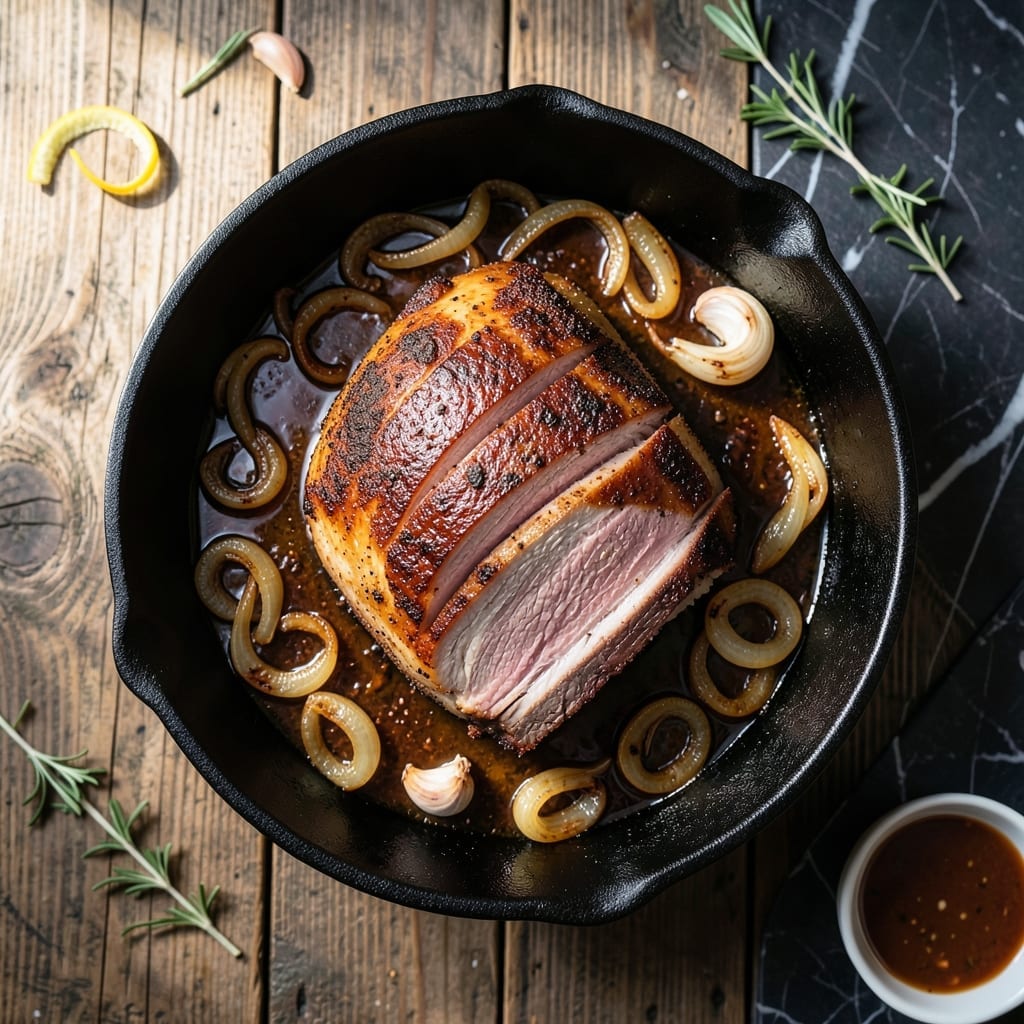
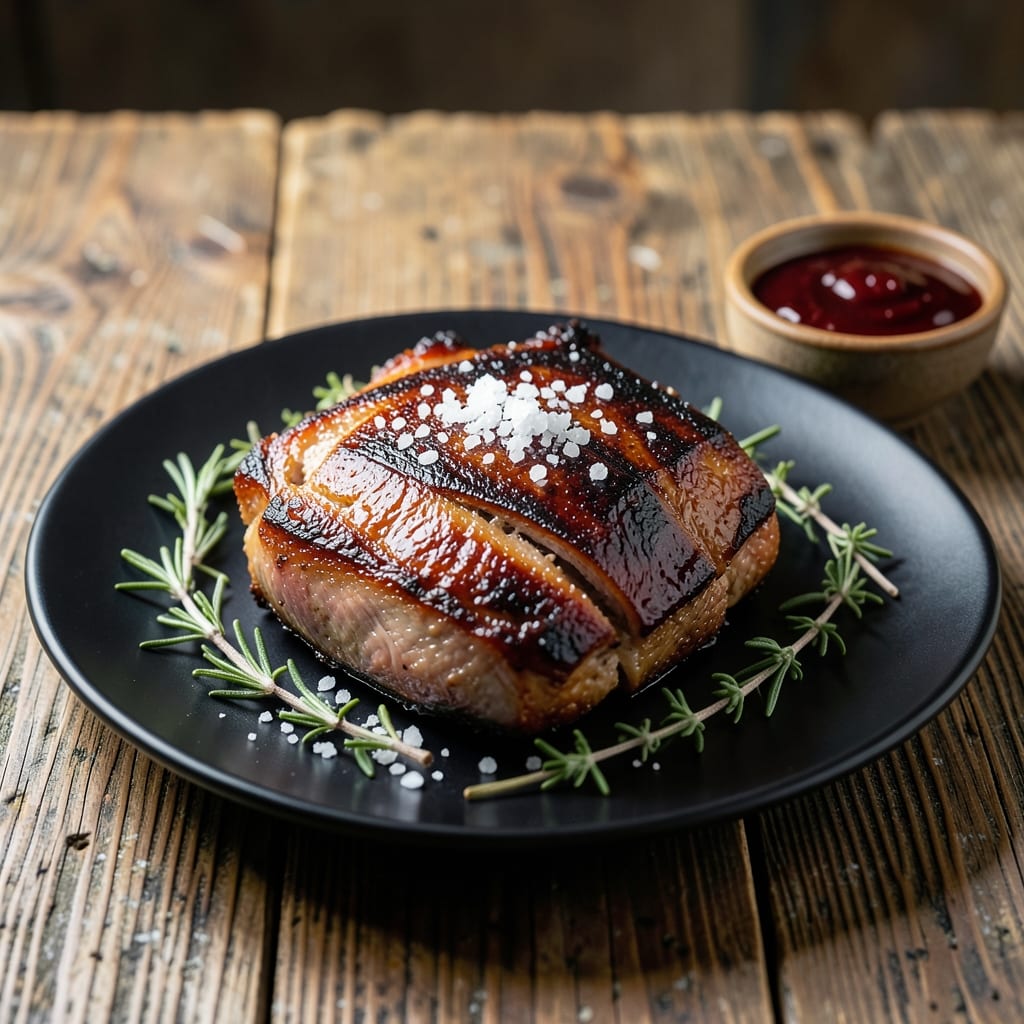
This oven-roasted Boston butt delivers pull-apart tender pork with minimal effort. The slow cooking process transforms tough cuts into juicy, flavorful meat that falls off the bone.
With just a few simple seasonings and low, steady heat, you’ll achieve results that rival any barbecue joint. The oven does all the work while you enjoy the aroma filling your kitchen.
Ingredients for Boston Butt Recipe Oven
Simple spices and a slow roast transform this pork into something extraordinary.
| Ingredient | Amount | Notes |
|---|---|---|
| Boston Butt Pork Roast 🥩 | 4 lb | Bone-in for extra flavor |
| Kosher Salt 🧂 | 2 tbsp | Diamond Crystal preferred |
| Coarse Black Pepper 🌶️ | 1 ½ tbsp | Freshly ground for best results |
| Garlic Powder 🧄 | 1 tbsp | Not garlic salt |
| Onion Powder 🧅 | 1 tbsp | Balances the seasoning blend |
| Smoked Paprika 🌶️ | 2 tsp | Adds depth and color |
| Dried Oregano 🍃 | 1 tsp | Mediterranean oregano preferred |
| Brown Sugar 🧈 | ½ cup | Light or dark variety |
| Apple Cider Vinegar 🍏 | ¼ cup | Brightens the rub |
| Olive Oil 🫒 | 2 tbsp | For rubbing the roast |
| Yellow Mustard 🟡 | 2 tbsp | Helps rub adhere to meat |
| Chicken Broth 🥣 | 1 cup | Low-sodium preferred |
[recipeingredientscaler]
The pork shoulder is key here—bone-in Boston butt gives you that fall-apart texture. Look for good marbling at Costco or your butcher; the fat cap should be thick (it renders down beautifully). I grab mine from Whole Foods when they have sales (usually around $2.99/lb). Skip the pre-cut chunks; a whole roast lets you control the size and ensures even cooking.
No smoked paprika? Regular paprika plus a pinch of liquid smoke works in a pinch. Swap apple cider vinegar for white vinegar or lemon juice if that’s what’s in the pantry. Brown sugar can be replaced with honey or maple syrup (use slightly less). The yellow mustard is just a binder—Dijon works too but has a sharper bite.
Leftovers keep 4-5 days in the fridge, or freeze for 3 months. The roast actually improves overnight as the flavors meld. Reheat gently in a covered dish with a splash of broth (worth the extra minute).
Why You’ll Love This Recipe
- Set and Forget: I just rub the pork with salt, pepper, and those powders, pop it in the oven, and let it do its thing for hours.
- Crispy Outside, Juicy Inside: The dry rub forms the most incredible bark while the meat stays tender—every bite is a perfect balance.
- Feeds a Sunday Crowd: Between us, this is my go-to for family dinners, game days, or when I need to fill hungry teenagers with minimal fuss.
- Leftovers for Days: Honestly, the pulled pork tastes even better the next day, and it freezes beautifully for future sandwiches or tacos.
Step-by-Step Instructions for Boston Butt Oven Roast
This method guarantees fall-apart tenderness with a flavorful crust every time.
Step 1: Create and Apply the Dry Rub
In a bowl, combine the 2 tbsp Kosher Salt, 1.5 tbsp Coarse Black Pepper, 1 tbsp Garlic Powder, 1 tbsp Onion Powder, 2 tsp Smoked Paprika, 1 tsp Dried Oregano, and 0.5 cup Brown Sugar. Mix thoroughly to ensure even distribution of all spices.
Pat the 4 lb Boston Butt Pork Roast completely dry with paper towels. This step is crucial for achieving a good bark. I like to rub the pork with 2 tbsp Yellow Mustard first—this helps the dry rub adhere better. Then generously coat all sides of the roast with the spice mixture, pressing it into the meat so it forms a crust.
Step 2: Sear and Deglaze for Maximum Flavor
Heat 2 tbsp Olive Oil in a large Dutch oven or heavy pot over medium-high heat. Once hot, add the pork roast and sear on all sides for 2-3 minutes per side until deeply browned. You’re looking for a rich, caramelized crust—this adds incredible depth to the final dish.
Remove the pork and set it aside briefly. Pour in 0.25 cup Apple Cider Vinegar to deglaze the pot, scraping up all those delicious browned bits with a wooden spoon. Then add the pork back to the pot and pour in 1 cup Chicken Broth around the edges. The liquid should come about halfway up the roast.
Step 3: Slow-Roast to Pull-Apart Perfection
Cover the pot tightly and transfer it to a preheated 300°F oven. Roast for 4-5 hours, basting the pork with the juices every hour. You want the internal temperature to reach 195-200°F for that perfect pull-apart texture.
Here’s the thing—every oven runs a little differently, so start checking at the 4-hour mark. The pork is done when a fork slides in and out with absolutely no resistance. If the liquid level gets low, add a splash of water or additional broth to maintain moisture.
Step 4: Rest and Shred for Serving
Once the pork reaches the desired tenderness, carefully transfer it to a cutting board. Let it rest for 15-20 minutes—this allows the juices to redistribute throughout the meat. I tent it loosely with foil to keep it warm during this crucial rest period.
Use two forks to shred the pork into chunks, discarding any large fat pieces. Skim excess fat from the cooking liquid, then pour some of the juices over the shredded pork to keep it moist. The meat should be so tender it falls apart with minimal effort, and every bite should be infused with the rich, spiced flavors from the rub.
Pro Tips For Making Boston Butt Recipe Oven
- Start Hot, Finish Low: Sear the Boston butt at 450°F for 20 minutes first, then drop to 275°F for the rest. I learned this the hard way—skipping the high-heat start gives you pale, sad pork instead of that deep brown crust.
- Dry the Roast: Pat the pork shoulder completely dry before seasoning, even if it feels tedious. Sounds weird, but it works: the salt and spices stick better, and you’ll get a crispier exterior.
- Skip the Overcrowding: Give the roast at least an inch of space on all sides in the pan. After burning three batches, I finally figured out that crowded pork steams instead of browns.
- Rest Under Foil: Pull the butt out when it hits 195°F internal temp, tent it loosely with foil, and let it rest 30 minutes. My grandmother swore by this, and she was right: it stays juicy and doesn’t fall apart when you slice it.
Troubleshooting This Recipe
🔥 Too Dry or Tough?
Overcooking or insufficient liquid can leave your Boston butt dry. Low moisture and high heat evaporate natural juices, making the meat tough.
Quick Fix: Baste the pork with broth or apple juice every hour. Cover with foil to trap steam, and reduce oven temperature to 275°F (135°C).
🍳 Not Fall-Apart Tender?
If the meat isn’t tender, it may not have cooked long enough. Collagen breaks down slowly, so rushing the process results in chewy pork.
Quick Fix: Extend cooking time by 1-2 hours, or until internal temperature reaches 195-203°F (90-95°C). Use a meat thermometer for accuracy.
⏰ Uneven Cooking?
Uneven heat distribution or an improperly placed roast can cause some parts to cook faster than others. This often happens in ovens with hot spots.
Quick Fix: Rotate the pan halfway through cooking. Place the pork fat-side up for even heat exposure, and ensure the oven rack is centered.
🌡️ Bark Not Crispy?
A soggy bark usually means too much liquid or not enough exposure to dry heat. Covering the pork for too long can also soften the exterior.
Quick Fix: Uncover the pork during the last 30-45 minutes of cooking. Increase oven temperature to 300°F (150°C) briefly to crisp the bark.
Nutrition Facts

- 6 Egg Cake Recipe with Oil: Light as Air With Buttery Moisture - October 4, 2026
- 4 Bean Casserole Recipe: One-Pan Heartiness With Smoky Paprika Depth - October 4, 2026
- 3-Ingredient Keto Mug Cake Recipe: Microwave Magic in 2 Minutes - October 4, 2026