
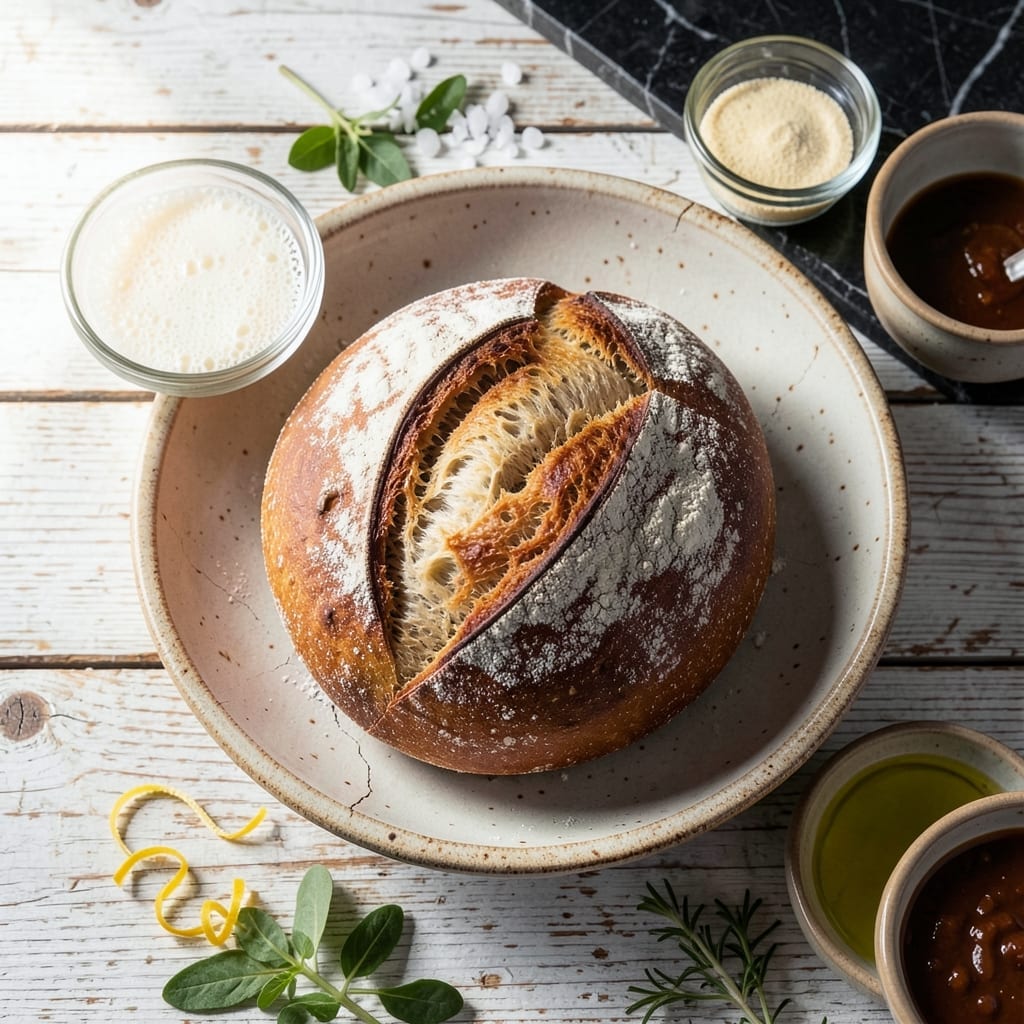
There’s nothing quite like pulling a perfect artisan loaf from the oven, its golden crust crackling with promise. This method transforms basic ingredients into bakery-quality bread with minimal effort.
With just flour, water, salt and yeast, you’ll create a loaf with a crisp exterior and airy interior. The slow fermentation develops deep flavor, while the high-heat bake ensures that signature crust.
Ingredients for Bread Recipe for Bread
Basic ingredients transform into bakery-quality bread with minimal effort and maximum reward.
| Ingredient | Amount | Notes |
|---|---|---|
| Bread Flour 🌾 | 4 cups | High-protein for structure |
| Water 💧 | 1 ¾ cups | Room temperature preferred |
| Active Dry Yeast 🍞 | 2 ¼ tsp | One packet plus a bit more |
| Kosher Salt 🧂 | 2 tsp | Diamond Crystal preferred |
| Olive Oil 🫒 | 1 tbsp | For greasing bowl |
| Honey 🍯 | 1 tsp | Optional, for yeast activation |
| Cornmeal 🌽 | ¼ cup | For dusting baking surface |
| All-Purpose Flour 🌾 | ½ cup | For dusting work surface |
The flour is critical here. King Arthur Bread Flour is my go-to for its consistent protein content, which gives you that perfect chew. Bob’s Red Mill works too if that’s what your store carries. Yeast freshness matters—check the expiration date and store it in the freezer if you won’t use it within a month. The salt should be fine-grained kosher to dissolve properly in the dough.
No bread flour? All-purpose in a pinch, but add a tablespoon of vital wheat gluten per cup to boost protein. Out of honey? Sugar or maple syrup works for feeding the yeast. Cornmeal can be swapped for semolina or extra flour. The olive oil is just for the bowl—any neutral oil will do. Water temperature matters: aim for 105-110°F to wake the yeast without killing it.
The dough can rest in the fridge for up to 24 hours for deeper flavor development. Baked loaves keep at room temperature for 2-3 days in a paper bag, or freeze for 1 month. Slice before freezing for easy toasting later.
Why You’ll Love This Recipe
- No-Knead Magic: I mix the flour, water, yeast, and salt the night before—let it rise overnight, and the olive oil gives it that perfect golden crust with almost no effort.
- Crispy Yet Tender: The olive oil and kosher salt create this incredible balance: a crunchy exterior with a soft, airy center that’s honestly hard to resist.
- Sandwich Superstar: This loaf is my go-to for everything—toast, paninis, or just tearing into it warm with butter. Between us, it’s the only bread I bother making now.
- Penny-Wise Loaf: Five simple ingredients, and it costs a fraction of store-bought. Plus, leftovers make the best croutons or breadcrumbs—nothing goes to waste.
Step-by-Step Instructions for Bread Recipe for Bread
Master the technique for an artisan loaf with a crisp crust and airy interior every time.
Step 1: Activate the Yeast and Begin the Dough
In a large mixing bowl, combine the 1.75 cups Water (room temperature) with the 1 tsp Honey and sprinkle the 2.25 tsp Active Dry Yeast evenly over the surface. Let this sit for 5-10 minutes until the mixture becomes frothy and cloudy—this confirms the yeast is active and ready to work.
Add the 4 cups Bread Flour and 2 tsp Kosher Salt to the bowl. Using a wooden spoon or dough whisk, mix until a shaggy dough forms. This initial mix ensures the flour is fully hydrated, which is critical for developing the gluten structure needed for that perfect artisan texture.
Step 2: Knead and Develop the Gluten
Turn the dough out onto a clean work surface dusted with the 0.5 cup All-Purpose Flour. Begin kneading by pushing the dough away with the heel of your hand, then folding it back over itself. Continue this process for 8-10 minutes until the dough is smooth, elastic, and slightly tacky but not sticky.
You’ll know the gluten is properly developed when you can stretch a small piece of dough thin enough to see light through it without it tearing (the windowpane test). This step is non-negotiable for achieving the open crumb structure that defines artisan bread.
Step 3: First Rise and Bulk Fermentation
Lightly grease a large bowl with the 1 tbsp Olive Oil and place the kneaded dough inside, turning it to coat all sides. Cover the bowl with a damp kitchen towel or plastic wrap and let it rise in a warm, draft-free place for 1.5 to 2 hours, or until the dough has doubled in volume.
During this time, the yeast will ferment the sugars in the flour, producing carbon dioxide that expands the dough. Look for a domed top and a slightly puffy texture—when you press gently with your finger, the indentation should slowly spring back, indicating it’s ready for the next step.
Step 4: Shape and Final Proof
Turn the risen dough out onto a lightly floured surface and gently press to degas. Shape the dough into a round loaf (boule) by pulling the edges toward the center and pinching them together, creating surface tension on the top. Place the shaped dough on a parchment-lined baking sheet dusted with the 0.25 cup Cornmeal to prevent sticking.
Cover the loaf with the damp towel again and let it proof for 45 minutes to 1 hour. The dough should rise noticeably but not double in size this time. The cornmeal adds a subtle texture and prevents the bottom from becoming soggy during baking.
Step 5: Bake to Crusty Perfection
Preheat your oven to 450°F with a baking stone or inverted baking sheet inside. Just before baking, make a shallow slash (about ½ inch deep) across the top of the loaf with a sharp knife or razor. This allows the bread to expand fully during the oven spring.
Bake the loaf for 25-30 minutes, or until the crust is deep golden brown and the internal temperature reaches 200-210°F. Transfer the loaf to a wire rack and let it cool for at least 1 hour before slicing—this ensures the crumb sets properly and prevents a gummy texture.
Pro Tips For Making Bread Recipe For Bread
- Prove the Yeast: Always dissolve active dry yeast in warm water (110°F) with a pinch of sugar first—if it doesn’t bubble within 5 minutes, your loaf won’t rise. I learned this the hard way after wasting a whole batch of flour.
- Weigh Your Flour: Scooping flour with a cup can pack it down, adding 20-30% extra. Use a scale for 100% accuracy—bread flour is dense, and even small variations throw off the hydration.
- Salt Last: Add kosher salt after the yeast has activated, or it can inhibit the fermentation. Sounds minor, but it actually changes the outcome of your rise.
- Oil the Bowl: Coat your rising bowl with olive oil before the first proof—this keeps the dough from sticking and makes cleanup a breeze. A little oil goes a long way, about 1 tablespoon is plenty.
Flavor Customization for These Flavors
🔥 Make it Spicier
For a warm, fiery kick, add 2 tsp cayenne pepper or 1 tbsp crushed red pepper flakes to the dough. This adjustment introduces a subtle heat that builds with each bite, perfect for pairing with savory soups or cheeses. The spice won’t overpower but will add a layer of complexity to your loaf.
🍯 Add Sweetness
Balance the earthy notes of your bread by mixing in 2 tbsp honey or 3 tbsp brown sugar. This tweak enhances caramelization on the crust while adding a gentle sweetness that complements breakfast spreads like jam or Nutella. Ideal for those who love a slightly dessert-like bread.
🍋 Tangy Twist
Incorporate 1/4 cup plain yogurt or 2 tbsp lemon zest for a bright, tangy flavor. The acidity cuts through the richness of the bread, making it lighter and more refreshing. This works especially well in sandwich loaves or as a base for bruschetta.
🔥 Extra Smoky
For a deep, smoky aroma, stir in 1 tsp smoked paprika or 1/2 tsp liquid smoke. This addition mimics the flavor of wood-fired ovens, giving your loaf a rustic, barbecue-like essence. It’s a great match for hearty stews or grilled meats.
💡 Umami Boost
Elevate the savory depth with 1 tbsp soy sauce or 2 tsp nutritional yeast. These ingredients amplify the bread’s natural richness, creating a more satisfying, almost meaty undertone. Perfect for garlic bread or as an accompaniment to charcuterie boards.
Nutrition Facts

- 6 Egg Cake Recipe with Oil: Light as Air With Buttery Moisture - October 4, 2026
- 4 Bean Casserole Recipe: One-Pan Heartiness With Smoky Paprika Depth - October 4, 2026
- 3-Ingredient Keto Mug Cake Recipe: Microwave Magic in 2 Minutes - October 4, 2026