
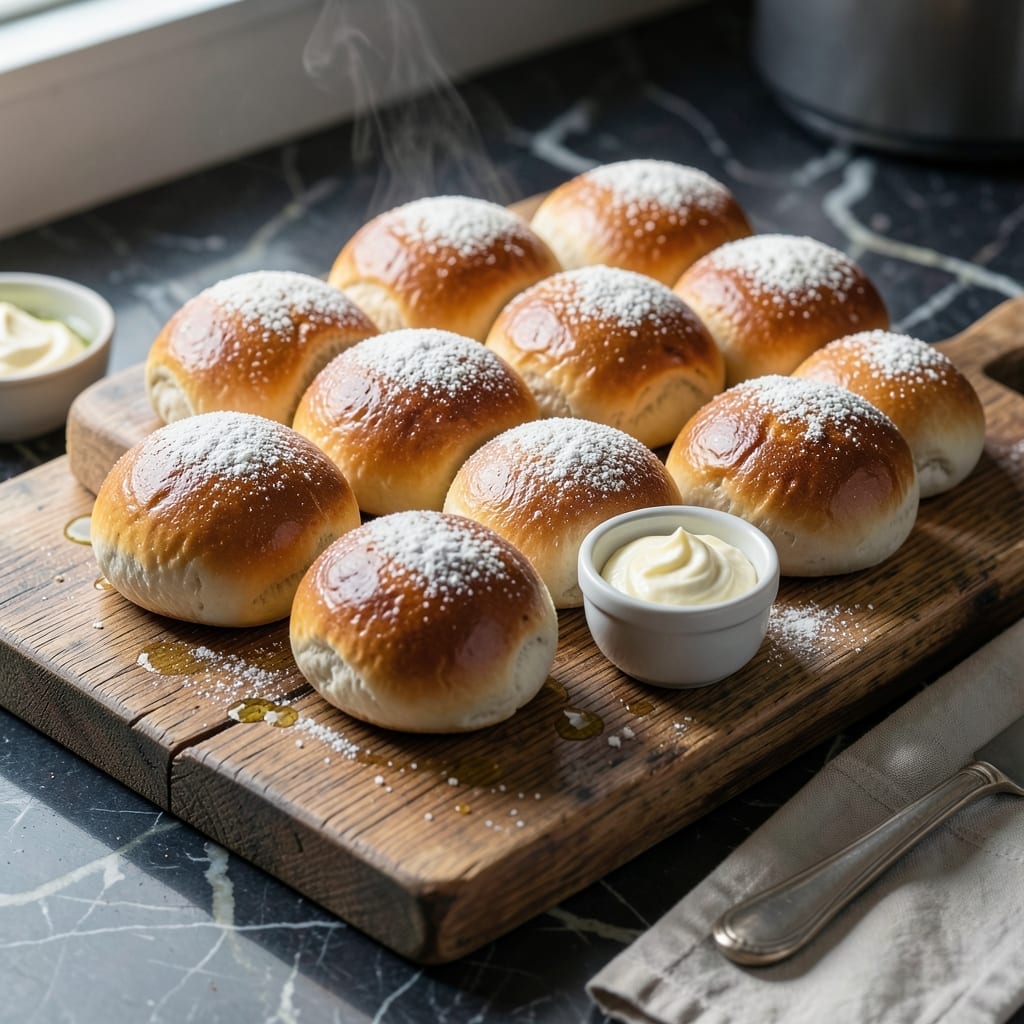
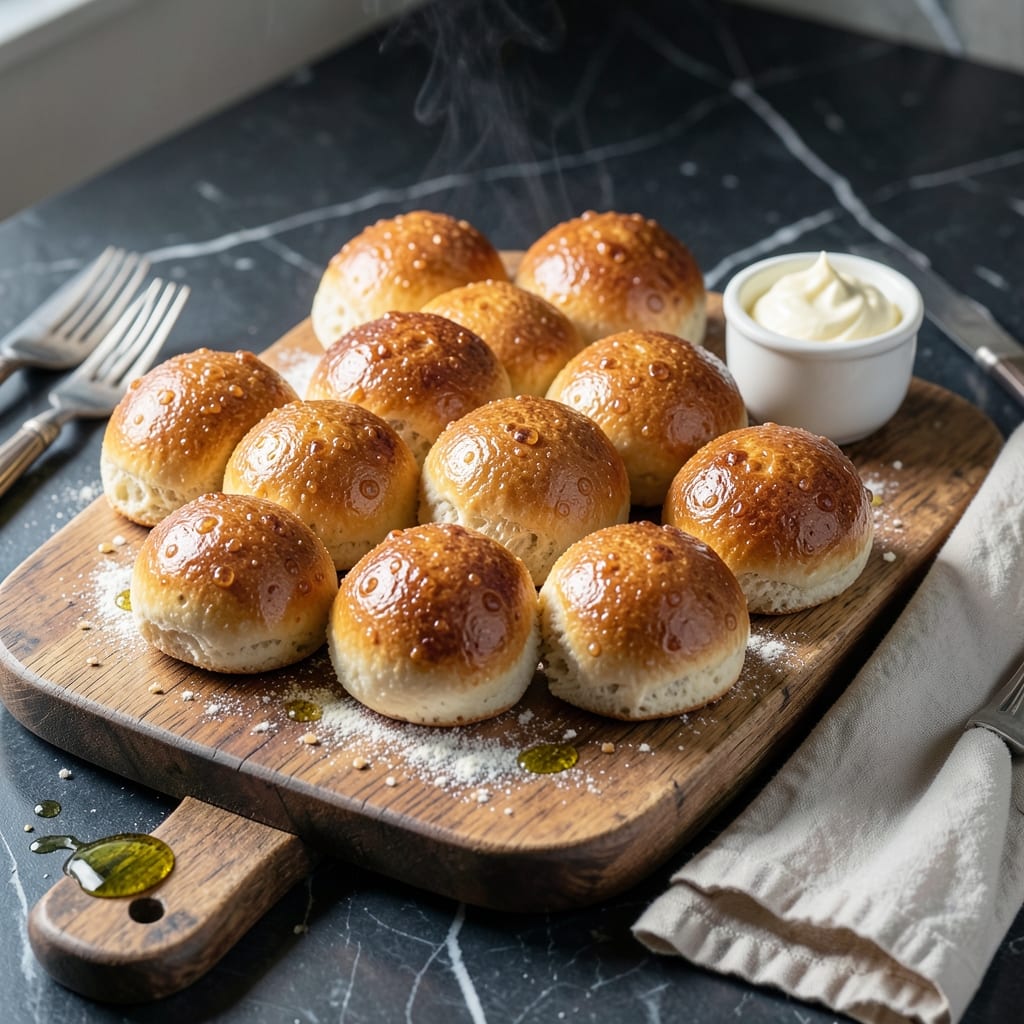
Making soft bread rolls in a bread maker is simpler than you might think. This method delivers foolproof results with minimal effort and maximum consistency.
With precise settings and simple ingredients, your machine does most of the work. The result is perfectly soft, golden rolls every time.
Ingredients for Bread Roll Recipe Bread Maker
Precise measurements and quality ingredients ensure foolproof bread maker rolls every time.
| Ingredient | Amount | Notes |
|---|---|---|
| Bread Flour 🌾 | 4 cups | All-purpose flour works in a pinch |
| Whole Milk 🥛 | 1 cup | Warm to 110°F for activation |
| Unsalted Butter 🧈 | ¼ cup | Melted and cooled slightly |
| Granulated Sugar 🍚 | 2 tbsp | Feeds the yeast for rise |
| Active Dry Yeast 🍞 | 2 ¼ tsp | Or one 0.25 oz packet |
| Kosher Salt 🧂 | 1 ½ tsp | Diamond Crystal preferred |
| Large Egg 🥚 | 1 whole | Room temperature for best incorporation |
| Honey 🍯 | 1 tbsp | Adds subtle sweetness and browning |
| Instant Potato Flakes 🥔 | ¼ cup | Secret for ultra-soft texture |
| Dry Milk Powder 🥛 | ¼ cup | Boosts richness and shelf life |
The flour is critical here. King Arthur Bread Flour delivers consistent protein content for reliable rise. Whole Foods or Trader Joe’s carry it if your regular grocery store doesn’t. The yeast must be fresh—check the expiration date (old yeast is the number one cause of failed bread). For the milk, whole milk provides the richness that makes these rolls tender, but 2% works if that’s what you have on hand.
No bread flour? All-purpose at a 1:1 ratio works, though the texture may be slightly less pillowy. Out of whole milk? Any milk substitute at the same volume is fine, but avoid almond milk as it can be too thin. The honey can be swapped with maple syrup or sugar if preferred. For a dairy-free version, replace the butter with coconut oil and the milk with a rich plant-based option.
Store flour and yeast in airtight containers in a cool, dark place for up to 6 months. The rolls themselves are best enjoyed fresh but can be frozen for 1 month. Reheat frozen rolls wrapped in foil at 350°F for 10-15 minutes to restore softness.
Why You’ll Love This Recipe
- Hands-Off Magic: The bread maker does all the kneading and rising while I sip coffee. Honestly, it feels like cheating.
- Buttery Richness: That whole milk and butter combo gives these rolls a melt-in-your-mouth softness with just the right sweetness.
- Feeds a Crowd: I make a double batch for Sunday dinner and everyone—even the picky nephew—reaches for seconds.
- Freezer Friendly: Leftovers? No problem. I freeze extras and pop them in the oven for warm rolls in minutes. (Yes, even on a Tuesday night)
Step-by-Step Instructions for Bread Maker Bread Rolls
Master the process with precision timing and temperature control for consistent results.
Step 1: Activate the Yeast and Combine Wet Ingredients
Begin by warming the 1 cup Whole Milk to precisely 110°F—this is the optimal temperature for activating the 2.25 tsp Active Dry Yeast without killing it. I use a digital thermometer to verify the temperature.
In the bread maker pan, combine the warmed Whole Milk, 0.25 cup Unsalted Butter (melted and cooled), 2 tbsp Granulated Sugar, 1 tbsp Honey, and the 1 whole Large Egg. Whisk these wet ingredients thoroughly until fully homogeneous. The sugars and honey will dissolve completely at this stage.
Step 2: Incorporate Dry Ingredients with Strategic Layering
Add the 4 cups Bread Flour to the pan, spreading it evenly over the wet mixture. Create a small well in the center of the flour and add the 2.25 tsp Active Dry Yeast to this depression. This prevents the yeast from contacting the liquid prematurely.
Next, add the 1.5 tsp Kosher Salt, 0.25 cup Instant Potato Flakes, and 0.25 cup Dry Milk Powder to the flour layer. Distribute these dry components evenly without mixing. The potato flakes and milk powder will dissolve during the kneading cycle, ensuring uniform distribution throughout the dough.
Step 3: Select and Initiate the Dough Cycle
Secure the bread maker pan in the machine and select the dough cycle. I recommend using the basic dough setting with a 1-hour 30-minute duration if your machine offers customization. The kneading paddle will thoroughly combine all ingredients into a smooth, elastic dough.
During the first 5-10 minutes of the cycle, observe through the viewing window to confirm all dry ingredients have been incorporated. If any flour remains on the sides, use a silicone spatula to gently push it toward the center. The dough should form a single cohesive ball that pulls away from the pan sides.
Step 4: Monitor Rising and Complete the Cycle
Allow the dough to complete the full kneading and rising cycle undisturbed. The Instant Potato Flakes and Dry Milk Powder will contribute to a remarkably soft texture during this phase. The dough should approximately double in volume by the end of the cycle.
At the cycle’s completion, the dough will be perfectly proofed and ready for shaping. I check for proper rising by pressing a finger gently into the dough—it should spring back slowly, leaving a slight indentation. This indicates optimal yeast activity and gluten development.
Step 5: Shape, Proof, and Bake the Rolls
Transfer the dough to a lightly floured surface and divide it into 12 equal portions using a kitchen scale for precision. Shape each portion into a smooth ball by pulling the edges toward the center and pinching to seal.
Place the shaped rolls on a parchment-lined baking sheet, spacing them 2 inches apart. Cover with a clean kitchen towel and let rise in a warm, draft-free location for 30-45 minutes until puffy. Bake at 375°F for 15-18 minutes until the rolls are golden brown and sound hollow when tapped.
Pro Tips For Making Bread Roll Recipe Bread Maker
- Warm the Milk: Heat whole milk to 110°F before adding yeast—any hotter and you’ll kill it, any colder and it won’t activate. I learned this the hard way after my first few batches never rose.
- Use Bread Flour: Skip all-purpose flour; bread flour’s higher protein content gives rolls that perfect chewy texture. It’s the thing that matters most for structure.
- Don’t Overproof: Let the dough rise until just doubled—usually 1-2 hours in a warm spot. Overproofing makes rolls collapse in the oven, and nobody wants flat bread rolls.
- Brush with Butter: Right after baking, brush warm rolls with melted unsalted butter for a soft, golden crust. Sounds simple, but it actually changes the outcome.
Flavor Customization for bread roll recipe bread maker
🔥 Make it Spicier
Add 2 tsp cayenne pepper or 1 tbsp chopped jalapeños to the dough for a fiery kick. The heat builds gradually, so taste-test after baking to adjust next time. Pair with cheddar cheese for a balanced spicy-savory combo.
🍯 Add Sweetness
For a subtly sweet roll, mix in 2 tbsp honey or 3 tbsp brown sugar with the wet ingredients. This enhances caramelization, giving your rolls a golden crust and a soft, slightly sticky texture. Great for breakfast or dessert-style rolls!
🍋 Tangy Twist
Stir in 1 tbsp lemon zest or 2 tbsp plain yogurt to brighten the flavor. The acidity cuts through richness, making the rolls taste lighter. Works well with herb-infused doughs like rosemary or thyme.
🌫️ Extra Smoky
Swap 1 tsp regular paprika for 1 tsp smoked paprika, or add ½ tsp liquid smoke to the dough. This gives the rolls a deep, barbecue-like aroma—perfect for pairing with soups or grilled dishes.
💡 Umami Boost
Enhance savory notes with 1 tbsp nutritional yeast or 1 tsp soy sauce (reduce liquid elsewhere by 1 tsp to compensate). This adds a rich, almost cheesy depth that elevates simple rolls into a gourmet side.
Nutrition Facts

- 6 Egg Cake Recipe with Oil: Light as Air With Buttery Moisture - October 4, 2026
- 4 Bean Casserole Recipe: One-Pan Heartiness With Smoky Paprika Depth - October 4, 2026
- 3-Ingredient Keto Mug Cake Recipe: Microwave Magic in 2 Minutes - October 4, 2026