
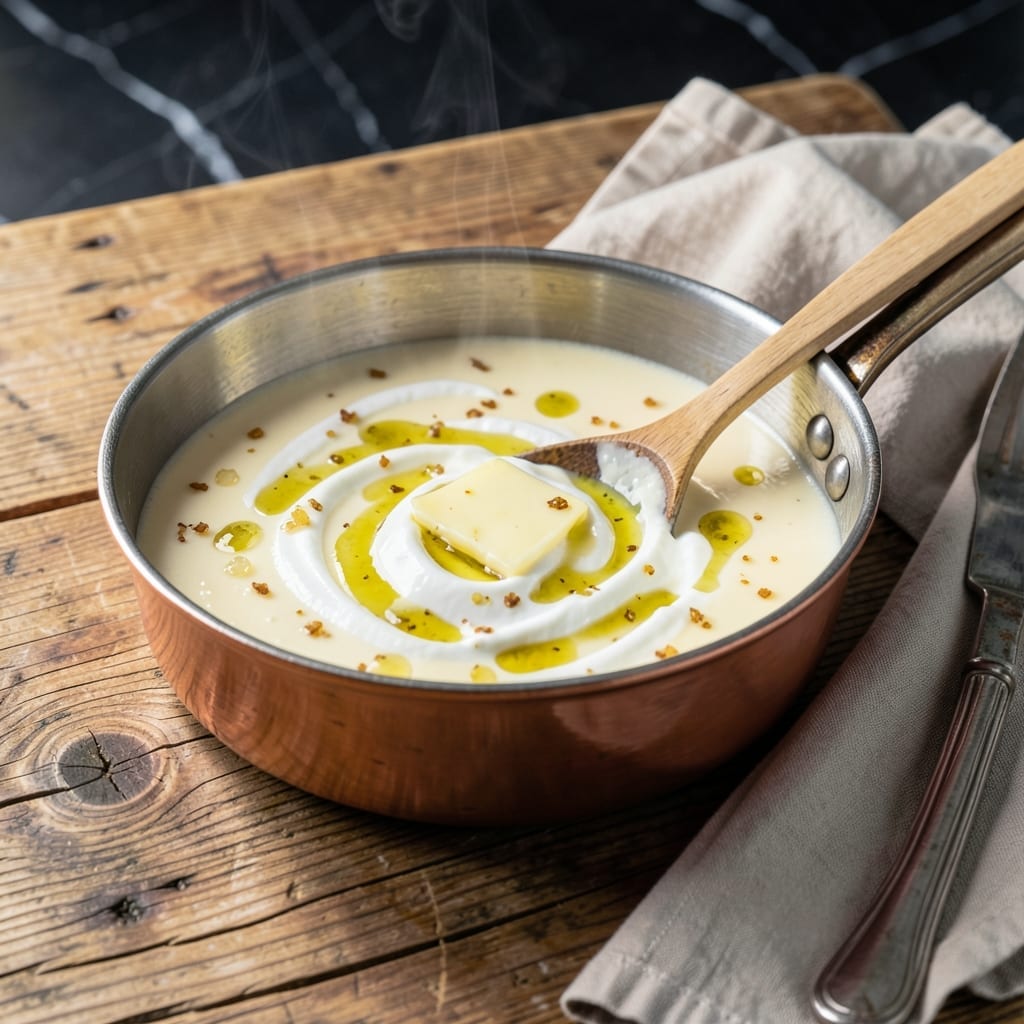
There’s something transformative about a well-crafted brie sauce that elevates any dish from ordinary to extraordinary. This creation brings restaurant-quality sophistication to your home kitchen with minimal effort.
The secret lies in melting brie slowly to achieve its signature velvety texture while preserving its mild, buttery flavor. A touch of cream enhances the richness, creating a sauce that clings beautifully to pasta, vegetables, or meats.
What emerges is a luxuriously smooth sauce with just the right balance of creaminess and subtle tang. It pairs wonderfully with everything from grilled chicken to roasted asparagus, making it incredibly versatile.
Store leftovers in an airtight container in the refrigerator for up to 3 days, gently reheating before use.
Ingredients for Brie Sauce
Ten ingredients transform into a velvety sauce fit for any fine dining table.
| Ingredient | Amount | Notes |
|---|---|---|
| Brie Cheese 🧀 | 8 oz | Rind removed, high-quality |
| Heavy Cream 🥛 | ½ cup | Full-fat for richness |
| Unsalted Butter 🧈 | 2 tbsp | For smooth melting |
| White Wine 🍷 | ¼ cup | Dry variety like Sauvignon Blanc |
| Garlic Cloves 🧄 | 2 cloves | Minced, fresh preferred |
| Shallot 🧅 | 1 whole | Finely diced, for depth |
| Dijon Mustard 🟡 | 1 tsp | For subtle tang |
| Fresh Thyme Leaves 🌿 | 1 tbsp | Stems removed, chopped |
| Salt 🧂 | ¼ tsp | Fine sea salt preferred |
| White Pepper 🌶️ | 0.125 tsp | Freshly ground, for color |
The brie is non-negotiable here—grab a wedge from Whole Foods or Trader Joe’s (avoid pre-sliced, it melts unevenly). Look for a creamy, soft-rind variety like President orFromager d’Affinois. The cream matters too: heavy cream with 36-40% fat gives that restaurant-quality richness. Butter should be unsalted so you control the seasoning. For the wine, any dry white works (I keep a cheap Sauvignon Blanc on hand just for cooking).
No white wine? Chicken or vegetable stock with a splash of lemon juice mimics the acidity. Shallots can be swapped for half a small onion (softer flavor). Out of Dijon? Whole-grain mustard at half the amount adds texture. Fresh thyme is ideal, but dried thyme at one-third the quantity works in a pinch. For a richer sauce, some chefs add a splash of crème fraîche at the end.
This sauce thickens as it cools, so reheat gently with a splash of cream or wine. Keeps in the fridge for 3 days—any longer and the brie starts to separate. Freezing isn’t recommended (it breaks). Best made fresh, but leftovers are still delicious drizzled over roasted veggies.
Why You’ll Love This Recipe
- Five Ingredient Magic: I just melt the brie with butter, cream, wine, and garlic—no chopping, no fuss.
- Rich and Velvety: The wine cuts through the creaminess of the brie in a way that’s honestly addictive.
- Dinner or Dip: I’ve drizzled this over pasta, dunked bread in it, and even used it for a fancy grilled cheese upgrade.
- Leftovers? No Problem: Here’s what sold me—it reheats beautifully and tastes just as good the next day.
Step-by-Step Instructions for Brie Sauce
Here’s the method. Straightforward, tested, works every time.
Step 1: Sauté Aromatics Until Fragrant
Melt the 2 tbsp Unsalted Butter in a medium saucepan over medium heat. Add the finely diced Shallot and cook for 3-4 minutes, stirring occasionally, until it turns translucent and begins to soften.
Stir in the 2 cloves minced Garlic Cloves and the 1 tbsp Fresh Thyme Leaves, cooking for an additional 30-45 seconds until the garlic is fragrant but not browned. You’ll smell the aroma as it blooms—this is your signal to move quickly to the next step.
Here’s the thing—burnt garlic turns bitter, so keep the heat at a steady medium and watch closely. The shallots should be tender, not caramelized, to maintain a delicate flavor base.
Step 2: Deglaze with White Wine
Pour in the 0.25 cup White Wine and scrape up any browned bits from the bottom of the pan with a wooden spoon. This deglazing step captures all the concentrated flavors from the aromatics.
Simmer for 2-3 minutes until the liquid reduces by about half. You’ll notice the sharp alcohol smell mellow into a rich, savory aroma. The mixture should look slightly syrupy but not completely dry.
I know it seems weird, but don’t rush this reduction. The wine needs time to cook off the raw alcohol taste while leaving behind its depth of flavor. This creates the perfect foundation for the creamy sauce.
Step 3: Incorporate Cream and Mustard
Reducing heat to medium-low, add the 0.5 cup Heavy Cream and the 1 tsp Dijon Mustard. Whisk constantly for 2-3 minutes until the sauce begins to thicken slightly and coats the back of a spoon.
Watch for tiny bubbles at the edges—this indicates the cream is hot enough to thicken without curdling. The mustard adds a subtle tang that balances the richness of the cream and cheese.
This is the moment that matters: don’t let it boil vigorously, or the cream may separate. Gentle heat is key.
Step 4: Melt in the Brie Cheese
Reduce heat to low and add the 8 oz Brie Cheese (rind removed) in small chunks, stirring constantly with a whisk. The cheese should melt smoothly into the sauce within 3-4 minutes.
Continue stirring until the sauce is velvety and uniform. If it seems too thick, you can thin it with a splash of warm water, but I’ve found that the full-fat cream and slow melting usually create the perfect consistency.
Real talk: if your sauce looks grainy, you’ve likely heated it too quickly. Remove from heat immediately and whisk vigorously—it often smooths out as it cools slightly.
Step 5: Season and Finish
Stir in the 0.25 tsp Salt and 0.125 tsp White Pepper. Taste and adjust seasoning if needed, remembering that the cheese adds its own saltiness.
Let the sauce sit for 1-2 minutes off the heat to allow the flavors to meld completely. The finished sauce should be glossy, smooth, and coat the back of a spoon with a luxurious thickness.
Serve immediately over pasta, grilled chicken, or steamed vegetables for that fine dining experience. The sauce will thicken slightly as it cools, so keep it warm until serving.
Pro Tips For Making Brie Sauce
- Melt Brie Slowly: Use low heat and stir constantly—rie melts fast and can separate if it gets too hot. I learned this the hard way after ending up with a greasy, broken sauce.
- Remove Brie Rind: Cut off the white rind before melting; it doesn’t dissolve and leaves an unpleasant texture in the finished sauce.
- Deglaze with Wine: After sautéing the garlic, pour in the white wine and scrape up any browned bits—this adds depth to the sauce that you’d otherwise miss.
- Temper the Cream: Warm the heavy cream slightly before adding it to the melted brie to prevent the sauce from seizing up or turning grainy.
Pro Cooking Tips for Perfect Results
Low and Slow Melting
Always melt brie over low heat to prevent separation. I use a heavy-bottomed All-Clad saucepan for even heat distribution. Add cheese in 1-inch chunks and stir constantly with a silicone whisk to avoid clumping.
Wine Selection Matters
Use a dry white wine like Sauvignon Blanc for deglazing. The acidity cuts through the richness. Avoid cooking wines with added salt—Trader Joe’s Charles Shaw is my affordable go-to. 🍷
If avoiding alcohol, substitute ½ cup chicken stock with 1 tsp lemon juice for similar acidity.
Preventing Graininess
If your sauce looks grainy, remove from heat immediately and whisk vigorously. Often, it smooths out as it cools slightly. For stubborn cases, add 1 tsp warm cream and whisk until silky.
Seasoning Strategy
Taste before adding salt—the cheese contributes its own. I use fine sea salt and start with ¼ tsp, adjusting gradually. White pepper adds heat without dark specks, keeping the sauce visually pristine. 💡
Temperature Control
Never let the sauce boil after adding cream or cheese. The ideal range is 160-180°F. Use a candy thermometer for precision if you’re unsure about visual cues.
Nutrition Facts
Frequently Asked Questions
Can I use a different type of cheese?
Camembert works well as a substitute with similar creaminess. Avoid hard cheeses like cheddar—they won’t melt smoothly. For a lighter version, try 1/3 less-fat cream cheese blended in.
How do I fix a sauce that separated?
Remove from heat and whisk in 1 tsp warm cream or butter. If that fails, blend with an immersion blender to re-emulsify. Prevent separation by keeping heat at low when melting.
What dishes pair best with this sauce?
Drizzle over grilled chicken, steamed asparagus, or fettuccine. It also elevates roasted mushrooms or serves as a dip for crusty bread. The rich flavor complements both meats and veggies.
Can I make this ahead of time?
Yes, but store in an airtight container for up to 3 days. Reheat gently on low heat, stirring often. Add a splash of cream if it thickens too much.

- 6 Egg Cake Recipe with Oil: Light as Air With Buttery Moisture - October 4, 2026
- 4 Bean Casserole Recipe: One-Pan Heartiness With Smoky Paprika Depth - October 4, 2026
- 3-Ingredient Keto Mug Cake Recipe: Microwave Magic in 2 Minutes - October 4, 2026