
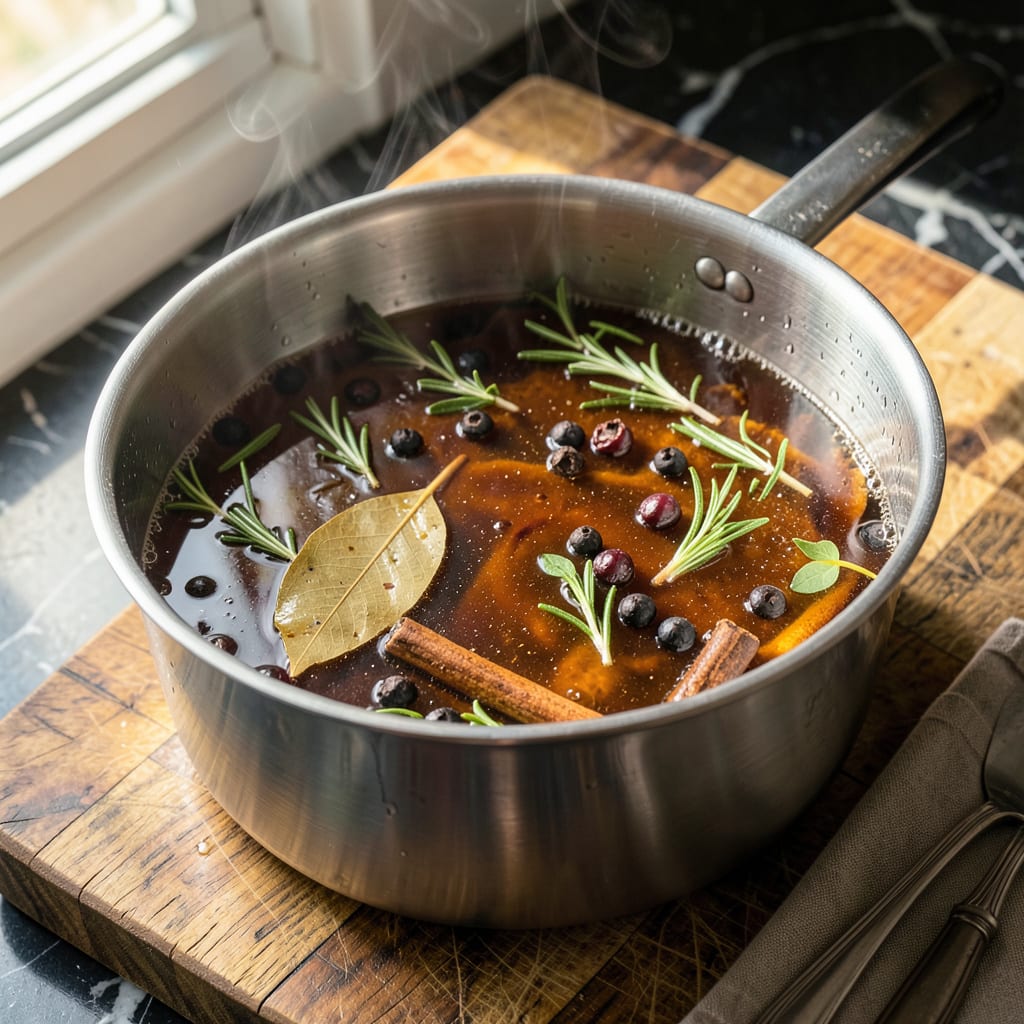
A perfectly balanced brine transforms duck from good to extraordinary by ensuring juicy, flavorful meat every time. This professional-grade wet brine uses precise ratios of salt, sugar, and aromatics to penetrate the meat without overpowering its natural richness. The science is simple: osmosis infuses moisture and seasoning deep into the duck while breaking down proteins for optimal tenderness.
Designed for consistency, this brine works with any duck preparation—whether roasting, smoking, or grilling. The 12–24 hour soaking period allows complete flavor absorption, while the 1-gallon-to-5-pound ratio guarantees even coverage. Discard the brine after single use for food safety, but keep the technique for perfectly seasoned duck every time.
Ingredients for Brine Recipe for Duck
Ten professional-grade ingredients create this osmosis-driven brine for consistently juicy, deeply seasoned duck every time.
| Ingredient | Amount | Notes |
|---|---|---|
| Kosher Salt 🧂 | 1 cup | Diamond Crystal preferred for purity |
| Dark Brown Sugar 🍚 | ½ cup | Packed, for caramelization balance |
| Fresh Thyme Sprigs 🌿 | 6 pieces | Stems intact for infusion |
| Fresh Rosemary Sprigs 🌿 | 4 pieces | Woody stems removed post-brine |
| Black Peppercorns 🌶️ | 1 tbsp | Whole, lightly crushed |
| Juniper Berries 🍇 | 1 tbsp | Gently bruised for aroma |
| Bay Leaves 🌿 | 3 whole | Dried, high-quality preferred |
| Garlic Cloves 🧄 | 8 cloves | Smashed, skins removed |
| Orange Zest 🍊 | 2 tbsps | Freshly grated, no pith |
| Water 💧 | 16 cups | Filtered, cold for dissolution |
The salt-to-water ratio is non-negotiable for proper osmosis. Diamond Crystal kosher salt dissolves cleanly without additives; avoid iodized table salt. Fresh herbs must be organic when possible—their essential oils penetrate more effectively. Juniper berries and black peppercorns should come from a reputable spice merchant like Penzeys or La Boîte for maximum volatility. The garlic and citrus zest provide enzymatic tenderization; use microplane graters for optimal surface area exposure.
No juniper berries? Substitute 1 tsp ground allspice for warmth, though the piney complexity will differ. Brown sugar can be replaced with maple syrup (½ cup), but monitor sweetness levels. For herb substitutions, sage replaces thyme 1:1, while marjoram works for rosemary at double the quantity. The 16 cups water equals 1 gallon—use bottled spring water if your tap has strong mineral notes that could alter flavor.
Prepare brine immediately before use—herbs oxidize and salt begins dissolving upon contact. Store-bought citrus zest loses potency after 3 days refrigerated; zest fresh oranges as needed. The complete brine mixture remains viable at room temperature for 4 hours maximum before microbial risks escalate. Post-brine, discard all liquid and solids—never reuse due to pathogen cross-contamination from raw duck proteins.
Why You’ll Love This Recipe
- Five-Minute Mix: I dump everything—salt, sugar, herbs—into a pot while the kettle boils. No fancy techniques, just stir until the sugar dissolves and you’re done. Honestly, the hardest part is waiting for it to cool.
- That Sweet-Savory Magic: The dark brown sugar caramelizes the skin into something between candy and crackling, while the thyme and rosemary sneak in earthy depth. It’s the kind of flavor that makes people pause mid-bite and ask, “What’d you do to this?”
- Holiday or Tuesday: I’ve used this brine for a fancy Christmas duck and also for a random weeknight when I wanted leftovers to shred into tacos. Between us, it’s the only way I’ll cook duck now—no more dry, chewy disappointments.
- Stretches Further Than You Think: One brined duck feeds us for two meals: crispy slices the first night, then shredded meat for fried rice or ramen. The salt-sugar balance keeps it juicy even after reheating, which means no wasted money on takeout later.
Step-by-Step Instructions for Brining Duck
This professional method ensures perfectly seasoned, moist duck with balanced flavor infusion throughout.
Step 1: Prepare the Aromatic Base
In a large stockpot, combine the 16 cups water, 1 cup Kosher Salt, and 0.5 cup Dark Brown Sugar. Stir over medium heat until both salt and sugar dissolve completely. The water should become clear with no visible granules—this ensures even distribution of seasoning throughout the brine.
Add the 1 tbsp Black Peppercorns and 1 tbsp Juniper Berries, lightly crushing them with the back of a spoon to release their essential oils. These spices provide subtle warmth and piney notes that complement duck’s rich flavor profile. Bring the mixture to a gentle simmer, then remove from heat immediately to prevent over-extraction of bitter compounds.
Step 2: Infuse with Herbs and Citrus
Stir in the 6 pieces Fresh Thyme Sprigs, 4 pieces Fresh Rosemary Sprigs, 3 whole Bay Leaves, and 2 tbsps Orange Zest. The citrus oils in the zest will bloom in the warm liquid, creating a bright counterpoint to the earthy herbs. Allow the mixture to steep for 10 minutes off heat—the residual warmth will extract maximum flavor without cooking the herbs.
Add the 8 cloves Garlic Cloves, ensuring they’re fully submerged. The garlic will mellow during the brining process, infusing the duck with sweet, aromatic notes rather than sharp pungency. At this stage, the brine should develop a complex, layered aroma with citrus top notes and herbal depth.
Step 3: Cool and Submerge the Duck
Transfer the brine to a non-reactive container large enough to accommodate your duck. Cool to 40°F or below before adding the duck—this prevents bacterial growth and ensures food safety. I recommend placing the container in an ice bath to expedite cooling while stirring occasionally to maintain even temperature distribution.
Once properly chilled, submerge the duck completely in the brine. The duck should be fully covered by at least 1 inch of liquid. If necessary, place a weight on top to keep it submerged. Cover and refrigerate for 12-24 hours, turning the duck once halfway through the brining period for uniform flavor penetration.
Step 4: Rinse and Rest Before Cooking
Remove the duck from the brine and rinse thoroughly under cold running water to remove excess salt from the surface. Pat dry with paper towels, paying special attention to the skin—this ensures proper crisping during cooking. The meat should feel firm but yielding, indicating proper moisture retention from the brining process.
Place the duck on a wire rack set over a baking sheet and refrigerate uncovered for 4-12 hours. This air-drying step is crucial for developing crisp skin while maintaining the juicy interior achieved through brining. The surface should become slightly tacky to the touch when properly dried.
Step 5: Cook with Confidence
When ready to cook, you’ll notice the duck maintains its shape better and the skin browns more evenly due to the brining process. Roast or sear according to your recipe, confident that the brine has created a protective moisture barrier within the meat. The internal temperature should reach 165°F in the thickest part of the thigh without breast meat drying out.
The finished duck will exhibit a golden-brown crust with meat that pulls cleanly from the bone. Each bite should reveal layers of flavor—initial saltiness giving way to herbal notes, followed by the bright citrus finish and subtle juniper warmth. The texture remains consistently moist throughout, with no dry or stringy fibers.
Wine and Beer Pairings for These Flavors
Rich Red Wines
For brined duck’s deep, savory flavors, I love pairing with Pinot Noir from Oregon’s Willamette Valley. The wine’s bright acidity and red fruit notes cut through the duck’s richness while complementing the juniper and thyme in the brine. Look for bottles from Domaine Serene or Archery Summit—they offer perfect balance. 🍷
Bold White Options
If you prefer white wine, a full-bodied Chardonnay from Burgundy works beautifully. The buttery texture and subtle oak notes mirror the duck’s unctuous quality, while the citrus undertones echo the orange zest in our brine. Try Louis Latour or Meursault for exceptional quality.
Craft Beer Pairings
For beer lovers, a malty Doppelbock like Paulaner Salvator provides caramel sweetness that balances the brine’s salinity. The toasty malt character enhances the brown sugar notes in our recipe. Serve slightly chilled at 50°F to let the flavors shine. 🍺
Darker Beer Alternatives
A Belgian Dubbel such as Westmalle offers dark fruit and spice notes that harmonize with the juniper and peppercorns. The higher alcohol content (around 7% ABV) stands up to duck’s intensity. Pour into a tulip glass to concentrate the aromas.
Sparkling Surprises
Don’t overlook dry sparkling wines—a Brut Champagne like Veuve Clicquot cleanses the palate between bites. The effervescence cuts through the fat while the yeasty notes complement the garlic and herbs. Chill to 45°F for optimal crispness.
Non-Alcoholic Options
For a zero-proof pairing, try sparkling apple cider from Downeast Cider. The natural sweetness and acidity mirror the brown sugar and orange zest in our brine. Serve ice-cold in a wine glass for an elegant presentation that still delivers on flavor complexity. ✨
Nutrition Facts

- 6 Egg Cake Recipe with Oil: Light as Air With Buttery Moisture - October 4, 2026
- 4 Bean Casserole Recipe: One-Pan Heartiness With Smoky Paprika Depth - October 4, 2026
- 3-Ingredient Keto Mug Cake Recipe: Microwave Magic in 2 Minutes - October 4, 2026