
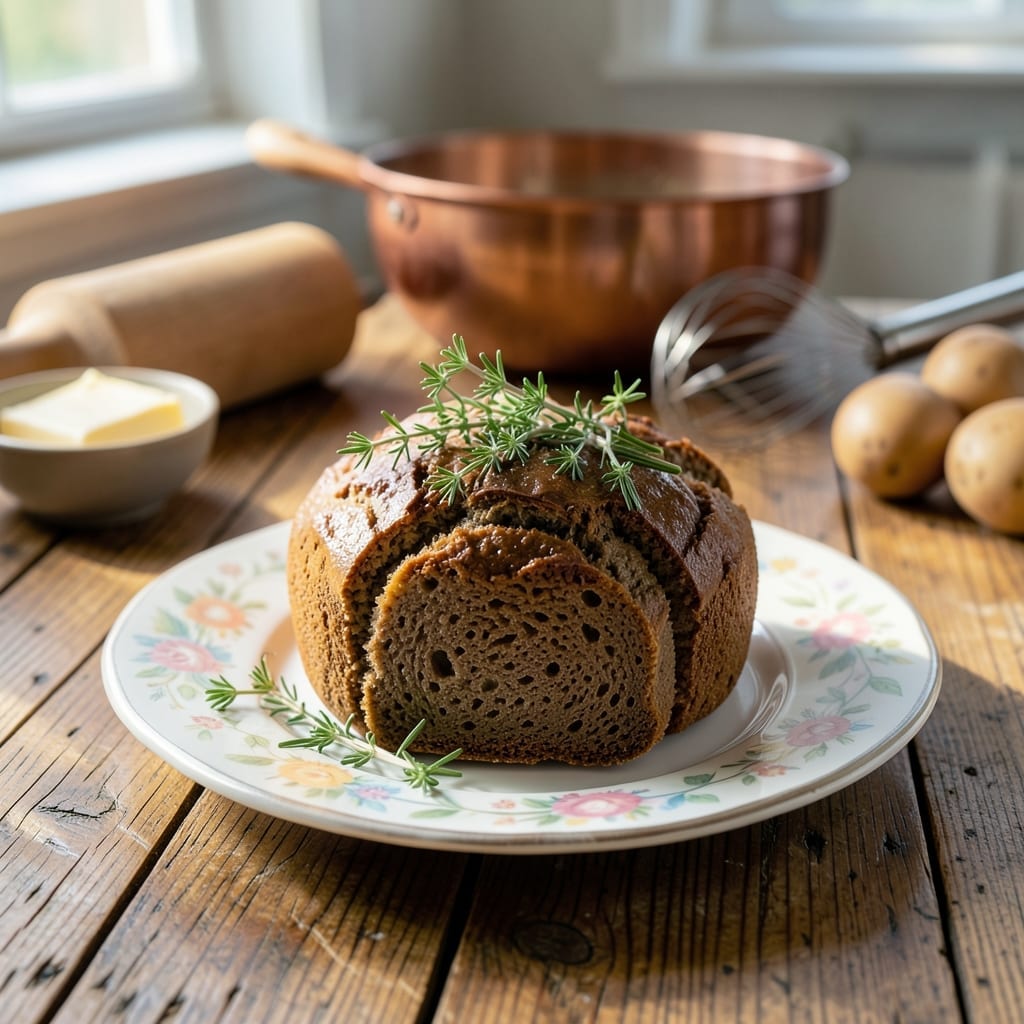
This traditional Irish loaf captures the essence of rustic baking with its dense texture and deep molasses flavor.
With simple ingredients and a straightforward method, you’ll achieve a hearty, wholesome bread that pairs perfectly with soups or butter.
Ingredients for Brown Bread Recipe Ireland
Simple pantry staples transform into a rustic, hearty Irish loaf with deep flavor.
| Ingredient | Amount | Notes |
|---|---|---|
| Whole Wheat Flour 🌾 | 3 cups | Stone-ground preferred for texture |
| All-Purpose Flour 🌾 | 1 cup | For lighter crumb structure |
| Old-Fashioned Rolled Oats 🥣 | ¾ cup | Plus extra for topping |
| Molasses 🍯 | ¼ cup | Unsulphured for cleaner flavor |
| Buttermilk 🥛 | 1 ¾ cups | Room temperature for best rise |
| Baking Soda 🧂 | 1 tsp | Fresh for optimal leavening |
| Salt 🧂 | 1 tsp | Fine sea salt preferred |
| Unsalted Butter 🧈 | 2 tbsp | Melted and cooled slightly |
| Large Egg 🥚 | 1 whole | Beaten, for richness |
| Wheat Bran 🌾 | ½ cup | Optional for extra fiber |
| Honey 🍯 | 2 tbsp | Clovers or wildflower variety |
| Vanilla Extract 🌿 | 1 tsp | Pure extract for depth |
The flours are foundational—King Arthur Flour offers excellent whole wheat and all-purpose options. Stone-ground whole wheat flour provides the authentic texture this loaf demands. For the molasses, Br’er Rabbit unsulphured is a reliable choice at most supermarkets. Buttermilk should be fresh; if sourcing is an issue, whole milk with a tablespoon of vinegar works as a substitute (let it sit for 5 minutes).
No buttermilk? Use plain yogurt thinned with milk at a 1:1 ratio. Swapping molasses for honey changes the flavor profile slightly but works in a pinch. The egg can be omitted for a denser crumb, though the rise will be less pronounced. For a vegan version, flax egg (1 tbsp ground flaxseed + 3 tbsp water) replaces the egg effectively, though the bread will be slightly heavier.
Store the cooled loaf wrapped in a clean kitchen towel at room temperature for up to 3 days. For longer storage, slice and freeze in an airtight container for up to 3 months. Toast slices directly from frozen to revive their texture and warmth.
Why You’ll Love This Recipe
- I’ll be real: it stays moist and fresh for nearly a week, so I always make two loaves.
- No Yeast Needed: I mix, shape, and bake—no waiting for dough to rise, just straight to the oven.
- Deep, Rich Taste: The molasses gives it a caramel-like sweetness that pairs perfectly with the nutty oats.
- Breakfast or Tea: Honestly, it’s just as good toasted with butter in the morning as it is with soup at dinner.
Step-by-Step Instructions for Irish Brown Bread
Master this traditional method for a dense, moist loaf with authentic Irish character.
Step 1: Combine Dry Ingredients
In a large mixing bowl, whisk together the 3 cups Whole Wheat Flour, 1 cup All-Purpose Flour, 0.75 cup Old-Fashioned Rolled Oats, 1 tsp Baking Soda, and 1 tsp Salt. I use a balloon whisk for this—it aerates the mixture and prevents clumping.
If using, add the 0.5 cup Wheat Bran at this stage. This optional addition enhances the fiber content and contributes to the bread’s characteristic hearty texture. The dry ingredients should be uniformly distributed before introducing any wet components.
Step 2: Incorporate Wet Ingredients
In a separate bowl, combine the 1.75 cups Buttermilk, 0.25 cup Molasses, 2 tbsp Honey, 1 tsp Vanilla Extract, 2 tbsp Unsalted Butter (melted and cooled), and the 1 whole Large Egg. Whisk until the mixture is homogeneous and the molasses is fully dissolved.
Create a well in the center of your dry ingredients and pour in the wet mixture. Using a wooden spoon, gently fold the ingredients together until just combined. The batter will be thick and slightly sticky—this is normal for Irish brown bread.
Step 3: Prepare and Bake
Preheat your oven to 375°F. Lightly grease a standard loaf pan and dust it with a bit of flour to prevent sticking. Transfer the batter to the prepared pan, smoothing the top with a spatula.
For added texture, sprinkle a handful of extra Old-Fashioned Rolled Oats on top of the loaf before baking. This creates a rustic, slightly crispy crust. Bake for 45-50 minutes, or until a toothpick inserted into the center comes out clean and the loaf sounds hollow when tapped.
Step 4: Cool and Serve
Remove the bread from the oven and let it cool in the pan for 10 minutes. This allows the structure to set before removing it to a wire rack. Cool completely before slicing—this prevents a gummy texture.
The finished loaf should have a deep brown color, a slightly crisp crust, and a moist, dense crumb. Serve at room temperature with butter for the authentic Irish experience. This bread keeps well wrapped at room temperature for up to 5 days.
Pro Tips For Making Brown Bread Recipe Ireland
- Warm the Molasses: I learned this the hard way—cold molasses sticks to the measuring cup and leaves half behind. Heat it gently for 10 seconds in the microwave, then it pours out smooth and mixes evenly into the buttermilk.
- Soak the Oats: Sounds weird, but it works: cover the rolled oats with hot water for 5 minutes before adding them. They soften just enough to blend seamlessly into the dough without turning to mush.
- Don’t Overmix: After burning three batches, I finally figured out that stirring just until the flours are damp is enough. Overworking the dough makes the loaf dense and tough.
- Use Room-Temp Buttermilk: My grandmother swore by this, and she was right: cold buttermilk can seize the molasses and create streaks. Pull it from the fridge 30 minutes early to guarantee a uniform batter.
Dietary Considerations for These Flavors
Keto-Friendly Options
Traditional brown bread is high in carbs, but you can adapt it for a keto diet by replacing whole wheat flour with almond or coconut flour. These alternatives reduce net carbs while keeping the bread moist and flavorful. Add psyllium husk for structure and a touch of molasses substitute like sugar-free syrup to maintain the classic Irish taste.
Gluten-Free Adaptations
For those avoiding gluten, swap whole wheat flour with a gluten-free flour blend (e.g., oat or rice flour). Ensure all ingredients, including baking powder, are certified gluten-free. Xanthan gum can help bind the dough, mimicking the texture of traditional brown bread.
Allergen Awareness
Brown bread often contains wheat, dairy (butter/milk), and eggs. For allergies, use dairy-free butter and plant-based milk. Eggs can be replaced with flaxseed or applesauce for binding. Always check labels for hidden allergens like nuts in flour blends.
Vegetarian Modifications
Most brown bread recipes are naturally vegetarian, but some use honey or gelatin in variations. Opt for molasses or maple syrup instead of honey, and ensure additives like vitamin D in milk are plant-based if strict vegetarianism is a concern.
Low-Sodium Choices
Reduce sodium by using unsalted butter and omitting added salt. Enhance flavor with herbs (thyme, rosemary) or spices (cinnamon, nutmeg) instead. For baking powder, choose a low-sodium version or make your own with cream of tartar and baking soda.
Nutrition Facts

- 6 Egg Cake Recipe with Oil: Light as Air With Buttery Moisture - October 4, 2026
- 4 Bean Casserole Recipe: One-Pan Heartiness With Smoky Paprika Depth - October 4, 2026
- 3-Ingredient Keto Mug Cake Recipe: Microwave Magic in 2 Minutes - October 4, 2026