
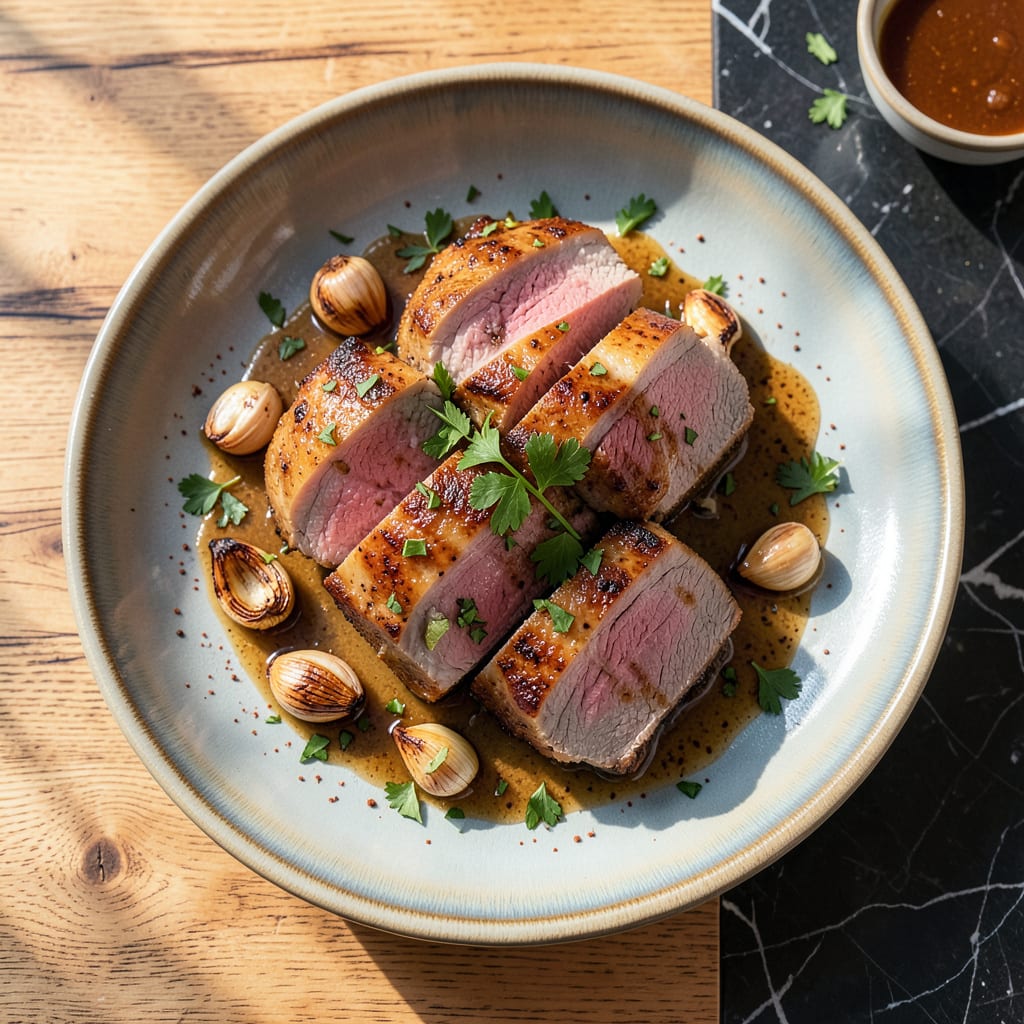
This brown sugar pork tenderloin delivers the perfect balance of sweet and savory, creating a dish that’s both elegant and approachable. The combination of brown sugar, garlic, and spices forms a caramelized crust that locks in moisture, ensuring every bite is tender and flavorful. I’ve refined this method over years of testing to achieve consistent results—juicy pork with a sticky, golden glaze that’s impossible to resist.
What sets this recipe apart is its simplicity: a quick marinade, 30 minutes of hands-off roasting, and a brief broil for that signature caramelized finish. The pork emerges from the oven with a glossy exterior and an internal temperature of 145°F, guaranteeing both safety and perfect doneness. Serve with roasted vegetables or mashed potatoes to complete the meal.
Ingredients for Brown Sugar Pork Tenderloin
These twelve ingredients create a perfectly balanced sweet-savory crust with juicy, tender pork every time.
| Ingredient | Amount | Notes |
|---|---|---|
| Pork Tenderloin 🥩 | 1 ½ lb | Trimmed of excess fat |
| Light Brown Sugar 🍚 | ½ cup | Packed for caramelization |
| Garlic Cloves 🧄 | 6 cloves | Minced for even distribution |
| Kosher Salt 🧂 | 1 ½ tsp | Diamond Crystal preferred |
| Freshly Ground Black Pepper 🌶️ | 1 tsp | Coarse grind for texture |
| Smoked Paprika 🌶️ | 1 tsp | Spanish variety recommended |
| Ground Cumin 🌿 | ½ tsp | Toasted for depth |
| Extra-Virgin Olive Oil 🫒 | 2 tbsp | Cold-pressed for searing |
| Dijon Mustard 🟡 | 1 ½ tbsp | Smooth, not grainy |
| Apple Cider Vinegar 🍎 | 1 tbsp | Unfiltered for tang |
| Fresh Rosemary Sprigs 🌿 | 2 whole | Stems removed, chopped |
| Fresh Thyme Sprigs 🍃 | 4 whole | Leaves stripped |
Optimal quality requires selecting pork tenderloin with vibrant pink color and minimal visible fat. Whole Foods or Costco consistently offer premium cuts; avoid pre-marinated versions. The brown sugar must be light brown—dark brown’s molasses content alters caramelization. For spices, Penzeys provides superior freshness, though standard grocery brands suffice if recently purchased. Fresh herbs should exhibit firm stems and bright green leaves—avoid wilted bundles.
Substitutions must maintain flavor equilibrium. Dark brown sugar may be used but reduces sweetness by 20%; compensate with 1 additional tablespoon. Garlic powder (1 tsp) replaces fresh garlic in emergencies, though fresh delivers superior aroma. Dried rosemary/thyme work at one-third fresh quantity but lack complexity. For acidity, white wine vinegar substitutes apple cider, while yellow mustard replaces Dijon with milder results. Olive oil alternatives like avocado oil perform similarly for searing.
Storage demands precision. Unused pork tenderloin remains viable for 2 days refrigerated or 6 months frozen. Prepared marinade holds 3 days in sealed containers. Fresh herbs require damp paper towel wrapping and refrigeration for 5-7 days maximum. Caramelized leftovers reheat optimally at 300°F for 10-12 minutes to preserve texture. Never microwave—it compromises the crust’s integrity.
Why You’ll Love This Recipe
- One-Pan Magic: Honestly, this might be the easiest protein I make. Just sear the tenderloin, toss in the brown sugar and garlic, and let the oven do the rest—no marinating, no fancy techniques.
- Caramelized Crust: That first bite where the brown sugar turns sticky-sweet against the peppery crust? I’ve caught my husband sneaking bites straight from the cutting board.
- Weeknight Hero: Between us, this is my Tuesday-night lifesaver. It’s fancy enough for company but unfussy enough to throw together after soccer practice—leftovers (if there are any) reheat beautifully.
- Budget-Friendly Luxury: Pork tenderloin stays affordable, but the brown sugar glaze makes it taste like a restaurant splurge. I’ll be real: it’s my secret for feeding four on what I’d spend on two steaks.
Step-by-Step Instructions for Brown Sugar Pork Tenderloin
This method delivers perfectly caramelized, fall-apart tender pork with balanced sweet and savory flavors.
Step 1: Prepare the Wet Marinade Base
In a medium bowl, whisk together the 0.5 cup light brown sugar, 1.5 tbsp Dijon mustard, 1 tbsp apple cider vinegar, and 2 tbsp extra-virgin olive oil until fully emulsified. The sugar should dissolve completely, creating a smooth, glossy mixture with no graininess. This balance of sweet, tangy, and fatty elements forms the flavor foundation for your marinade.
Add the 6 cloves minced garlic cloves, 1.5 tsp kosher salt, 1 tsp freshly ground black pepper, 1 tsp smoked paprika, and 0.5 tsp ground cumin. Whisk vigorously for 30 seconds to fully incorporate the spices. The mixture should darken slightly as the smoked paprika and cumin disperse evenly throughout the liquid base.
Step 2: Infuse with Fresh Herbs and Marinate
Remove the leaves from the 2 whole fresh rosemary sprigs and 4 whole fresh thyme sprigs, finely chopping them to release their essential oils. Add the chopped herbs to the marinade and stir to distribute. The herbs should be visible throughout the mixture, with their green flecks contrasting against the brown sugar base.
Place the 1.5 lb pork tenderloin in a resealable plastic bag or shallow dish and pour the marinade over it. Turn the pork to coat completely, ensuring every surface is covered. Seal the bag or cover the dish and refrigerate for at least 4 hours, or preferably overnight. The pork should become noticeably more aromatic as it absorbs the marinade flavors.
Step 3: Sear for Caramelized Crust Development
Remove the pork from the refrigerator 30 minutes before cooking to allow it to come to room temperature. Preheat your oven to 400°F. Heat an oven-safe skillet over medium-high heat until a drop of water sizzles and evaporates immediately upon contact.
Add the marinated pork tenderloin to the hot skillet, reserving any excess marinade. Sear for 2-3 minutes per side until you achieve a deep, caramelized crust. The sugar in the marinade should create a glossy, mahogany-colored exterior. Use tongs to rotate the pork, being careful not to pierce the meat and lose precious juices.
Step 4: Finish with Precision Roasting
Transfer the skillet with seared pork to the preheated 400°F oven. Roast for 15-20 minutes, or until an instant-read thermometer inserted into the thickest part registers 145°F. The pork should feel firm but still yield slightly when pressed with tongs.
During roasting, baste the pork with the reserved marinade every 5 minutes to build layers of flavor and prevent drying. The final product should have a sticky, glossy exterior with visible herb specks. The internal temperature is more reliable than visual cues for doneness with pork tenderloin.
Step 5: Rest and Slice for Optimal Texture
Transfer the cooked pork to a cutting board and tent loosely with aluminum foil. Allow it to rest for 10 minutes before slicing. This resting period lets the muscle fibers relax and juices redistribute throughout the meat, ensuring each slice remains moist.
Slice the pork tenderloin against the grain into ½-inch thick medallions. The interior should be uniformly pink with no traces of blood, and the slices should hold their shape without falling apart. The caramelized crust should glisten from the brown sugar marinade, with visible herb flecks throughout.
Pro Cooking Tips for This Dish
Perfect Searing Technique
Getting that caramelized crust starts with proper pan temperature. I heat my cast iron skillet over medium-high heat for 5 minutes before adding oil. The pan should be hot enough that a drop of water dances and evaporates instantly. This ensures the brown sugar marinade caramelizes immediately upon contact, creating that signature sticky exterior. 🔥
Marinade Adherence Trick
For maximum flavor penetration, I pat the pork tenderloin completely dry with paper towels before marinating. This creates a textured surface that helps the marinade cling better. When searing, I let the pork sit undisturbed for the full 2-3 minutes per side—resist the urge to peek! The sugar needs this time to properly caramelize without burning.
Oven Temperature Precision
After searing, I immediately transfer the skillet to a 400°F oven. This high heat continues the caramelization process while cooking the interior evenly. I’ve found that 15-20 minutes is perfect for a 1.5 lb tenderloin to reach 145°F internally. Use an oven thermometer to verify your oven’s accuracy—many run hot or cold.
Basting for Extra Glaze
Every 5 minutes during roasting, I baste the pork with the reserved marinade using a silicone brush. This builds layers of flavor and creates that beautiful glossy finish. Be careful not to over-baste—the sugar can burn if the pan gets too dry. If needed, add 1-2 tbsp water to the pan to deglaze and prevent sticking.
Resting for Juiciness
This step is non-negotiable: always rest your pork for 10 minutes before slicing. I tent it loosely with foil to keep it warm while allowing steam to escape. This prevents the juices from flooding out when you cut into it. The internal temperature will rise about 5°F during resting, so remove it from the oven when it hits 140°F.
Slicing Against the Grain
Look for the natural lines in the meat—they run lengthwise. Slice perpendicular to these lines into ½-inch thick medallions. This shortens the muscle fibers, making each bite more tender. I use a sharp 8-inch chef’s knife and slice in one smooth motion to avoid tearing the beautiful caramelized crust. ✨
Nutrition Facts
Frequently Asked Questions
Can I use dark brown sugar instead of light?
Yes, but expect a deeper molasses flavor. Dark brown sugar will make the glaze richer and slightly less sweet. Reduce the amount by 1 tablespoon to balance the stronger taste. The caramelization will still work beautifully.
How do I prevent the glaze from burning?
Keep the oven temperature at 400°F and baste every 5 minutes. If the pan gets too dry, add 1-2 tablespoons water to deglaze. Watch closely after 15 minutes—the sugar can go from caramelized to burnt quickly.
What’s the best way to slice the tenderloin?
Use a sharp knife and cut against the grain into ½-inch thick medallions. This shortens the muscle fibers for maximum tenderness. Always let it rest 10 minutes first to keep juices intact.
Can I make this ahead of time?
Marinate the pork overnight for deeper flavor, but cook it fresh. Leftovers keep 3 days refrigerated—reheat gently at 300°F for 10 minutes to preserve texture. Never microwave, as it ruins the crust.
What sides pair best with this dish?
Try roasted sweet potatoes or garlic mashed potatoes to complement the sweetness. For contrast, serve with sautéed green beans or a crisp apple slaw. The key is balancing the caramelized flavors.

- 6 Egg Cake Recipe with Oil: Light as Air With Buttery Moisture - October 4, 2026
- 4 Bean Casserole Recipe: One-Pan Heartiness With Smoky Paprika Depth - October 4, 2026
- 3-Ingredient Keto Mug Cake Recipe: Microwave Magic in 2 Minutes - October 4, 2026